
M50 Art District: Shanghai’s First Artist Quarter in a 1930s Cotton Mill with a Famous Graffiti Wall at Moganshan Road 50 in Putuo District, Shanghai
旧纺机声沉入梦,新涂鸦色醒于墙。Jiù fǎngjī shēng chén rù mèng, xīn túyā sè xǐng yú qiáng – The sound of the old spinning machines has sunk into dreams; the colours of new graffiti wake upon the walls.
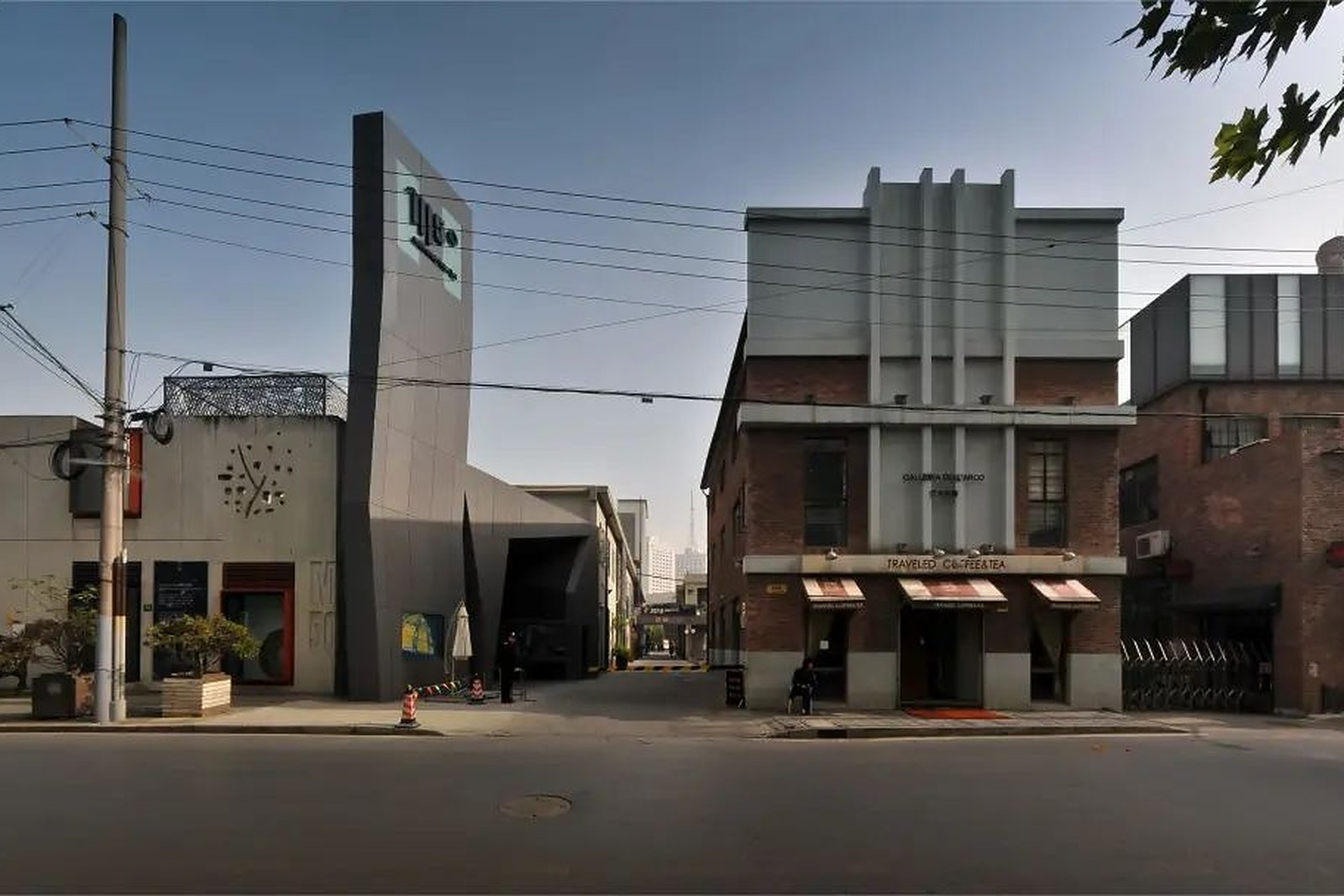
M50创意园 M50 Creative Park the M50 Art District is not a purpose-built museum quarter — it is, plainly put, a 1930s textile mill taken over by artists, gallery by gallery, until the whole compound became an artwork of its own: the district fills the former mill buildings at 莫干山路 Mògànshān Lù Moganshan Road 50 in 普陀区 Pǔtuó Qū Putuo District, on the south bank of the 苏州河 Sūzhōu Hé Suzhou Creek, where Shanghai’s mill belt once ran. The address carries its own history: the factory on this ground — known in its day as 信和纱厂 Xìnhé Shāchǎng the Xinhe Cotton Mill — was part of the 1930s weaving boom that made this stretch of the creek the hum of Shanghai’s textile industry, and its saw-tooth roofs and brick sheds survived the industry that built them. From around the year 2000, painters, sculptors and dealers priced out of the city centre began renting the empty sheds, and M50 grew into one of the earliest contemporary art compounds in China. What you actually visit is a free, walkable factory campus where working galleries occupy working mills.
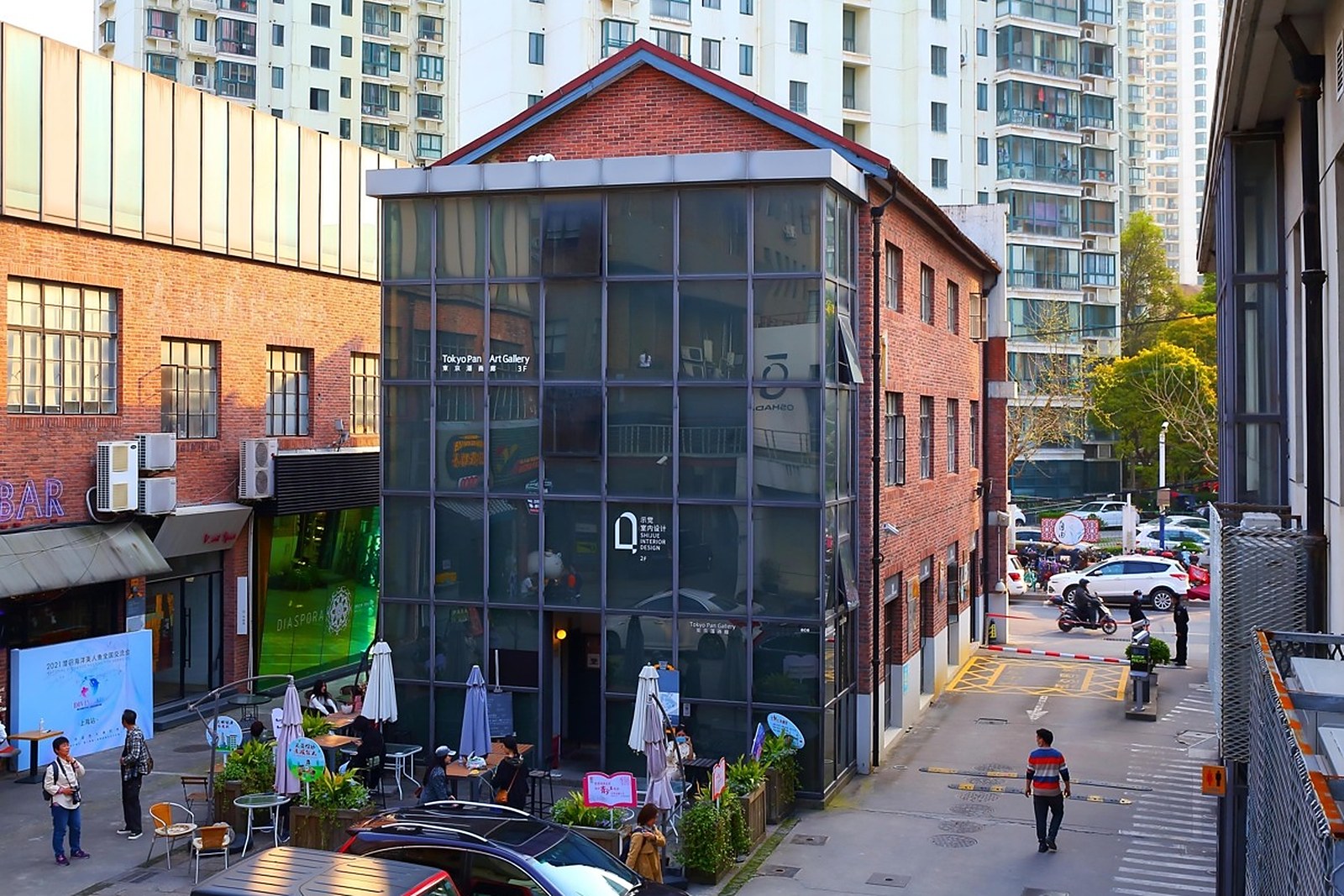
Call it honestly: entry to the grounds is free, and most of the galleries are free too — the exceptions are the occasional ticketed shows and the privately run exhibition halls, whose fees rotate with their programmes (worth confirming the details for which exhibitions currently charge). 江宁路站 Jiāngníng Lù Zhàn Jiangning Road station on Metro Line 13 puts you within a walk of the gate, and 中潭路站 Zhōngtán Lù Zhàn Zhongtan Road station on Lines 3 and 4 serves it from the other side. The honest warning is curation: this is a living gallery district, not a curated museum, so shows open and close on their own schedules and some sheds sit half-empty between tenants. Weekend middays bring the crowds and the photographers; weekday afternoons leave the lanes to art students and gallery staff. Give it an hour and a half to two hours, longer if you settle into a café.
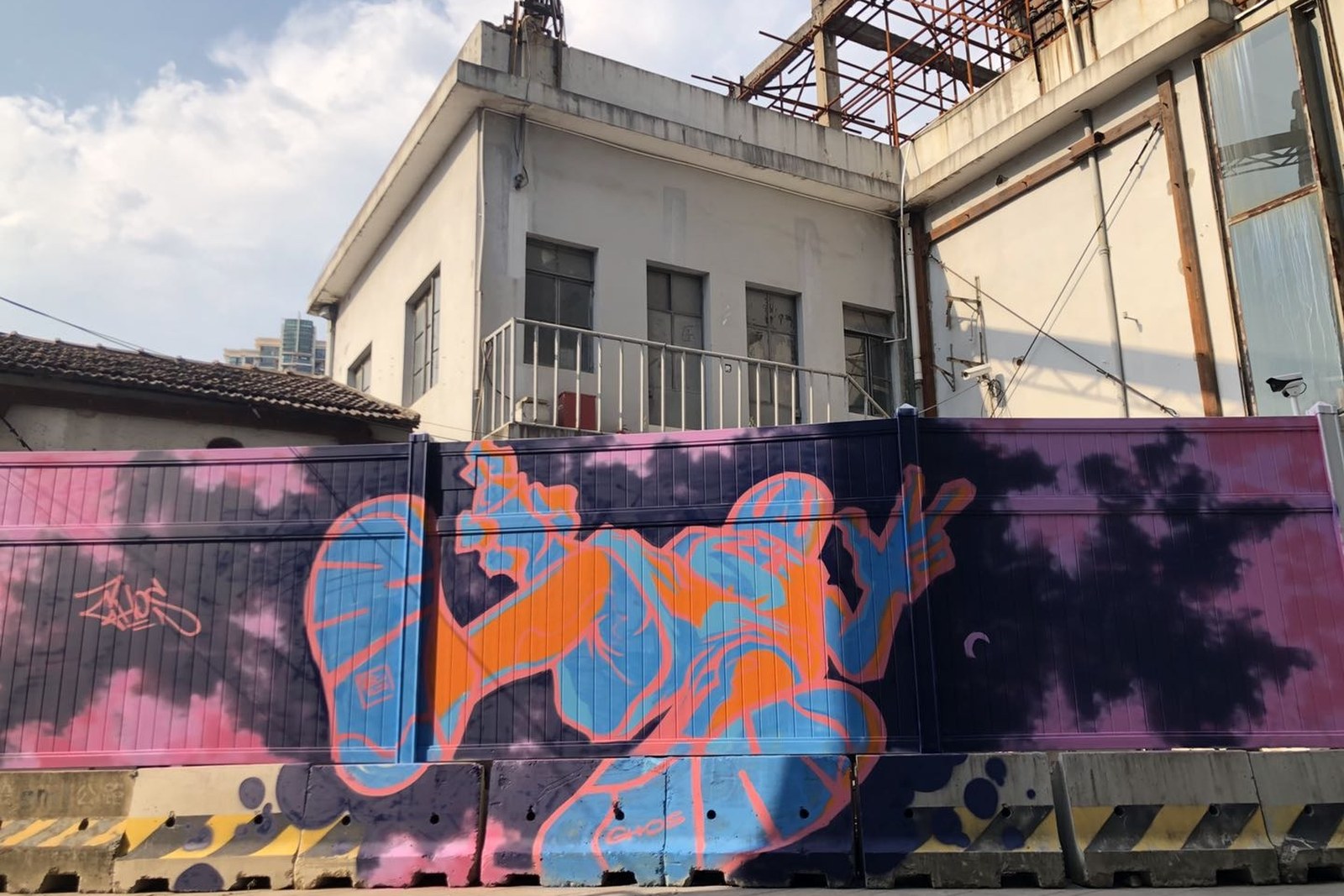
The honest star is the graffiti wall along 莫干山路 Mògànshān Lù Moganshan Road itself — a long, continuously repainted stretch of street art that functions as the district’s unofficial noticeboard, changing month by month and photographed more than anything hung inside. What gets oversold is the “major galleries” framing: visitors expecting a Louvre of Chinese contemporary art find commercial galleries of uneven ambition, with famous names holding space alongside empty rooms (worth confirming the details for which shows are on during your visit). What repays the effort is the fabric of the place: the saw-tooth rooflines, the mills’ brick and timber bones showing through the white-cube paint, the sculptures lodged in courtyards, and the views over the creek that remind you what the machines here once fed. Come for the layering of the place: graffiti, then mill, then the galleries inside the bones.
The self-aware postscript: I was photographing a fresh piece of spray work one weekday afternoon when the artist came out of a gallery doorway for a smoke. “The wall gets painted over every few weeks,” she said, flicking ash toward the bricks, “so nobody’s work lasts — but everybody’s work gets seen, and that is worth more than lasting in this city”. That is the visit in miniature. From the far end of the lane, the painted wall runs downhill toward the gate with the old mill roofs rising behind it, the one composition that explains the district in a single frame. M50 M50 suits whoever treats it as a free afternoon of street art, galleries and industrial architecture first and a shopping trip for art second, and disappoints anyone expecting a ticketed attraction with a fixed collection and a map kiosk.
Nearly everything else on this Putuo list lies within a short walk or ride along the creek: the old mill halls of 上海纺织博物馆 Shànghǎi Fǎngzhī Bówùguǎn the Shanghai Textile Museum sit a short stroll east along 澳门路 Àomén Lù Aomen Road, the jade halls of 玉佛寺 Yùfó Sì Jade Buddha Temple wait a short ride east near 安远路 Ānyuǎn Lù Anyuan Road, the lake and boating lawns of 长风公园 Chángfēng Gōngyuán Changfeng Park open in the district’s west, and the Yuan-dynasty hall of 真如寺 Zhēnrú Sì Zhenru Temple waits in the north-west at 真如古镇 Zhēnrú Gǔzhèn Zhenru Old Town — all inside the same 普陀区 Pǔtuó Qū Putuo District that this repainted mill quarter has made the city’s contemporary-art doorstep.
Practicalities
- Rating: ★★★★☆ — Shanghai’s original artist quarter, free to enter and full of street art and working galleries; go on a weekday afternoon and take the shows as they come.
- Tickets: Free entry to the grounds and most galleries; selected exhibitions charge (worth confirming the details for which shows currently have fees).
- Address: M50创意园 M50 Creative Park, 莫干山路 Mògànshān Lù Moganshan Road 50, 普陀区 Pǔtuó Qū Putuo District, Shanghai — within walking distance of Jiangning Road station on Metro Line 13, or Zhongtan Road station on Lines 3 and 4.
- Time needed: An hour and a half to two hours for the lanes, graffiti wall and a handful of galleries; half a day for unhurried gallery-hopping.
Words and Names
M50创意园 M50 Chuàngyìyuán M50 Creative Park · 信和纱厂 Xìnhé Shāchǎng the Xinhe Cotton Mill, the 1930s factory on the site · 涂鸦 túyā graffiti · 画廊 huàláng gallery · 纺织 fǎngzhī textile, spinning and weaving · 厂房 chǎngfáng factory building · 苏州河 Sūzhōu Hé Suzhou Creek · 莫干山路 Mògànshān Lù Moganshan Road · 中潭路站 Zhōngtán Lù Zhàn Zhongtan Road station · 普陀区 Pǔtuó Qū Putuo District
flowcloud would say that M50创意园 M50 Creative Park is a mill that outlived its industry by changing cargo — built in the 1930s as 信和纱厂 Xìnhé Shāchǎng the Xinhe Cotton Mill on the 苏州河 Sūzhōu Hé Suzhou Creek bank, and colonised by artists from around 2000 until its sheds at 莫干山路 Mògànshān Lù Moganshan Road 50 held the city’s most famous graffiti wall and one of China’s first contemporary art compounds (worth confirming the details for which exhibitions currently charge admission) — and that the honest move is a weekday-afternoon walk that starts at the street-art wall and works inward through the mill bones, because the blue-chip-gallery expectation is the poster half and the repainted factory with its changing shows is the real half, and the district repays whoever returns often enough to watch the wall repaint itself. All checked October 2026.
Getting there: Metro Line 13 to 江宁路 Jiāngníng Lù Jiangning Road station, exit 1, then a walk north-west into 莫干山路 Mògānshān Lù Moganshan Road, where the factory gate at 50 marks the gallery rows (worth confirming the details for which galleries close on Mondays); the graffiti wall starts along the lane fence. All checked October 2026.