
Salt from the Lancang: The Yanjing Salt Wells
澜沧江畔千年盐,木架田畴叠彩笺 Láncāng jiāng pàn qiān nián yán, mùjià tiánchóu dié cǎi jiān – A thousand years of salt by the Lancang; wooden frames stack the fields like painted pages
盐井古盐田 Yánjǐng Gǔ Yántián The ancient salt wells of Yanjing, in Mangkang county along the Lancang River in 西藏自治区昌都市 Xīzàng Zìzhìqū Chāngdū Shì Chamdo, hold what may be the plateau’s oldest working industry: brine springs beside the river that local families have channelled into thousands of terraced evaporation pans, a craft said to reach back more than a thousand years along the old tea-horse trade route. The Tibetan name, 察卡洛 chákäluò, means simply “salt well” – the place where the river gives salt.
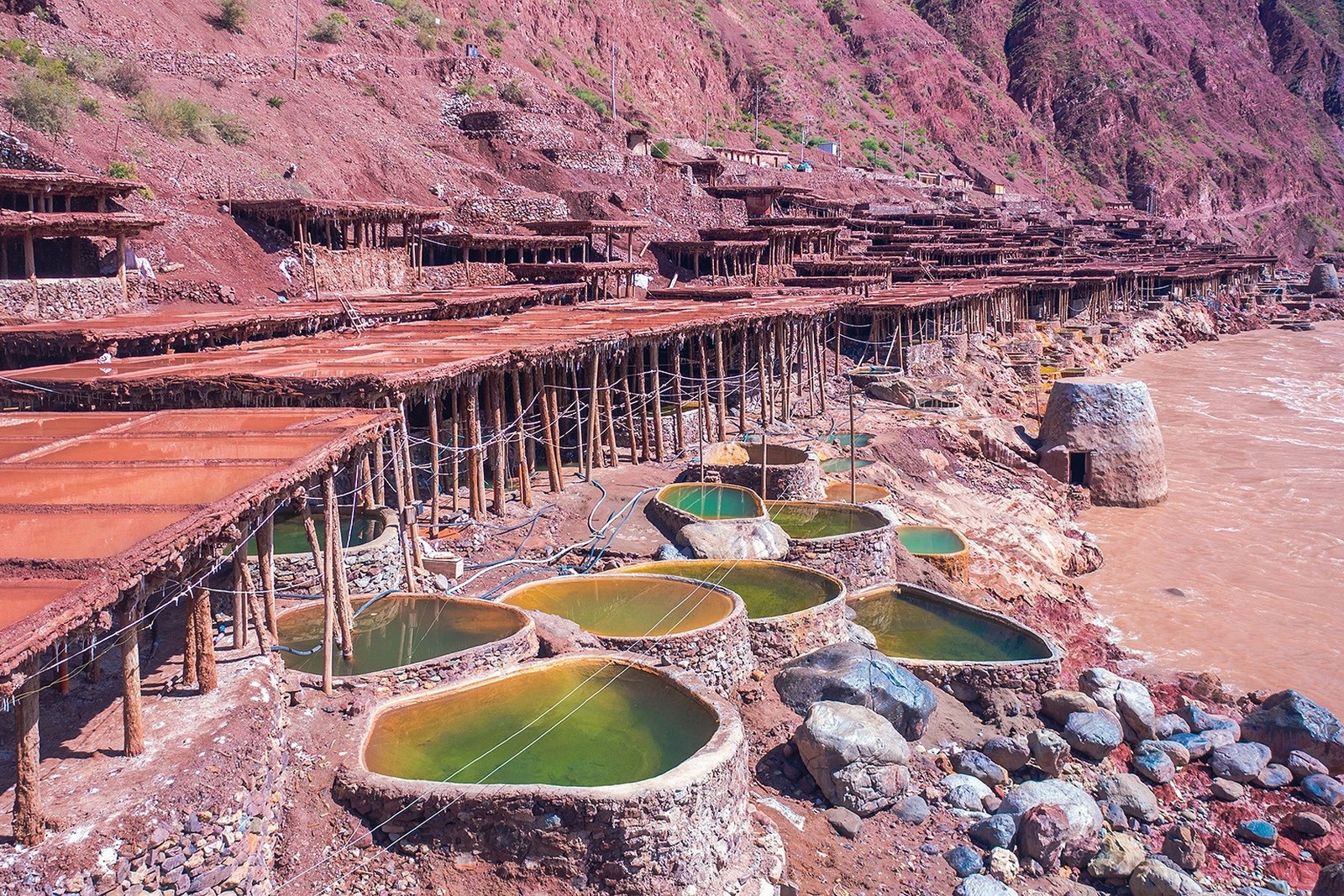
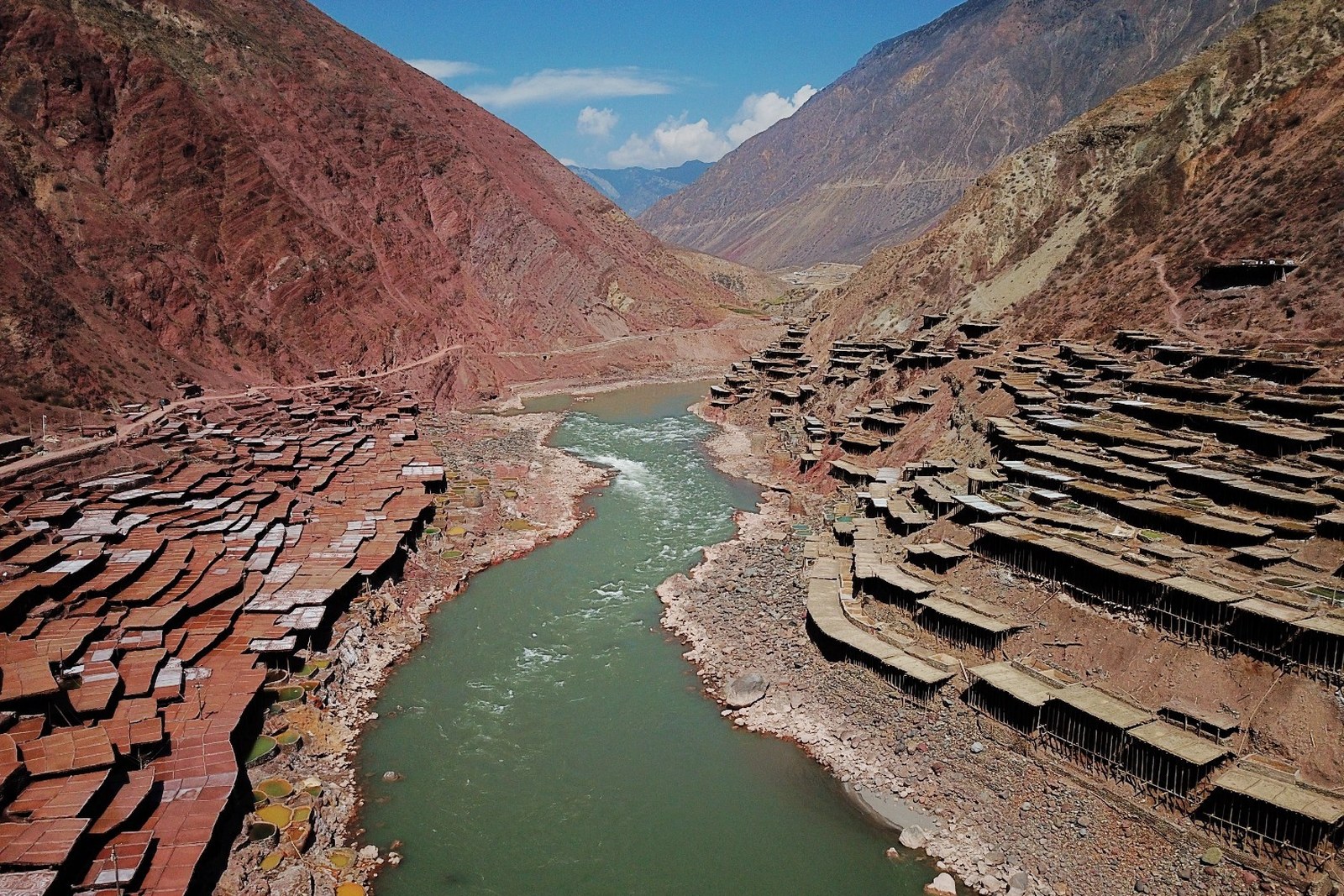
The craft is visible in everything. Narrow wooden frames carry squares of hardened mud beside the emerald river, brine is hauled from the wells and poured pan by pan, and the sun and wind do the rest: in days the pans crust over with coarse white salt, raked and stacked in woven baskets. Some three hundred households work more than four thousand pans, and the two banks differ – the west’s pans give the rose-tinted “flower salt”, the east’s the pure white table salt, a split the soil itself makes.
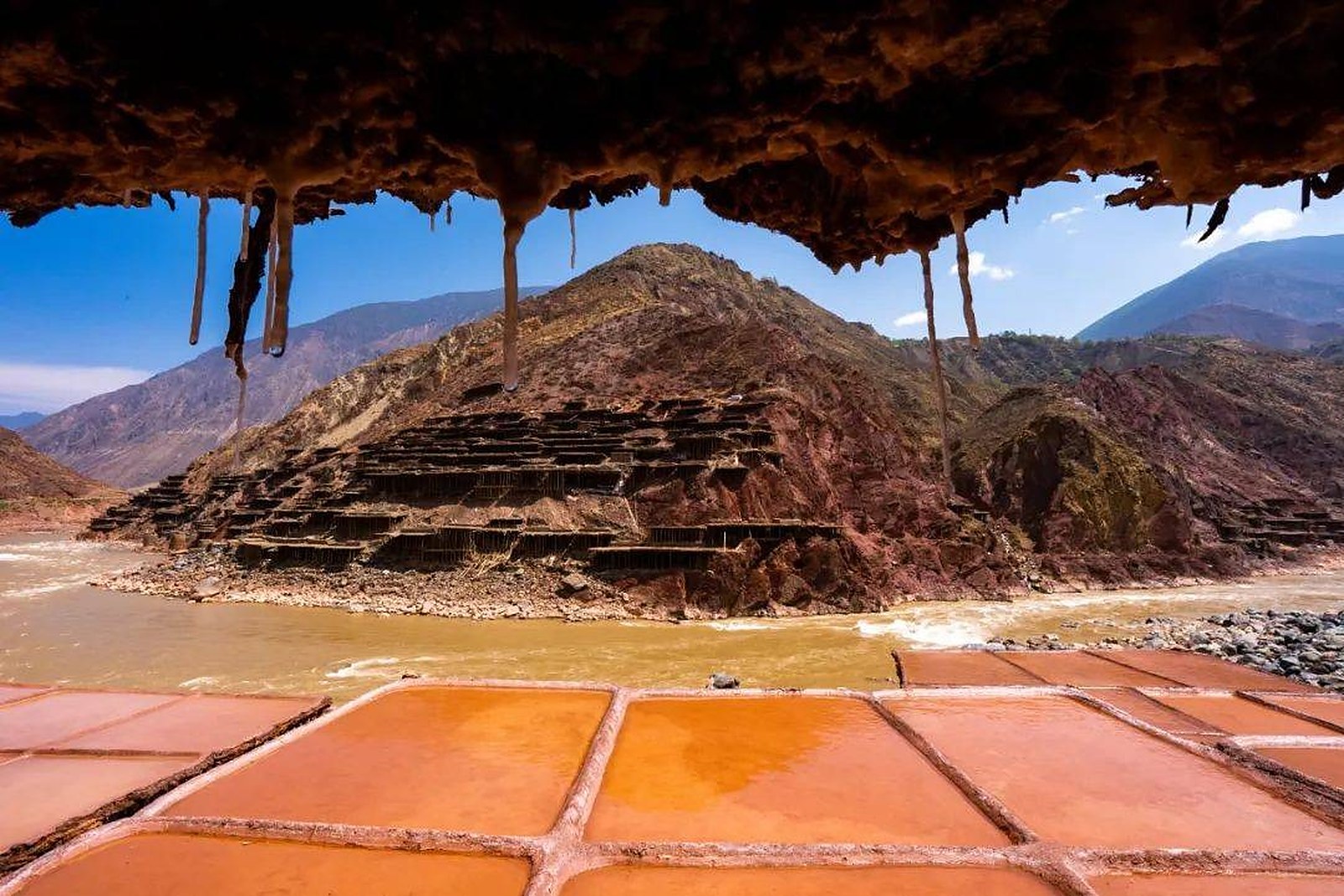
The season writes the scene. Winter and spring lower the river and expose the wells at their most photogenic, terraces of copper-red pans climbing the gorge walls; summer floods hide the lower rows and the work moves up the banks. Between the terraces run cable bridges and stone stairs, and above them the hamlet of Naxi and Tibetan families keeps the lanes, the prayer flags and the small shrine that watches over the salt trade.
Yanjing is more than its salt. The valley floor sits barely above two thousand meters, warm enough for vineyards planted by nineteenth-century missionaries, and the small Catholic church up the road – the only one in Xizang – rings a bell that belongs to no other plateau town. Salt, wine and the old caravan road meet in one valley: the pans below, the vines above, and the G214 winding north toward Mangkang through a gorge that carries the whole history in its cliffs.
Practicalities
- The salt terraces lie in Yanjing township, about 120 kilometers south of the Mangkang county seat on the G214 toward Deqen – roughly two hours by car from either direction.
- Winter and spring lower the river and expose the wells at their most photogenic; summer brings green vines but a fuller river.
- The terraces are working family property – view from the marked walks and ask before stepping onto the pans.
- Pair the visit with the village church and the vineyard lanes above the town in the same half-day.
Words and Names
盐井古盐田 Yánjǐng Gǔ Yántián the ancient salt terraces of Yanjing; 察卡洛 chákäluò “salt well”, the Tibetan name of the place; 桃花盐 táohuā yán the rose-tinted “flower salt” of the west bank; 卤水 lǔshuǐ the brine drawn from the wells; 澜沧江 Láncāng Jiāng the Lancang, upper Mekong, the river that feeds the wells; 茶马古道 chámǎ gǔdào the tea-horse road that carried the salt north. Beyond the salt pans, the same 西藏自治区昌都市 Xīzàng Zìzhìqū Chāngdū Shì Chamdo keeps more places worth the detour: 强巴林寺 Qiángbālín Sì the gold-roofed Gelug monastery above two rivers, 卡若遗址 Kǎruò Yízhǐ the Neolithic village site south of town, 孜珠寺 Zīzhū Sì the Bon monastery on its six peaks, or 然乌湖 Ránwū Hú the glacier lake on the G318 – four more doors into the same Chamdo. Once the terraces are behind you, our Chamdo food map fills the table.
flowcloud would say Yanjing is Chamdo’s oldest factory tour: three hundred families, four thousand pans, and a river that has paid wages in salt for a millennium – taste the flower salt and the trade route makes sense. All checked November 2026.
Getting there: The salt terraces lie in Yanjing township, about 120 kilometers south of Mangkang county seat on the G214 toward Deqen – roughly two hours by car from either direction. Winter and spring lower the river and expose the wells at their most photogenic. All checked November 2026.