
Mangshan National Forest Park: Beijing’s Largest National Forest Park, the Thousand-Step Stone Stair and the Smiling Maitreya above the Shisanling Reservoir in Changping District, Beijing
弥勒笑看千级路,松风送客上蟒山。Mílè xiào kàn qiān jí lù, sōngfēng sòng kè shàng Mǎngshān – The Maitreya smiles upon the thousand-step way; the pine wind walks the climber up Mangshan.
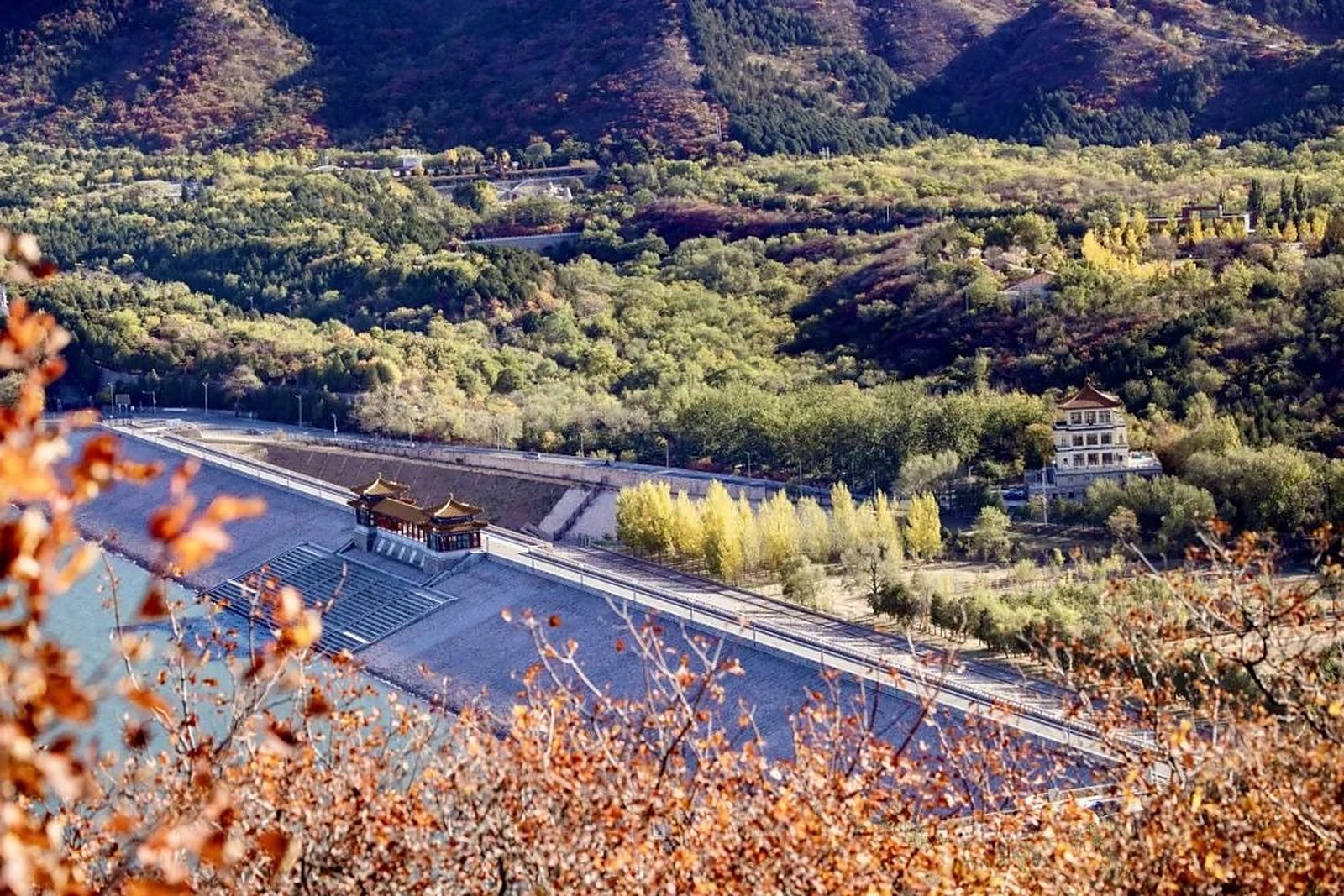
蟒山国家森林公园 Mǎngshān Guójiā Sēnlín Gōngyuán Mangshan National Forest Park is not a hill with a path — it is, plainly put, Beijing’s largest national forest park pressed against the water: a reported six-odd square kilometres of wooded hill on the east bank of the 十三陵水库 Shísānlíng Shuǐkù Shisanling Reservoir in 昌平区 Chāngpíng Qū Changping District, the reservoir itself a 1958 civic feat dug by mass volunteer labour. The hill’s python-like silhouette above the water gives the name — 蟒 mǎng means python — and the cover is largely hand-planted 油松 yóusōng Chinese pine. The visit is vertical: a stone 登山石阶 dēngshān shíjiē climbing stair — said to run 1299 steps — lifts you from the gate through pine shade toward the ridge, some 659 metres up at the reported summit. Two landmarks frame the climb: at the hillfoot, a giant seated 弥勒佛 Mílè Fó Maitreya statue carved in stone, reported to stand close to ten metres; and on the ridge, the 天池 Tiānchí heaven-pool — the upper pond of the 十三陵抽水蓄能电站 Shísānlíng chōushuǐ xùnéng diànzhàn pumped-storage power station — a sheet of water parked on the mountaintop. What you actually visit is one honest workout with a reservoir view paying the fare, not a sightseeing drive-through.
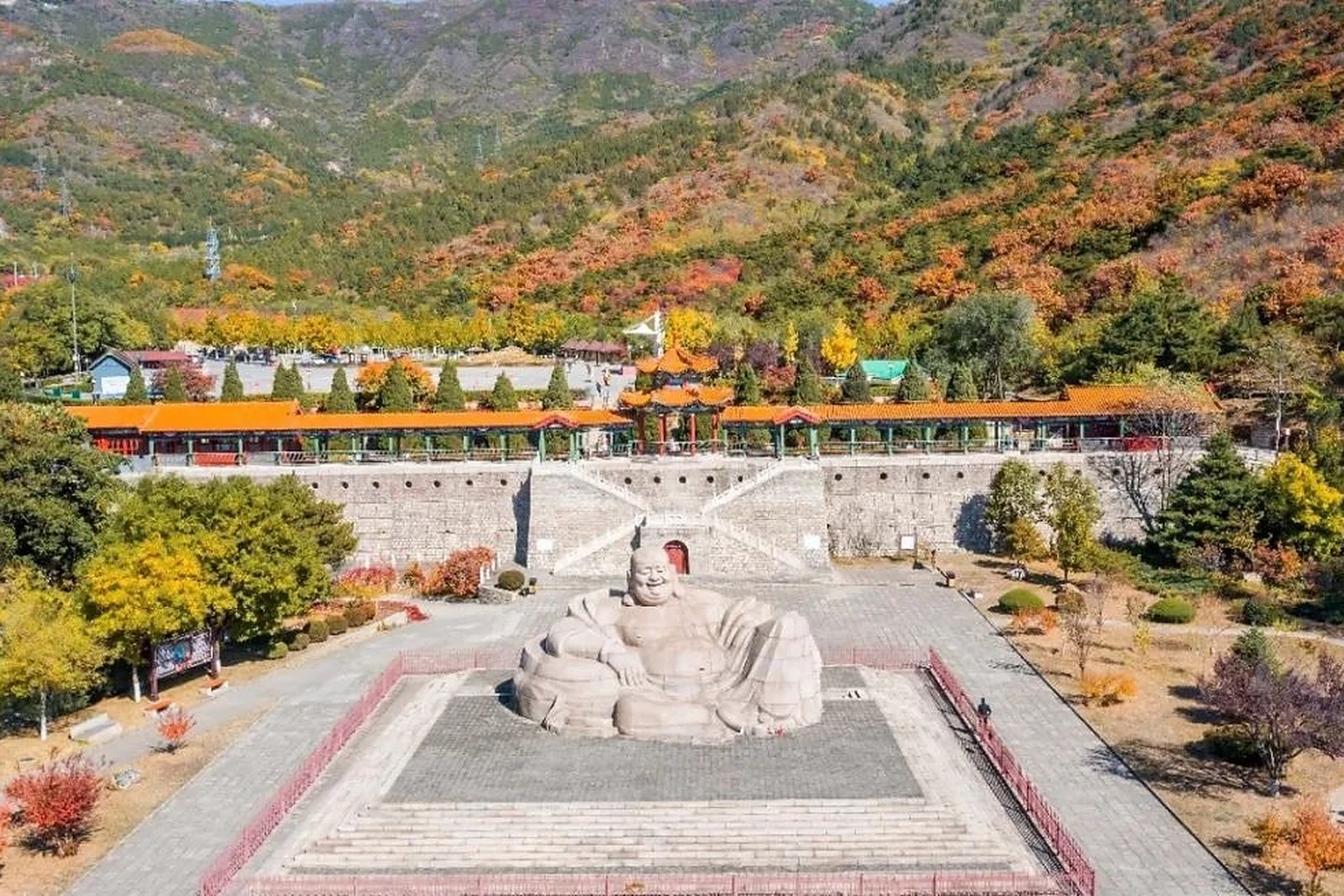
Call it honestly: the stair is the whole visit and it is steeper than its postcard — pace it in stages, mind the downhill, and treat the lower pine terraces as the honest destination if steps are trouble. Admission has run at a modest fee reported in the low tens of yuan, with daylight hours roughly 8:00 to 17:00 in season and thinner services in winter (worth confirming the details for current prices, hours and any reservation rules). Spring brings mountain peach and apricot up the slopes, summer gives the coolest shade in the city’s heat, and autumn is the local brag — red-gold slopes over a blue reservoir, the tomb hills of 明十三陵 Míng Shísān Líng beyond. Weekends bring picnic crowds to the reservoir bank and queues at the stair mouth; midweek the mountain is nearly yours. Bring water and a wind layer for the ridge, and allow two to three hours for the round trip.
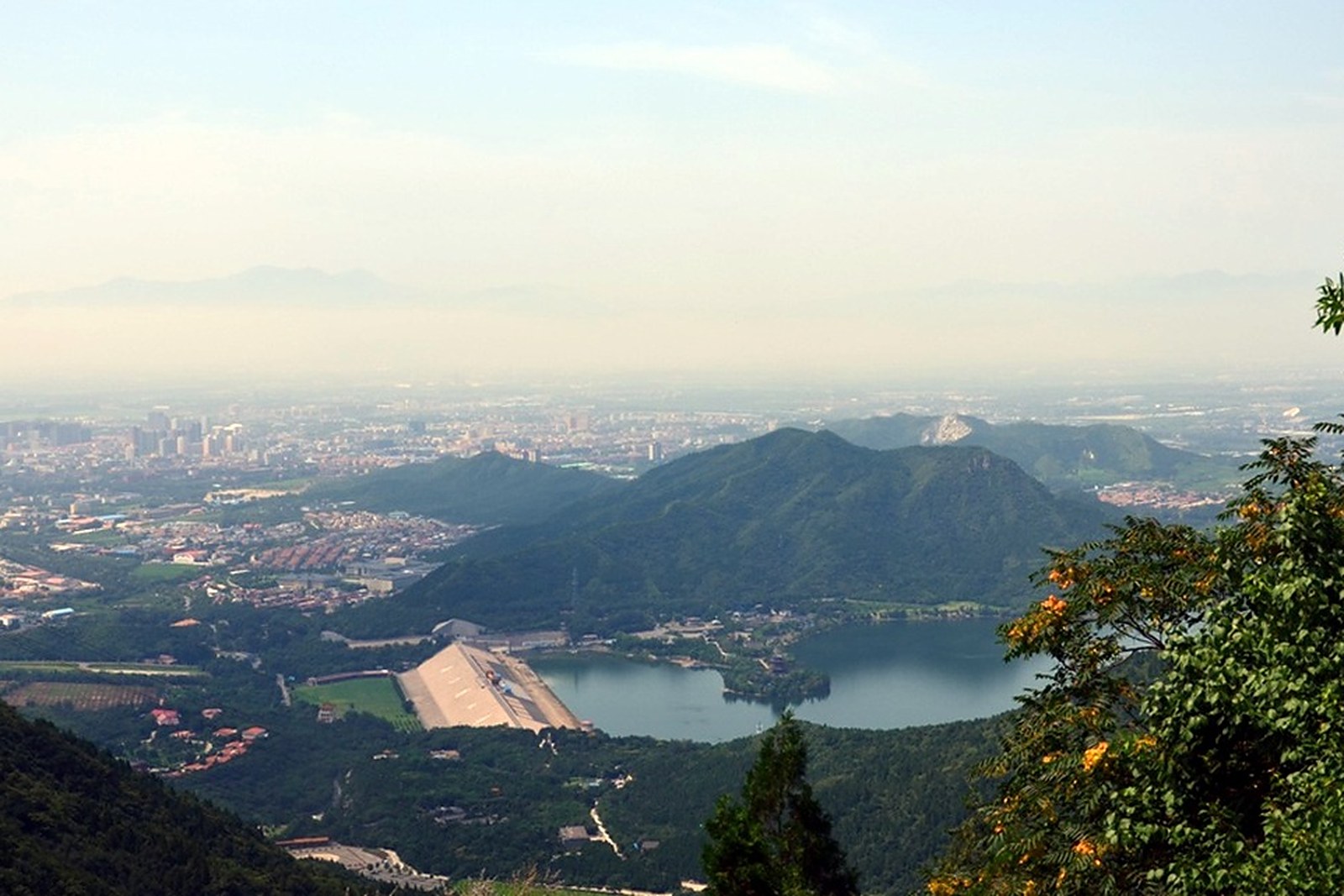
The honest star is the view from the upper terraces — the whole reservoir a hard blue comma in its green frame, the tomb valley of the Ming opening north, the city haze on the southern horizon — not the summit furniture. What gets oversold is the “forest park” label read as wilderness: this is a designed, planted, half-tamed wood on the city’s doorstep, its paths engineered and its views curated — a civic forest doing its job, and honest about it. The Maitreya earns his place in any photograph: the grin at the trailhead sets the only correct mood for the climb ahead (worth confirming the details for which upper sections are open on windy days). What repays the effort is the mountaintop water of the 天池 Tiānchí — a reservoir above a reservoir, gravity’s battery holding water that falls back down to make the valley’s electricity. Come for the layering of the place: stair, then summit, then the water both above and below.
The self-aware postscript: I met an old regular coming down the stone steps sideways, and when I asked how many times he had climbed it he said, “I stopped counting at ten thousand — the mountain counts now”. That is the visit in miniature. 蟒山国家森林公园 Mǎngshān Guójiā Sēnlín Gōngyuán suits whoever treats it as a lungful of pine and a leg test first and a viewpoint second, and exhausts anyone expecting gondolas and a cafe at the top. Everything else on this Changping list stands within a short radius: the tomb gates of 明十三陵 Míng Shísān Líng across the water, the flight line of 中国航空博物馆 Zhōngguó Hángkōng Bówùguǎn on the plain to the south-east, the frontier loop of 居庸关长城 Jūyōngguān Chángchéng in the western hills, and the stupa grove of 银山塔林 Yínshān Tǎlín in the eastern valleys — all in the same 昌平区 Chāngpíng Qū, one district holding a dynasty’s graves, a great wall, a stupa grove, an air force’s memory and a mountain of planted pines.
Practicalities
- Rating: ★★★★☆ — Beijing’s largest national forest park and the best cheap workout on this list; the thousand-step stair and the reservoir panorama outrank the summit furniture; climb it midweek, drink the view.
- Tickets: A modest gate fee reported in the low tens of yuan, with seasonal daylight hours reported roughly 8:00 to 17:00 (worth confirming the details for current prices and hours).
- Address: 蟒山国家森林公园 Mǎngshān Guójiā Sēnlín Gōngyuán, east bank of the 十三陵水库 Shísānlíng Shuǐkù, 昌平区 Chāngpíng Qū, Beijing — signed off the reservoir ring road.
- Time needed: Two to three hours for the stair round trip; half a day adding the reservoir bank and the Buddha terrace.
Words and Names
蟒山国家森林公园 Mǎngshān Guójiā Sēnlín Gōngyuán Mangshan National Forest Park · Beijing’s largest national forest park 蟒山 Mǎngshān Python Hill · the ridge whose long silhouette named the park 十三陵水库 Shísānlíng Shuǐkù Shisanling Reservoir · the 1958 mass-labour reservoir at the hill’s foot 弥勒佛 Mílè Fó Maitreya Buddha · the smiling stone colossus at the trailhead 登山石阶 dēngshān shíjiē climbing stone stair · the reported 1299 steps through the pines 油松 yóusōng Chinese pine · the hand-planted cover of the hill 天池 Tiānchí heaven-pool · the mountaintop pond above the valley 十三陵抽水蓄能电站 Shísānlíng chōushuǐ xùnéng diànzhàn Shisanling pumped-storage power station · the gravity battery that keeps the 天池 Tiānchí full
flowcloud would say that 蟒山国家森林公园 Mǎngshān Guójiā Sēnlín Gōngyuán is a staircase with a park attached — a reported six-odd square kilometres of hand-planted 油松 yóusōng pine on the east bank of the 1958 十三陵水库 Shísānlíng Shuǐkù, a stone stair said to run 1299 steps past a near-ten-metre 弥勒佛 Mílè Fó grin, and a 天池 Tiānchí power-station pond parked near the 659-metre summit — and that the honest move is a midweek climb with water and a wind layer, because tickets, hours and windy-day closures all shift (worth confirming the details), the largest-forest-park title is the poster half and the reservoir turning blue under your feet is the real half, and the mountain repays whoever lets the steps set the pace. All checked October 2026.
Getting there: Ride the 昌平线 Chāngpíng xiàn Changping Line out to 昌平东关 Chāngpíng Dōngguān station, then a taxi or local 昌 Chāng-numbered bus covers the short hop east across the 十三陵水库 Shísānlíng Shuǐkù Ming Tombs Reservoir toward the 蟒山 Mǎngshān park gate; self-drive leaves the 京藏高速 Jīngzàng gāosù G6 at the 昌平 Chāngpíng exits and follows the reservoir shore roads to the hillside lots; the climb itself is on foot up forest steps to the great seated 弥勒 Mílè Buddha statue and the ridge viewpoints over the water (worth confirming the details for current bus numbers, park opening hours and hill-lot parking). All checked October 2026.