
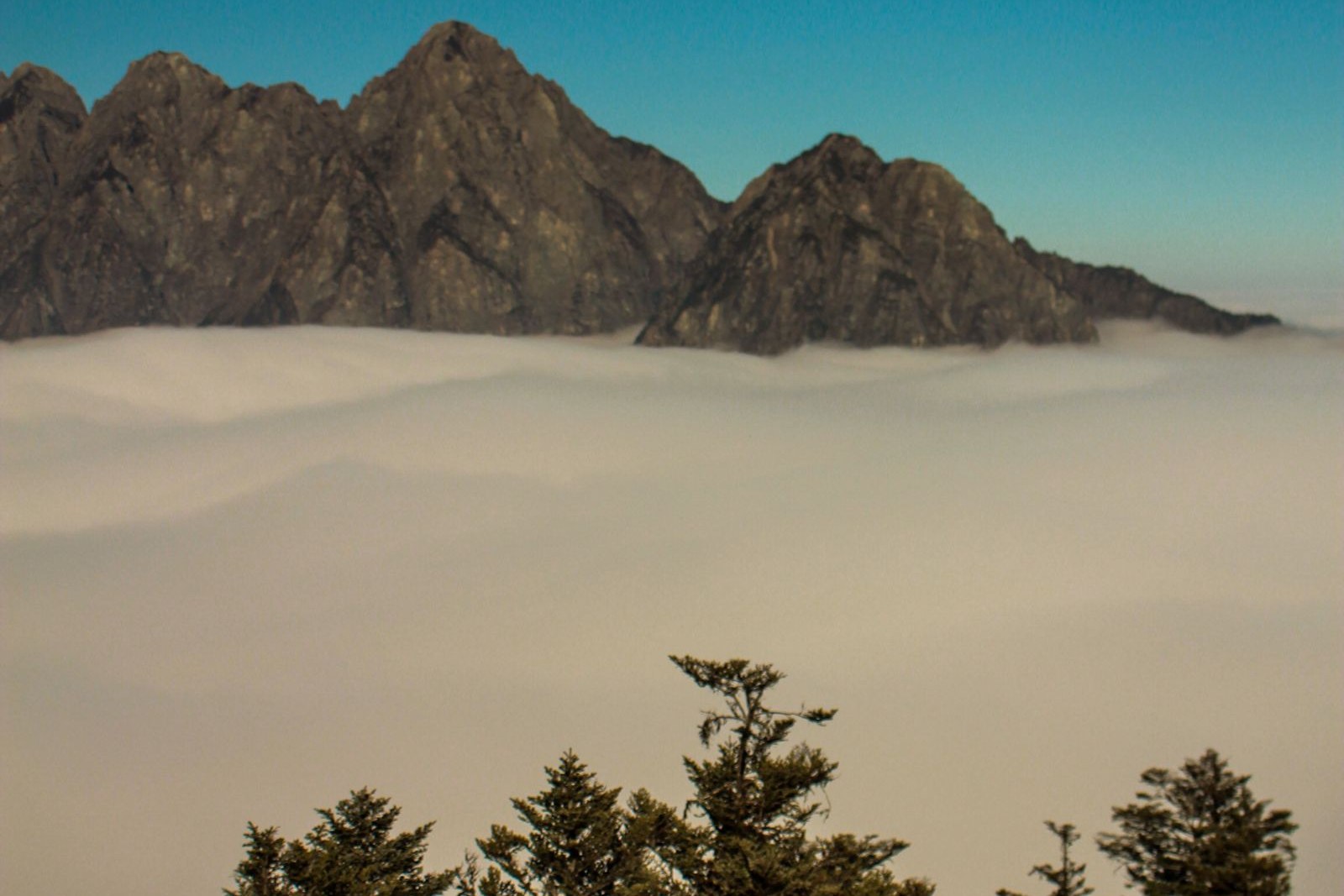
The cloud arrives from the south, over the Guangdong border, and it arrives fast. One moment you are standing on a granite platform at 1,600 metres looking at a valley; the next the valley is a white floor and the peaks are islands in it, and you are standing on one of the islands. It takes about two minutes. Then the wind shifts, the whole thing slides away east, and the view is back. This happens four or five times an hour on a good morning at 天台山 Tiāntái Shān, one of the four scenic zones of 莽山国家森林公园 Mǎngshān Guójiā Sēnlín Gōngyuán, and it is why people are willing to get up at four and drive two hours to be here.
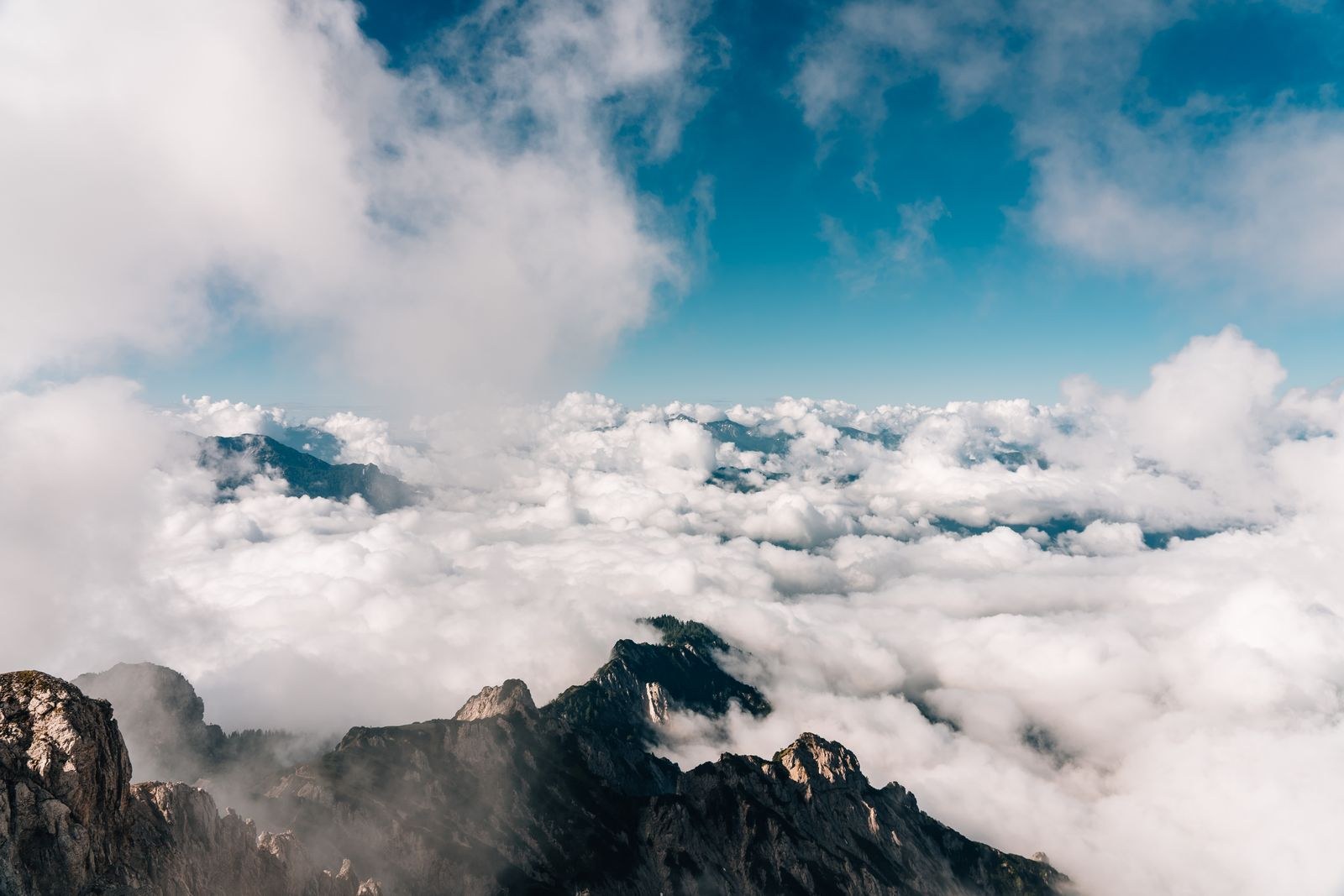
The park covers 20,000 hectares of the northern 南岭 Nánlǐng range in 宜章县 Yízhāng Xiàn, on the border with Guangdong, and its central claim — 中国原始生态第一山, the best-preserved primeval forest at this latitude in China — is based on the fact that the core has never been cut. It is often called the second Xishuangbanna and the 南国天然树木园 nánguó tiānrán shùmùyuán, the natural arboretum of the south, and the species list backs it up: more than two hundred kinds of tree, a large population of 红豆杉 hóngdòushān, the Chinese yew, and the 莽山烙铁头蛇 Mǎngshān làotiětóu shé, an enormous pit viper unknown to science until 1989. There are over 150 summits above a thousand metres. The highest, 猛坑石 Měngkēngshí, also called 湘粤峰 Xiāng-Yuè Fēng — the Hunan-Guangdong peak — tops out at 1,902 metres and is the tallest point in southern Hunan.
The park is divided into four zones, and they are different enough that people plan two days. 将军寨 Jiāngjūnzhài, also written 鬼子寨 Guǐzizhài, is the classic one: a deep forest gorge with a tall waterfall, gnarled pines, and a rock formation shaped like a general. 天台山 Tiāntái Shān is the cloud-sea viewpoint, three granite peaks linked by a ridge path, with the 中南第一险 Zhōngnán dì yī xiǎn — “the most dangerous spot in central-south China” — a vertiginous section of cliff walk that is safe and does not feel it. 猴王寨 Hóuwángzhài has monkeys, predictably, and a chain of pools and cascades. 湘粤峰 is for the summit and the sunrise, and requires an early start and a head for heights on the access road.
Practicalities
Tickets. The main park ticket with the internal shuttle bus is ¥115 for one day and ¥132 for two, with a 50 percent discount for the over-65s and for residents of Guangdong and Hunan in the low season. The separately operated 五指峰 Wǔzhǐfēng area, reached by cable car and famous for its cliff walkways, is priced higher — around ¥277 for the entry, cable car and shuttle combined. Private cars pay around ¥40 to enter.
Opening hours. The gates open at 08:00 and the last shuttle leaves the upper stations around 17:30. Sunrise trips, which require staying on the mountain, are arranged separately and effectively extend the day from about 05:00.
Closing day. The park does not close. Some upper sections and the cable car shut in heavy snow or high wind, and the gorge path is occasionally closed after summer storms, but the main gates are open every day of the year.
Getting there. From 郴州 Chēnzhōu, take the G4 expressway south towards 宜章 Yízhāng and then the county road up through 莽山瑶族乡 Mǎngshān Yáozú Xiāng: about two hours by car. Buses run from 郴州 to 宜章 in roughly 90 minutes, and from 宜章 a local minibus continues to the park gate. High-speed rail passengers should use 郴州西站.
flowcloud would say that Mangshan is the rare Chinese scenic area where the marketing claim and the actual experience line up, mostly because the forest was protected by being difficult to reach for four hundred years.
Getting there: the drive from 郴州 Chēnzhōu takes about two hours and the last forty minutes are steep and twisting, so avoid arriving after dark. If you want the cloud sea, stay overnight on the mountain and be at 天台山 by six.