
The Sea’s Own Museum: National Maritime Museum
白帆卧波藏沧海,一楼鲸影万年游 Báifān wò bō cáng cānghǎi, yī lóu jīng yǐng wànnián yóu – White sails rest on the waves and hold the deep sea inside; one hall of whale shadows swims ten thousand years
国家海洋博物馆 Guójiā Hǎiyáng Bówùguǎn spreads its tentacle-like wings over a lagoon in the Sino-Singapore Eco-city of 天津市滨海新区 Tiānjīn Shì Bīnhǎi Xīn Qū Binhai New Area – gallery floors run from fossil seas and model junks to a full whale hall and polar station gear, and the building itself, all white sails and tidal curves, gives the harbor front its modern landmark. It is the museum Tianjin built to answer the question of what the sea left behind.
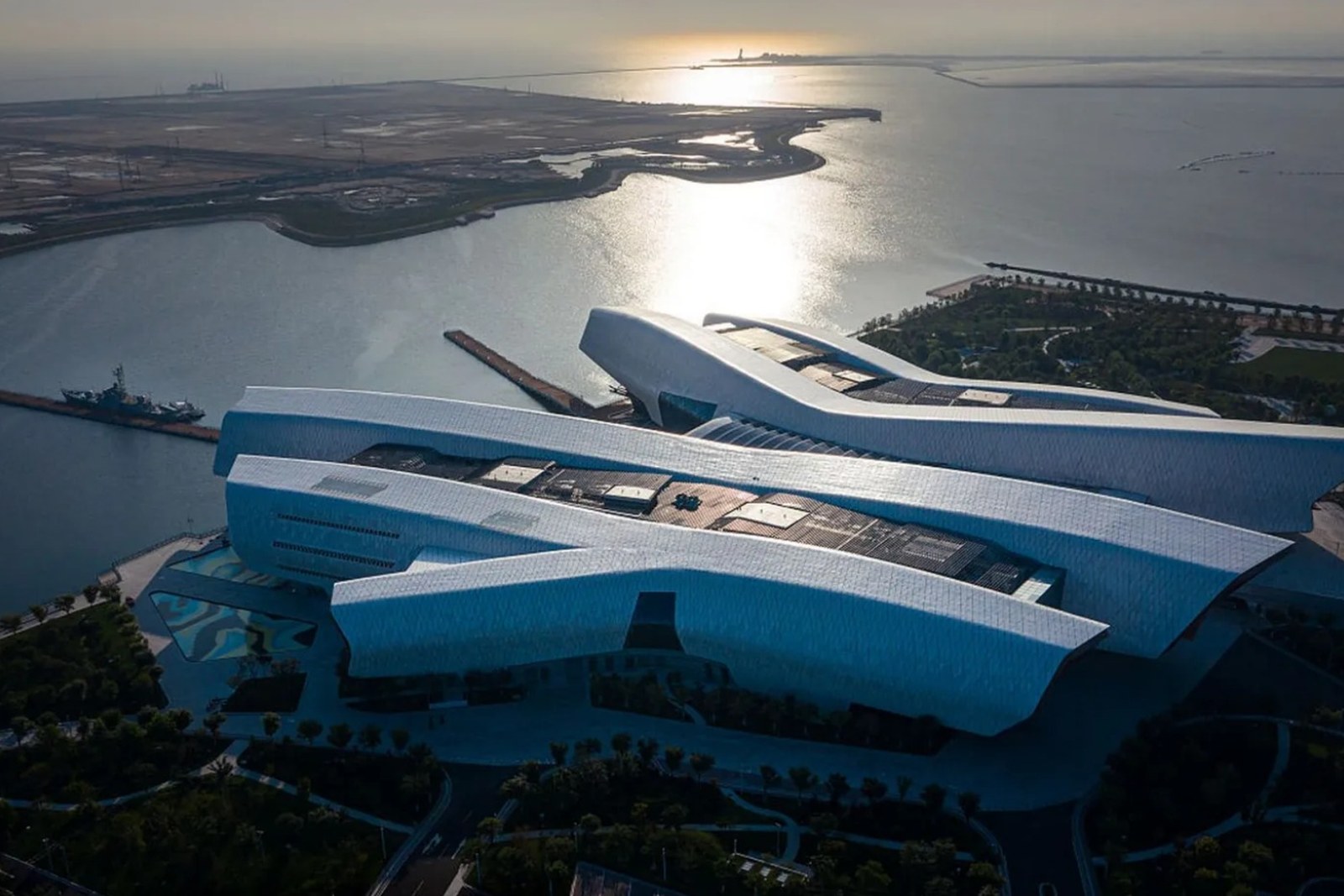
The architecture is the overture. From the lagoon side the roofline reads as a fleet under sail; from the bridge it turns into a wave caught mid-curl, its white panels sliding over glass. The lobby ramps climb through the floors like a hull ribcage, and every gallery window frames the same Bohai horizon the exhibits are about.
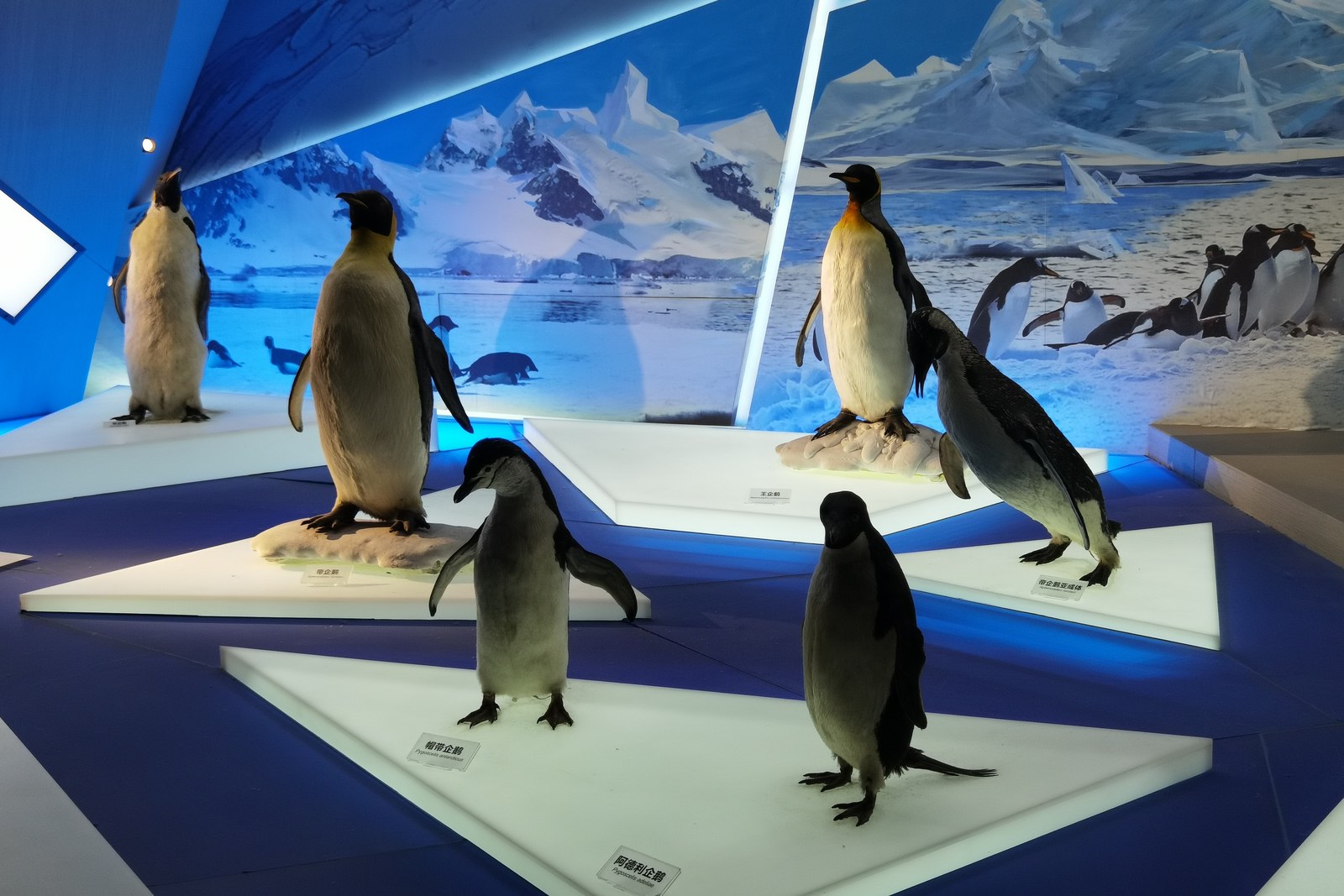
The Today’s Ocean hall is the crowd favorite. A full whale pod hangs from the ceiling in dive formation, penguins stand on ice-flake pedestals, and the touch-screen trench maps let you sink a camera to the hadal depths. Children run the loop twice; adults read the bycatch panels and slow down instead.
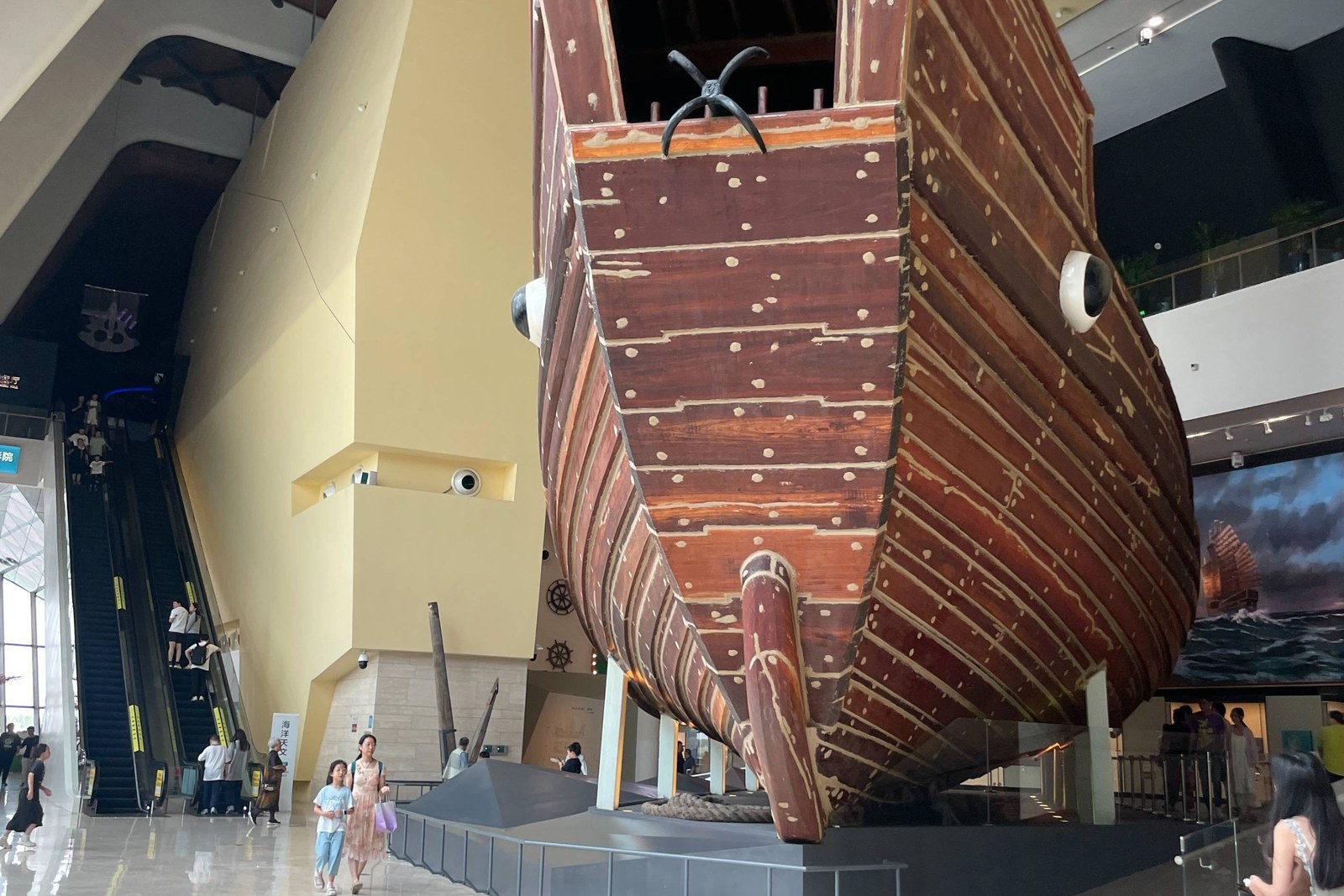
The historical floors carry the collection’s depth. Junk models from the Grand Canal era share cases with compasses and sea charts; the maritime-silk-road gallery maps the ports the coastal towns once ran; and the polar hall’s expedition gear – parkas, sledges, an icebreaker wheelhouse simulator – ties the museum back to China’s polar program. The temporary-exhibit floor rotates; check the board when you enter.
Practicalities
- The museum is free with an advance reservation – book the morning slot and the halls stay walkable.
- Closed Mondays; the whale hall draws the biggest crowds from eleven to two.
- The lagoon-side walk between the parking lots and the gate is half the photo value – budget ten minutes.
- The cafe overlooks the sails’ roofline; the best single viewpoint is the third-floor terrace.
Words and Names
国家海洋博物馆 Guójiā Hǎiyáng Bówùguǎn the National Maritime Museum; 生态城 Shēngtài Chéng the Eco-city, the Sino-Singapore district hosting it; 鲸 jīng whale; 帆船 fānchuán sailing junk; 北极 Běijí the polar north of the expedition hall. Beyond the halls, the same 天津市滨海新区 Tiānjīn Shì Bīnhǎi Xīn Qū Binhai New Area keeps more places worth the detour: 大沽口炮台遗址 Dàgǔ Kǒu Pàotái Yízhǐ the river-mouth fort ruins, 泰达航母主题公园 Tàidá Hángmǔ Zhǔtí Gōngyuán the aircraft carrier park, 东疆湾沙滩 Dōngjiāng Wān Shātān the man-made beach, or 滨海妈祖文化园 Bīnhǎi Māzǔ Wénhuà Yuán the sea-goddess park on the reclaimed coast – four more doors into the same Binhai New Area. After the whale hall, our Binhai food map fills the table.
flowcloud would say the maritime museum is a sea kept indoors: sails for a roof, a pod of whales for neighbors, and ten thousand years of coastline filed by floor. All checked November 2026.
Getting there: The museum fronts the lagoon in the Sino-Singapore Eco-city – drive the central boulevard to the free-booking gate or transit to the Eco-city stops and walk the park path; closed Mondays, so time the halls accordingly. All checked November 2026.