
高山仰止,景行行止。Gāoshān yǎngzhǐ, jǐngxíng xíngzhǐ – We look up to a high mountain; we follow a great road.
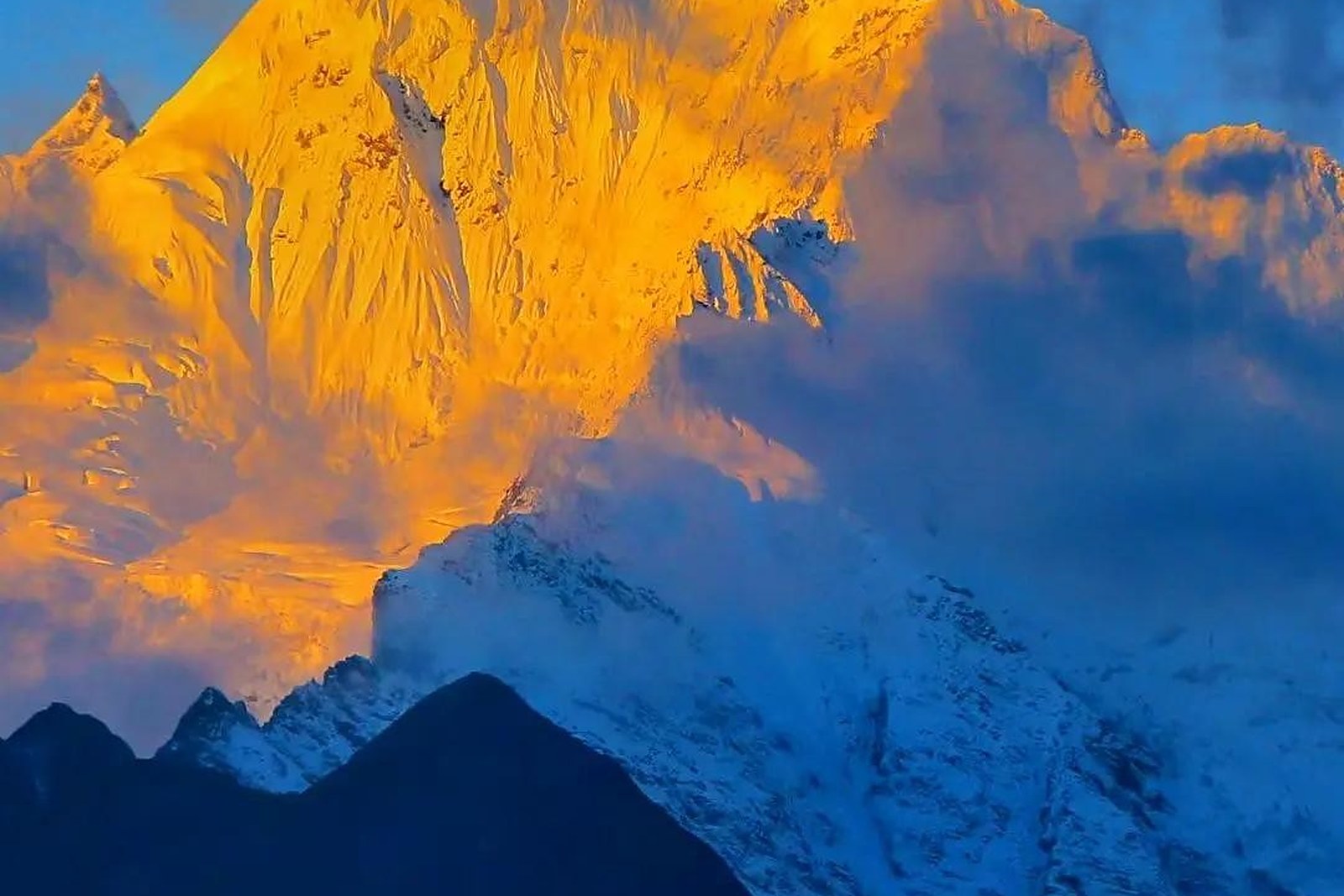
梅里雪山 Méilǐ Xuěshān Meili Snow Mountain rises along the 德钦县 Déqīn Xiàn Deqin County border of northwest Yunnan, the outermost wall of the 三江并流 Sānjiāng Bìngliú Three Parallel Rivers UNESCO World Heritage landscape. Its presiding peak, 卡瓦格博 Kǎwǎgébó Kawagarbo, stands at 6,740 m and is the highest mountain in Yunnan and one of Tibetan Buddhism’s 八大神山 bā dà shénshān Eight Sacred Mountains – a peak that has never been climbed, after a 1991 expedition disaster led to a permanent climbing ban. The range is also called the 太子十三峰 Tàizǐ Shísān Fēng Thirteen Prince Peaks, a ridge of snow summits that catches the first light; Meili is a national scenic area (named 2003) and a stop on the 转山 zhuǎnshān pilgrim circuit, but its draw for travellers is the 日照金山 Rìzhào Jīnshān “golden mountains in the sun” – the moment at dawn when the snow turns molten gold.
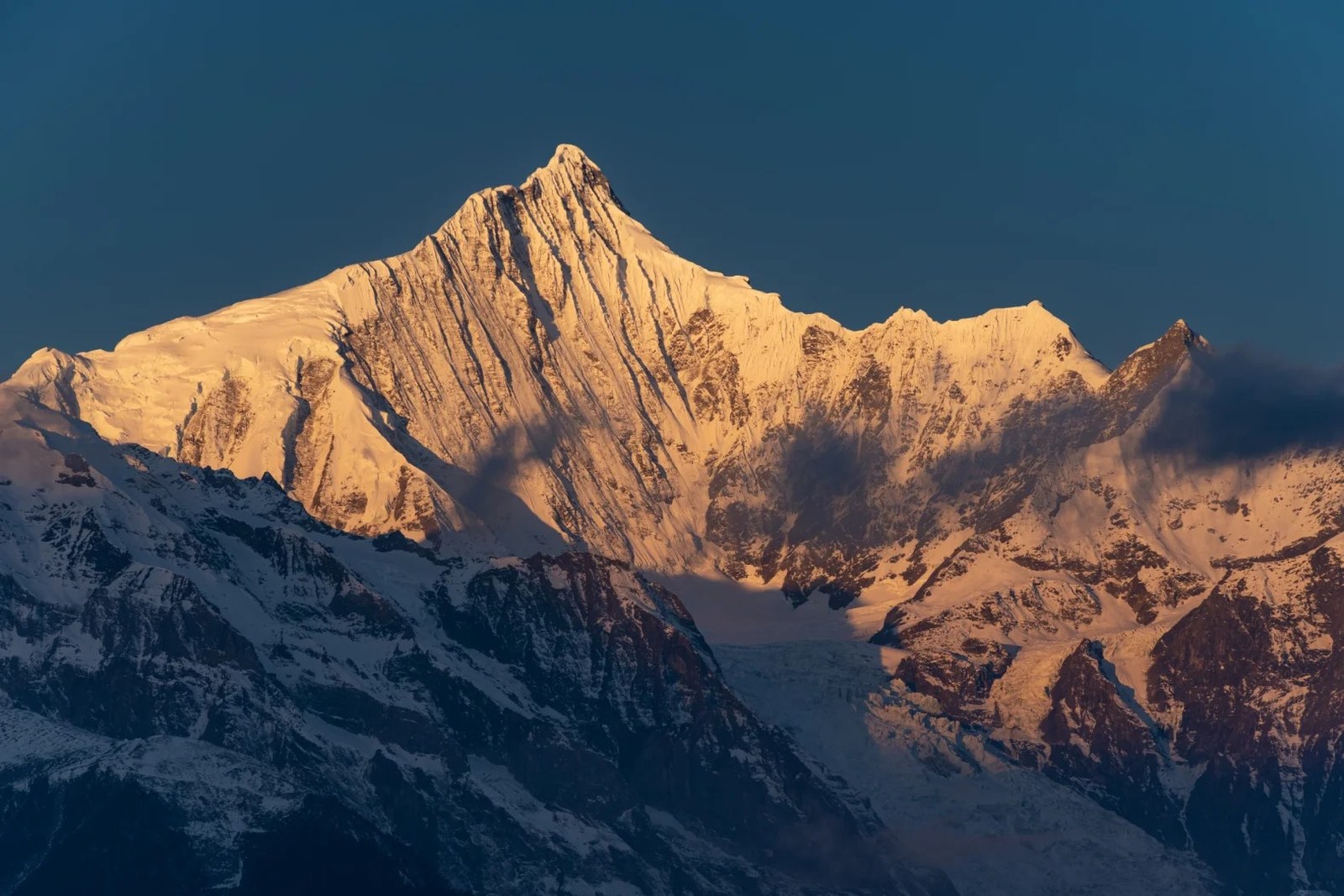
The classic viewpoint is 飞来寺 Fēilái Sì Feilai Temple, a ridge shelf at about 3,400 m opposite the main face, strung with white 佛塔 fótǎ stupas and 经幡 jīngfān prayer flags, where you sleep in a guesthouse and step out before first light to wait for the gold; a second, wider platform is 雾浓顶 Wùnóngdǐng Wunongding, with its row of thirteen white towers. Below the ridge, 雨崩 Yǔbēng Yubeng is a Tibetan village at about 3,000 m reached only on foot or by off-road vehicle – the trailhead hubs are 西当 Xīdāng Xidang and 尼农 Nínóng Ninong – and it gives access to the 神瀑 shénpù sacred waterfall and the 冰湖 bīnghú ice lake. The 明永冰川 Míngyǒng Bīngchuān Mingyong Glacier spills from Kawagarbo down to about 2,660 m, a rare low-latitude glacier you can walk toward on a plankway.
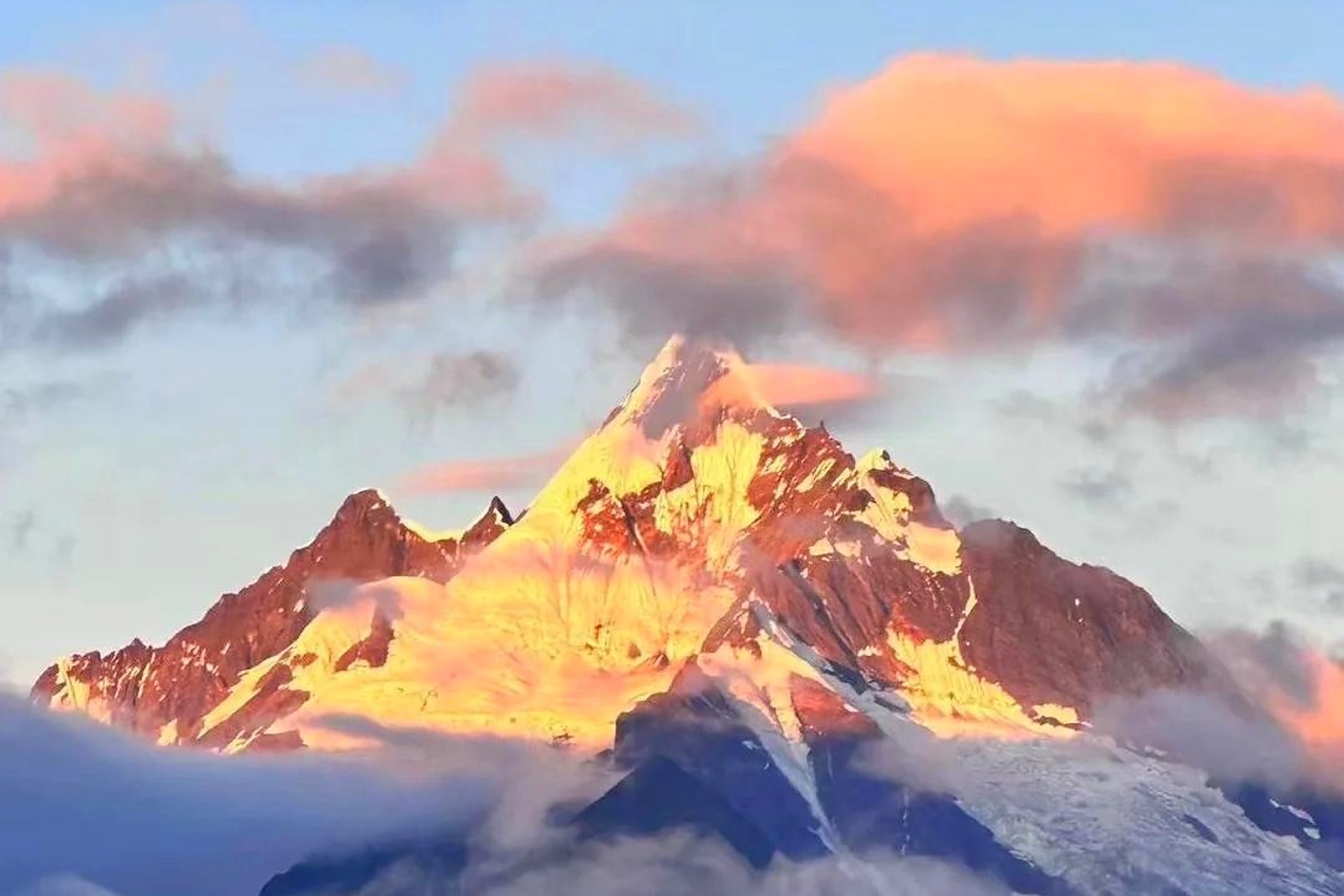
Tickets and access are the honest catches. The Meili scenic-area ticket is sold as a combo – a base ticket around 150 yuan covers the 金沙江大湾 Jīnshājiāng Dàwān Jinsha River bend, 雾浓顶 Wùnóngdǐng Wunongding and 飞来寺 Fēilái Sì Feilai Temple terraces, with 明永冰川 Míngyǒng Bīngchuān Mingyong Glacier and 雨崩 Yǔbēng Yubeng each at about 55 yuan, or a deeper pass near 228-230 yuan that folds them in – while many roadside viewpoints along the ridge are free to stand on. 德钦 Déqīn is a long way out – about 4 to 5 hours by road from 香格里拉 Xiānggélǐlā Shangri-La, past the 金沙江大湾 Jīnshājiāng Dàwān Jinsha River bend and over 白马雪山 Báimǎ Xuěshān Baima Snow Mountain – so plan two nights at the ridge to raise your odds of a clear 日照金山 Rìzhào Jīnshān, which are best from October to April. Dress for a windy, freezing dawn at 3,400 m: down jacket, gloves, a tripod and a warm spare battery, and never point a lens at a praying pilgrim or touch a 玛尼堆 mǎníduī mani pile.
Practicalities
- Rating: A national scenic area (named 2003) forming part of the Three Parallel Rivers UNESCO World Heritage; Kawagarbo (6,740 m) is an unclimbed sacred peak, not a graded summit.
- Tickets: The scenic-area ticket is sold as a combo – a base ticket around 150 yuan covers the Jinsha River bend, Wunongding and Feilai Temple terraces, with Mingyong and Yubeng each about 55 yuan, or a deeper pass near 228-230 yuan that folds them in; many roadside ridge viewpoints are free to stand on while the managed terraces charge.
- Address: 德钦县云岭乡 Déqīn Xiàn Yúnlǐng Xiāng, Diqing, Yunnan – about 4-5 hours by road from Shangri-La; 飞来寺 Fēilái Sì Feilai Temple ridge is the main viewpoint base.
- Time needed: Two nights at the ridge for a real shot at 日照金山 Rìzhào Jīnshān; add 1-2 days for Yubeng on foot or a day for the Mingyong Glacier.
Words and Names
梅里雪山 Méilǐ Xuěshān Meili Snow Mountain · the Deqin range and Yunnan’s highest peaks, part of Three Parallel Rivers 德钦县 Déqīn Xiàn Deqin County · the northwest Yunnan county that holds the Meili range 卡瓦格博 Kǎwǎgébó Kawagarbo · the 6,740 m presiding peak, an unclimbed sacred mountain 日照金山 Rìzhào Jīnshān golden sunrise · the dawn moment the snow turns gold, Meili’s signature sight 飞来寺 Fēilái Sì Feilai Temple · the 3,400 m ridge viewpoint opposite the main face 雨崩 Yǔbēng Yubeng · a roadless Tibetan village at ~3,000 m below the peaks 明永冰川 Míngyǒng Bīngchuān Mingyong Glacier · a low-latitude glacier reaching ~2,660 m 太子十三峰 Tàizǐ Shísān Fēng Thirteen Prince Peaks · the named snow ridge of the Meili massif 转山 zhuǎnshān circumambulation · the pilgrim walk clockwise around the sacred mountain 经幡 jīngfān prayer flags · the wind-prayers strung along the ridge and passes 玛尼堆 mǎníduī mani pile · heaps of inscribed stones, not to be touched 白马雪山 Báimǎ Xuěshān Baima Snow Mountain · the pass range between Shangri-La and Deqin
flowcloud would say that 梅里雪山 Méilǐ Xuěshān is Yunnan’s high wall – 卡瓦格博 Kǎwǎgébó at 6,740 m, unclimbed and sacred, best seen as 日照金山 Rìzhào Jīnshān gold from 飞来寺 Fēilái Sì – and that the move is two ridge nights from October to April, down jacket and tripod at 3,400 m, because the 德钦 Déqīn road is a 4-5 hour haul and the sunrise is a matter of luck. All checked October 2026.
Getting there: 梅里雪山 Méilǐ Xuěshān Meili Snow Mountain, in 德钦县云岭乡 Déqīn Xiàn Yúnlǐng Xiāng, Diqing, Yunnan – about 4-5 hours by road from 香格里拉 Xiānggélǐlā Shangri-La past the Jinsha River bend and over 白马雪山 Báimǎ Xuěshān Baima Snow Mountain; 飞来寺 Fēilái Sì Feilai Temple ridge is the main viewpoint base, with 雾浓顶 Wùnóngdǐng Wunongding a wider terrace, and 德钦 Déqīn town a further 20-minute drive below the ridge (checked October 2026, subject to change).