
金塔立山巅,落日镀边城。Jīn tǎ lì shān diān, luòrì dù biānchéng – The golden pagoda stands upon the peak; the setting sun gilds the border city.
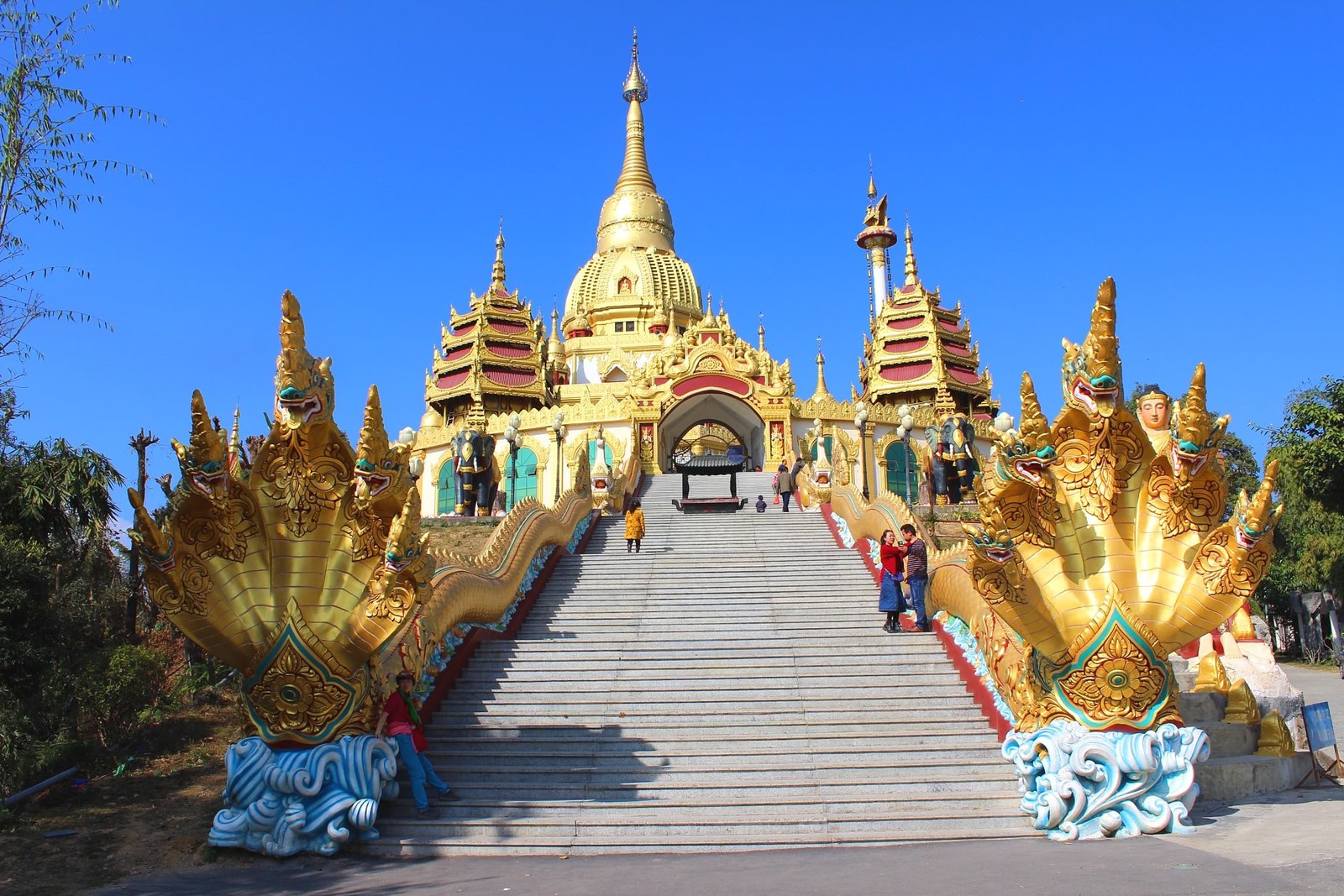
勐焕大金塔 Měnghuàn Dà Jīntǎ the Great Golden Pagoda is the landmark of 芒市 Mǎngshì Mangshi, a hollow, gilded 佛塔 fótǎ stupa crowning the hill above the prefectural capital of 德宏傣族景颇族自治州 Déhóng Dǎizú Jǐngpōzú Zìzhìzhōu Dehong Dai and Jingpo Autonomous Prefecture, a 边境 biānjìng border city facing 缅甸 Miǎndiàn Myanmar. It is a modern reconstruction – the current stupa was rebuilt and consecrated in the mid-2000s on the site of an older 傣族 Dǎizú Dai pagoda legend – and it is big: roughly 76 m tall, with four towering entrance 佛像 fóxiàng Buddha figures at the base and a reported eighty-odd thousand small gilded Buddhas housed inside the hollow bell, which you can actually walk into. Its boosters call it the tallest or one of the tallest hollow golden pagodas in Asia, a claim the brochures lean on heavily (worth confirming the “Asia’s tallest” superlative – it is certainly among the largest, but the exact ranking is marketing as much as measurement). What is not in dispute is that the stupa is genuinely, unapologetically gold, lit at night, and visible across the whole small city.
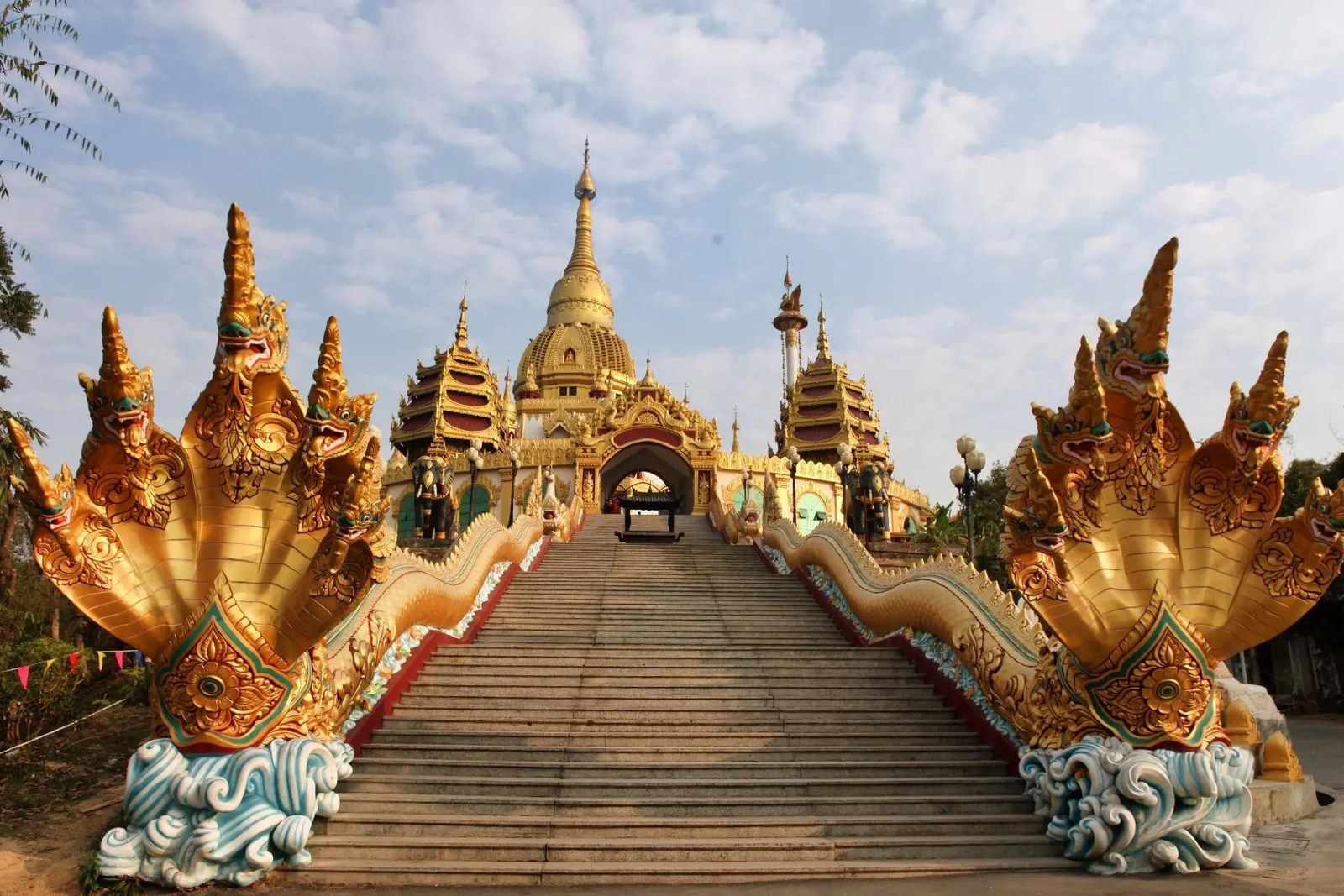
The honest rating is a national 4A scenic area (worth confirming – some older guides file it lower), with a ticket of about 40 yuan (worth confirming, and the same 40 appears in the Mangshi-stay file). Getting there is trivial: the hill sits on the southern edge of 芒市 Mǎngshì town, a ten-yuan taxi or a stiff walk up from the 勐焕路 Měnghuàn Lù commercial spine, and the climb is short but steep enough that the 电动车 diàndòngchē e-scooter crowd zips past the walkers. Across the same slope, a few minutes’ walk downhill, is its deliberate twin – the 勐焕银塔 Měnghuàn Yíntǎ Silver Pagoda, a white-and-silver 塔 tǎ pagoda complex that many photographers now rate the prettier of the two for its clean lines and the 镜面 jìngmiàn mirror-pool reflections. Together they are the city’s postcard, and the paired ticket is sometimes sold as one (worth confirming the bundle).
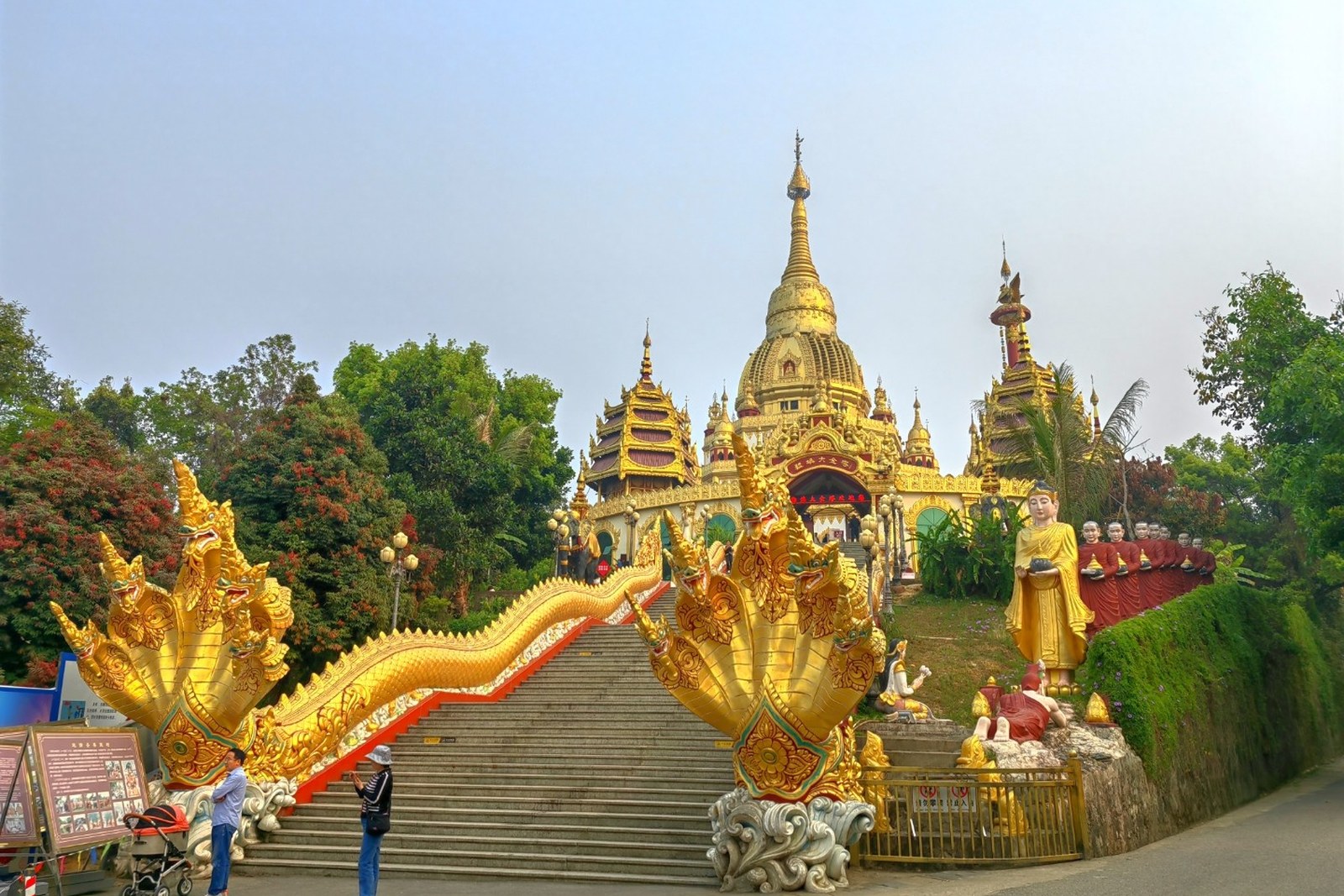
The wry truth is that this is a beautiful, slightly theme-park golden stupa rather than an ancient shrine, and you should visit it for exactly that: the view down over the 边城 biānchéng border town, the sunset gilding the whole basin, and the cooler, more photogenic silver sister across the slope. What is overrated is any expectation of venerable age or hushed sanctity – the interior is part museum, part viewing platform, and the grounds are polished for the camera. Best season is the dry November-to-April window when the light is clean and the evenings sit in the low twenties; go at dusk, not noon, because the gold needs the low sun to mean anything and the night lights are the real show. Note the standing 目瑙纵歌 Mùnǎo Zònggē Jingpo circle dance and the 泼水节 Pōshuǐjié Water-Splashing Festival that turn the hill into a stage on their dates, carry your ID for the routine 边境 biānjìng checks, and do not mistake the hilltop for a quiet temple – it is the city’s loud, lovely front room.
Practicalities
- Rating: The gilded hilltop landmark of 芒市 Mǎngshì; a national 4A scenic area (worth confirming the details), rebuilt in the mid-2000s as a large hollow stupa, not an ancient monument.
- Tickets: About 40 yuan (worth confirming the details); the twin 勐焕银塔 Měnghuàn Yíntǎ Silver Pagoda across the slope is sometimes bundled, sometimes separate (worth confirming the pairing).
- Address: 勐焕路南端雷牙让山 Měnghuàn Lù nánduān Léiyáràng Shān, the hill south of Mangshi town, Dehong – a short taxi or walk from the 勐焕路 Měnghuàn Lù spine; 德宏芒市机场 Déhóng Mǎngshì Jīchǎng is about 10 km north (worth confirming the details).
- Time needed: 1-2 hours for the gold stupa and the silver twin together; add the sunset if you time it for dusk.
Words and Names
勐焕大金塔 Měnghuàn Dà Jīntǎ Great Golden Pagoda · the ~76 m gilded hollow stupa on the Mangshi hill, the city’s landmark 勐焕银塔 Měnghuàn Yíntǎ Silver Pagoda · the white-silver twin across the slope, the more photographic of the pair 芒市 Mǎngshì Mangshi · the Dehong prefectural capital, the border city below the pagoda 德宏傣族景颇族自治州 Déhóng Dǎizú Jǐngpōzú Zìzhìzhōu Dehong Dai and Jingpo Autonomous Prefecture · the border prefecture of Yunnan facing Myanmar 佛塔 fótǎ stupa · the gilded Buddhist tower form of the Great Pagoda 佛像 fóxiàng Buddha figure · the four giant entrance statues at the stupa base 目瑙纵歌 Mùnǎo Zònggē Jingpo circle dance · the Jingpo mass dance staged at the hill on festival dates 泼水节 Pōshuǐjié Water-Splashing Festival · the mid-April Dai new year that fills the hill 边境 biānjìng border · the frontier status that makes the checks routine here 镜面 jìngmiàn mirror pool · the reflecting water at the Silver Pagoda used for symmetry shots
flowcloud would say that 勐焕大金塔 Měnghuàn Dà Jīntǎ is a modern, unapologetically gold stupa on the Mangshi hill – about 76 m, hollow, walk-in, lit at night – and that the honest move is dusk on the slope for the silver 勐焕银塔 Měnghuàn Yíntǎ and the basin sunset, because the gold needs the low sun and the “Asia’s tallest” line is marketing more than measurement. All checked October 2026.
Getting there: 芒市 Mǎngshì, the prefecture capital, on the hill south of the city centre – about 10 minutes by taxi from the 勐焕路 Měnghuàn Lù commercial spine, or a 40-minute walk up for the fit; pair it with the twin 银塔 Yíntǎ Silver Pagoda across the slope and the 树包塔 Shùbāo Tǎ Tree-Wrapped Pagoda in town (worth confirming the ticket and the lit-hours); the honest light is the 30 minutes before sunset. All checked October 2026.