
The Ming Tombs: Thirteen Emperors’ Mausoleums at the Foot of Mount Tianshou, the Sacred Way’s Stone Figures and the Opened Underground Palace of Dingling in Changping District, Beijing
天寿山前王气沉,十三陵阙柏森森。Tiānshòu Shān qián wángqì chén, shísān líng quē bǎi sēnsēn – Before Mount Tianshou the royal aura settles into the ground; thirteen mausoleums stand hushed in dense cypress.
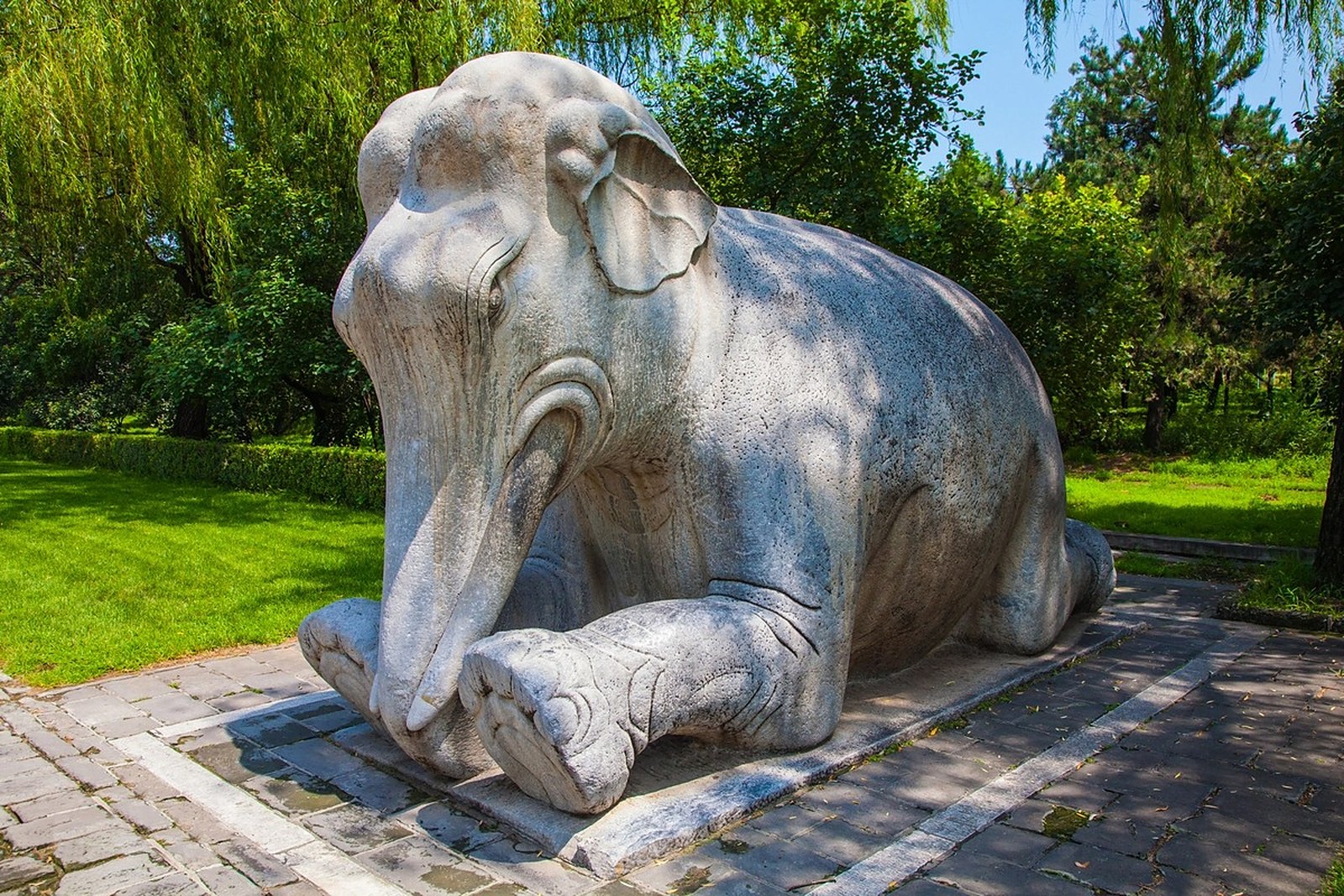
明十三陵 Míng Shísān Líng the Ming Thirteen Tombs is not one monument with a ticket window — it is, plainly put, a whole dynasty buried in a single valley: thirteen imperial mausoleums of the Ming dynasty below 天寿山 Tiānshòu Shān Mount Tianshou, some forty-odd kilometres north-west of central Beijing in 昌平区 Chāngpíng Qū Changping District, inscribed by UNESCO as a World Cultural Heritage site in 2003. The valley opened for business in 1409, when the Yongle Emperor 朱棣 Zhū Dì chose the hill for his own 长陵 Cháng Líng Changling, and ten successors followed over two centuries, until the valley held thirteen of the sixteen emperors the Ming produced. One axis orders everything: from the 石牌坊 Shípáifāng stone archway of 1540 the 神道 Shéndào Sacred Way runs north past the 大红门 Dàhóng Mén Great Red Gate, flanked by the 石像生 shíxiàngshēng stone figures — twenty-four animals and twelve human officials keeping six centuries of watch. Three tombs receive visitors today: 长陵 with its 祾恩殿 Líng’ēn Diàn Ling’en Hall on a forest of giant nanmu columns; 定陵 Dìng Líng Dingling, tomb of the Wanli Emperor and the only Ming imperial tomb ever scientifically excavated, dug in 1956–58; and the restored 昭陵 Zhāo Líng Zhaoling. What you actually visit is a valley-scale heritage landscape toured by car or shuttle between sites, not a single building you tick off.
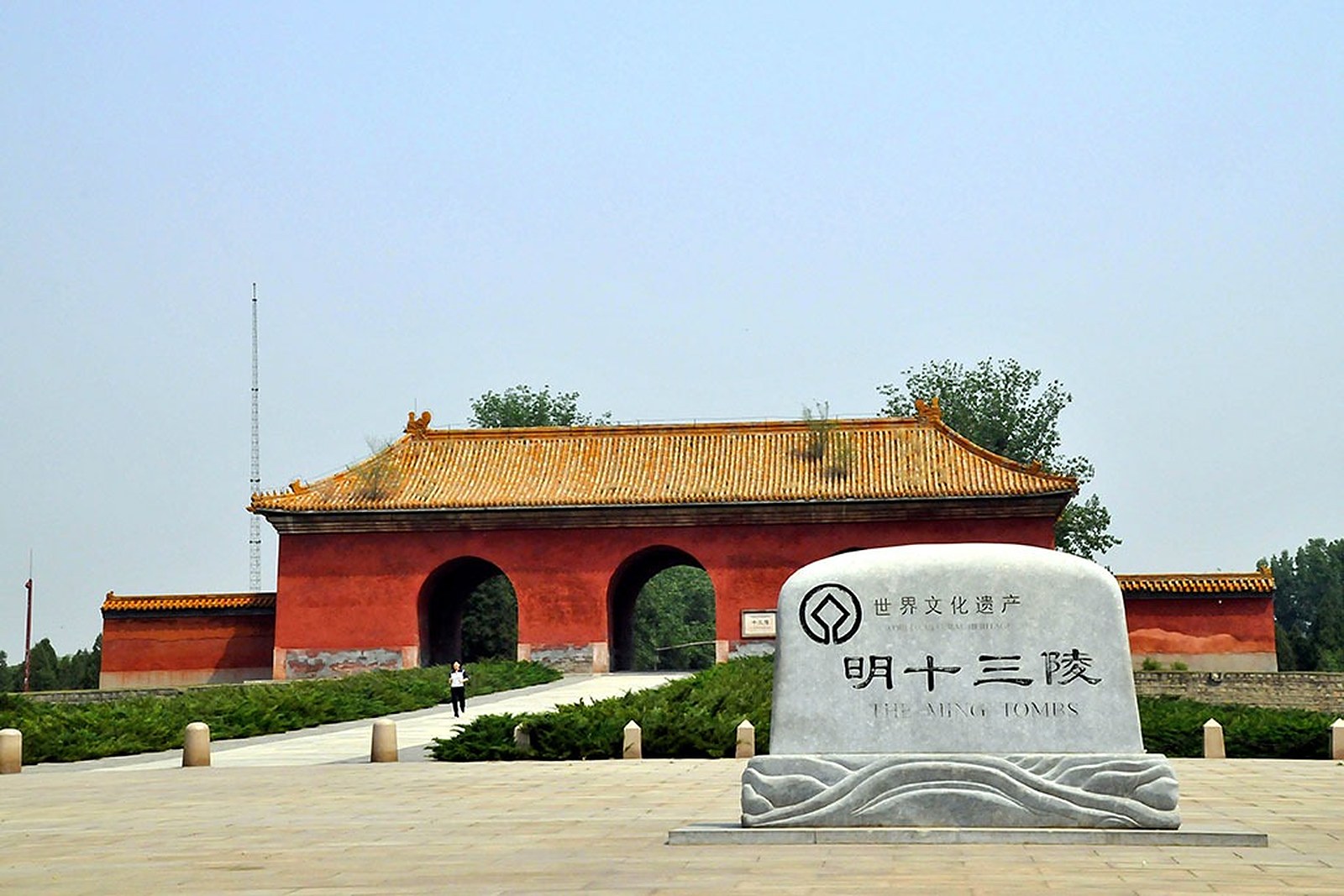
Call it honestly: this is a multi-ticket day and the costs stack — each opened tomb charges separately, with 长陵 and 定陵 reported at around fifty to sixty-five yuan and the 神道 Sacred Way and 昭陵 lower (worth confirming the details for current prices, joint tickets and reservation rules). The spread is the second warning: the tombs sit kilometres apart, so the honest circuit wants your own wheels or a tour, and bus-borne visitors must plan around thinning schedules. Spring dresses the approach in blossom, autumn puts the best light on the cypress slopes, and weekends crowd the gates with tour groups by late morning. Give the core at least half a day, wear shoes that forgive gravel, and do not promise yourself all thirteen — most of the mounds stay sealed and silent, as tombs should.
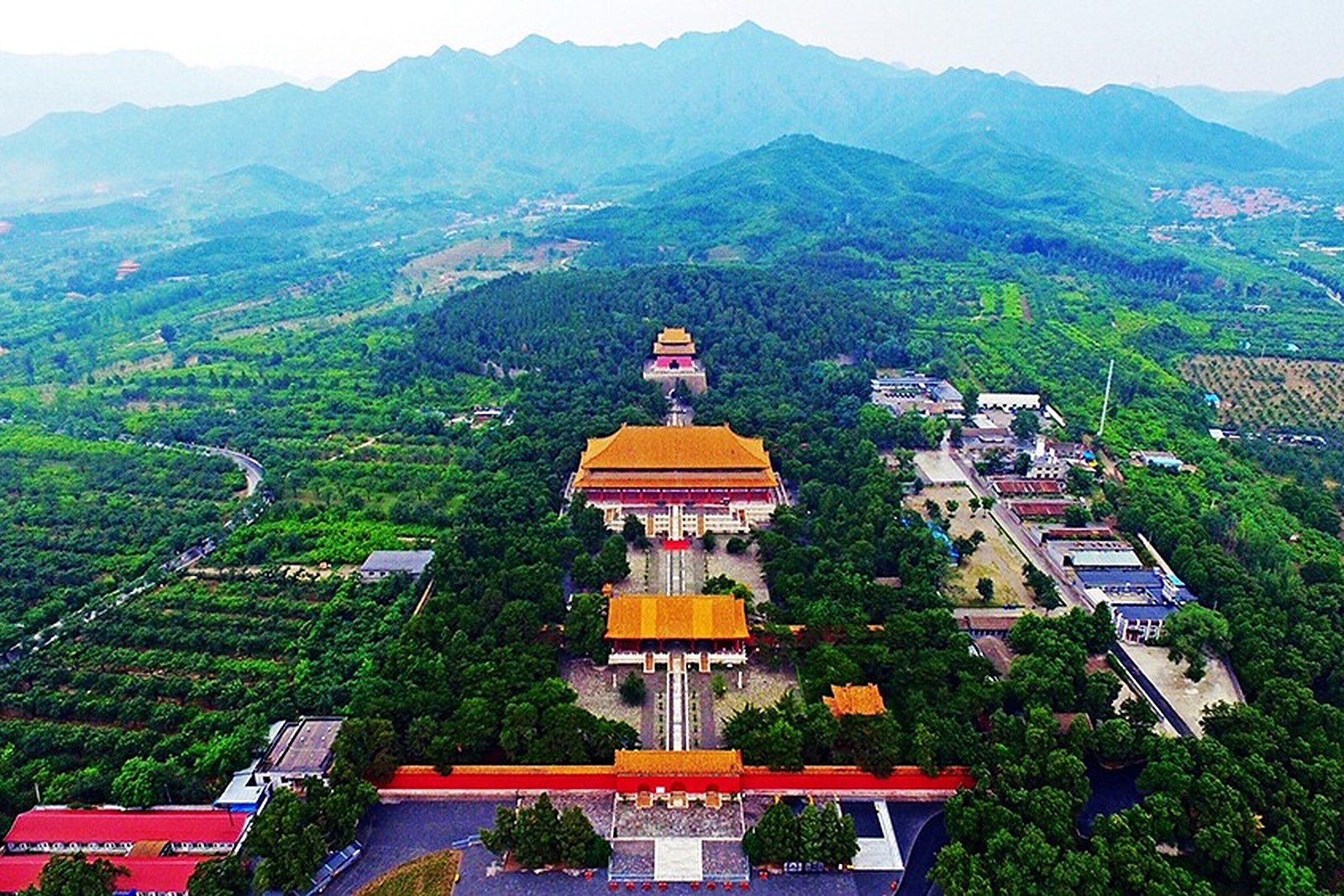
The honest star is the 石像生 shíxiàngshēng avenue at low sun — lions, camels, elephants and generals weathered to a velvet grey, six centuries into their watch — not the souvenir arcades at the gates. 定陵’s underground palace earns its billing: five stone-vaulted chambers some twenty-seven metres below the mound, reached down a long stair and cool even in August (worth confirming the details for which galleries of the site museum are open on your day). What gets oversold is the checklist habit of “doing” all the open tombs in one sprint — the valley rewards one tomb read slowly, the nanmu hall of 长陵 above all, one of the largest timber halls left in China with its sixty great columns. What repays the effort is the geography: look back from any mound at the hills closing the valley’s end — a necropolis needs a mountain for a backrest, and 天寿山 Tiānshòu Shān was picked for exactly that. Come for the layering of the place: avenue, then hall, then the hill’s silence.
The self-aware postscript: I stood in the 祾恩殿 Líng’ēn Diàn doorway beside a caretaker sweeping the hall, and when I admired the columns he said, “they have stood six hundred years and never once complained — my broom is younger and grumbles every day”. That is the visit in miniature. 明十三陵 Míng Shísān Líng suits whoever treats it as a slow heritage circuit first and a checklist of gates second, and exhausts anyone expecting one grand monument with everything behind a single door. Everything else on this Changping list lies within an easy radius: the cloud platform of 居庸关长城 Jūyōngguān Chángchéng up the valley, the Liao-and-Jin stupas of 银山塔林 Yínshān Tǎlín over the eastern hills, the flight line of 中国航空博物馆 Zhōngguó Hángkōng Bówùguǎn on the 小汤山 Xiǎotāngshān plain, and the pine stair of 蟒山国家森林公园 Mǎngshān Guójiā Sēnlín Gōngyuán across the reservoir — all in the same 昌平区 Chāngpíng Qū that once guarded Beijing’s north gate and still keeps an empire’s tombs, a frontier pass and a jet age in one pocket.
Practicalities
- Rating: ★★★★★ — the World Heritage necropolis of a whole dynasty; the stone-figure avenue and the nanmu hall of 长陵 Cháng Líng outrank the gift streets; see one tomb slowly.
- Tickets: Per-tomb admission with 长陵 Cháng Líng and 定陵 Dìng Líng reported at around fifty to sixty-five yuan, the 神道 Shéndào and 昭陵 Zhāo Líng cheaper; reservation through official channels at busy times (worth confirming the details for current prices and booking rules).
- Address: 明十三陵 Míng Shísān Líng scenic area, the valley below 天寿山 Tiānshòu Shān, 十三陵镇 Shísānlíng Zhèn, 昌平区 Chāngpíng Qū, Beijing — the Sacred Way gate south of the tombs off the 京藏高速 Jīngzàng gāosù G6.
- Time needed: Half a day for the Sacred Way plus one tomb; a full day for two tombs and the stone-figure avenue.
Words and Names
明十三陵 Míng Shísān Líng the Ming Thirteen Tombs · the World Heritage valley of thirteen Ming emperors 天寿山 Tiānshòu Shān Mount Tianshou · the “heavenly longevity” hill backing the necropolis 长陵 Cháng Líng Changling · the Yongle Emperor’s tomb of 1409, largest of the thirteen 定陵 Dìng Líng Dingling · the Wanli Emperor’s tomb, excavated 1956–58, underground palace open 昭陵 Zhāo Líng Zhaoling · the restored tomb of the Longqing Emperor 神道 Shéndào Sacred Way · the spirit road of archway, steles and stone figures 石像生 shíxiàngshēng stone figures · twenty-four animals and twelve officials lining the way 祾恩殿 Líng’ēn Diàn Ling’en Hall · the nanmu hall of ritual at 长陵 Cháng Líng
flowcloud would say that 明十三陵 Míng Shísān Líng is a dynasty with its own postcode — thirteen emperors bedded below 天寿山 Tiānshòu Shān since 1409, the 神道 Shéndào lined with thirty-six stone watchmen, 长陵 Cháng Líng on sixty nanmu columns and 定陵 Dìng Líng opened in the only scientific excavation of a Ming imperial tomb — and that the honest move is one tomb done slowly on a weekday, because tickets, passes and reservations all shift (worth confirming the details), the thirteen-tomb checklist is the poster half and the stone camels at dusk are the real half, and the valley repays whoever lets the hill do the talking. All checked October 2026.
Getting there: The 昌平线 Chāngpíng xiàn Changping Line runs north from 西二旗 Xī’èrqí toward the 十三陵景区 Shísānlíng Jǐngqū Ming Tombs Scenic Area stretch, putting the 神道 Shéndào Sacred Way and the tomb gates within a short taxi of the stations; from the city, the long-running bus 872 out of 德胜门 Déshèngmén Deshengmen is the classic direct service up the G6 corridor to the 明十三陵 Míng Shísānlíng Ming Tombs; self-drive leaves the 京藏高速 Jīngzàng gāosù G6 at the 昌平西关 Chāngpíng Xīguān exit and follows the signed reservoir roads to the 神道 Shéndào and 定陵 Dìnglíng Dingling lots (worth confirming the details for current train times, bus numbers and gate parking). All checked October 2026.