
Miyun Reservoir: The Largest Artificial Lake in North China, a Vast Sheet of Protected Drinking Water Held in the Arms of the Yanshan Mountains, with Viewing Platforms and a Ring Road in Miyun District, Beijing
燕山怀抱千顷碧,一库清波润京城。Yānshān huáibào qiān qǐng bì, yī kù qīngbō rùn jīngchéng – The Yanshan mountains hold a thousand hectares of blue in their arms; one reservoir’s clear waves nourish the capital city.
密云水库 Mìyún Shuǐkù Miyun Reservoir is not a boating lake with pedal boats and snack stalls — it is, plainly put, the great water chest of the capital: the largest 人工湖 réngōng hú artificial lake in North China, built in the years around 1960 where the 白河 Báihé Bai River and the 潮河 Cháohé Chao River meet among the hills of 密云区 Mìyún Qū Miyun District northeast of Beijing. Its role is not decorative but vital: it is the 水源保护地 shuǐyuán bǎohùdì water-source protection area that fills a large share of Beijing’s taps, which is why swimming, boating and fishing on it are forbidden and why the water stays so startlingly clean. Around its edge run the 环库公路 huánkù gōnglù reservoir ring road and a scatter of 观景台 guānjǐngtái viewing platforms. What you actually visit is a drive-and-look landscape of enormous still water and mountain horizons, not a watersports park.
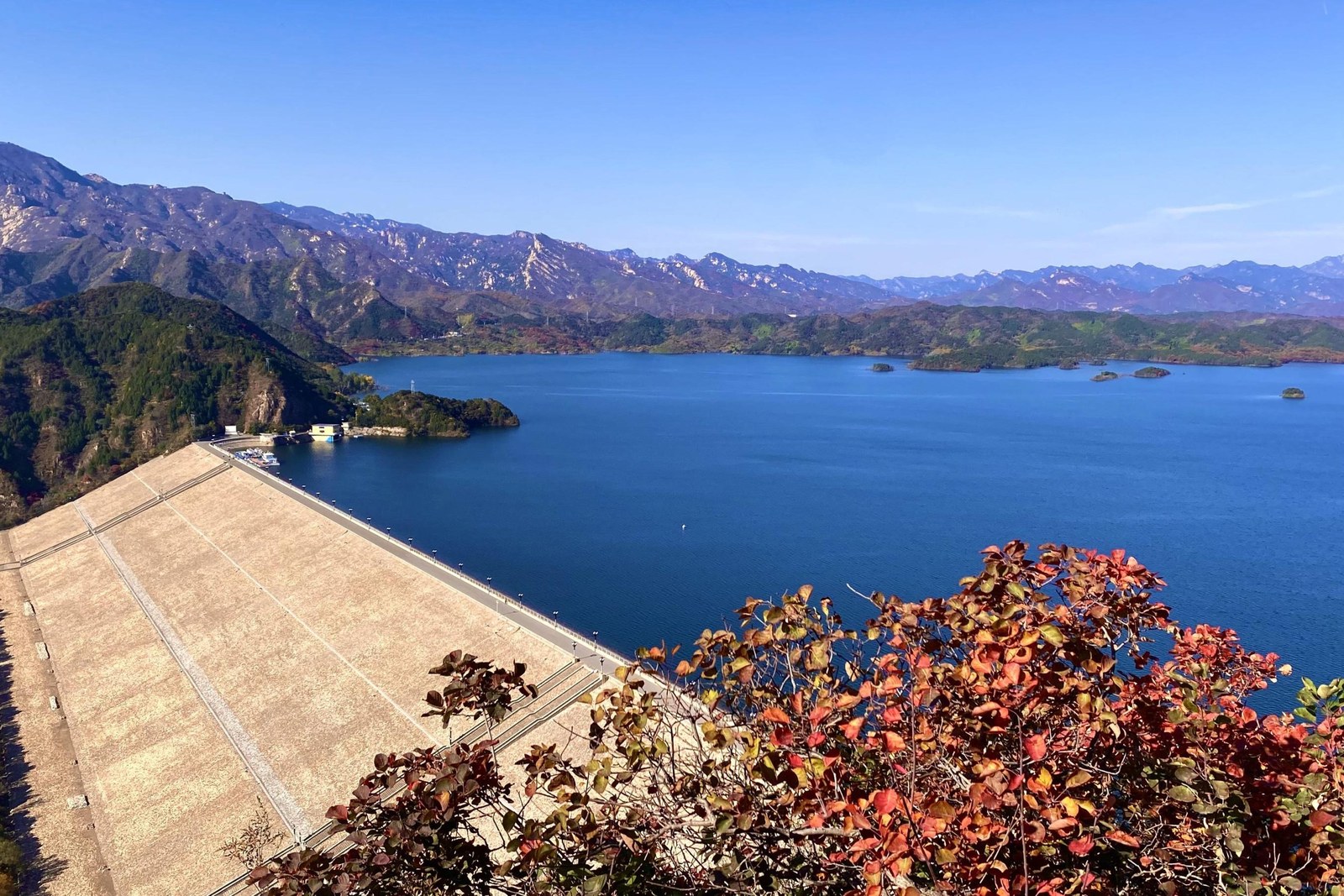
Call it honestly: the reservoir itself charges no general gate — the visit is a route of free or low-cost viewing platforms and roadside pull-offs along the ring road, with a few named viewpoints and village stops adding small fees, and everything depending on the day’s access rules, which tighten and relax with water policy (worth confirming the details for which platforms and road sections are open). The honest warning is conduct, not cost — this is drinking water first and scenery second, so no wading, no drones in restricted zones and no picnicking down at the waterline. Autumn is the reservoir at its best, with the hills burning rust and gold behind flat blue water. Give it two to three hours to circle a stretch of the road and stop properly.
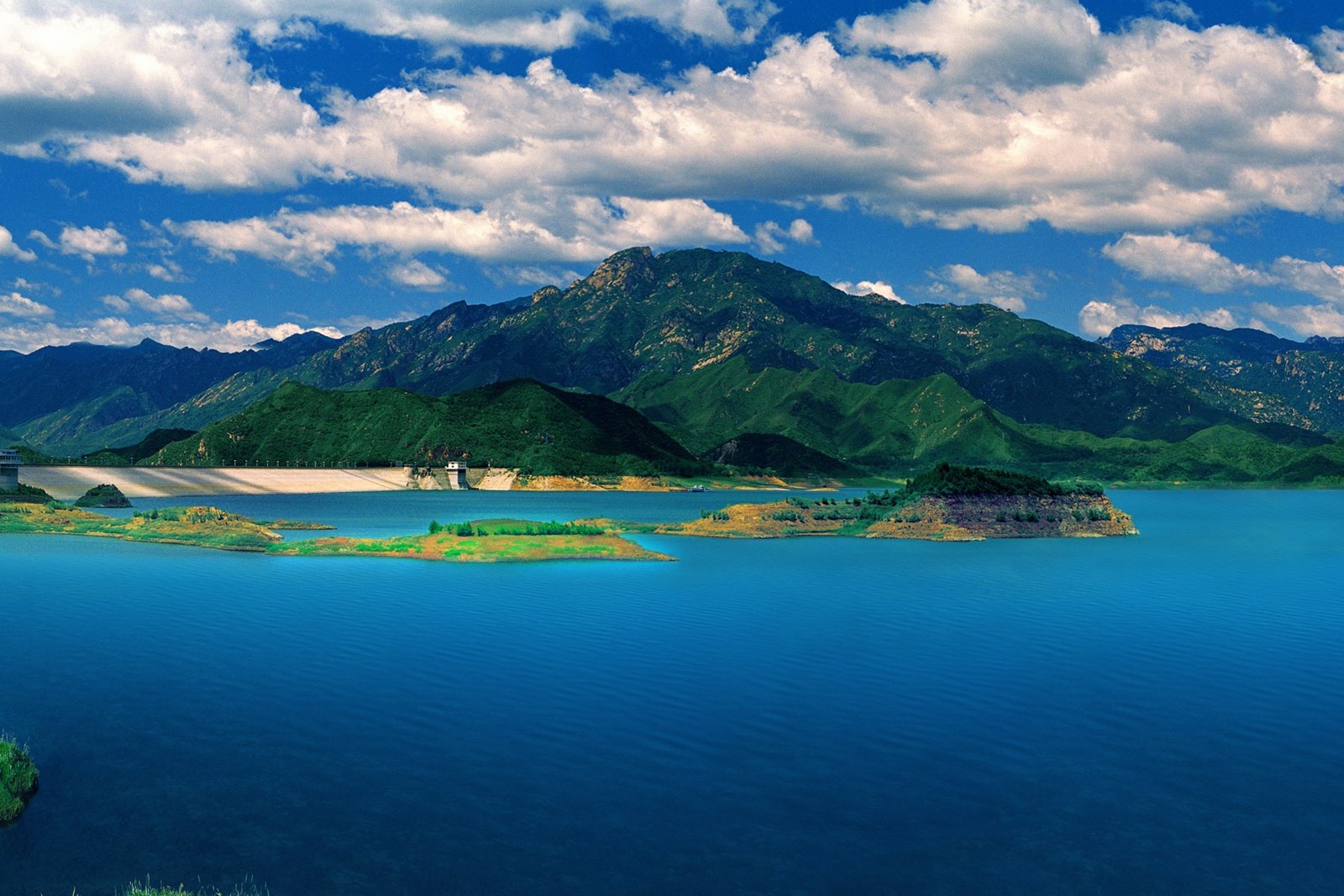
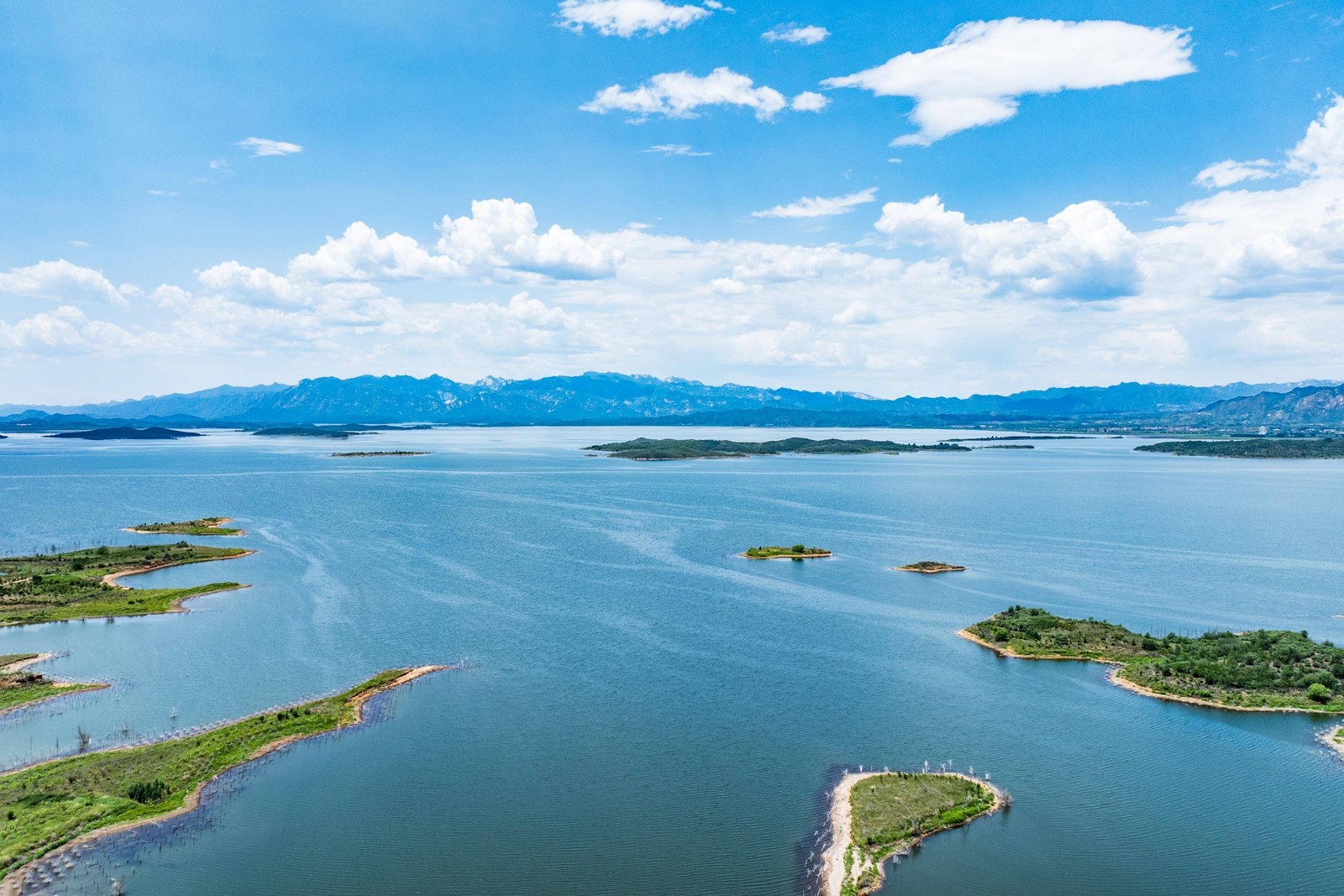
The honest star is the scale against the silence — a sheet of water so wide the far shore dissolves into blue haze, the Yanshan ridges folding around it on every side, the reed flats and fish-farm memories of the shore villages passing frame by frame from window to window (worth confirming the details for which platforms give the widest views on your day). What gets oversold is the word “lake” read as a resort shore with beaches: there is no swimming and no sailing here, and that refusal is precisely the point. What repays the effort is the meaning of the place — nearly everything in the frame exists so that a city of twenty million can drink. Come for the layering of the place: road, then platform, then the protected water beyond.
The self-aware postscript: I stood on a viewing platform beside an old man who said he had helped carry stone to the dam as a teenager, and when I asked whether he missed the villages that now lie under the water he said, “every morning Beijing boils our lake for tea — so no, I do not miss it, I see it”. That is the visit in miniature. 密云水库 Mìyún Shuǐkù suits whoever treats it as a slow scenic drive and a lesson in where water comes from first and a photo checklist second, and exhausts anyone expecting boat rides or beach time. Everything else on this Miyun list lies within the same district: the original Ming wall of 司马台长城 Sīmǎtái Chángchéng Simatai Great Wall in the northeast, the lantern-lit lanes of 古北水镇 Gǔběi Shuǐzhèn Gubei Water Town at its foot, the pine ridges of 云蒙山 Yúnméng Shān Yunmeng Mountain in the west and the chain of falls at 黑龙潭 Hēilóngtán Heilongtan — all in the same 密云区 Mìyún Qū that guards the capital’s biggest bowl of drinking water.
Practicalities
- Rating: ★★★★☆ — the largest artificial lake in North China and the capital’s water jug; the wide-water views from the ring road outrank the thin formal facilities; drive or tour the road, stop often.
- Tickets: The reservoir itself is a protected zone with no general admission; viewing platforms and roadside stops are free or low-cost, with some sections access-controlled (worth confirming the details for which platforms and road sections are open).
- Address: 密云水库 Mìyún Shuǐkù, 密云区 Mìyún Qū, Beijing — in the northern hills of the district, ringed by the 环库公路 huánkù gōnglù reservoir ring road, with popular viewpoints near 溪翁庄 Xīwēngzhuāng Xiwengzhuang.
- Time needed: Two to three hours to drive a scenic stretch of the ring road with proper platform stops; a full day pairing it with the western hills.
Words and Names
密云水库 Mìyún Shuǐkù Miyun Reservoir · the largest artificial lake in North China 人工湖 réngōng hú artificial lake · the human-made water the region depends on 水源保护地 shuǐyuán bǎohùdì water-source protection area · why the water stays off-limits and clean 环库公路 huánkù gōnglù reservoir ring road · the scenic circuit around the shore 观景台 guānjǐngtái viewing platform · the legal places to stand and look 燕山 Yānshān Yanshan Mountains · the ridge system holding the water in its arms
flowcloud would say that 密云水库 Mìyún Shuǐkù is the capital’s biggest bowl of drinking water wearing scenery as its second job — the largest artificial lake in North China, built around 1960 where the 白河 Báihé and 潮河 Cháohé rivers meet in 密云区 Mìyún Qū, closed to boats and swimmers because Beijing drinks from it — and that the honest move is an autumn drive along the 环库公路 huánkù gōnglù with slow stops at each 观景台 guānjǐngtái viewing platform, because which platforms and road sections are open shifts with water policy (worth confirming the details), the lake-resort image is the poster half and the protected, boatless, beautiful water is the real half, and the reservoir repays whoever comes to look rather than to swim. All checked October 2026.
Getting there: The 980 or 980 Express bus 东直门 Dōngzhímén Dongzhimen to 密云城区 Mìyún chéngqū Miyun town, then a taxi or local bus out to the reservoir’s viewing shores such as 龙云山 or the 井庄 side (worth confirming the details for current connections, as access roads circle the protected watershed); self-drive leaves the 京承高速 Jīngchéng gāosù G45 and follows signed reservoir roads to the lookouts. All checked October 2026.