
The tropical garden at 那大 Nàdà is the 海南热带植物园 Hǎinán rèdài zhíwùyuán, the Hainan Tropical Botanical Garden, and it is not a municipal park but a research collection: it belongs to the 中国热带农业科学院 Zhōngguó rèdài nóngyè kēxuéyuàn, the Chinese Academy of Tropical Agricultural Sciences, whose campus and trial plots have stood west of the city centre of 儋州市 Dānzhōu shì since the late 1950s. Locals call it 两院植物园 liǎng yuàn zhíwùyuán, the garden of the two institutes, after the college and the research academy that shared the site. It is the place where the island keeps and studies its trees, and for a visitor it is a quiet, uncrowded two hours among several thousand species.
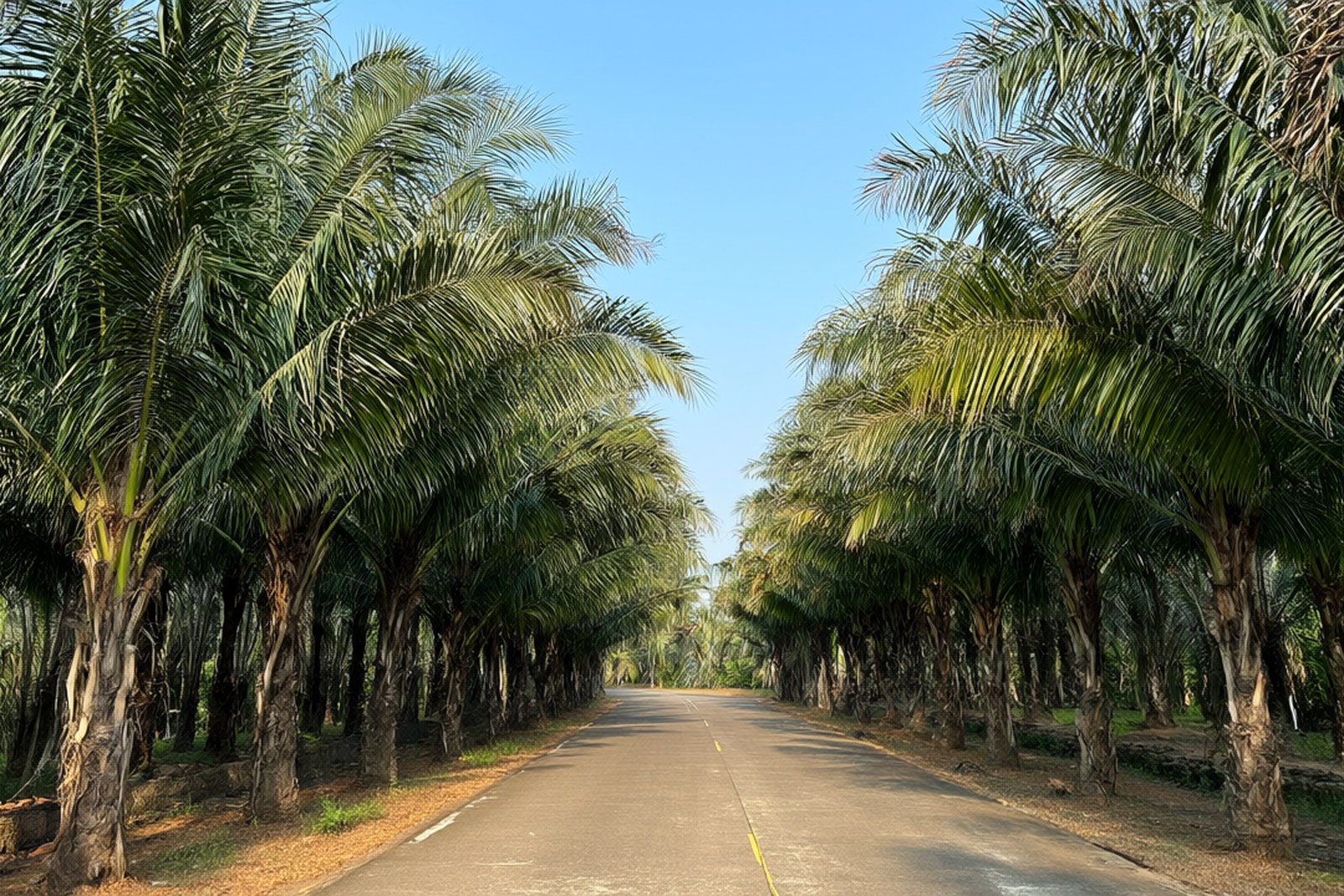
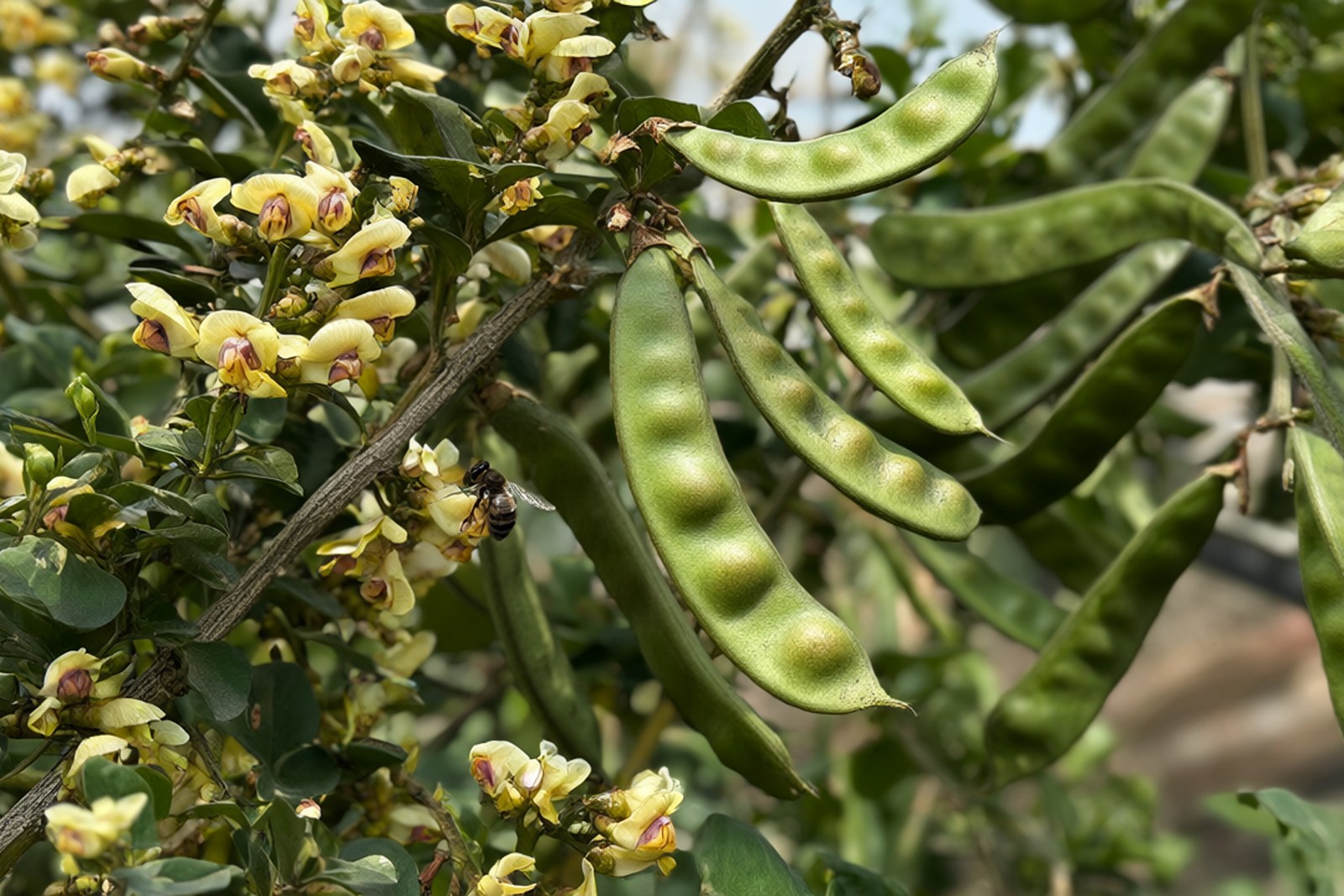
What makes it different from the tourist gardens on the east coast is what it is for. The academy’s remit has always been the economic plants of the tropics, so the collection is organised as a working reference: a palm section with the oil palm and the coconut and the betel, a spice and aromatic section with pepper, vanilla, cardamom and cinnamon, a rubber section with the tapping panels still cut, fruit sections with mango, jackfruit, durian, rambutan and the lesser-known things that will not travel, and a timber section with the hardwoods. Labels give the Latin name and the family, and the whole place reads like a library with leaves.
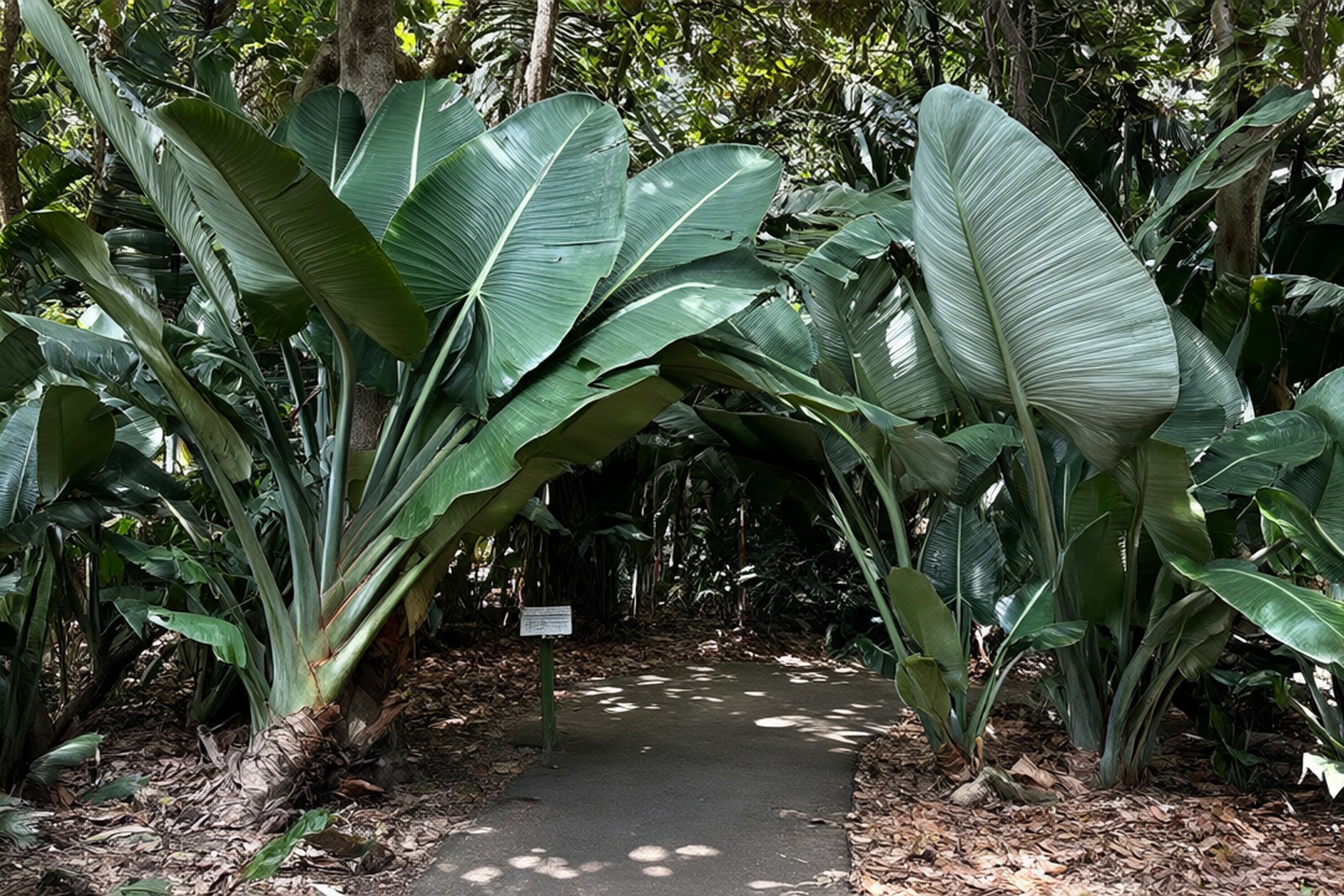
The garden is laid out on gently sloping ground with a grid of shaded avenues, and the walking is easy and flat, which makes it a good morning for anyone who has had enough of caves and stairs. The great draw for visitors is the size of things: the giant 王棕 wáng zōng, royal palm, and the 油棕 yóu zōng, oil palm, the buttressed roots of the big figs, the enormous leaves of the 旅人蕉 lǚ rén jiāo, traveller’s palm, and the 炮弹树 pào dàn shù, cannonball tree, which puts out its flowers straight from the trunk. A greenhouse holds the orchids and the ferns, and the spice beds are the part most people remember, because they can smell what they have only ever bought dried.
The garden is on the western edge of the city, so it fits easily into a day built around 那大: the morning market and a bowl of 米烂 early, the garden through the middle of the day while the heat is up, and the 松涛水库 or the 蓝洋 springs in the afternoon. It is also the natural first stop after arriving, because it explains the island’s farming in an afternoon and makes the rest of the county’s landscape legible. Come in the morning or the late afternoon for the light and the birds, bring water and mosquito repellent, and allow two hours rather than one, because the collection is larger than the map suggests.
Practicalities
Tickets. The garden charges an entrance ticket in the region of ¥30 to ¥60. It covers the whole collection and the greenhouse, and a guided walk can be arranged at the gate for a modest extra, which is worth it if you want the economic plants explained rather than merely labelled.
Opening hours. The garden is open roughly 07:30 to 18:00 through the year, with the last entry in the late afternoon. It is quietest on weekday mornings; the light is at its best in the first two hours after opening and in the last hour before closing.
Getting there. The garden is on the western edge of 那大, the seat of 儋州市, a short taxi ride from the city centre. The nearest high-speed rail stop is 白马井站 Báimǎjǐng zhàn on the west ring line, about forty minutes from 海口东, from which a taxi to the city takes another forty minutes.
Closing day. The garden is open every day of the year with no weekly closing day. The greenhouse is occasionally shut for maintenance, and the spice and orchard beds are at their best from the spring through the early summer, when the flowering and fruiting is heaviest.
flowcloud would say that an island which set aside its best land not for hotels but for a library of trees, and has spent sixty years measuring which of the world’s economic plants will grow on it, has put its money where its future is, and that a garden you walk through in two hours is the readable index of that work.
Getting there: the garden is on the western edge of 那大 in 儋州市, a short taxi ride from the city centre and about forty minutes by taxi from 白马井站 on the west ring line, which is the rail gateway to the city; the entrance is signposted from the ring road.