
The Nagqu Horse Racing Festival — the Changtang in Full Gallop
羌塘八月万马嘶,帐篷如城彩旗飞 Qiāngtáng bāyuè wàn mǎ sī, zhàngpéngrúchéng cǎiqí fēi – In the eighth month the Changtang rings with ten thousand horses; tents rise like a city and colored flags fly
那曲赛马节 Nàqū Sàimǎjié The Nagqu Horse Racing Festival – the great 恰青 Qiàqīng Qiaqing gathering – is the event the whole northern plateau rides toward: a week each August when the grassland capital becomes a tent city of herders, horses and pageantry on a scale nothing else in the region matches. Families arrive from townships days apart, black yak-hair tents spring up beside carnival rows, and the racetrack’s grandstands fill with the brightest clothes, heaviest silver and best horses the Changtang owns.
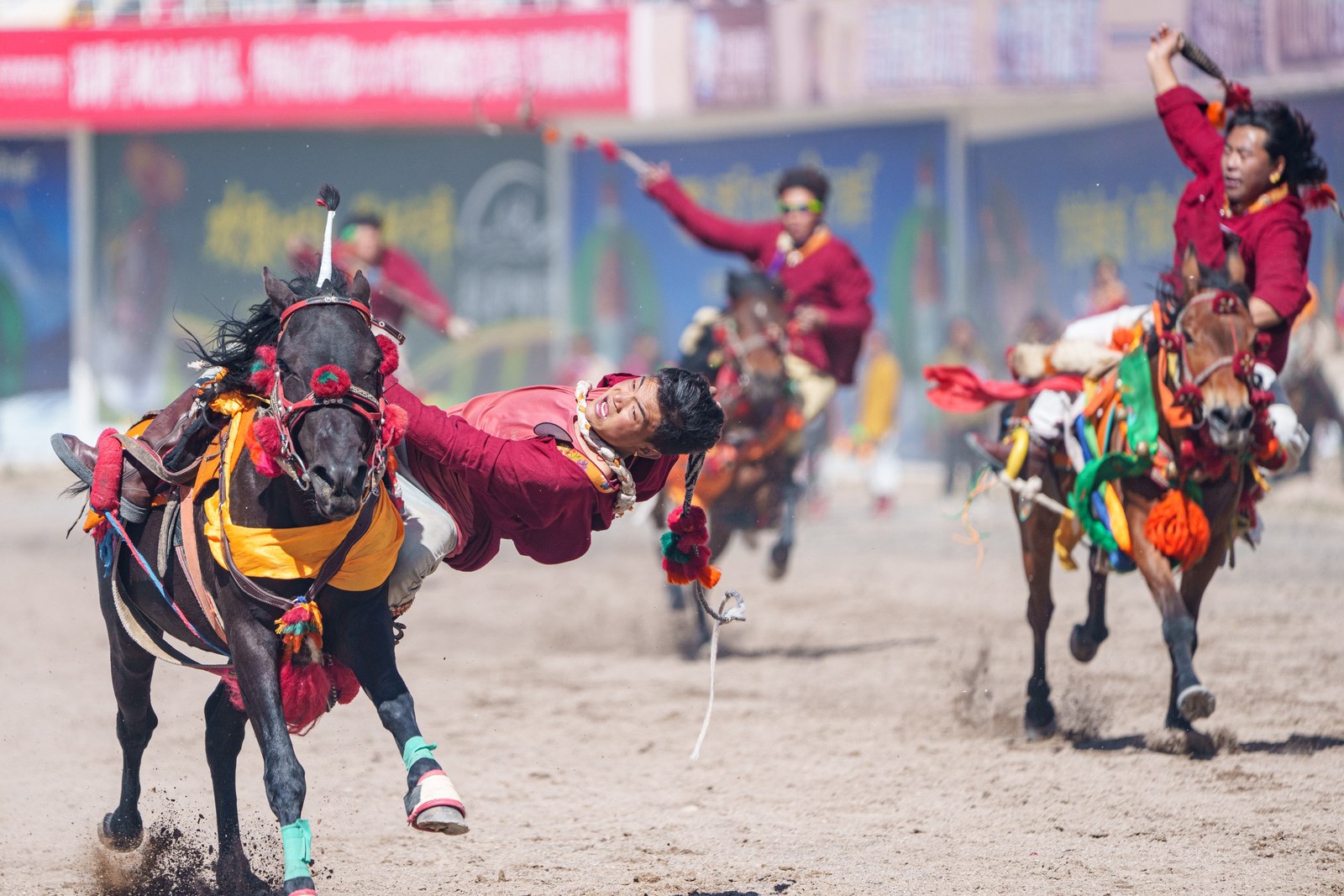
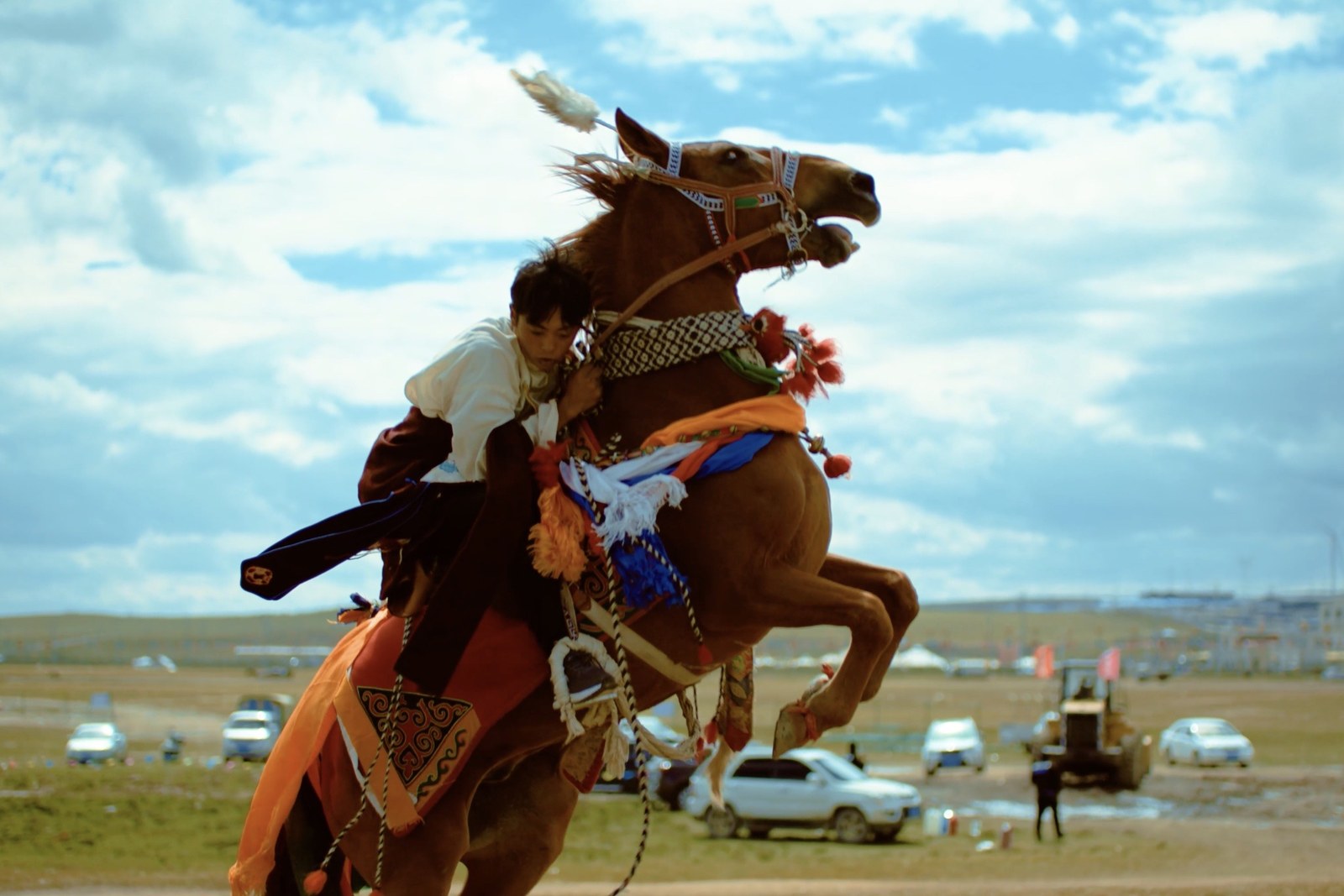
The racing itself is only the spine of the program. Bareback races send young jockeys flying the length of the track standing in the stirrups; horsemanship contests award the rider who plucks scarves from the ground at a gallop; yak races and heavyweight events keep the whole field laughing; and between heats the infield turns into a festival ground of food stalls, honest-horse trading and impromptu singing. The grand opening days draw the biggest crowds – plan for them or plan around them.
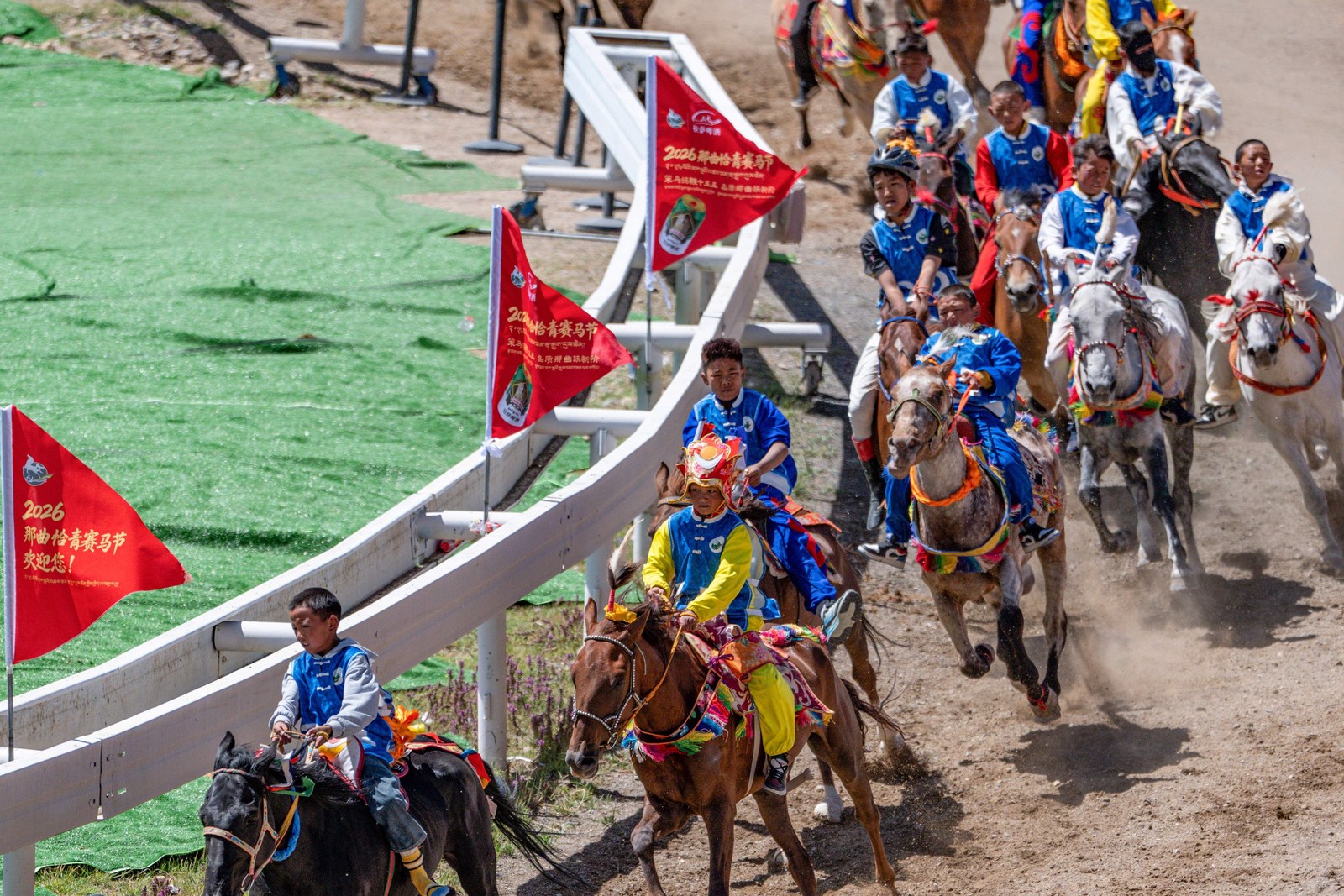
What stays with visitors is the crowd, not just the contest: this is the annual market of the Changtang’s whole social world. Herding families who winter a hundred kilometers apart meet in the stands; bride-wealth suits and turquoise headdresses come out of chests; elder judges in official hats argue finishes with the gravity of high court; and children who raced ponies at dawn sleep under the stands by noon. The festival is the grassland’s photograph of itself – and everyone is in it.
For the traveler, timing is everything. Dates follow the Tibetan calendar – usually August, but they move – so confirm locally before booking anything; the city’s hotels sell out weeks ahead, and grandstand seats for the opening ceremony go first. Come with sun protection, patience and a full memory card: a week in Nagqu during the festival is the fastest, fullest education in northern-plateau culture that any visitor can buy, and it ends with the whole tent city packing away like a circus until next year.
Practicalities
- The festival grounds sit at the edge of Nagqu town – minutes by taxi from any hotel, walkable from the center.
- Dates move with the Tibetan calendar each August; confirm locally, and book rooms and seats weeks ahead.
- Opening days carry the biggest program and crowds; quieter mid-week days suit photographers and families.
- Sun, wind and afternoon rain are all routine at 4,500 meters – bring layers, water and sunscreen in equal measure.
Words and Names
那曲赛马节 Nàqū Sàimǎjié the Nagqu Horse Racing Festival, the Changtang’s great August gathering; 恰青 Qiàqīng Qiaqing, the festival’s traditional name; 赛马场 sàimǎchǎng the racetrack grounds on the town’s edge; 黑帐篷 hēi zhàngpéng the black yak-hair tent of the herding families; 藏北 Zàngběi northern plateau, the festival’s home region. Beyond the festival, the same 那曲市 Nàqū Shì Nagqu keeps more places worth the detour: 纳木错 Nàmù Cuò the heavenly lake of the Elephant Gate, 色林错 Sèlín Cuò the great crane lake of the reserve, 萨普神山 Sàpǔ Shénshān the glacier family of Biru, or 当惹雍错 Dāngrě Yōngcuò the deep holy water of Nyima – four more doors into the same Nagqu. Once the grandstand empties, our Nagqu food map fills the table.
flowcloud would say the festival is the Changtang’s annual heartbeat – one week of thunder, eleven months of quietly counting toward it. All checked November 2026.
Getting there: The festival grounds sit at the edge of Nagqu town itself – minutes by taxi from any hotel, walkable from the center. Dates follow the Tibetan calendar each August; confirm locally and book rooms well ahead. All checked November 2026.