
Namcha Barwa — the Shy Peak of the Eastern Himalaya
云遮雾锁羞女面,一见金顶十年运 Yún zhē wù suǒ xiūnǚ miàn, yī jiàn jīndǐng shí nián yùn – Cloud and mist veil the shy maiden’s face; one glimpse of the golden summit is ten years’ luck
南迦巴瓦峰 Nánjiābāwǎ Fēng Namcha Barwa, 7,782 meters, closes the eastern end of the Himalaya the way a period closes a sentence: absolutely. It stands alone above the 雅鲁藏布江 Yǎlǔzàngbù Jiāng Tsangpo gorge in a single triangle of rock and ice that looks drawn with a ruler, rising almost straight from the canyon country below.
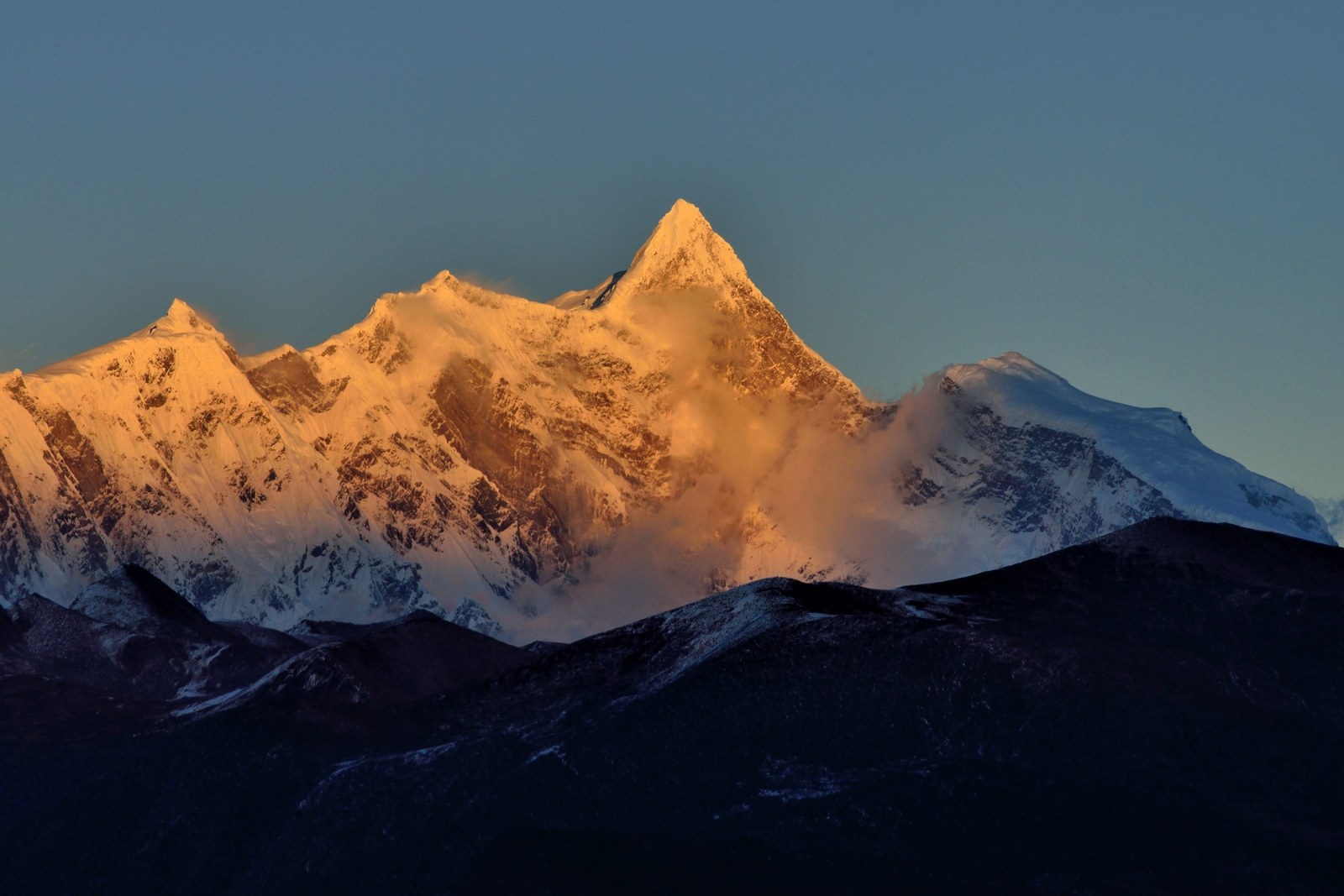
The mountain hides. Warm moist air funnels up the gorge and wraps the summit in cloud for much of the year, earning it the Chinese nickname 羞女峰 xiūnǚ fēng – the shy peak – and travelers trade stories of the visits it took to see it. Climbers rate it among the hardest of the great mountains – the first ascent came only in 1992 – and the same weather that hides the peak feeds the fantastic forest of the valley at its foot.
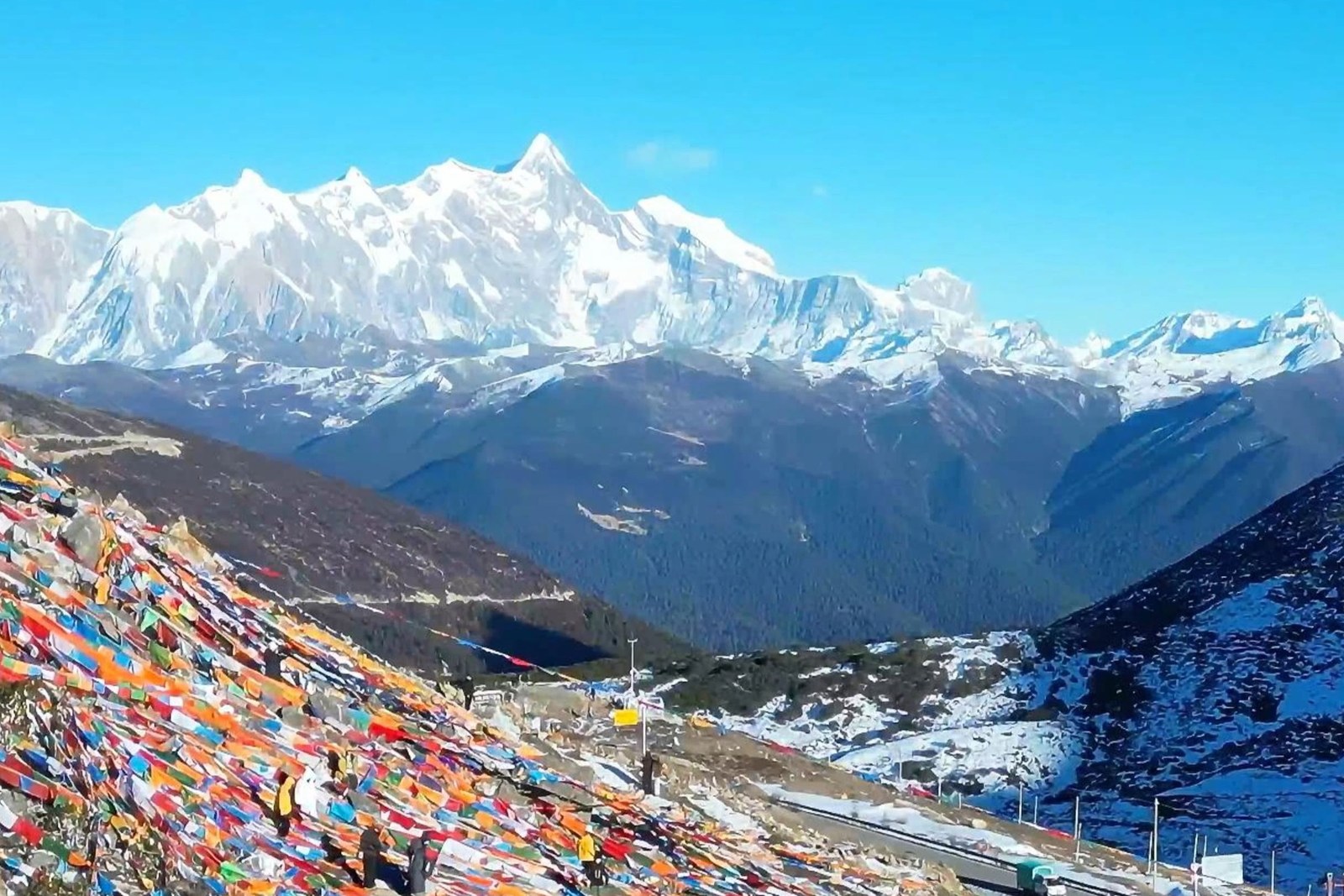
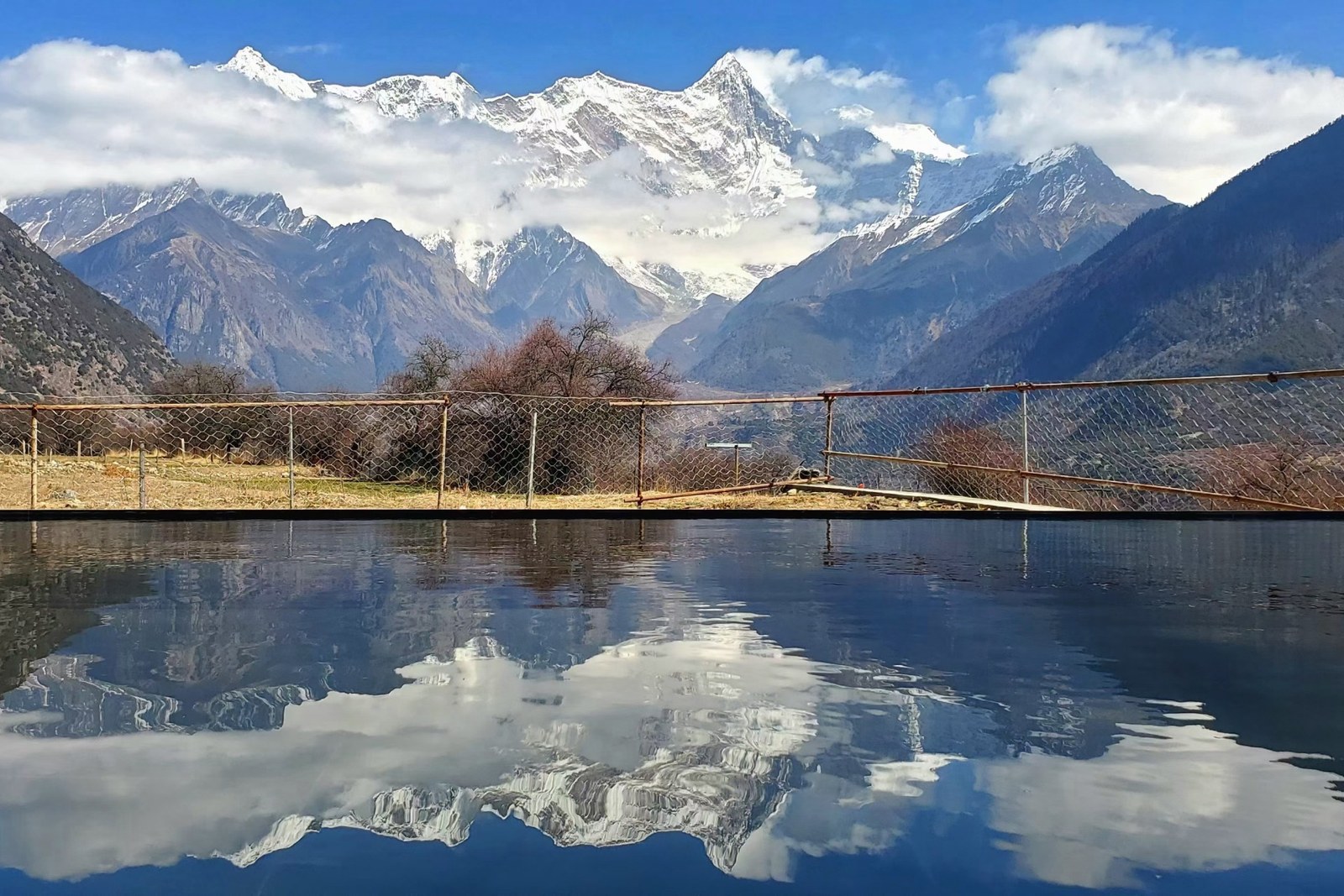
The classic viewing station is 色季拉山口 Sèjìlā Shānkǒu the Sekyim La, the high pass on the G318 east of Bayi. From the viewing terrace the massif floats at the head of an ocean of ridged forest, its white pyramid catching the first sun while the valleys below are still blue with shadow. The second, and for many the better, vantage is 索松村 Suǒsōng Cūn Sosong village across the river from Pai: a foreground of barley terraces and peach trees, the peak rising nearly four kilometers directly behind.
The peak matters to more than photographers. In Tibetan tradition Namcha Barwa is a sacred mountain, a protector of the gorge country, and its twin role – holy mountain, geographic anchor – runs through every local story of the valley. Plan for patience rather than luck: stay two nights, watch the dawn from the fields and the dusk from the pass, and the shy peak shows itself more often than the statistics suggest. When it does, the whole horizon seems to reorganize around that single white triangle.
Practicalities
- The Sekyim La viewpoint lies on the G318 about 70 kilometers east of Bayi town; mornings hold the best odds before clouds build.
- Sosong village and Pai town offer guesthouse stays directly facing the peak; two nights is the sensible minimum.
- Autumn and late spring bring the clearest air; the blossom season adds peach flowers but more cloud.
- The pass is nearly 4,800 meters – go up slowly, dress for wind, and skip it if you have just arrived on the plateau.
Words and Names
南迦巴瓦峰 Nánjiābāwǎ Fēng Namcha Barwa, 7,782 m, eastern anchor of the Himalaya; 羞女峰 xiūnǚ fēng “the shy peak”, its cloud-cap nickname; 色季拉山口 Sèjìlā Shānkǒu the Sekyim La pass viewpoint on the G318; 索松村 Suǒsōng Cūn the barley-field viewpoint village across from Pai; 派镇 Pàizhèn Pai town at the canyon gateway. Beyond the peak, the same 林芝市 Línzhī Shì Nyingchi keeps more places worth the detour: 雅鲁藏布大峡谷 Yǎlǔzàngbù Dà Xiágǔ the great canyon at its foot, 巴松措 Bāsōngcuò the green lake of the Ba valley, 鲁朗林海 Lǔlǎng Línhǎi the forest sea over the pass, or 米堆冰川 Mǐduī Bīngchuān the glacier among the farms of Bomi – four more doors into the same Nyingchi. Once the summit has shown itself, our Nyingchi food map fills the table.
flowcloud would say Namcha Barwa runs the plateau’s strictest gallery – admission is patience, and the show never repeats. All checked November 2026.
Getting there: The Sekyim La viewpoint stands on the G318 about 70 kilometers east of Bayi – an hour’s drive up the switchbacks; the Sosong village viewpoint lies across from Pai town in the canyon reserve. Dawn and dusk give the best odds of cloud-free summits. All checked November 2026.