
南岗千年瑶寨 Nángǎng qiān nián Yáo zhài is a Yao village on a mountain ridge in 连南瑶族自治县 Liánnán Yáozú Zìzhìxiàn, the mountain county in the north-west of 清远市 Qīngyuǎn shì, and it is the largest and best known of the Yao settlements of the region. The name 千年瑶寨 means the thousand-year Yao village, and the claim is not far off: it is a settlement of stone lanes and timber houses built along a ridge above a deep valley, reached by a long stair, and it has been lived in for centuries without being rebuilt as a museum. It is a village you visit, but a village that is still a village.
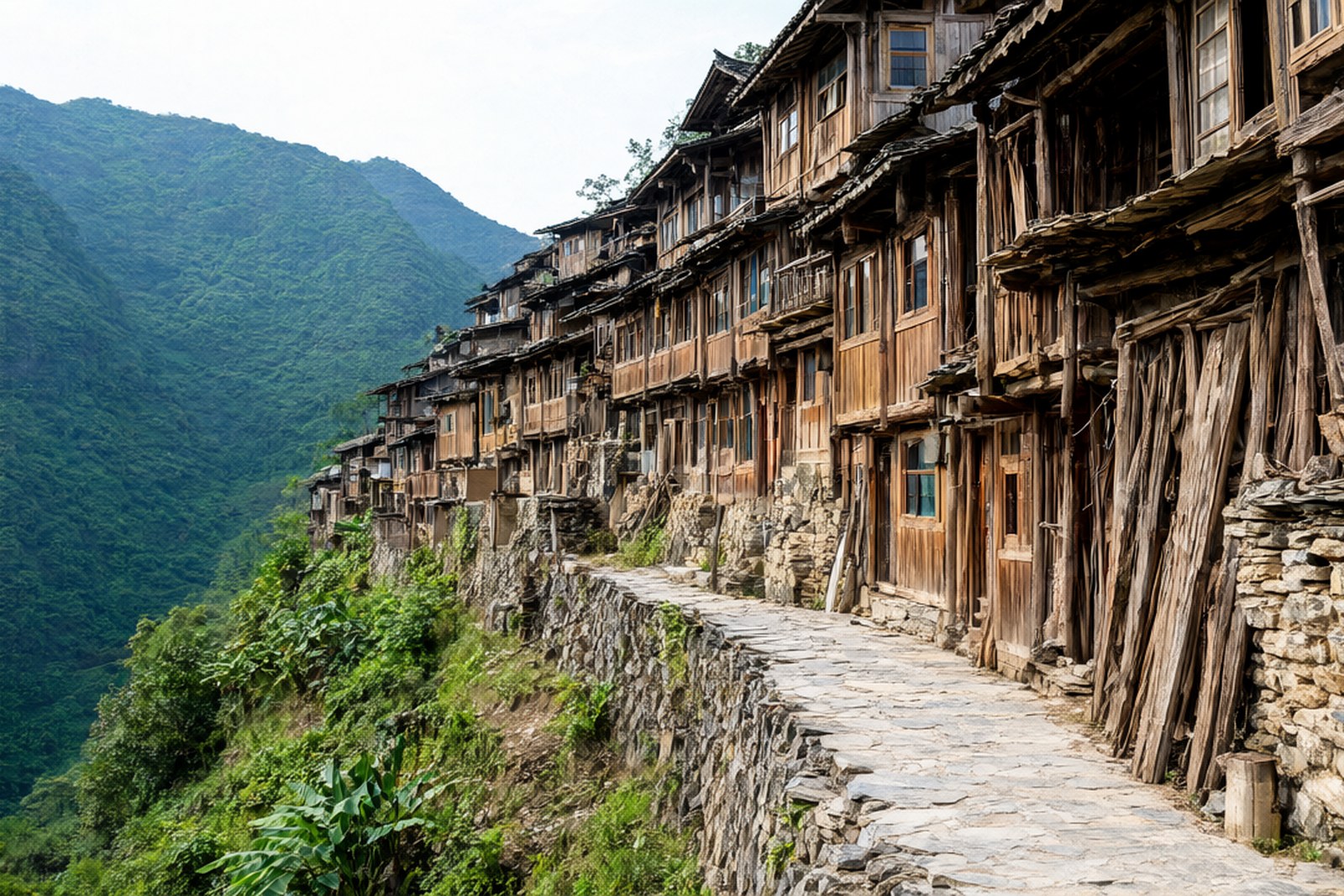
The architecture is what makes it remarkable. The houses are of timber frame, mud brick and stone, raised on stone plinths and roofed in tiles, packed along the ridge in ranks so that the roofs step down the slope; the lanes between them are laid in stone and climb and turn with the ground, and the whole village is defended by its position as much as by any wall. It is a settlement shaped by a wet, steep country and by the need to live where the land could be farmed, and it has kept its shape because there was never any reason to change it.
The village is Yao, and the culture is the other half of the visit. The 瑶 Yáo of 连南 have their own dress, their own songs and their own festivals, the drum and the long-drum dance, and the villages keep their customs alive; the women still wear the embroidered jackets and the headdress on festival days, and the village celebrates its own calendar of events. There is a small museum and a performance ground, but the real interest is the village itself, its people, and the life that goes on in the lanes and the terraces below, where the farming is the same farming it has always been.
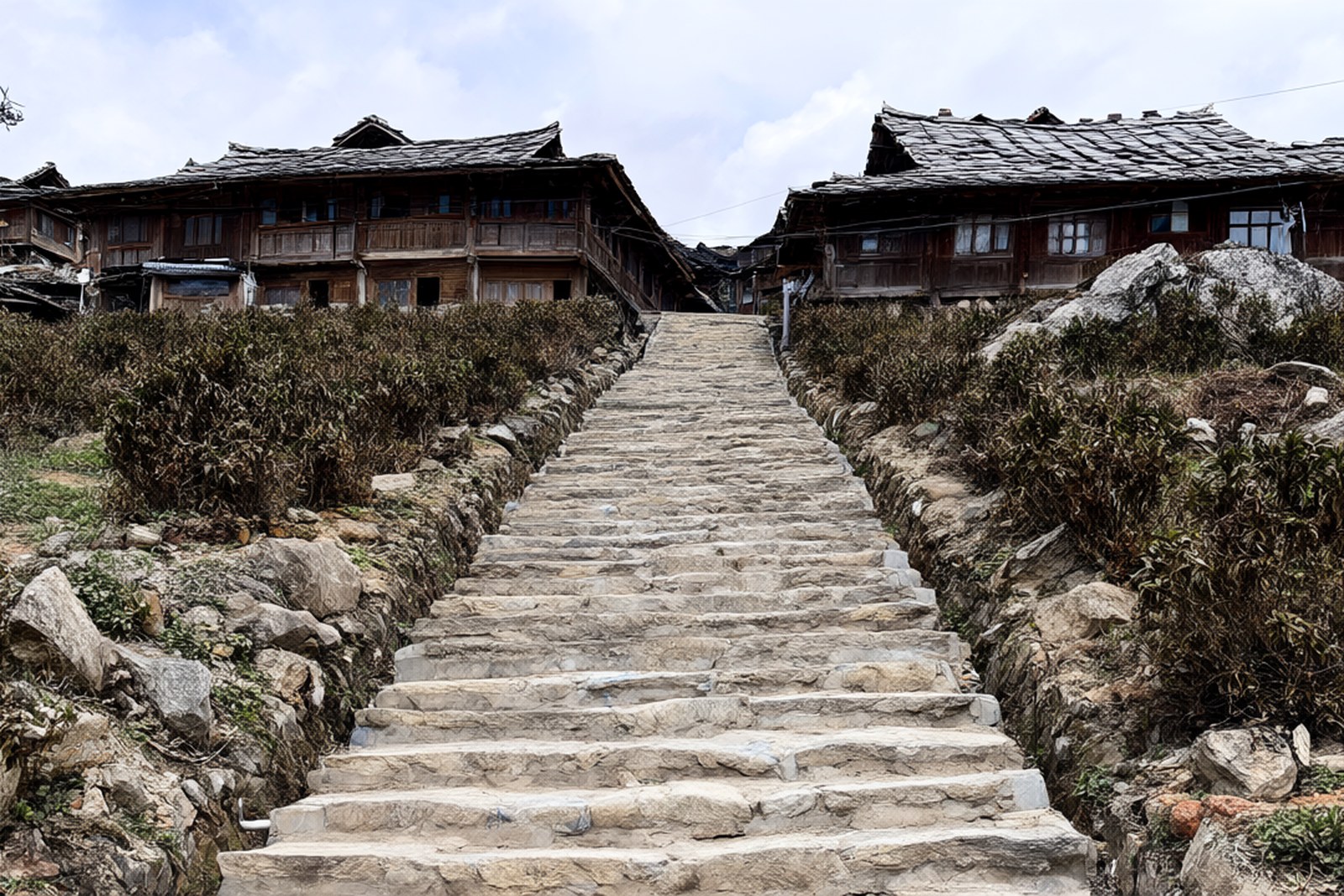
Getting there is part of the experience. The village sits high on the ridge, reached by a long flight of stone steps from the road below, and the climb opens the view as it goes until the whole valley and the ranges beyond are laid out below the lanes. The neighbouring villages in the same hills, smaller and quieter, are worth a walk, and the terraces around them are a landscape of their own. Come for the day, or better, stay a night in one of the village guesthouses, when the day-trippers have gone and the village is simply itself again. It is best in the autumn, when the air is clear and the harvest is in.
Practicalities
Tickets. The village charges an entrance ticket, in the region of ¥60 to ¥100, which covers the lanes, the small museum and the performance ground. There is usually a shuttle or a paid car park at the foot of the ridge, since the village itself is reached on foot up the stair.
Opening hours. The village is open roughly 08:30 to 17:30, with the last entry in the late afternoon. It is quietest in the early morning and after four o’clock, when the coaches have gone and the residents are out in the lanes.
Getting there. 南岗 is in the hills of 连南瑶族自治县, reached by road from 连南 town in about half an hour and from 清远市 in about two and a half hours. The nearest rail stop is 连州站 Liánzhōu zhàn, from which you hire a car or a taxi.
Closing day. The village is open every day of the year with no weekly closing day. The performances follow their own schedule and may be reduced on quiet days, and the stone lanes are slippery in the rain.
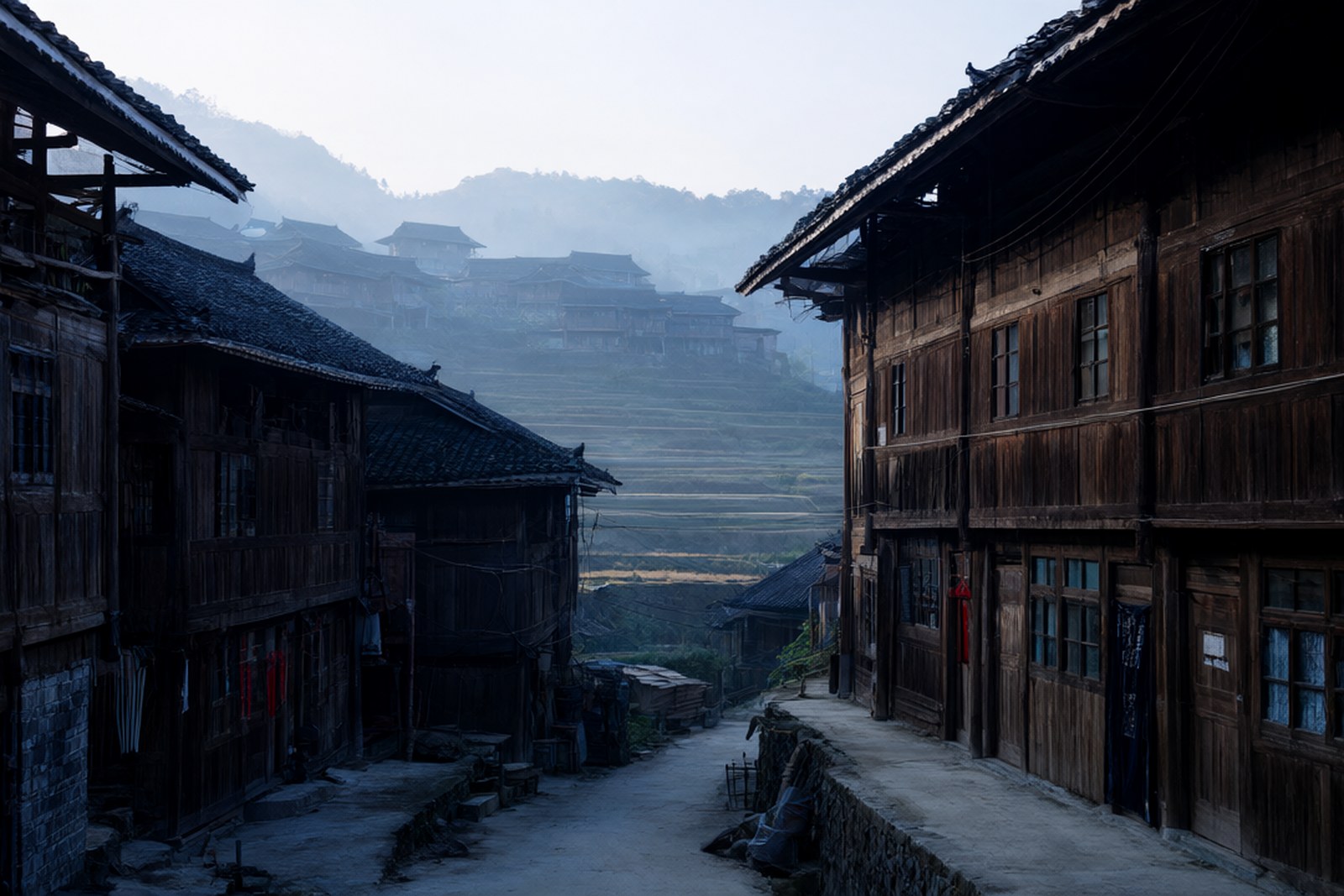
flowcloud would say that a people who built their houses in ranks along a ridge, in stone and timber, and then simply lived there for a thousand years without seeing a reason to change, have left the clearest kind of history, and that a village which is still a village is worth more than any museum of one.
Getting there: 连南 town is the base, about half an hour by road, and 连州站 Liánzhōu zhàn is the nearest rail gateway; from there a car or a taxi up into the hills to the foot of the stair is the way in.