
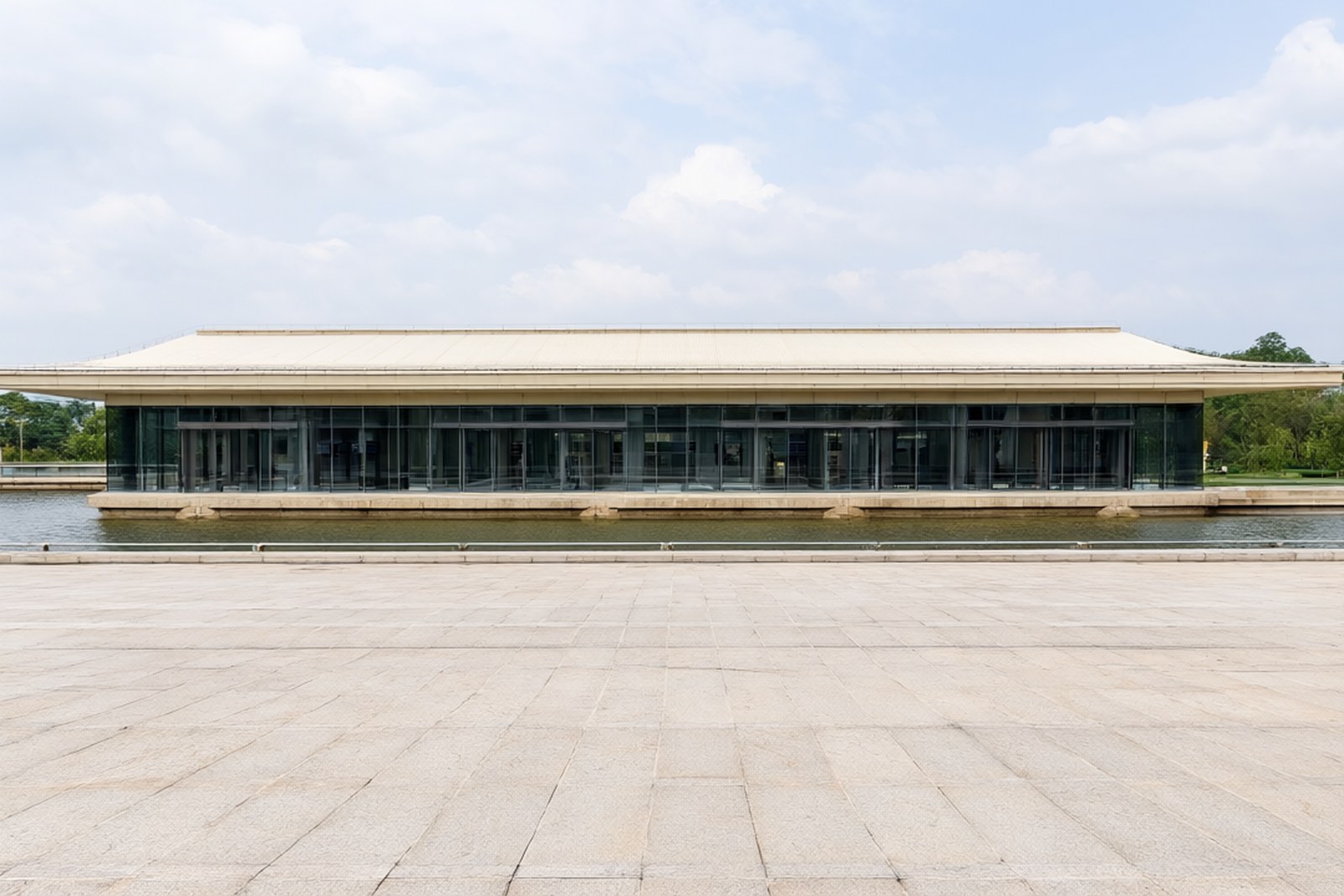
The 中国南海博物馆 Zhōngguó Nán hǎi bó wù guǎn, the China Museum of the South China Sea, stands on the waterfront at 潭门镇 Tán mén zhèn in 琼海市 Qiónghǎi shì, and it is the only national museum in the country built around a fishing port. Construction was launched on the site in November 2015 and the museum opened in 2018, with more than seventy thousand objects in the collection: export porcelain recovered from wrecks, biological specimens from the reefs, ship models, and the archaeology of the 西沙 Xī shā and the 南沙 Nán shā. Its address is 博物馆路 Bó wù guǎn lù, Museum Road, in a town of six thousand people whose business is fishing.
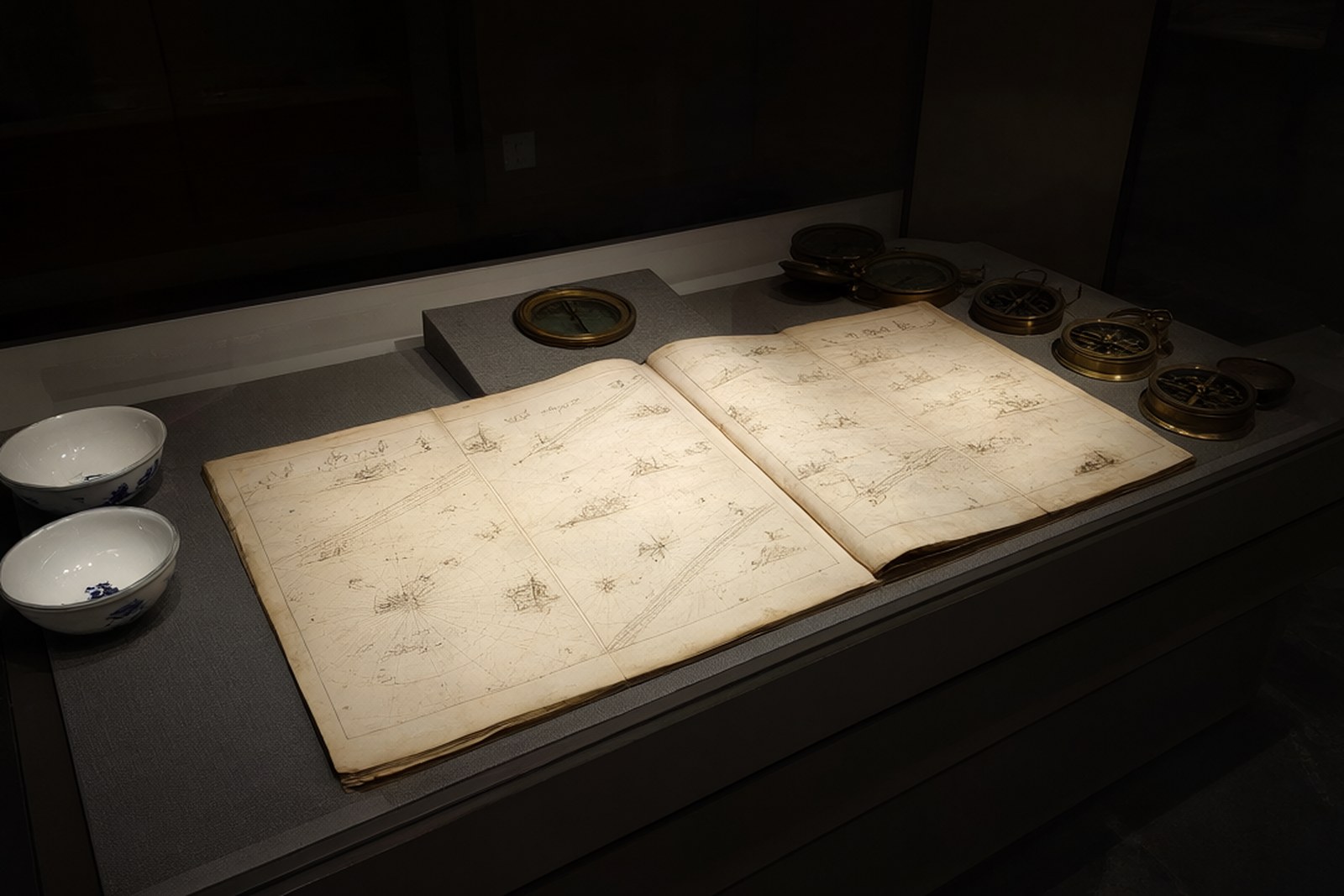
What holds the collection together is a book. The captains of 潭门 navigated to the far reefs for centuries with the 更路簿 gēng lù bù, a hand-written set of sailing directions in which 更 gēng is the distance run and 路 lù is the bearing taken on a 罗盘 luó pán, the magnetised needle. Every master had one, most were copied out by hand and passed down, and they recorded not only the routes but the names the fishermen gave the reefs and shoals: 猫注岛 Māo zhù dǎo for the island the charts call 永兴岛, 园峙岛 for 甘泉岛, 大筐 for 华光礁, 黄山马 for 太平岛. A copy of one of them, the 驶船更流簿, is among the museum’s exhibits, and in June 2008 the 南海航道更路经 was entered on the second national list of intangible cultural heritage. The permanent gallery on the fifth floor, 探海寻踪, sets out what Chinese underwater archaeology has recovered from the South China Sea over three decades, and the 更路簿 galleries are where the exhibits and the town outside the window turn out to be the same subject.
The museum is the anchor of a small cluster and the rest of it is worth the same afternoon. Two hundred metres away, in 排港村 Pái gǎng cūn, the old fishing village at the mouth of the harbour, one family has turned its own inherited book, compass, charts, salvaged porcelain and photographs into a private 更路簿博物馆 gēng lù bù bó wù guǎn that visitors have named the 潭门故事馆, the Tanmen story hall, and the man who runs it is a recognised inheritor of the tradition. The village itself is one of the best-preserved fishing settlements on the island and still keeps the 祭兄弟公 jì xiōng dì gōng rite for those lost at sea and the 鲤鱼灯节 lǐ yú dēng jié, the carp lantern festival. The working harbour next door was made a first-class national fishing port in 2004 and named one of the country’s civilised fishing harbours in 2010, and the boats still leave for weeks at a time.
The practical shape of a visit is straightforward. The museum is free and needs an identity document and a booking through its own account or by telephone, it opens on the hour from half past nine and closes at half past five with the last admission at five, and it closes on Mondays except over national holidays. It is a large building and the permanent galleries alone take three hours at a walk, so a half day is the honest allowance and a full day if you add the private museum and the village. The town itself then does what it does: the harbour at dawn for the landing, a plate of pan-fried mackerel or a plain hotpot at one of the 大排档 on the quay for lunch or dinner, and the museum in the heat of the afternoon, which is the order the locals would choose if they had a day off.
Practicalities
Tickets. The 中国南海博物馆 is free and requires a valid identity document plus a booking made through the museum’s own account or by telephone; the private 更路簿博物馆 in 排港村 is free or a donation. There is nothing else to pay on the site.
Opening hours. Tuesday to Sunday, 09:30 to 17:30, with admission and same-day bookings stopping at 17:00; closed on Mondays except over national public holidays. The private museum keeps its own and less regular hours and is worth telephoning about. Allow half a day for the national museum, and a full day to add the village and the harbour.
Getting there. 潭门镇 is about twenty kilometres east of 嘉积镇 Jiā jī zhèn, the 琼海市 seat, and about thirty-five kilometres from 琼海站 Qiónghǎi zhàn on the 东环 high-speed line; 琼海博鳌机场 Qiónghǎi Bó’áo jī chǎng is about forty minutes by road. By road 博鳌 is about forty minutes south and 海口 about two hours north on the 东线 expressway. A car or a taxi is needed to get here and the museum and the village are within a walk of each other once you are.
Closing day. The museum closes on Mondays, and on the days around national holidays it opens on the holiday schedule instead. The private museum in the village closes without notice when the family is busy, and the harbour has no closing day at all: the boats land every morning and the restaurants on the quay open every evening.
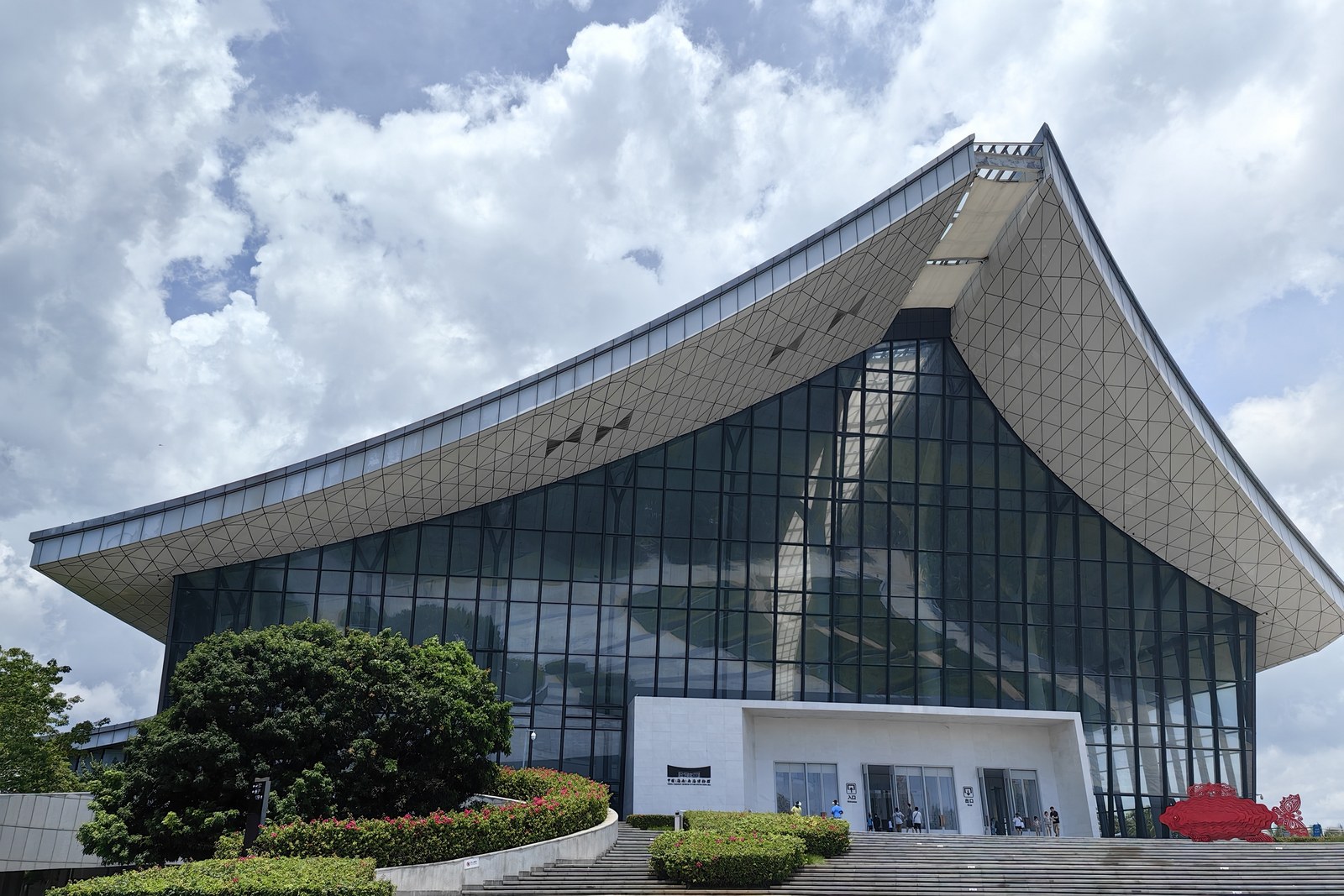
flowcloud would say that a port which kept its sailing directions by hand for a thousand years, and which now houses them in a national museum on the same quay, has arranged the rarest thing in heritage work, which is for the exhibit and the village outside to still be doing the same job.
Getting there: the 中国南海博物馆 is on 博物馆路 in 潭门镇, 琼海市, about twenty kilometres east of 嘉积镇 and thirty-five from 琼海站 Qiónghǎi zhàn on the 东环 high-speed line; it is a short walk from the fishing quay and from the private 更路簿博物馆 in 排港村.