
Nanhua Monastery, the Sixth Patriarch’s House
南华寺 Nán huá sì, in full 南华禅寺 nán huá chán sì, stands at the foot of 宝林山 Bǎo lín shān beside the 曹溪 Cáo xī in 曲江区 Qū jiāng qū, 马坝镇 Mǎ bà zhèn, about twenty kilometres south-east of the centre of 韶关市 Sháo guān shì. It is the monastery the 禅宗 Chán zōng – the Chan school of Chinese Buddhism – calls its 祖庭 zǔ tíng, its ancestral seat, because the sixth patriarch 惠能 Huì néng taught here, and because the only book in Chinese Buddhist history that is called a sutra rather than a commentary was compiled out of what he said here. The honorifics attached to it are old and are quoted in every account: 东粤第一宝刹 dōng yuè dì yī bǎo chà, the first precious monastery of eastern Guangdong, and 岭南禅林之冠 lǐng nán chán lín zhī guān, the crown of the monasteries of 岭南 Lǐng nán. The founding is put at the first year of 天监 Tiān jiān in the Liang, which is 502, with the buildings finished in the third year, 505, when the emperor 梁武帝 Liáng Wǔ dì granted the name 宝林寺 bǎo lín sì – the temple of the precious grove. That makes the site over 1,500 years old, and a 1,500th-anniversary ceremony was held on 10 November 2002. Both dates in the founding come with alternatives in some accounts, but 502 for the start and 505 for the completion are what the monastery’s own history and the standard references give.
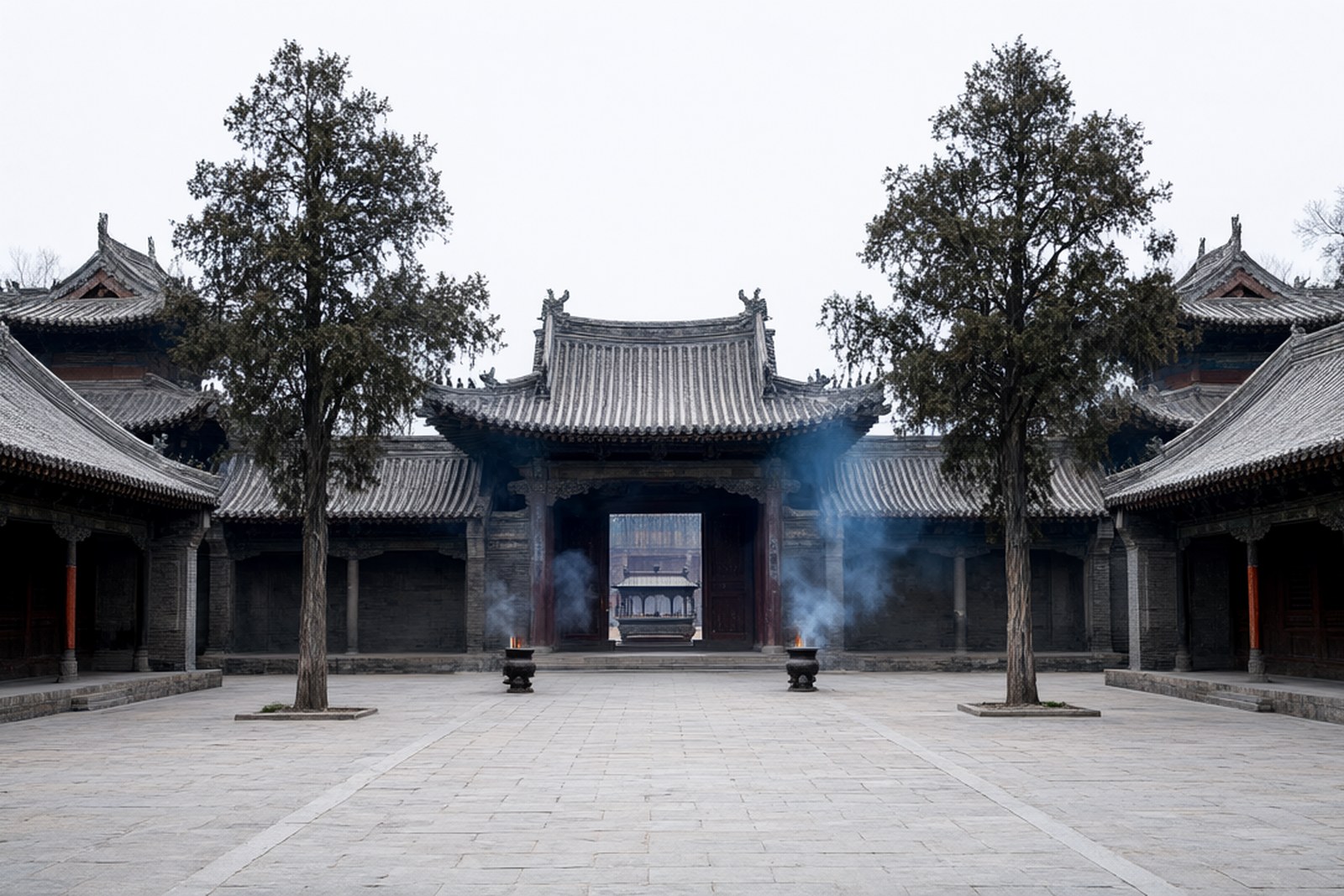
The account the temple keeps of how it began is a story about a foreign monk and a drink of water, and it is worth telling as the tradition tells it rather than as a fact. In the first year of 天监, the Indian monk 智药三藏 Zhì yào sān zàng was travelling with his disciples to 五台山 Wǔ tái shān to pay respect to 文殊 Wén shū when he passed the mouth of the 曹溪 and scooped up a handful of the water to drink. It was, the story says, unusually sweet, so he followed the stream up to its source and found the hills and the running water so fine that he told his followers: this mountain will take a monastery, and 170 years after I am gone a peerless dharma treasure will teach here. The prefect of 韶州 Sháo zhōu, 侯敬中 Hóu Jìng zhōng, reported the matter to the court, the throne approved, and the name 宝林寺 came back as an imperial grant. The prophecy is the part the temple has always made something of, because 170 years on from 502 lands in the years when 惠能 was teaching at 曹溪, and the connection between the two halves of the story is the whole of the foundation legend. 惠能 himself was born in the twelfth year of 贞观 Zhēn guān, 638, in 新州 Xīn zhōu, and came to 曹溪 to settle in the second year of 仪凤 Yí fèng, 677 – the sources also give 676, the first year – when the local landholder 陈亚仙 Chén Yà xiān gave the monastery the ground it stands on and the 宝林寺 was restored after a period of decline. He taught here for some 37 years, and the temple’s own phrase for the period is 传法三十余载 chuán fǎ sān shí yú zǎi, spreading the dharma for more than thirty years.
The court took an interest more than once and the names on the gate changed with it. In the first year of 神龙 Shén lóng, 705, emperor 唐中宗 Táng Zhōng zōng summoned 惠能 to the capital; he declined, and the emperor sent gifts instead and renamed 宝林寺 as 中兴寺 zhōng xīng sì, the monastery of the restoration. In 景龙 Jǐng lóng 2 – 708, with a variant account putting it at 神龙 3, 707 – the granted name became 法泉寺 fǎ quán sì, the monastery of the dharma spring, and the buildings were ornamented afresh. 惠能 died in the second year of 先天 Xiān tiān of 唐玄宗 Táng Xuán zōng, which is 713, at 国恩寺 guó ēn sì in his native 新州, aged 76; afterwards his disciple 法海 Fǎ hǎi gathered his sayings and compiled the 六祖坛经 Liù zǔ tán jīng, the Platform Sutra of the Sixth Patriarch, which is the only Chinese text in the Buddhist canon to be called a sutra – a scripture – rather than a treatise, and the reason the monastery is called a 祖庭 at all. The building was burned in the disorder at the start of the 宋 Sòng when retreating troops of the 南汉 Nán hàn held the area, and in the first year of 开宝 Kāi bǎo, 968 – another account says simply within the 开宝 years, around 970 – 宋太祖 Sòng Tài zǔ ordered the whole monastery rebuilt and gave it the name it still carries, 南华禅寺 nán huá chán sì. The 元 Yuán dynasty brought three more rounds of fighting and the seat declined; the monk 憨山德清 Hān shān Dé qīng brought about a substantial revival in 万历 Wàn lì 28, 1600, and it fell into disrepair again at the end of the 明 Míng; in the 康熙 Kāng xī years – 1668 is the usual figure – 尚可喜 Shàng Kě xǐ, the 平南王 Píng nán wáng commanding in Guangdong, had the whole place refurbished.
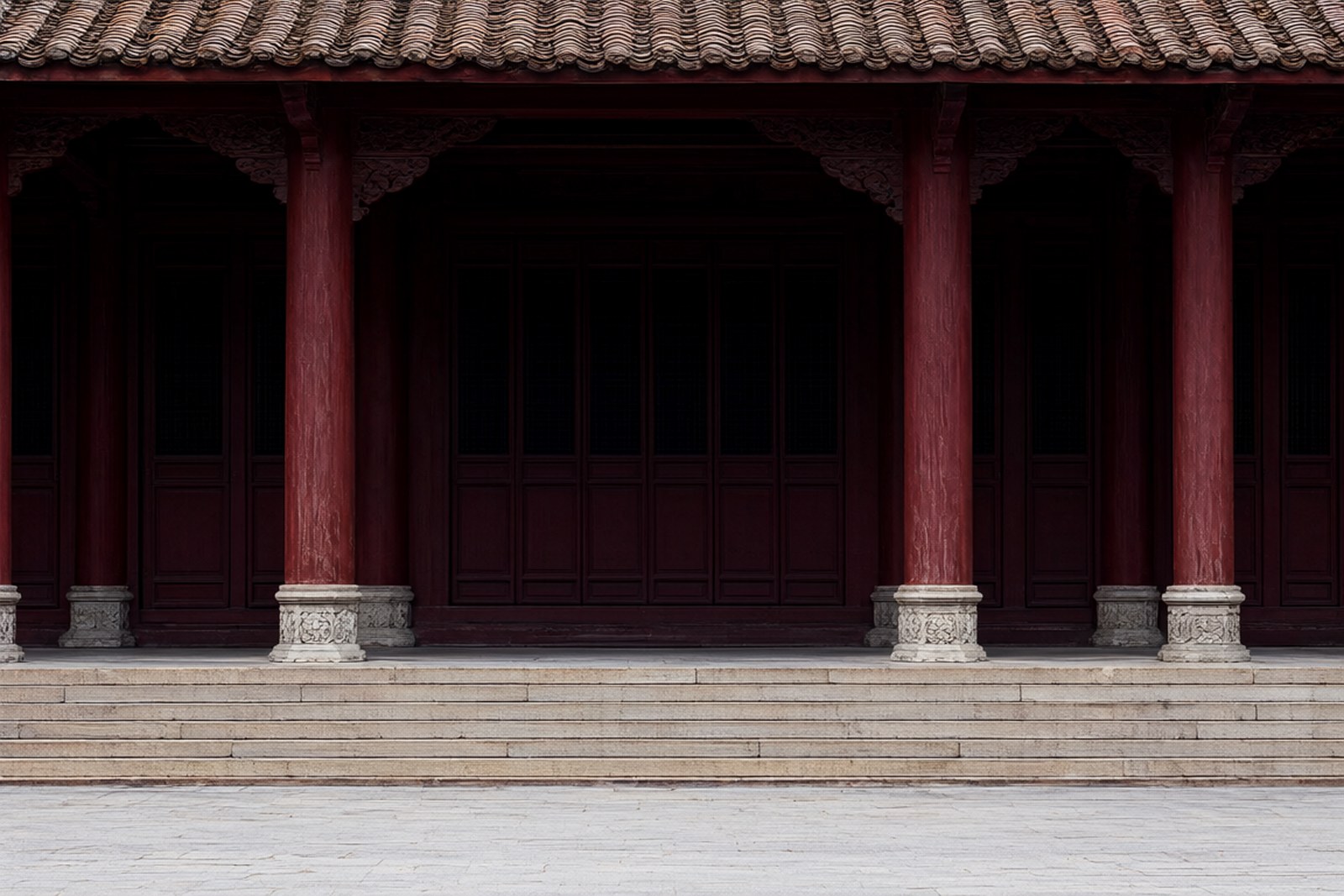
The monastery a visitor walks round today owes more to the twentieth century than to any of those reigns, and the man responsible was 虚云 Xū yún, the monk whose rebuilding of 南华禅寺 began in 1934 and who stayed from 1936 to 1943, raising money, surveying the ground and putting up halls. The numbers from those years are large and specific: some 243 new structures, halls, rooms, hermitages and stupas, and 690 images of the Buddha and the bodhisattvas newly made. The wooden shrine holding the preserved body of the sixth patriarch had been damaged by termites and 虚云 took the relic out and had it attended to, and the new seat he had made followed the form of an 阿育王塔 Ā yù wáng tǎ, an Ashoka pagoda, with figures of 南岳 Nán yuè, 青原 Qīng yuán, 法海 Fǎ hǎi and 神会 Shén huì set at the sides in attendance – the two great lineage heirs and the two figures closest to the Platform Sutra. The rebuilt monastery was measured out in the old units at the time: 151 丈 from the 曹溪门 Cáo xī mén to the 卓锡泉 Zhuó xī quán at the back, north to south, and 39.5 丈 from the eastern precinct wall to the western wall of the meditation hall, with a built area given in one account as 12,000 square 尺 and in another as 12,000 square metres – the two numbers differ by a factor of about ten because the units have been mixed somewhere along the way, so the honest way to put it is that the built floor is of the order of 12,000 units of area, and the layout matters more than the total. 李汉魂 Lǐ Hàn hún, then chairman of the Guangdong provincial government, was among those behind the reconstruction. The axis a visitor follows is long and legible: 曹溪门, the 放生池 fàng shēng chí – the release-of-life pond – the 五香亭 wǔ xiāng tíng or 宝环门 bǎo huán mén, the 宝林门 bǎo lín mén, the 天王宝殿 tiān wáng bǎo diàn with its four guardian kings, the 大雄宝殿 dà xióng bǎo diàn, the 法堂 fǎ táng, the 灵照塔 líng zhào tǎ, the 六祖殿 liù zǔ diàn where the patriarch’s hall is, and the 方丈室 fāng zhàng shì beyond. The left side carries the bell tower, the 报恩堂, the 伽蓝楼, the 客堂, the 香积厨 and the 斋堂 among others; the right the drum tower, the 祖师殿, the 云水堂, the 禅堂 and the 观音堂. East of the compound there is the 无尽庵 wú jìn ān and the 海会塔 hǎi huì tǎ; behind it the 飞锡桥 fēi xī qiáo, the 伏虎亭 fú hǔ tíng and the 卓锡泉, the spring the tradition connects with 惠能 washing his robe.
The objects are the reason the place is on the national protected list rather than only on the monastic one. 南华寺 holds more than 300 pieces graded as first-class national relics. The central one is the preserved body of 惠能 himself, kept in the 六祖殿; the hall was rebuilt and the image formally re-seated over three days, 19 to 21 October 1981, in a ceremony of its own. With it are a Tang imperial edict granted to 惠能 by 武则天 Wǔ Zé tiān – the text of which is not published anywhere the research for this piece could find, so it is safer to note what it is than to quote it – and the Tang 金丝千佛袈裟 jīn sī qiān fó jiā shā, the gold-thread robe with a thousand buddhas on it, which 武则天 is said to have given him. There are Song-dynasty carved wooden 罗汉 luó hàn figures, a Ming iron drum, a Qing 康熙 Kāng xī edition of the 大藏经 dà zàng jīng, the Buddhist canon, a copperplate 金刚经 jīn gāng jīng of the same dynasty, an iron 观音 Guān yīn, and edicts from several reigns. Two things in the courtyards that visitors notice before any of the halls are the pair of 菩提树 pú tí shù, bodhi trees, grown so large that they nearly meet overhead, which the tradition says were brought from the west and planted in the front court by 智药三藏 himself and tended afterwards by 惠能, and which have been renewed generation after generation without a break; and, at the back, nine old and rather rare 水松 shuǐ sōng standing beside the 卓锡泉. The monastery’s standing in the modern state is uncomplicated and documented: in 1983 it was in the first batch designated by the State Council as a national key monastery of Buddhism in the Han areas; in 2001 it entered the fifth batch of national key cultural relic protection units as a Ming and Qing architectural group; in 2017 it was approved as a base for cross-strait exchange, with the plaque presented in January 2019 alongside a Chan cultural exchange event. There are more than 200 resident monks, of whom 124 are registered and on file in Guangdong, and the monastery runs the 曹溪佛学院 Cáo xī fó xué yuàn, its own Buddhist college, and the 曹溪讲坛 Cáo xī jiǎng tán, its lecture programme. Twenty kilometres away at 马坝镇, in 1958, a hominid skull cap was found at 狮子岩 shī zi yán, dated to about 129,000 years ago and known as 马坝人 Mǎ bà rén – an archaic human of the middle Palaeolithic – and the hill behind the monastery has the 招隐寺 zhāo yǐn sì, where 惠能 is said to have stayed, together with a large limestone cave system, which makes an easy second half to the same day.
Practicalities
Tickets. An admission charge of a few tens of yuan applies, in the ordinary Chinese temple range, with the usual concessions for children, students and the older brackets; there is no booking system to fight and no timed entry. Incense is available at the gate and inside, vegetarian meals are served in the 斋堂 at fixed hours for a modest charge, and the monastery is a working religious institution first, which is why there is no commercial operation inside the walls to speak of.
Opening hours. Roughly 08:00 to 17:00, open every day of the year including the major Buddhist festivals, when it is at its busiest – the first and fifteenth of the lunar month, the Buddha’s birthday, and the days around the 六祖’s commemorations draw large local congregations. Two hours is enough for the axis and the courtyards; three if you want to sit in the 六祖殿 and read the inscriptions, and the light in the front court is best mid-morning.
Getting there. The monastery is at 马坝镇 Mǎ bà zhèn in 曲江区 Qū jiāng qū, about twenty kilometres south-east of the centre of 韶关市; 韶关站 Sháo guān zhàn on the 武广 Wǔ guǎng high-speed line is the main railhead and 马坝 is a short local bus or taxi ride from the city either way, with buses from the city centre running to the monastery and to 马坝 through the day. It is on the ordinary itinerary out of 韶关 to 丹霞山 in the opposite direction, and the 马坝人 site and the caves are within a few minutes of the temple gate by car, so the two are usually done together.
Closing day. There is no weekly closing day – a monastery with resident monks and daily services cannot have one – and the halls are open through the year. The exceptions are practical rather than calendrical: individual halls are occasionally closed for ceremonies or conservation work on the relics, and the 六祖殿 is the one most likely to be affected, so a visitor whose whole reason for coming is the patriarch’s hall should check before making a long trip.
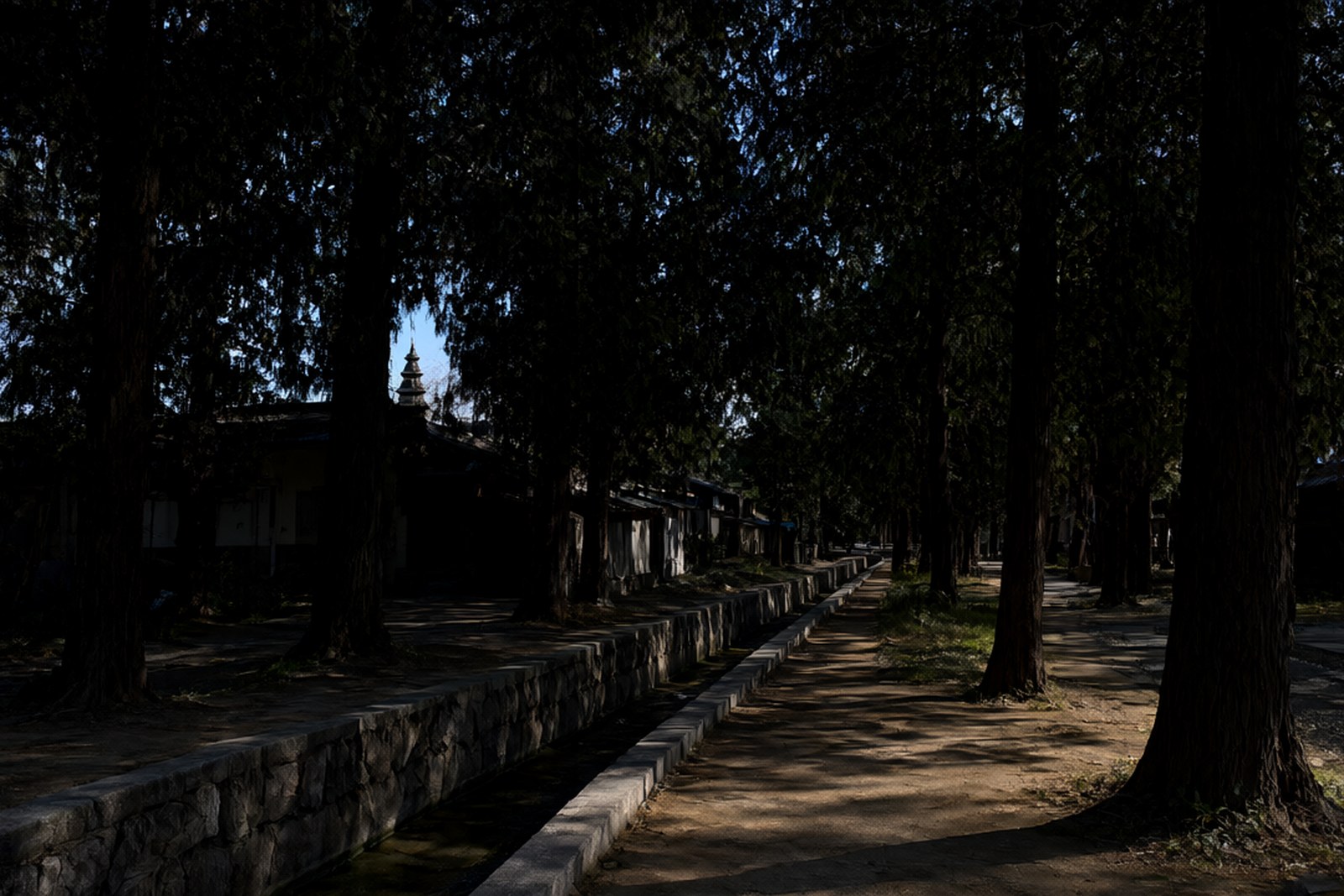
flowcloud would say that a place can be measured either by what it has kept or by what it made, and that 南华寺 scores on the harder of the two counts: it kept a body, a robe and an edict, which is a museum’s achievement, but what it made was a book, and the fact that a Chinese monk’s spoken teaching became the only Chinese text the canon calls a sutra is a more durable monument than any of the halls that have been burned and rebuilt around it.
Getting there: 南华寺 is at 马坝镇 Mǎ bà zhèn in 曲江区 Qū jiāng qū, 韶关市, about twenty kilometres south-east of the prefecture centre, with buses from the city and a short taxi ride from 韶关站 Sháo guān zhàn on the 武广 Wǔ guǎng high-speed line or from 韶关东站 Sháo guān dōng zhàn on the ordinary railway; the 马坝人 site at 狮子岩 shī zi yán is a few minutes away by car and the caves and the 招隐寺 zhāo yǐn sì on the hill behind the monastery make the same day trip, and 韶关丹霞机场 Sháo guān dān xiá jī chǎng is the nearest airfield for anyone arriving by air.