
The road up is the first sign that this is a different climate. It climbs out of the valley in a series of hairpin bends, the air coming through the window gets noticeably cooler, and then the vegetation closes over the road on both sides and it is bamboo — not a clump of it, but slope after slope of it, thin green trunks packed so tightly that you cannot see into the grove at all, only the way the light comes through the top. Somewhere below the road there is running water. This is 南昆山 Nánkūnshān, Nankun Mountain, in 龙门县 Lóngmén Xiàn, the massif that the travel writing about Guangdong calls 北回归线上的绿洲 běihuíguīxiàn shàng de lǜzhōu, the oasis on the Tropic of Cancer, and 南国避暑天堂 nánguó bìshǔ tiāntáng, the south’s summer refuge.
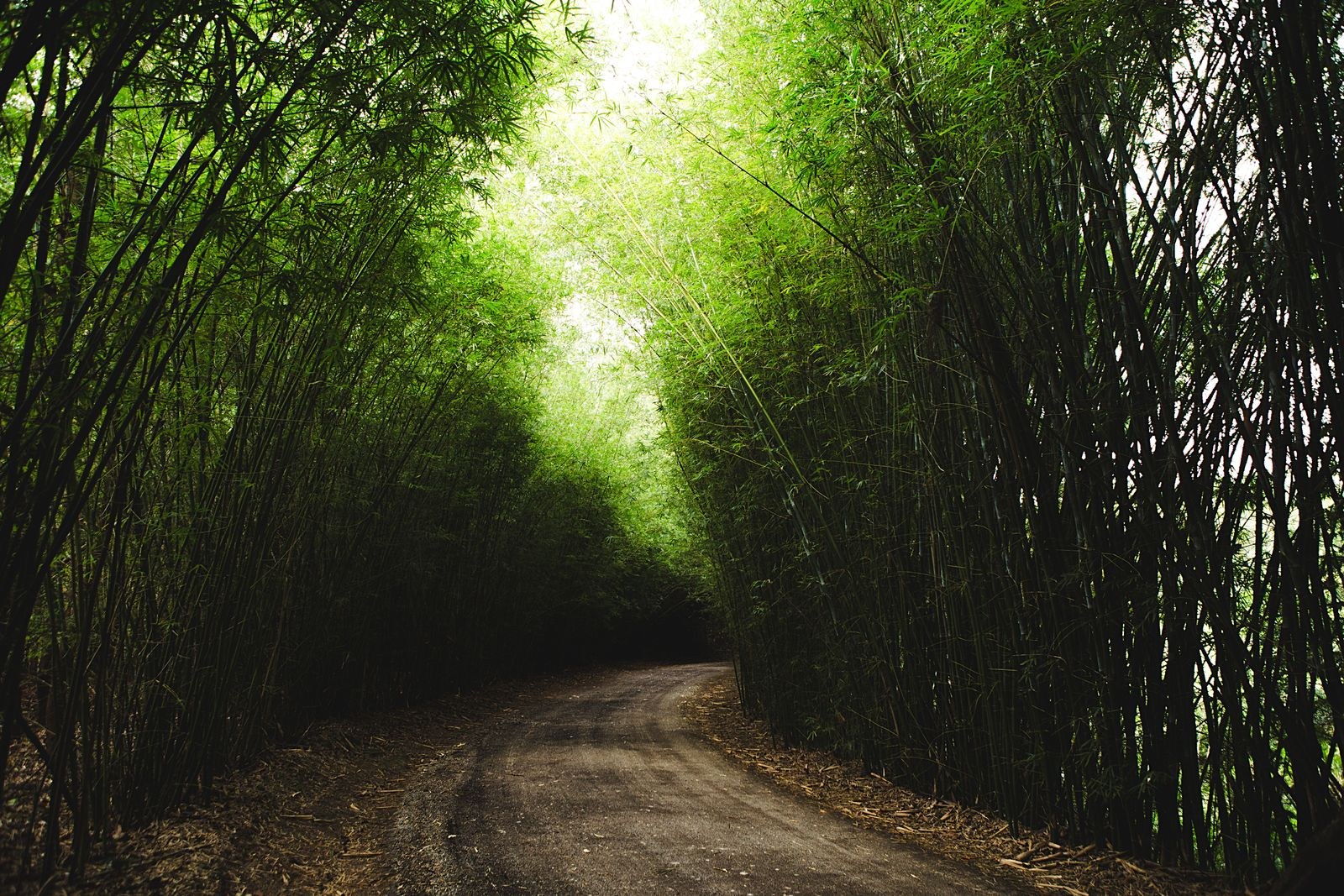
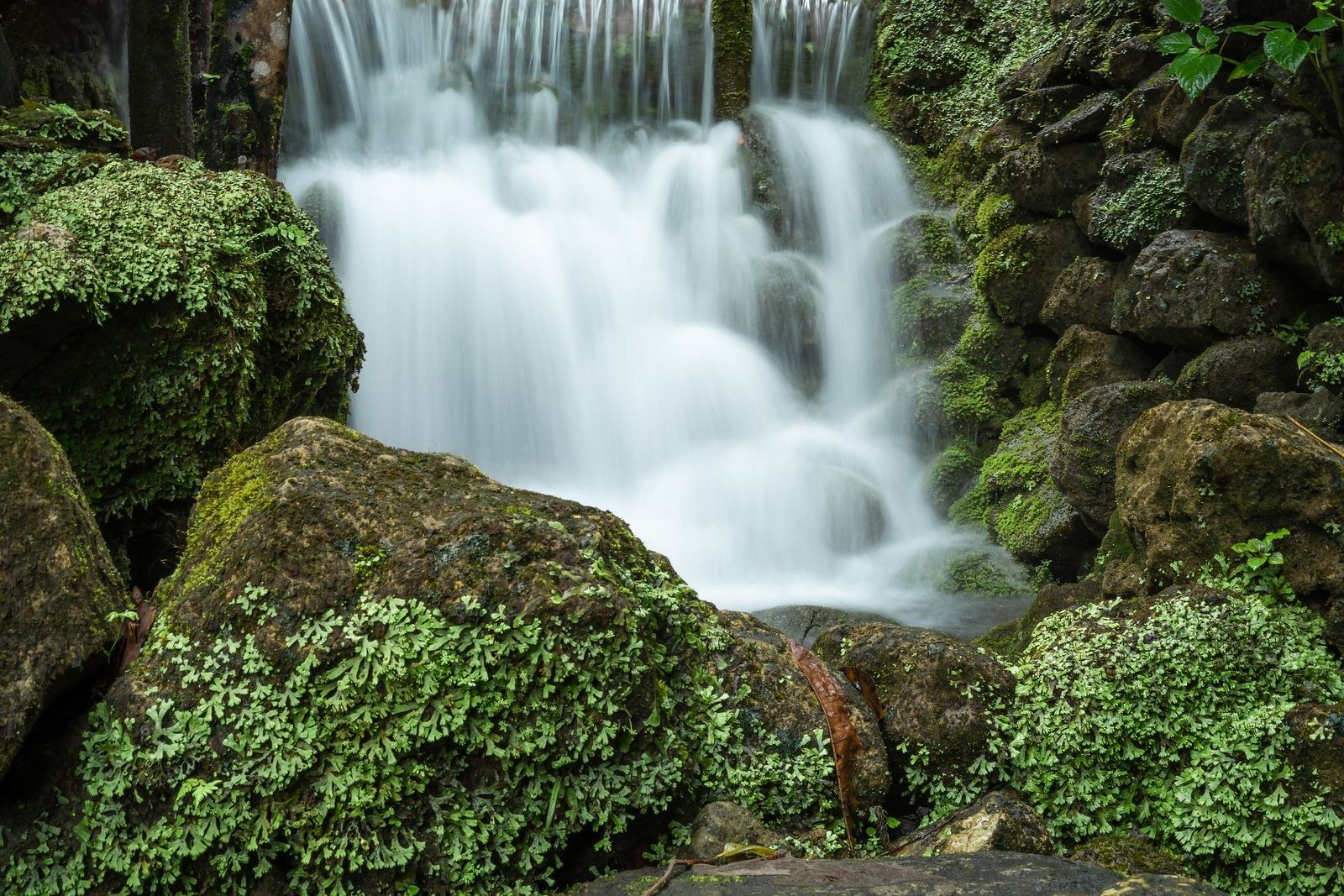
The mountain averages around 600 metres, its main peak 天堂顶 Tiāntángdǐng reaches about 1,200, and almost all of it is forest, which is what makes it cool: while the coast and the delta are at 35 degrees in July, the villages up here are ten degrees lower and the streams are cold. Everything the visitor comes for is water and wood. 川龙瀑布 Chuānlóng Pùbù, the mountain’s signature fall, drops 21.8 metres in five steps over a wooden boardwalk that is easy walking for anyone. 石河奇观 Shíhé Qíguān, the stone river, is a stretch of ancient glacial riverbed where seven clear green pools sit among smooth boulders, shallow and calm enough that families wade in them all summer. 观音潭 Guānyīntán is a three-tier cascade with a rock behind the curtain of water that is said to resemble Guanyin, set in a bamboo grove. 九重远眺 Jiǔchóng Yuǎntiào, the lookout of nine distances, is a free platform on the ridge with a 360-degree view over the bamboo, best at sunset. And 天堂顶 Tiāntángdǐng itself is a real mountain walk — four to six hours up and back, unimproved path, cloud and possibly sea of cloud at the top.
Practicalities
Tickets. The scenic area sells a core-sights pass at around ¥30, with single spots available at about ¥10 each, so you can pick off the waterfall and the stone river without buying the whole thing. 九重远眺 Jiǔchóng Yuǎntiào and 天堂顶 Tiāntángdǐng are free. Visitors over 60 pay half and over 70, or under 1.2 metres tall, go free. Separately, the hot springs that make the mountain a winter destination charge ¥78 to ¥150 for a soak, and the adventure park at 神鹰石 Shényīngshí charges by package, around ¥65 for the standard set.
Opening hours. The park is open 08:30 to 18:00 from May to August and 09:00 to 17:30 from September to April. The hot springs run late into the evening, roughly 08:30 to 23:00, and the outdoor pools are worth saving for after dark. The 天堂顶 Tiāntángdǐng trail needs a start in the morning; nobody should be setting off up it after two in the afternoon.
Closing day. There is no closing day, and the mountain is at its most useful in the opposite seasons from the coast: summer for the cool air, the streams and the swimming, late autumn and winter for the hot springs and the turning leaves. It does close individual trails after heavy rain or landslides, which is common between April and August, and the park closes entirely during typhoon warnings.
Getting there. By car is much the easiest option: about 1.5 hours from 广州 Guǎngzhōu or 东莞 Dōngguǎn and about 2 hours from 深圳 Shēnzhèn, leaving the expressway onto 省道 355 S355 for the climb. High-speed rail to 龙门站 Lóngmén Zhàn connects to a shuttle into the scenic area, and there are a small number of direct buses from 惠州客运南站 Huìzhōu kèyùn nán zhàn in Huizhou city. Public transport up the mountain between the individual sights is thin, so plan on a car or expect to walk and to hire.
flowcloud would say that Nankunshan is the one place in Huizhou where the weather is better in August than in January, and that anyone who comes here only for the hot springs has skipped the part that actually makes the mountain worth the drive.
Getting there: go in the warm months for the water and in the cool ones for the springs, and understand that the sights are scattered along several kilometres of mountain road, so a car is not optional if you want to see more than one of them. Wear shoes with grip for the wet stone, take mosquito repellent because the forest is thick, carry a light jacket since the evenings are genuinely cool, and buy the 土窑鸡 tǔyáojī — chicken roasted in an earth oven — from one of the roadside farm restaurants on the way down, which is what everyone who lives here does.