
Nanluoguxiang Hutong: A Fishbone of Yuan-Dynasty Lanes and Its Quiet Ribs
一街烟火鱼骨巷,满巷槐荫岁月深。Yī jiē yānhuǒ yúgǔ xiàng, mǎn xiàng huái yīn suìyuè shēn – One street of bustle in a fishbone of lanes; alleys full of locust shade, deep with the years.
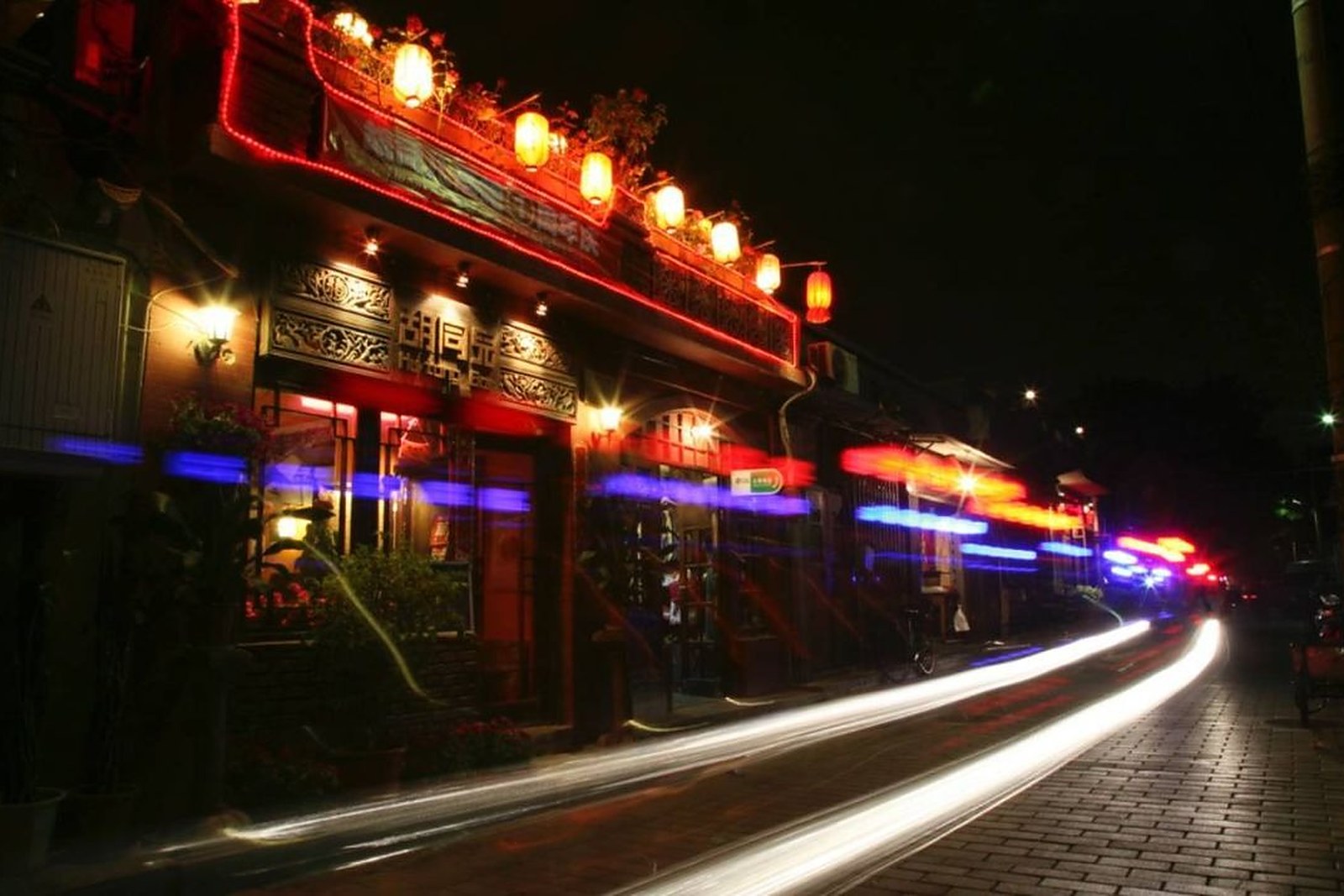
南锣鼓巷 Nánluōgǔxiàng Nanluoguxiang is not a preserved museum street — it is, plainly put, an ~800-metre hutong of slate paving in central 东城区 Dōngchéng Qū Dongcheng, just north of the Forbidden City, whose grid was laid out with the Yuan capital 大都 Dàdū Dadu in the 1260s–70s under the 里坊制 lǐfǎngzhì ward system, making it among the oldest surviving street fabric in Beijing. The plan is the charm: the spine of the fish runs south–north and eight pairs of hutongs branch off east and west like ribs, each lined with 四合院 sìhéyuàn courtyard houses — grey walls, painted beams, stone 门墩 méndūn gate drums. The spine itself has gone fully commercial, snack stalls and souvenir shops end to end, while one turn into any rib puts you back inside somebody’s actual weekday within thirty steps. That contrast is not a defect of the place; it is the honest story of the place.
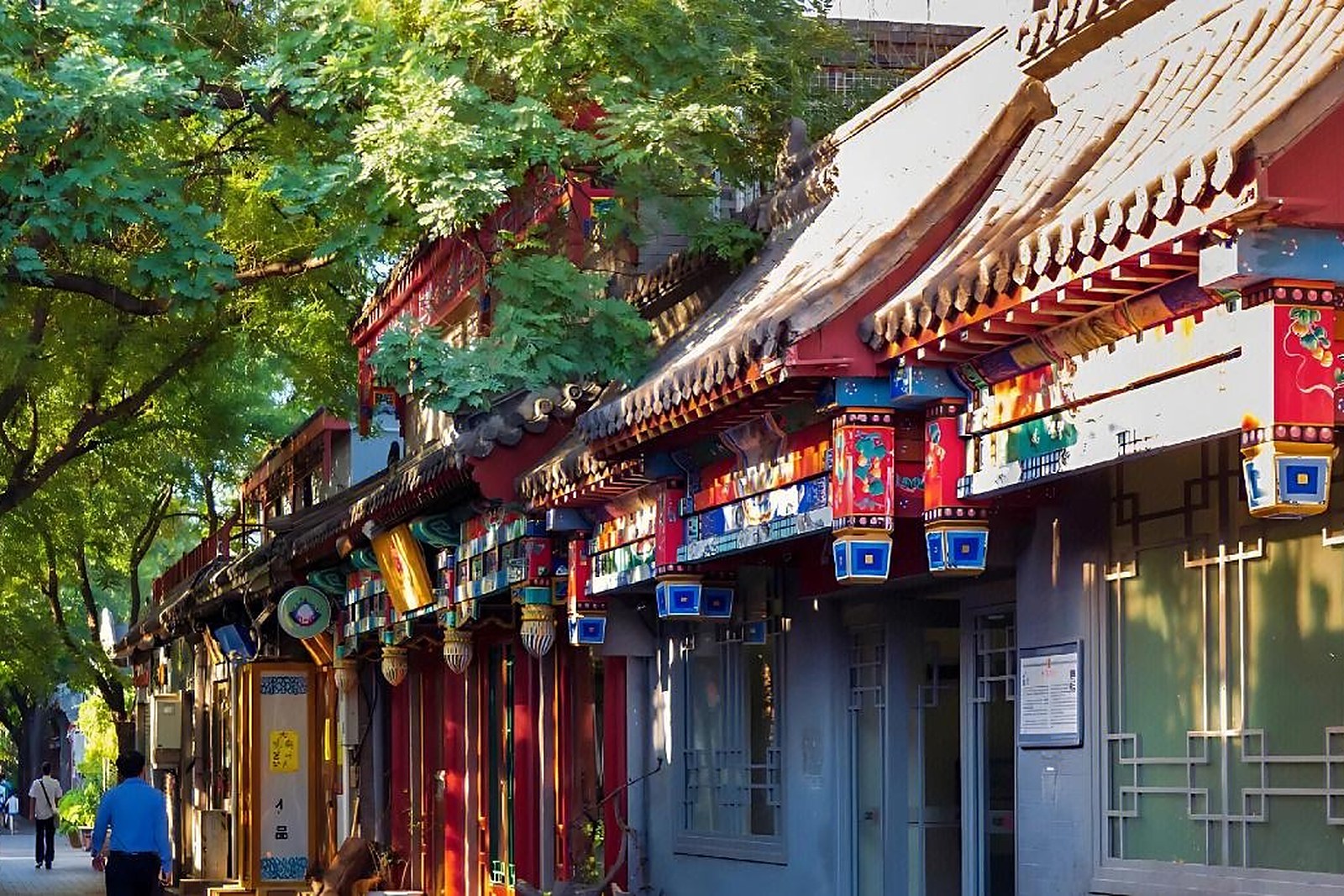
The logistics are the lightest in this list: no ticket, no gate and no queue beyond the shops’ own hours — the spine and its ribs are living public lanes (worth confirming nothing except any special exhibition you stumble into). Metro Line 6 and Line 8 meet directly under the street’s south end at 南锣鼓巷 Nánluōgǔxiàng station, and 地安门东大街 Dì’ānmén Dōng Dàjiē runs along the block’s southern edge, so access is about as easy as Beijing gets. The real constraint is crowd, not price: weekend afternoons pack the spine shoulder to shoulder and slow walking to a shuffle, while weekday mornings keep it merely lively. Pair the walk with 什刹海 Shíchàhǎi the lakes and 鼓楼 Gǔlóu the Drum Tower to the northwest and you have the classic Dongcheng hutong half-day.
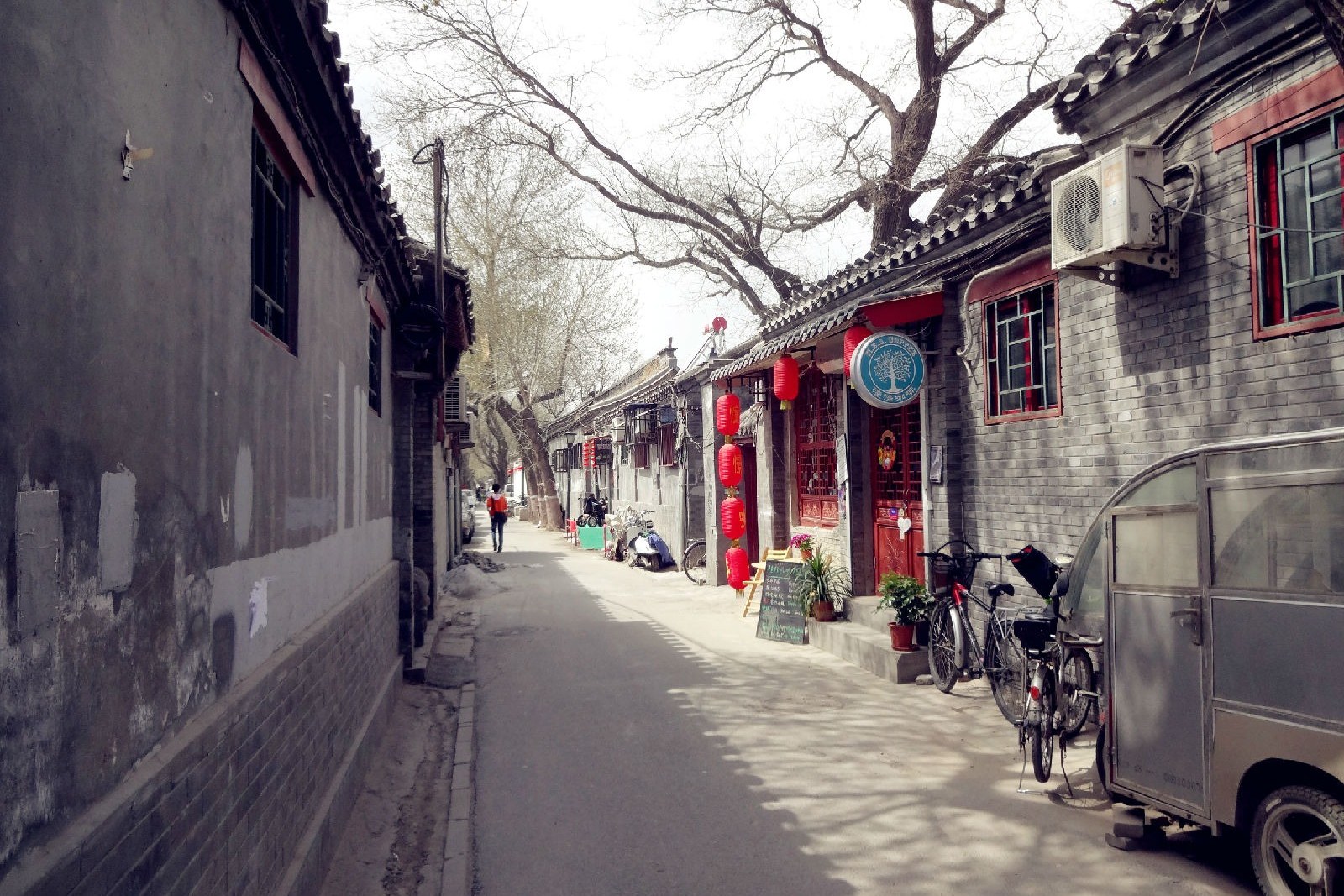
The wry fact is that the famous street is the least interesting thing about the famous neighborhood. What gets oversold is the spine at peak — chain snacks, trinkets and a wading crowd, an experience every city now manufactures. What repays the effort is the fishbone itself: 帽儿胡同 Mào’ér Hútóng Mao’er Hutong with the former residence of 婉容 Wǎnróng the last empress, 雨儿胡同 Yǔ’ér Hútóng Yu’er Hutong with the courtyard museum of the painter 齐白石 Qí Báishí Qi Baishi, and 菊儿胡同 Jú’ér Hútóng Ju’er Hutong with its celebrated 1990s courtyard-renewal housing — lanes where laundry still dries over gateways and cats still own the sunny sills. The right walk is asymmetric: pass down the spine once to say you did it, then spend the real hour threading two or three ribs east–west toward the lakes. Keep the voice low in the quiet stretches; every gate is somebody’s front door.
The self-aware postscript: I walked the spine first on a weekend afternoon, inherited a stranger’s shuffle and nearly wrote the quarter off — then ducked into 雨儿胡同 Yǔ’ér Hútóng and found, within thirty steps, a man repairing a bicycle, persimmons hanging over a courtyard wall and not one souvenir in sight. That is the visit in miniature. 南锣鼓巷 Nánluōgǔxiàng suits whoever uses the famous street as a door and the rib hutongs as the room, and disappoints whoever comes for the shopping alone. Go on a weekday morning, pick two ribs, and let the spine be the corridor between them — Dongcheng keeps its oldest street plan here, still inhabited, still warm, still washing hung out to dry.
Practicalities
- Rating: ★★★★☆ — a Yuan-grid hutong quarter whose commercial spine is the least of it; the eight pairs of quiet rib lanes are the real museum of old Beijing street life.
- Tickets: None — the lanes are free public streets; only shops and any special exhibition charge (worth confirming any temporary ticketed exhibit on site).
- Address: 南锣鼓巷 Nánluōgǔxiàng, 东城区 Dōngchéng Qū, Beijing — running north from 地安门东大街 Dì’ānmén Dōng Dàjiē up to 鼓楼东大街 Gǔlóu Dōng Dàjiē.
- Time needed: One to two hours for the spine plus a rib or two; half a day if you add 什刹海 Shíchàhǎi and the Drum Tower to the northwest.
Words and Names
南锣鼓巷 Nánluōgǔxiàng Nanluoguxiang · the commercial spine of Dongcheng’s Yuan-grid hutong quarter 里坊制 lǐfǎngzhì ward system · the Yuan-dynasty planning that laid the fishbone grid 四合院 sìhéyuàn courtyard house · the grey-walled dwelling type lining the ribs 帽儿胡同 Mào’ér Hútóng Mao’er Hutong · the rib with the last empress’s former residence 雨儿胡同 Yǔ’ér Hútóng Yu’er Hutong · the rib with Qi Baishi’s courtyard museum 菊儿胡同 Jú’ér Hútóng Ju’er Hutong · the rib known for its 1990s courtyard renewal
flowcloud would say that 南锣鼓巷 Nánluōgǔxiàng is Dongcheng’s oldest street plan — a Yuan-dynasty 里坊制 lǐfǎngzhì fishbone of 四合院 sìhéyuàn lanes off an 800-metre spine, with 帽儿胡同 Mào’ér Hútóng, 雨儿胡同 Yǔ’ér Hútóng and 菊儿胡同 Jú’ér Hútóng as the quiet ribs that matter — and that the honest move is a weekday morning, one pass down the spine and an hour threading the ribs, because the shop-front crowd is the picture everyone takes while the inhabited lanes are the actual sight, and the whole quarter is free to walk. All checked October 2026.
Getting there: the Nanluoguxiang hutong quarter just north of the Forbidden City, by Metro Line 6 or Line 8 to Nanluoguxiang station under the street’s south end (worth confirming any temporary ticketed exhibition, though the lanes themselves are free public streets); weekday mornings stay merely lively where weekends pack the spine — walk it once, then thread two or three rib lanes northwest toward the Drum Tower and the Shichahai lakes. All checked October 2026.