
Every foggy city keeps a green argument somewhere above the haze, and Chongqing’s lives on the slopes of Nanshan: 南山植物园 Nánshān Zhíwùyuán, Nanshan Botanical Garden, a hillside of camphor shade, camellia beds and a walk-in glasshouse, folded into a quiet valley of 南岸区 Nán’àn Qū, Nan’an District, Chongqing being a municipality of southwest China. This is a garden in the botanical sense – a curated, living collection of plants rather than a park with trees in it – and that framing is the honest one: the garden’s work is collecting, growing and teaching, from the subtropical flora of the region to the rainforest species sheltering in its great exhibition greenhouse, and a visit is closer to reading a library than to taking a walk. The city comes up the mountain to smell the seasons, and the seasons oblige.
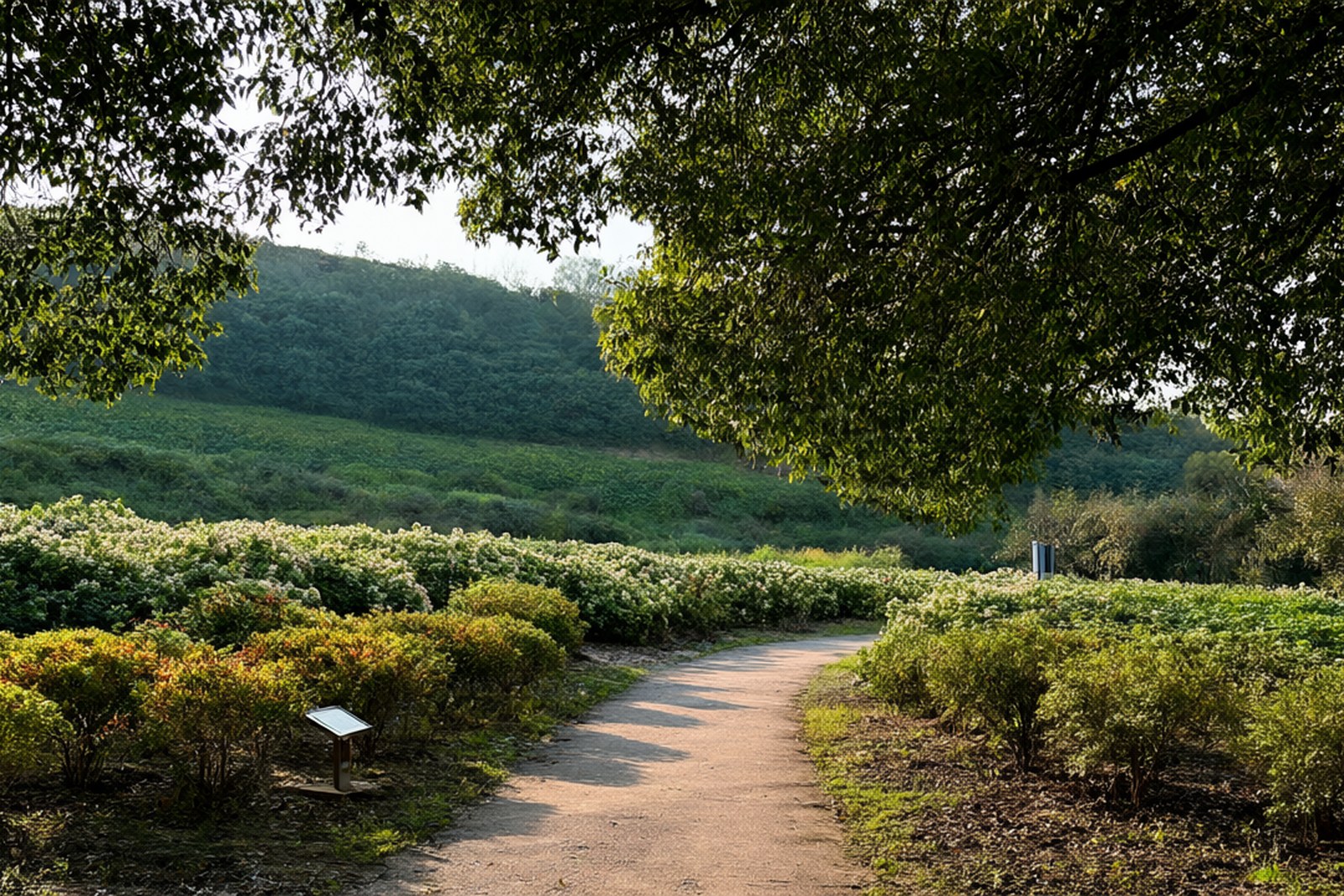
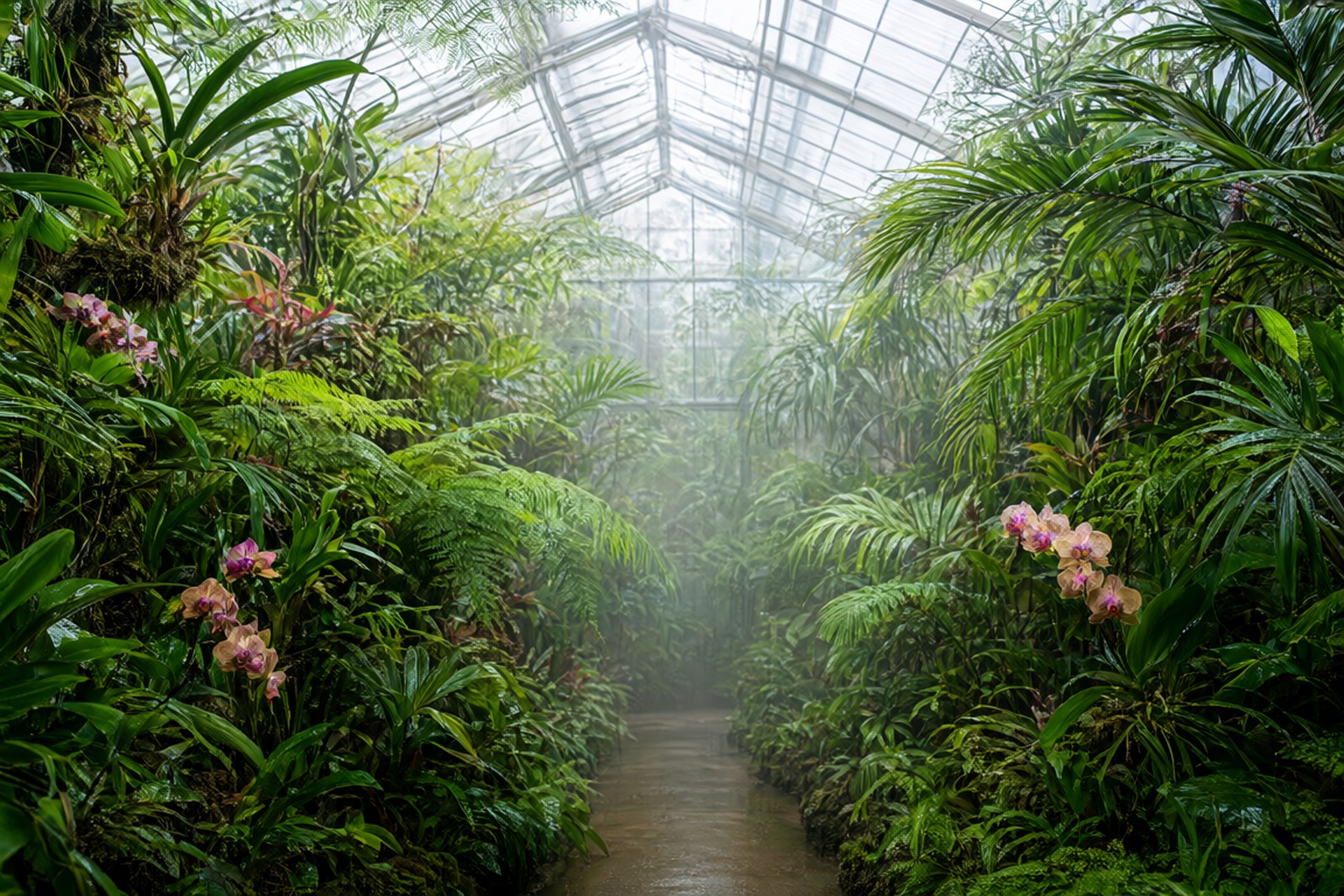
The collection is the draw, and the greenhouse is its loudest room. The big exhibition glasshouse simulates a tropical rainforest on the cool hillside – ferns, palms, orchids and the whole humid understory of the tropics arranged as a walk-through habitat, a deliberate contrast with the mists outside – and it is the garden’s signature experience in any season, which is why it tickets separately. Around it the outdoor sections do the subtropical work: landscaped bonsai gardens where decades of patient pruning sit in ranked display, a rose garden that holds the summer, collections of camellias – the flower this province grows best – and the ancient huangjue trees, Ficus virens, that give the hill its native character. Four seasons keep the beds changing, and the garden’s science role runs alongside: regular guided explanations and hands-on activities make it the municipality’s favourite outdoor classroom, and on a weekday morning the visitor mix of students, photographers and retirees tells you the teaching is landing. The garden holds a national 4A scenic-area rating, the standard mark of a well-run site, and decades of quiet accumulation show in the maturity of its trees – a collection cannot be rushed, and this one was not.
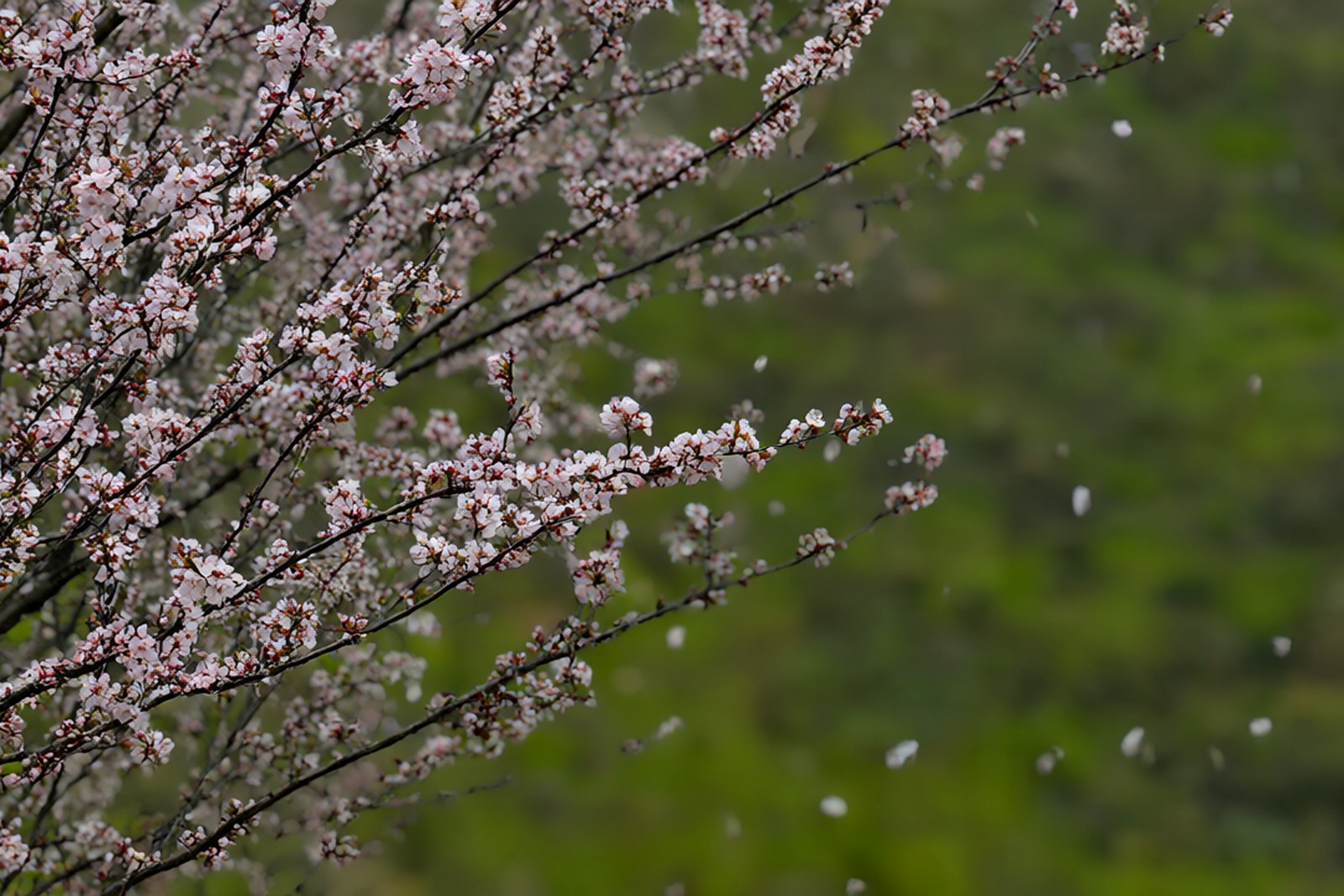
The calendar gives the visit its shape. Spring is the garden’s loud season, when the blossom plantings turn the terraces pale pink and the grounds price their own flower season at a higher gate; summer belongs to the shade and the glasshouse; autumn brings the camellia buildup; and winter, in Chongqing’s mild river climate, still finds flowers on the hill. Seasonal evening light shows have been held here in recent years – a garden-after-dark format that suits the terraces – but they run on announcements rather than a standing schedule, so check the official WeChat account before planning a night visit. A hilltop statue park, 大金鹰 Dàjīnyīng, Dajinying, with its golden-eagle monument above the garden, sells a combined ticket for those who want the summit view as a finale. The honest rhythm is a whole morning or a whole afternoon: the sections are spread along the valley slopes, and the garden rewards ambling far more than it rewards route-marching.
Cost is the garden’s quiet virtue: a day of a thousand greens for the price of a coffee, with the glasshouse as the one ticket worth adding. Come midweek if you can, because flower-season weekends bring the city up the mountain in numbers, and the beds are better met with elbow room; come after a rain and the camphor scent does the advertising for the whole hillside. Note the closing hour when you plan, because the last hour before the gate shuts is when the light through the valley is at its best – and the walk back down the paths is longer than the walk in, exactly as a garden intends.
Practicalities
Tickets. 16 yuan per person in peak season, 15 yuan off season, and 30 yuan during the spring flower season; the exhibition greenhouse is a separate all-year pass at 50 yuan. Online platforms sell the garden ticket for a little less. As of October 2026, subject to change – check before you go.
Opening hours. The grounds open at 9:00 and close at 17:30; plan the exit against the closing hour, since the garden stops admission for the day when the gates do.
Closing day. There is no fixed closing day: the garden is treated as open daily year-round on that single 9:00 to 17:30 schedule, with special events announced on its official WeChat account.
Getting there. Buses 335, 337 and 384 all climb to the 南山 Nánshān, Nanshan, stop, which sits about two minutes’ walk from the garden gate on 南山公园路 Nánshān Gōngyuán Lù, Nanshan Park Road.
flowcloud would say that the botanical garden is the hillside’s slowest and best-value institution – a library of plants filed by season, a rainforest parked in glass above the fog – and that the cheapest way to understand Chongqing’s climate is to watch what grows willingly on its ridge.
Getting there: Nanshan Botanical Garden is the living plant collection of the Nanshan ridge in Nan’an District, Chongqing, a municipality of southwest China, a nationally rated 4A scenic garden holding a rainforest-simulation exhibition greenhouse, bonsai and rose gardens, camellia collections and old huangjue trees across its valley slopes, with regular science education activities and seasonal blossom displays; the garden charges 16 yuan in peak season, 15 yuan off season and 30 yuan in the spring flower season, with the greenhouse as a separate 50-yuan all-year pass, keeps 9:00 to 17:30 daily with no fixed closing day, and is reached by buses 335, 337 or 384 to the Nanshan stop about two minutes from the gate (checked October 2026, subject to change).