
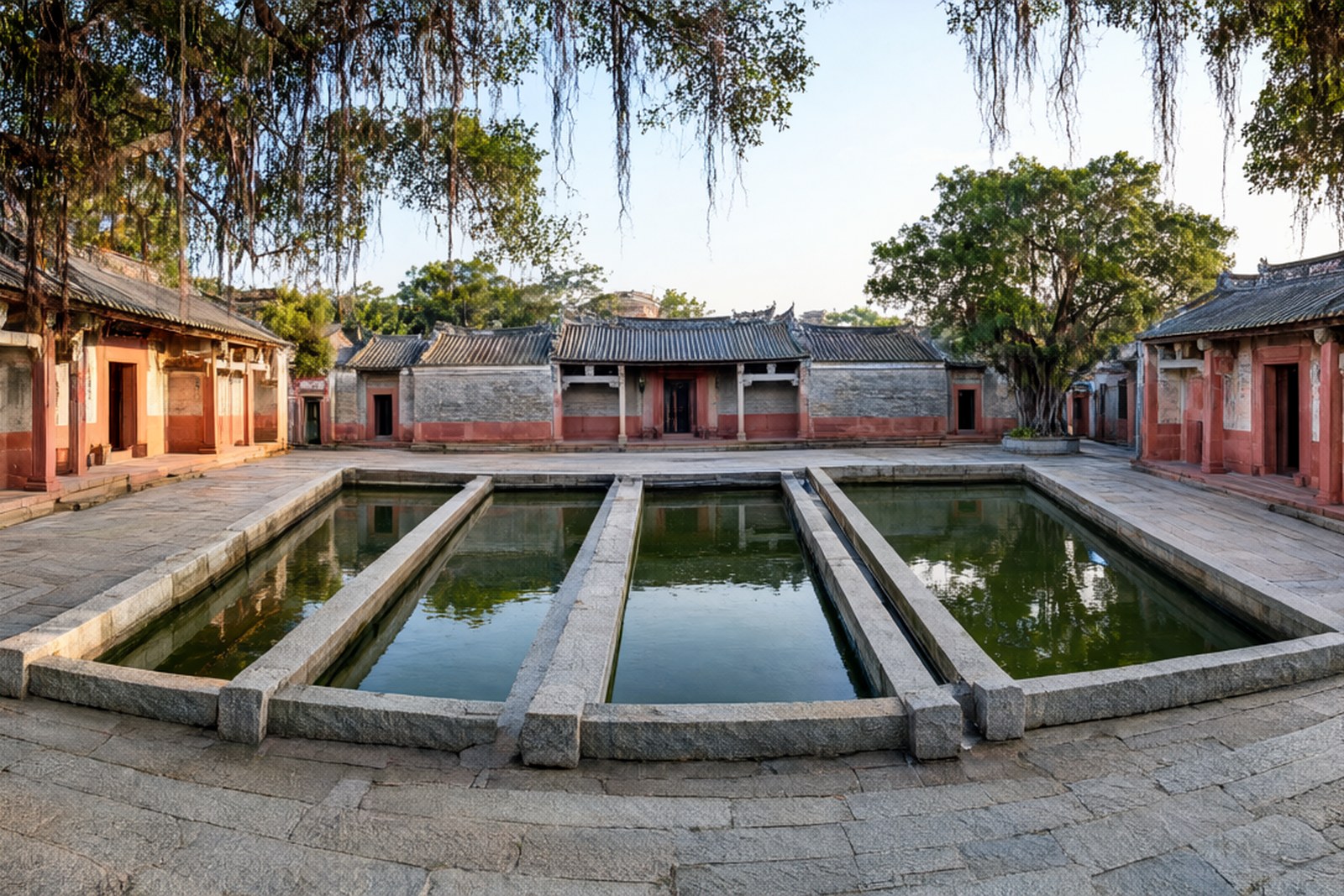
南社 Nánshè, in the eastern part of 茶山 Cháshān town, is the rare old village that can be described in one breath: one clan, one pond, eight hundred years. Founded at the end of the Southern Song by 谢尚仁 Xiè Shàngrén, ancestor of the Xie line, it grew into a single-surname, single-bloodline village – and it built itself around water: four long ponds run down the axis of the settlement, and a banyan the village counts at more than 530 years stands as the “sail” of a plan whose whole ground is meant to read as a boat riding the fields.
The defensive past is still visible. In 1644, the last year of the Ming, the village raised a perimeter wall 1,718 paces – about a kilometre – with twenty-one towers and four gates, against the banditry of the dynastic collapse. The honours arrived on schedule afterwards: provincial heritage protection for the building clusters in 2002, a place on China’s list of famous historical and cultural villages in 2005, and in May 2006 a national key heritage listing – “Nanshe and Tangwei village ancient building clusters”, one State Council number shared with the Li-surnamed village of Tangwei in neighbouring Shipai, a pairing that still governs the tourism branding, since the 4A rating the village took in February 2016 is registered in the city’s list under the combined name. In 2019 Nanshe became Dongguan’s first village on the national rural-tourism key-village list.
The building stock is the argument. The counts the local press prints – thirty-two ancestral halls, more than 600 Ming-and-Qing houses, dozens of old wells, about 110,000 square metres of historic fabric – vary by source, with encyclopedias offering 250 to 600 houses, but nineteen of the buildings are protected in their own right under the national listing. The houses are the classic delta “three bays and two corridors” type on granite footings with grey brick walls, and the door frames are cut from red sandstone, the warm local stone that gives the lanes their colour.
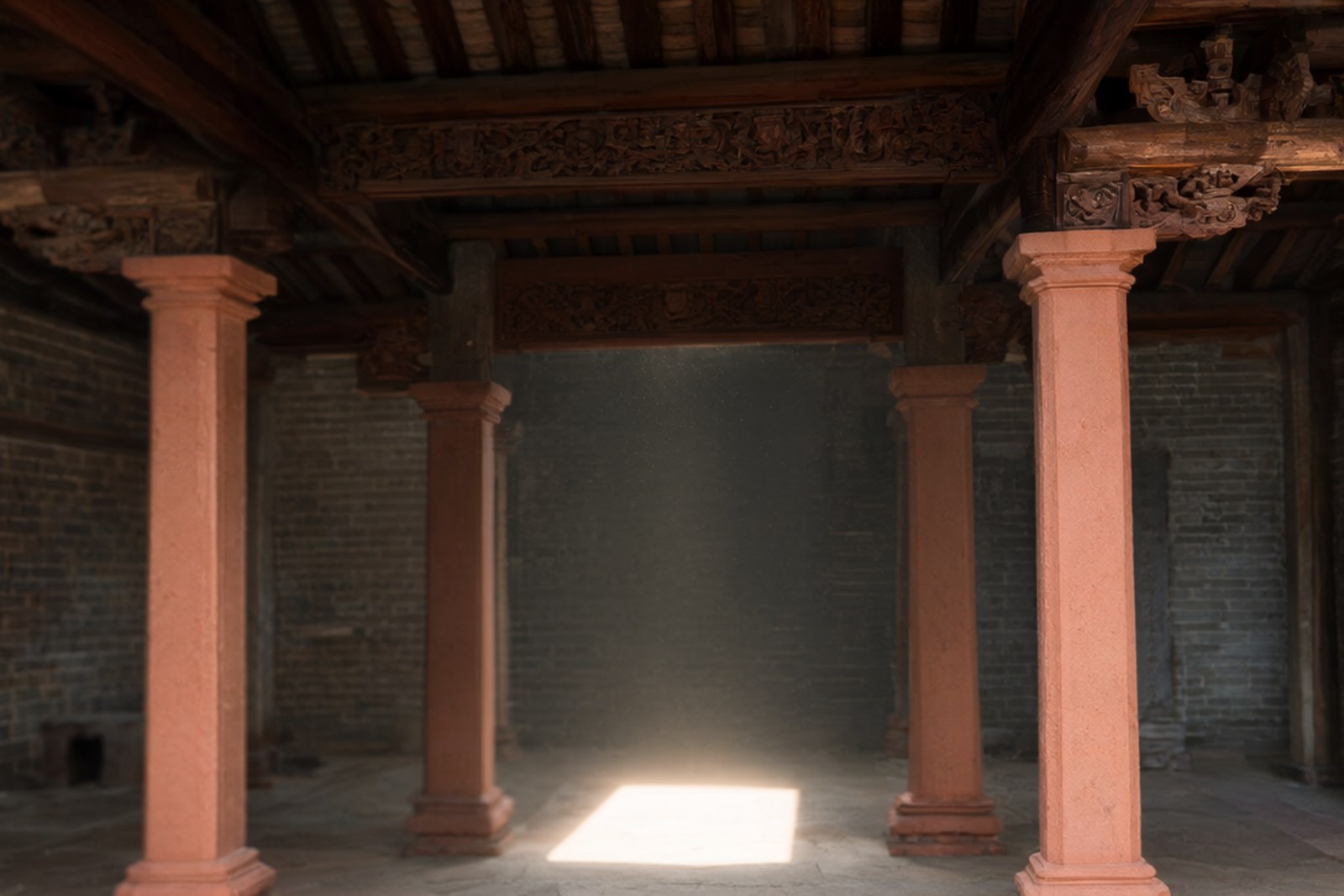
Four buildings carry the tour. The Xie clan’s great ancestral hall, begun in 1555, three bays deep with a mixed beam frame that still shows Ming work, is the earliest dated hall in the village. The Baishifang of 1592 – the “centenarians’ arch”, a stone gateway with wok-ear gables joined to a hall behind it, a form locals call arch-and-hall-in-one and prize as rare in Lingnan. 资政第 Zīzhèng dì, the 1882 mansion of 谢元俊 Xiè Yuánjùn, a jinshi who served in the Ministry of Rites, with a six-metre-high open corridor pavilion rising in its courtyard and western-flavoured plasterwork on the inner doors. And the family temple of 谢遇奇 Xiè Yùqí, built in 1898 for a military jinshi of 1865, its gables in the wok-ear profile. Four late-Qing jinshis – three military and one civil – give the single-surname village its examination-village reputation.
The village is kept alive by usage rather than costume: first-lamp celebrations in the first lunar month, the nine-dish “Jiudagui” banquet, the provincial intangible-heritage clay figurines made in a workshop inside the village, Cantonese opera on the waterside stage. In the evening the ponds light up – the booking platforms sell a night session after about 17:00 to 17:30, with fire-flow performances and evening boat songs as promoted on those platforms, and whether any given act runs on your night is a platform question, not a promise. Next door, past one wall, the older village of 牛过蓢 Niúguòyǎng keeps its grove of ancient trees; five kilometres away, Tangwei – the other half of the same heritage listing – waits with its own halls and study rooms. Give the village two and a half slow hours by day and stay for the lit ponds if the night session is on: enter by the west gate, take the centenarians’ arch, the great banyan over the boat-ponds, the great hall, the Zizheng mansion and the family temple, then drift the granite lanes toward the north gate. Arriving at three or four in the afternoon packages both lights in one visit.
Practicalities
Tickets. Around RMB 30 at the gate, a few yuan less online (listings run roughly 26 to 27), with student and child tickets around 14 to 15; a separate night-session ticket sells for about RMB 19.8 after roughly 17:00 to 17:30, and combination tickets with intangible-heritage craft sessions appear on the platforms. Seniors are exempt, though the age threshold printed by sellers varies. Figures float – check the day’s listing. Checked October 2026, subject to change.
Opening hours. Roughly 08:30 to 17:30 for the heritage buildings, with the night session running to about 22:00 on the platforms’ current listing; the ancestral halls close in the evening even when the night session is on. Older listings print shorter day hours, so confirm at the gate.
Closing day. No published closing day – the village is an open, all-year site, and the practical variable is whether the night programme runs on your evening.
Getting there. Metro line 2 to Chashan station, exit A, then bus 503 or 520, or a taxi of about fifteen minutes; Dongguan railway station, the line’s northern terminus, is about five kilometres away. By car leave the expressway at the Chashan exit and follow the signs; the west-gate car park is free and fills on holidays.
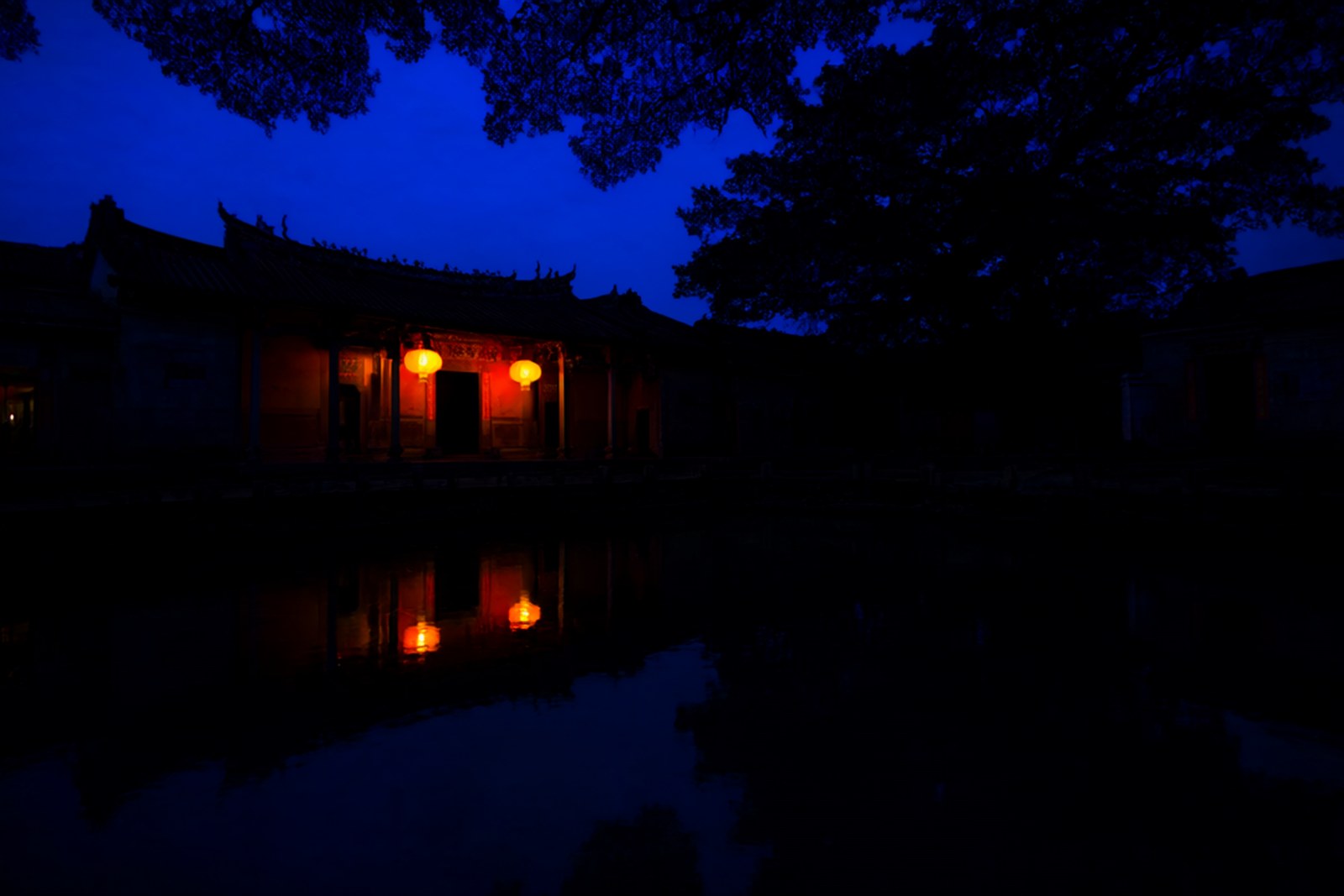
flowcloud would say that Nanshe is what a lineage looks like when it builds for eight centuries in one place – thirty-two halls of one surname, four ponds for one plan, nineteen buildings the nation itself now keeps – and that the boat the village ground is shaped into still floats, every evening, on its own reflection.
Getting there: 南社明清古村落 Nánshè míng-Qīng gǔ cūnluò stands in 茶山 Cháshān town, Dongguan, Guangdong, about fifteen minutes from Chashan station on metro line 2 by bus 503 or 520 or taxi, with Dongguan railway station five kilometres out; tickets run around RMB 30 at the gate and a few yuan less online, with a night session at about RMB 19.8 (checked October 2026, floating); heritage buildings open roughly 08:30-17:30 with the night session to about 22:00, and no closing day is published; the free west-gate car park fills on holidays.