
The River Where Chinese Landscape Poetry Began: Nanxi
三百滩声到海平,一篙撑破碧琉璃 Sānbǎi tān shēng dào hǎi píng, yī gāo chēng pò bì liúlí – Three hundred rapids run level toward the sea; one pole-stroke shatters the green glass of the water
楠溪江 Nánxī Jiāng the Nanxi River drifts 300 kilometers through 永嘉县 Yǒngjiā Xiàn Yongjia county north of Wenzhou, and holds the title of cradle of Chinese landscape poetry – 谢灵运 Xiè Língyùn Xie Lingyun, the first poet to write hills and water for their own sake, was posted here in 422 AD and filled his verses with exactly these bends. The river is the attraction: shallow, improbably clear, braided around gravel bars where bamboo rafts pole downstream all day, counting 36 bends and 72 shoals on the classic run. The banks keep some of Zhejiang’s oldest villages – Furong, Cangpo and the covered gallery of Lishui Old Street – laid out on Song-dynasty cosmology and still lived in.
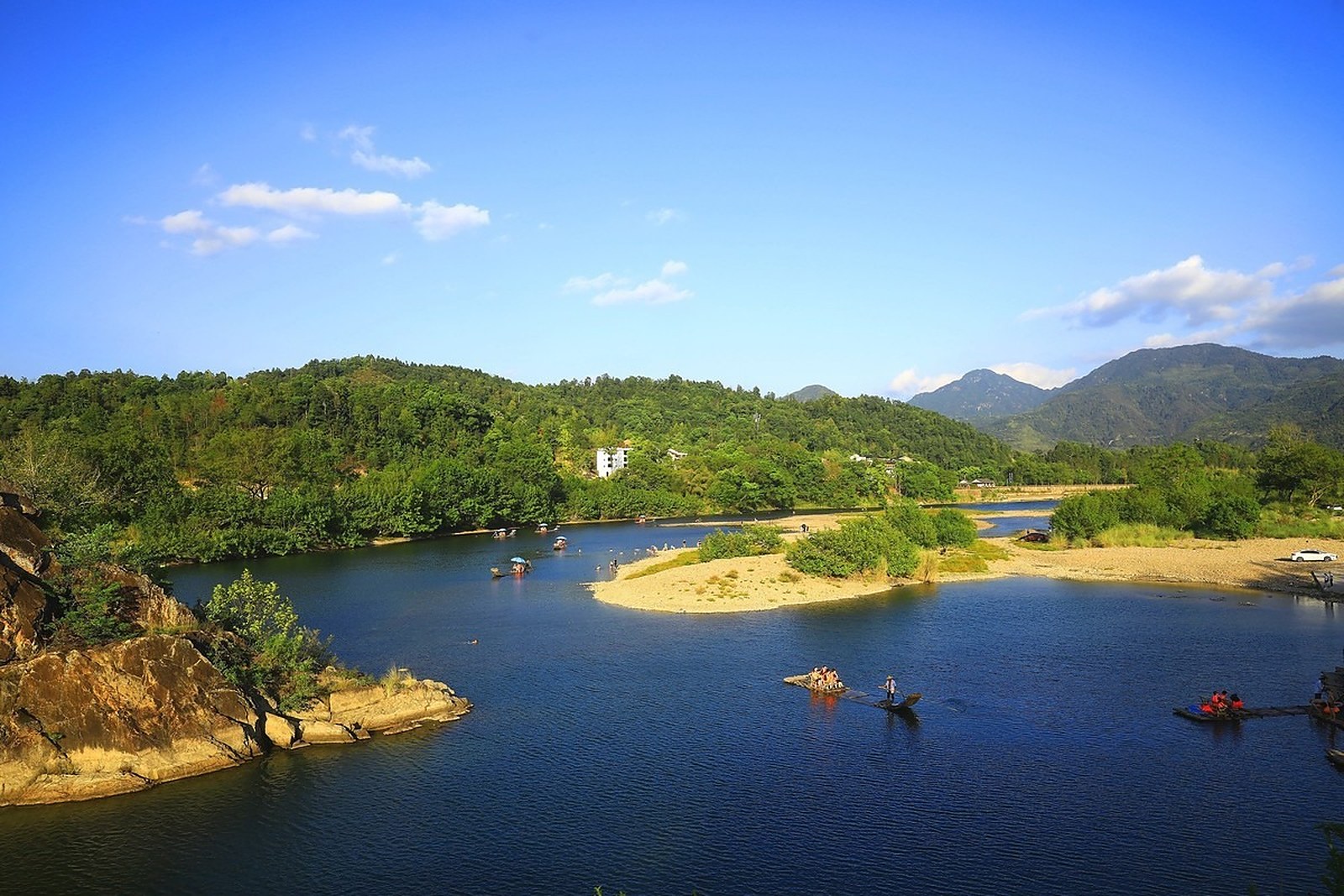
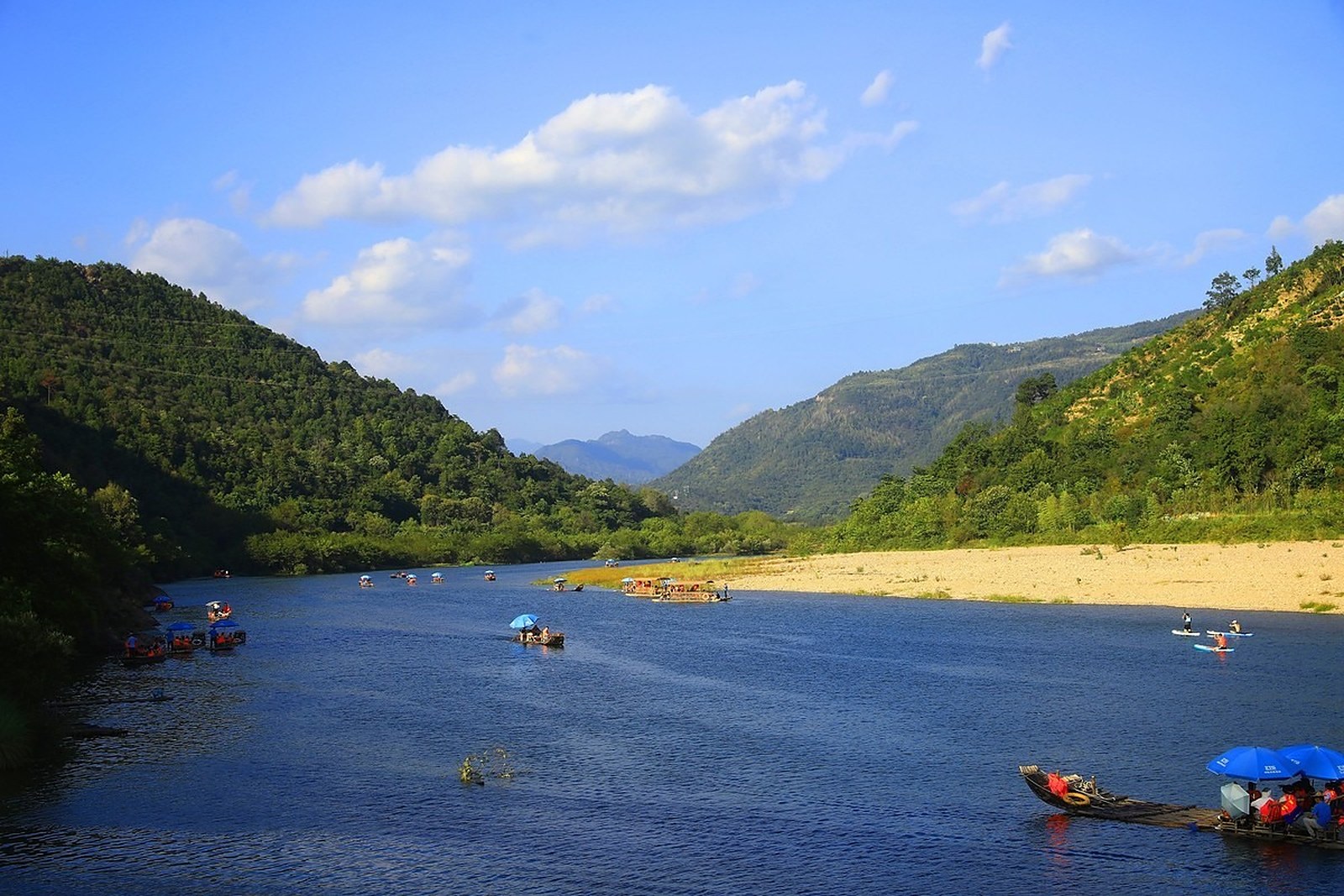
Rafting is the classic run: a bamboo platform lashed on inflated tubes, a poler in a straw hat, three lazy hours of shoals, egrets and water clear even after rain. Put-ins at Yantoudai and Lion Rock shuttle you back by bus, the water stays wading-warm from May to October, and the gravel bars fill with picnickers on fine weekends.
The villages reward the slower half-day. 苍坡村 Cāngpō Cūn Cangpo is planned as a scholar’s writing desk – its pool the inkstone, its long lane the brush; 芙蓉村 Fúróng Cūn Furong clusters its lanes under three limestone peaks shaped like lotus petals; and 丽水街 Lìshuǐ Jiē Lishui Old Street runs a 300-meter covered gallery of Ming-era shopfronts above the water, no relation to the city of Lishui far to the west.
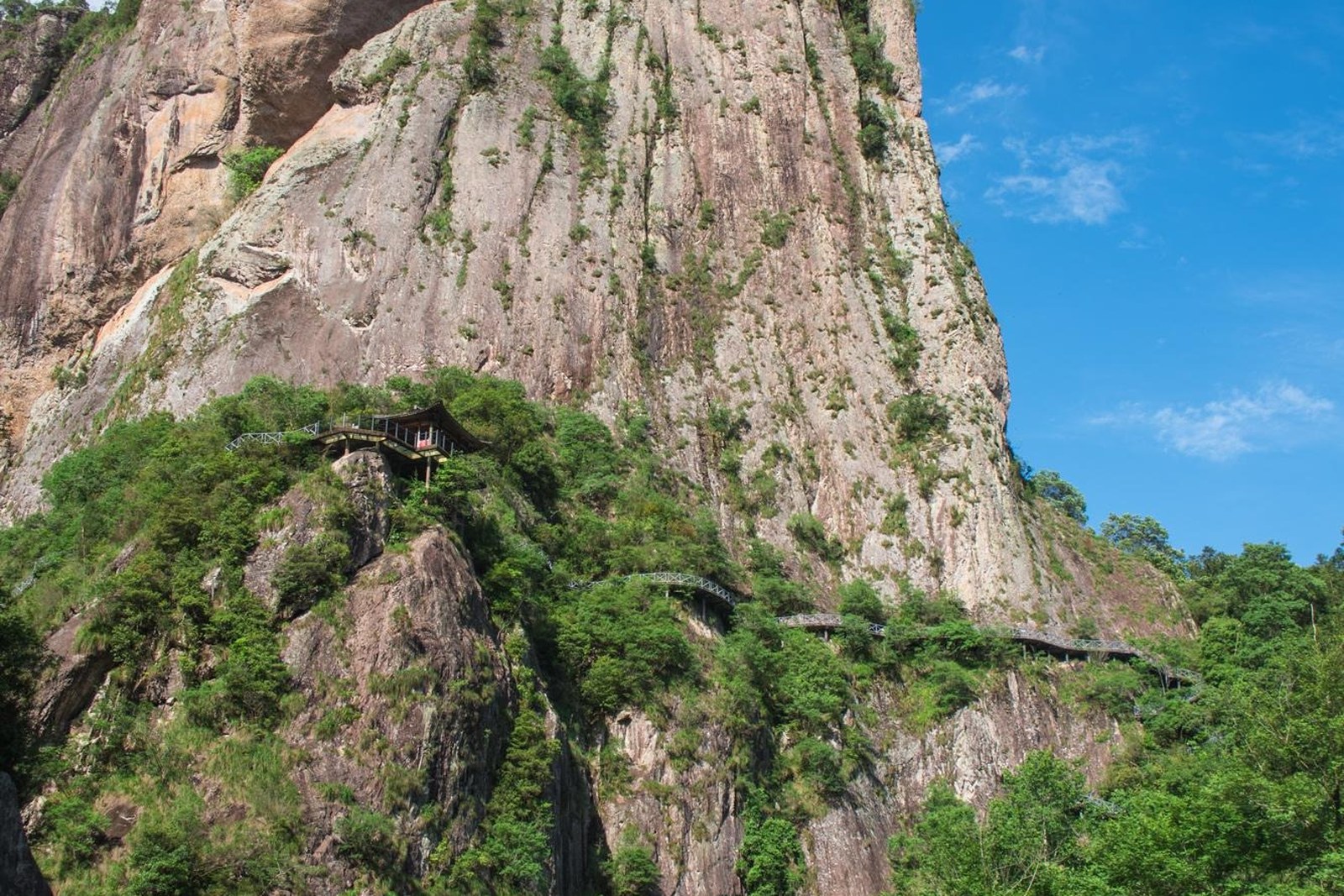
Upstream the valley climbs to 石桅岩 Shíwéi Yán Stone Mast Rock, a ship-sized block of stone above a gorge ferry, while the Twelve Peaks fold the sky near Daning. Most visitors pair one raft run with one village; photographers should chase the morning mist that sits on the river until eight o’clock.
Practicalities
- Raft runs board at Yantoudai, Lion Rock and Shimentai; the standard run takes two to three hours and a shuttle returns you to your start.
- After heavy rain the river browns for a day – check the morning flow before booking the raft.
- Cangpo and Furong pair well in one afternoon loop by taxi; village tickets are small and combined.
- Lishui Old Street is best at dusk when the gallery lamps come on above the water.
Words and Names
楠溪江 Nánxī Jiāng the Nanxi River; 永嘉 Yǒngjiā Yongjia, the county whose name means “eternal goodness”; 谢灵运 Xiè Língyùn Xie Lingyun, founder of landscape poetry; 石桅岩 Shíwéi Yán Stone Mast Rock; 丽水街 Lìshuǐ Jiē Lishui Old Street. Beyond the rafting water, the same 温州市 Wēnzhōu Shì Wenzhou City keeps more places worth the detour: 雁荡山 Yàndàng Shān the rhyolite peaks of Yandang, 江心屿 Jiāngxīn Yǔ the pagoda isle of Jiangxin, 洞头列岛 Dòngtóu Lièdǎo the islands of Dongtou, or 泰顺廊桥 Tàishùn Lángqiáo the covered bridges of Taishun – four more doors into the same 温州市 Wēnzhōu Shì Wenzhou City. Once the rafts have run the shallows, our Wenzhou food map fills the table.
flowcloud would say Nanxi is a river that taught China to see scenery: water as clear as the poetry it started, villages arranged like an inkstone, and a poler who steers three hundred shoals without appearing to try. All checked November 2026.
Getting there: The Nanxi valley lies an hour north of downtown Wenzhou by expressway – city buses reach the Yantoudai raft docks, high-speed trains stop at Yongjia station twenty minutes from the lower river, and taxis link the villages in a day loop. All checked November 2026.