
Nanxiang Old Town: A Thousand-Year Market Street of Flagstone Lanes, Time-Honoured Shopfronts and Twin Brick Pagodas Left by Yunxiang Temple, the Birthplace of Xiaolongbao Soup Dumplings, around Jiefang Street in Jiading District, Shanghai
双塔凌云标古镇,一笼鲜香动四邻。Shuāng tǎ líng yún biāo gǔzhèn, yī lóng xiān xiāng dòng sìlín – Twin towers brush the clouds and mark the old town; one steamer of fresh fragrance stirs the whole neighbourhood.
南翔老街 Nánxiáng Lǎojiē Nanxiang Old Town is not a rebuilt “ancient street” with a ticket gate — it is, plainly put, a market town still doing its own shopping: the old lanes run around 解放街 Jiěfàng Jiē Jiefang Street in 南翔镇 Nánxiáng Zhèn Nanxiang Town, where 石板路 shíbǎn lù flagstone lanes, 老字号 lǎozìhào time-honoured shopfronts and slow 河道 hédào canals hold the street plan of a thousand years. At the street’s heart stand the 南翔寺砖塔 Nánxiáng Sì zhuāntǎ twin brick pagodas of Nanxiang Temple, survivors of the 五代至北宋 Wǔdài zhì Běi Sòng Five Dynasties to Northern Song centuries and the last standing fragments of 云翔寺 Yúnxiáng Sì Yunxiang Temple, the great monastery from which the town itself takes its name — two small, solemn towers in the middle of the shopping crowd, older than everything leaning around them. And then there is the smell: this is the 发源地 fāyuándì birthplace of 小笼包 xiǎolóngbāo soup dumplings, the dish that carried the town’s name worldwide. What you actually visit is a living old street wearing its own history.
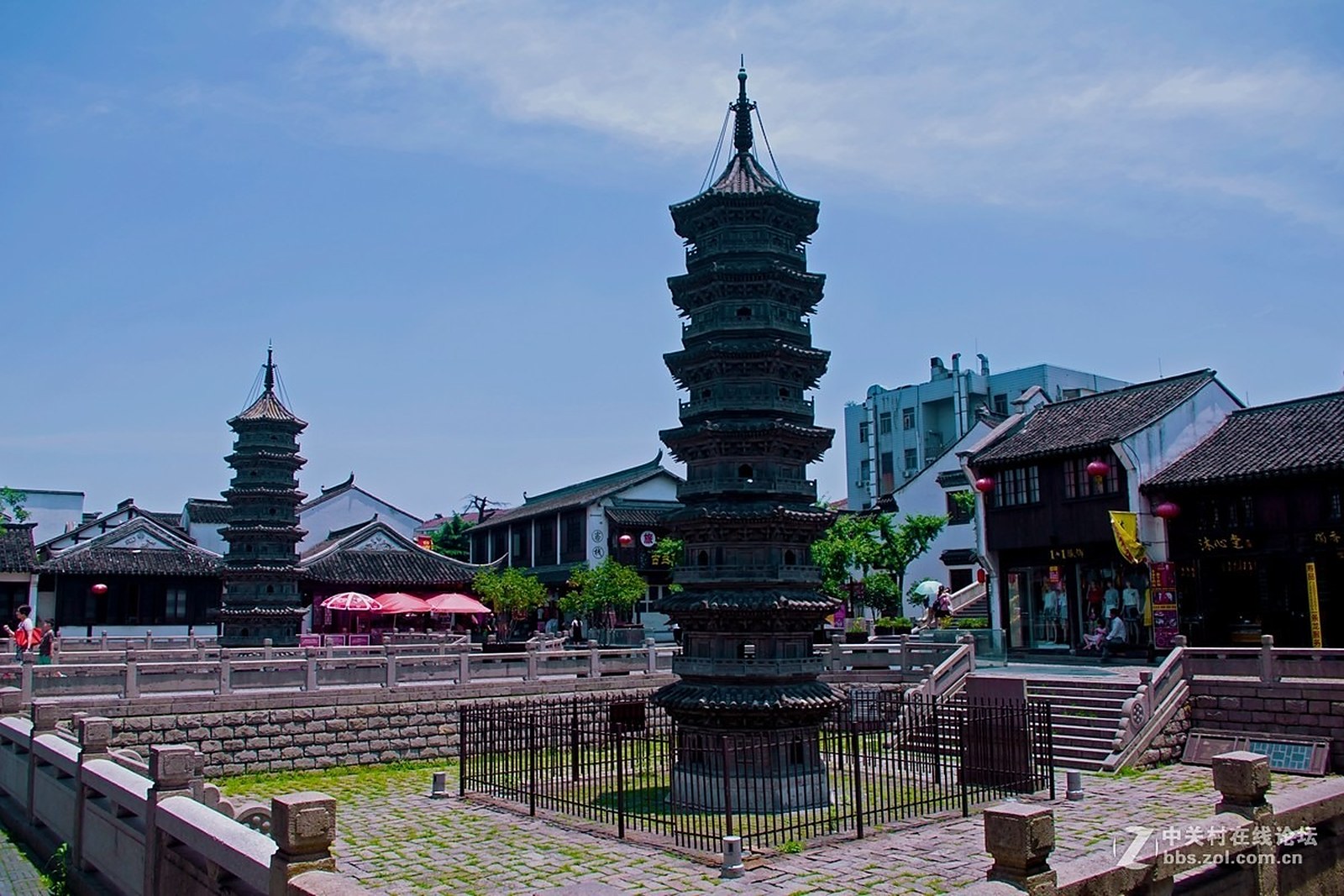
Call it honestly: the lanes are free and open at all hours, while the temple remnants, small exhibition corners and dumpling counters each keep their own arrangements (worth confirming the details for any small-site tickets, opening times and holiday crowd rules before you set out), and 南翔站 Nánxiáng Zhàn Nanxiang station on Metro Line 11 sets you down for a short walk into the old grid. The honest warning is the dumpling tax: at peak meal hours the most famous 小笼包 xiǎolóngbāo counters run queues measured in tens of minutes, so travellers arriving at Saturday noon find a wait rather than a snack — come early, go late, or take the quieter family shops a lane back from the water. The rest of the street moves at town speed regardless: grocery runs, mahjong, bicycles, laundry. Weekday mornings show the flagstones bare; evenings light the stone bridges over the canal. Give the town two to three hours with a long lunch, half a day if the dumplings and the twin towers both hold you.
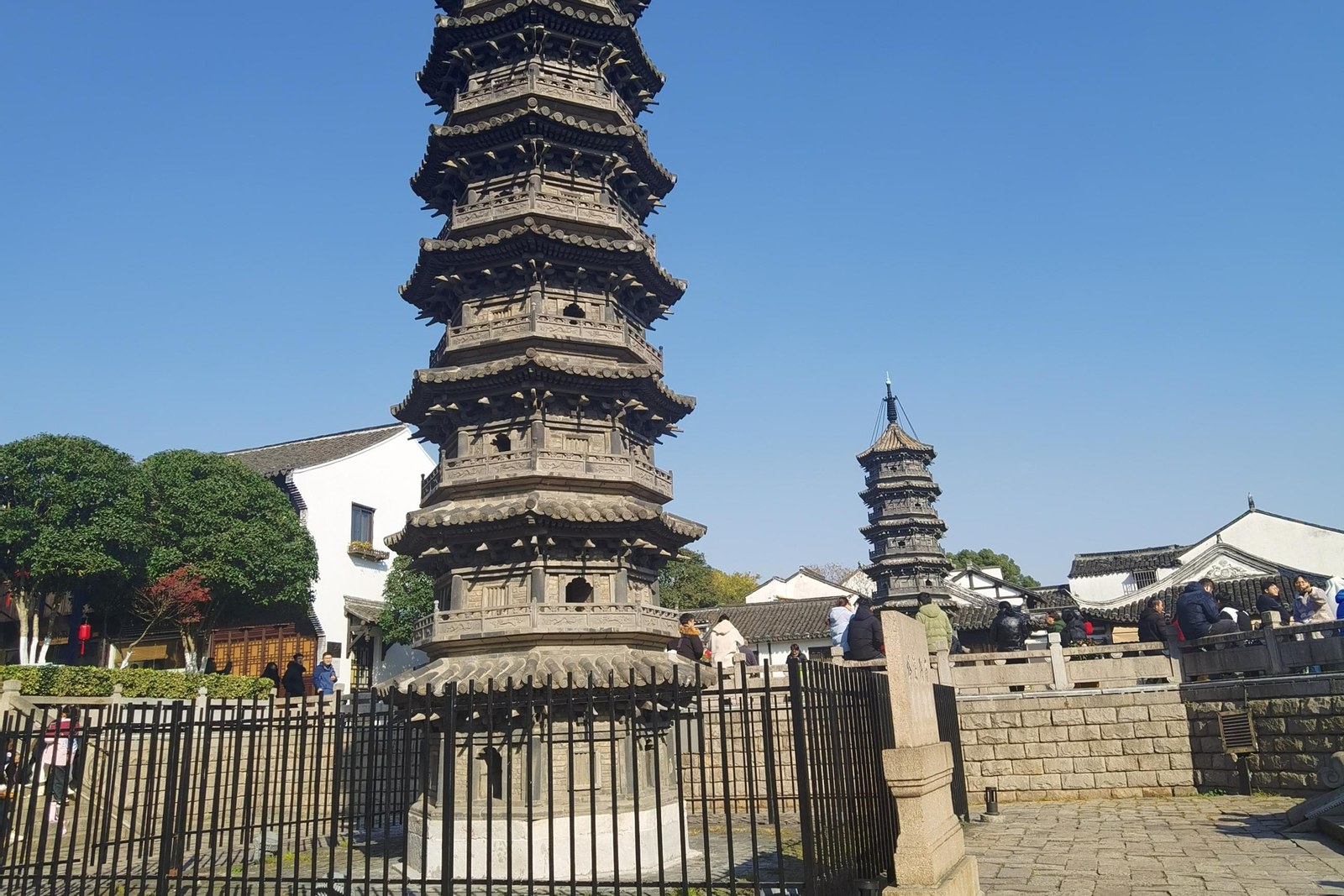
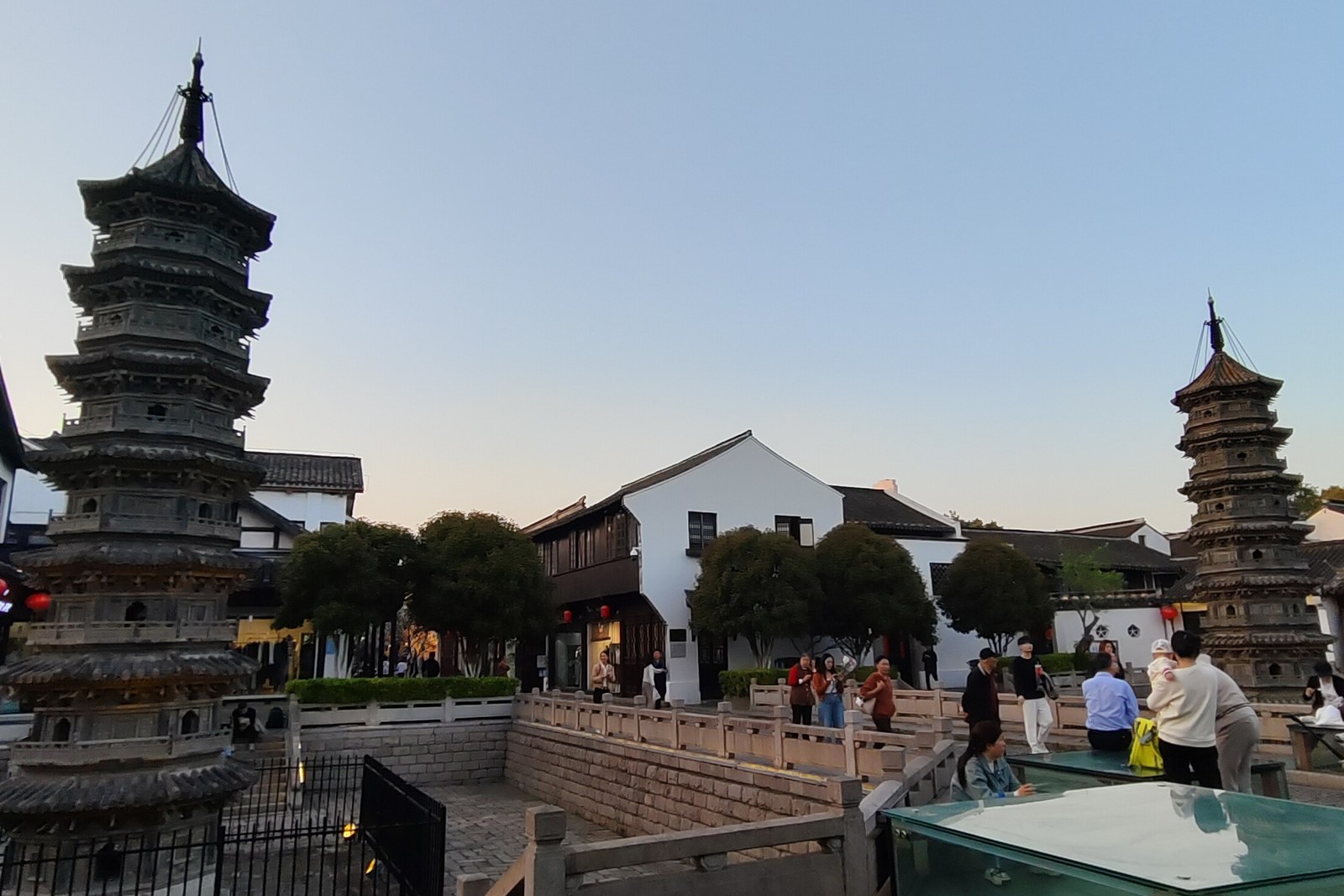
The honest star is the twin brick pagodas themselves — a matched pair rising straight out of the street’s busiest pavement, the rare case of a town’s founding monument standing where the crowds actually walk, their brick courses reading centuries older than every shopfront around them. What gets oversold is the phrase “ancient town”: visitors expecting a fully preserved heritage quarter of Ming facades find a working market street that has renewed itself many times, with authentic stone, water and towers set inside ordinary modern life (worth confirming the details for which lanes are currently under renovation or pedestrianisation). What repays the effort is the texture between the sights: the 河道 hédào canal corners where laundry and herons share the railings, the 老字号 lǎozìhào shop signs that predate the chains, the stone steps where old men watch the water, and the dumpling steam that unifies the whole street in one appetite. Stand at the pagodas first, then let the lanes pull you outward. Come for the layering of the place: towers, then tea, then steam.
The self-aware postscript: I was sketching the pagodas from a teahouse bench one weekday morning when the shopkeeper, refilling my pot, volunteered the local view. “Tourists photograph the towers and queue for soup,” she said, pouring, “but a thousand years ago the temple fed the market, and the market never left; we are the temple’s afterglow”. That is the visit in miniature. From the canal bridge, looking back down the flagstones toward the brick pair over the rooftops, the town holds its whole argument in one frame — commerce grown around faith and still growing. 南翔老街 Nánxiáng Lǎojiē suits whoever treats it as a real town with a great snack and two great towers first and a heritage stage set second, and disappoints anyone expecting a sanitised, uniform-shopfront old town. Nearly everything else on this Jiading list lies within a short ride: the bamboo and lotus of 古猗园 Gǔyī Yuán Guyi Garden wait at 沪宜公路 Hùyí Gōnglù Huyi Highway 218 just across town, the red autumn of 秋霞圃 Qiūxiápǔ Qiuxiapu Garden burns in 嘉定镇 Jiādìng Zhèn Jiading Town, and the vintage cars of the 上海汽车博物馆 Shànghǎi Qìchē Bówùguǎn Shanghai Auto Museum wait in 安亭镇 Āntíng Zhèn Anting Town — all inside the same 嘉定区 Jiādìng Qū Jiading District whose tastiest corner this street keeps.
Practicalities
- Rating: ★★★★☆ — a working thousand-year market town with twin brick pagodas in its heart and the world’s most famous soup dumplings; come hungry, and dodge the noon queue.
- Tickets: Free open lanes; small temple remnants and exhibitions priced or arranged individually (worth confirming the details for current arrangements).
- Address: 南翔老街 Nánxiáng Lǎojiē, around 解放街 Jiěfàng Jiē Jiefang Street, 南翔镇 Nánxiáng Zhèn Nanxiang Town, 嘉定区 Jiādìng Qū Jiading District, Shanghai — a short walk from Nanxiang station on Metro Line 11.
- Time needed: Two to three hours with a long lunch; half a day if the towers and dumplings both hold you.
Words and Names
南翔老街 Nánxiáng Lǎojiē Nanxiang Old Town · 南翔寺砖塔 Nánxiáng Sì zhuāntǎ twin brick pagodas of Nanxiang Temple · 云翔寺 Yúnxiáng Sì Yunxiang Temple, the town’s founding monastery · 小笼包 xiǎolóngbāo soup dumplings, the town’s gift to the world · 发源地 fāyuándì birthplace, a title the town guards · 石板路 shíbǎn lù flagstone lanes · 老字号 lǎozìhào time-honoured shopfronts · 河道 hédào canals through the town · 解放街 Jiěfàng Jiē Jiefang Street, the heart of the lanes · 南翔站 Nánxiáng Zhàn Nanxiang station, Metro Line 11 · 嘉定区 Jiādìng Qū Jiading District
flowcloud would say that 南翔老街 Nánxiáng Lǎojiē is the rare old street that never needed a ticket gate to stay authentic — a thousand-year market grid around 解放街 Jiěfàng Jiē Jiefang Street in 南翔镇 Nánxiáng Zhèn Nanxiang Town, where the 南翔寺砖塔 Nánxiáng Sì zhuāntǎ twin brick pagodas, Five Dynasties to Northern Song survivors of 云翔寺 Yúnxiáng Sì Yunxiang Temple, rise straight out of the shopping pavement while 石板路 shíbǎn lù flagstone lanes, 老字号 lǎozìhào time-honoured shopfronts and slow 河道 hédào canals carry on the town’s own business, and where the 发源地 fāyuándì birthplace of 小笼包 xiǎolóngbāo soup dumplings steams the whole street into one appetite (worth confirming the details for small-site opening times and peak-queue hours before you go) — and that the honest move is a weekday morning entered through 南翔站 Nánxiáng Zhàn Nanxiang station on Metro Line 11, because the preserved-heritage-quarter expectation is the poster half and the laundry, the mahjong, the herons on the canal and the towers over the rooftops are the real half, and the town repays whoever eats slowly and walks the side lanes. All checked October 2026.
Getting there: Metro Line 11 to 南翔 Nánxiáng Nanxiang station, then a walk to the old street and the twin brick pagodas (worth confirming the details for weekend pedestrian-zone rules, which the town posts at the gate); the xiaolongbao shops line the stone lanes. All checked October 2026.