
A Garrison Town of Three Provinces: Nianbadu
鸡鸣三省廿八都,枫溪桥畔旧时光 Jī míng sān shěng Niànbādū, fēngxī qiáo pàn jiù shíguāng – At Nianbadu one rooster’s crow wakes three provinces; old times linger by the Fengxi bridges
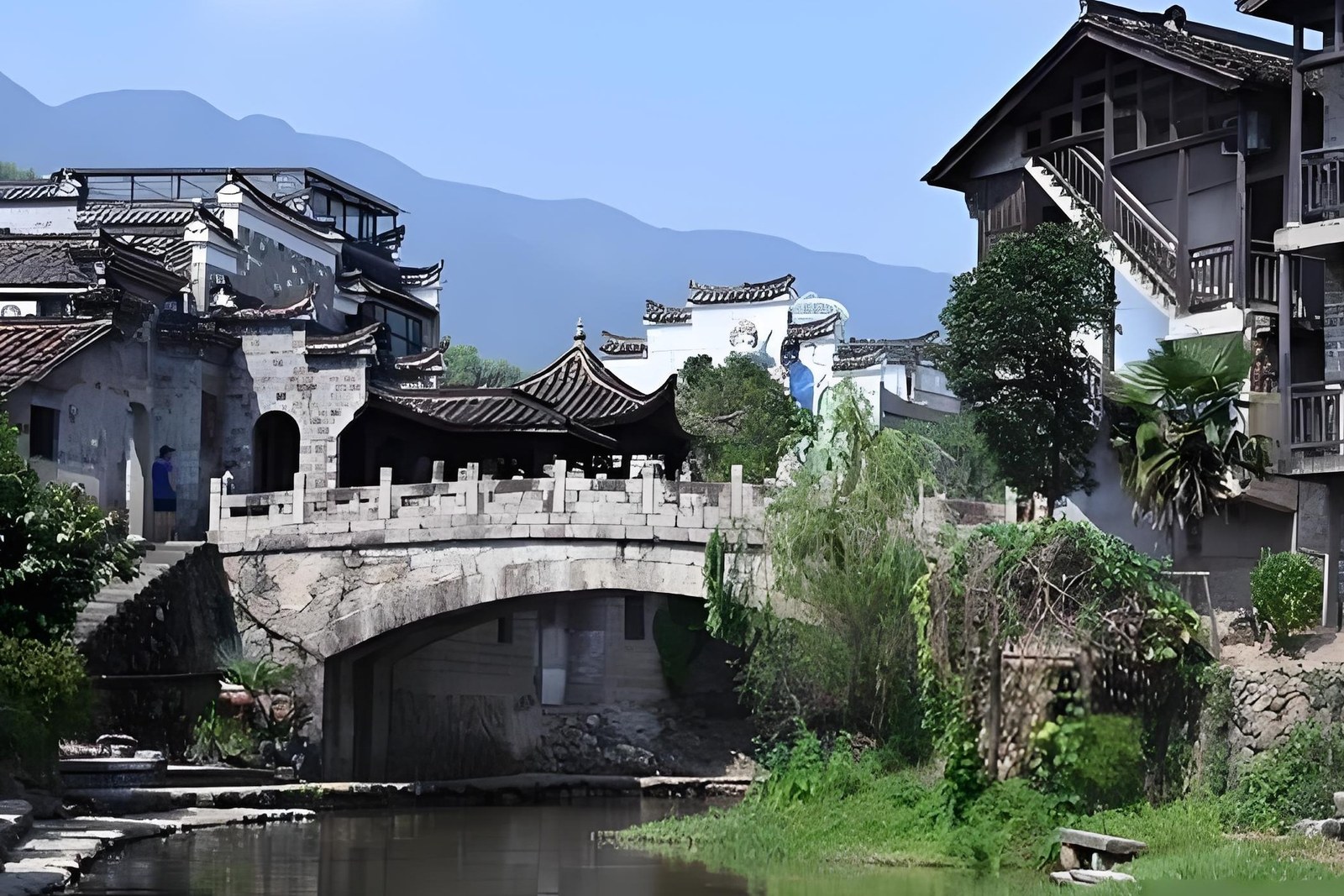
廿八都 Niànbādū Nianbadu sits at the bottom-right corner of 江山市 Jiāngshān Shì Jiangshan, wedged into the 仙霞岭 Xiānxiá Lǐng pass country where 浙江 Zhèjiāng Zhejiang, 福建 Fújiàn Fujian and 江西 Jiāngxī Jiangxi meet – close enough that the town’s own motto is 鸡鸣三省 jī míng sān shěng, “a rooster’s crow heard in three provinces.” The garrison was planted here a thousand years ago to hold the 仙霞古道 Xiānxiá Gǔdào the ancient Xianxia post road, and the town never demobilized: soldiers stayed, merchants followed, and the lane plan of Ming-Qing shops and courtyards survives under the same rooftree.
The census is the town’s party trick: around ten thousand residents carry 142 different surnames and speak thirteen dialect groups, a museum-grade drift of garrison families from every province the road once tied together. You hear it on the doorsteps – neighbors who cannot quite understand each other’s home speech, sharing the same local 豆腐 dòufu tofu and the same festival calendar. The 文昌宫 Wénchāng Gōng Wenchang Temple, with its gilded ceiling of scholar-immortals, is the proof that a town of soldiers’ children decided exams and learning were the way up.
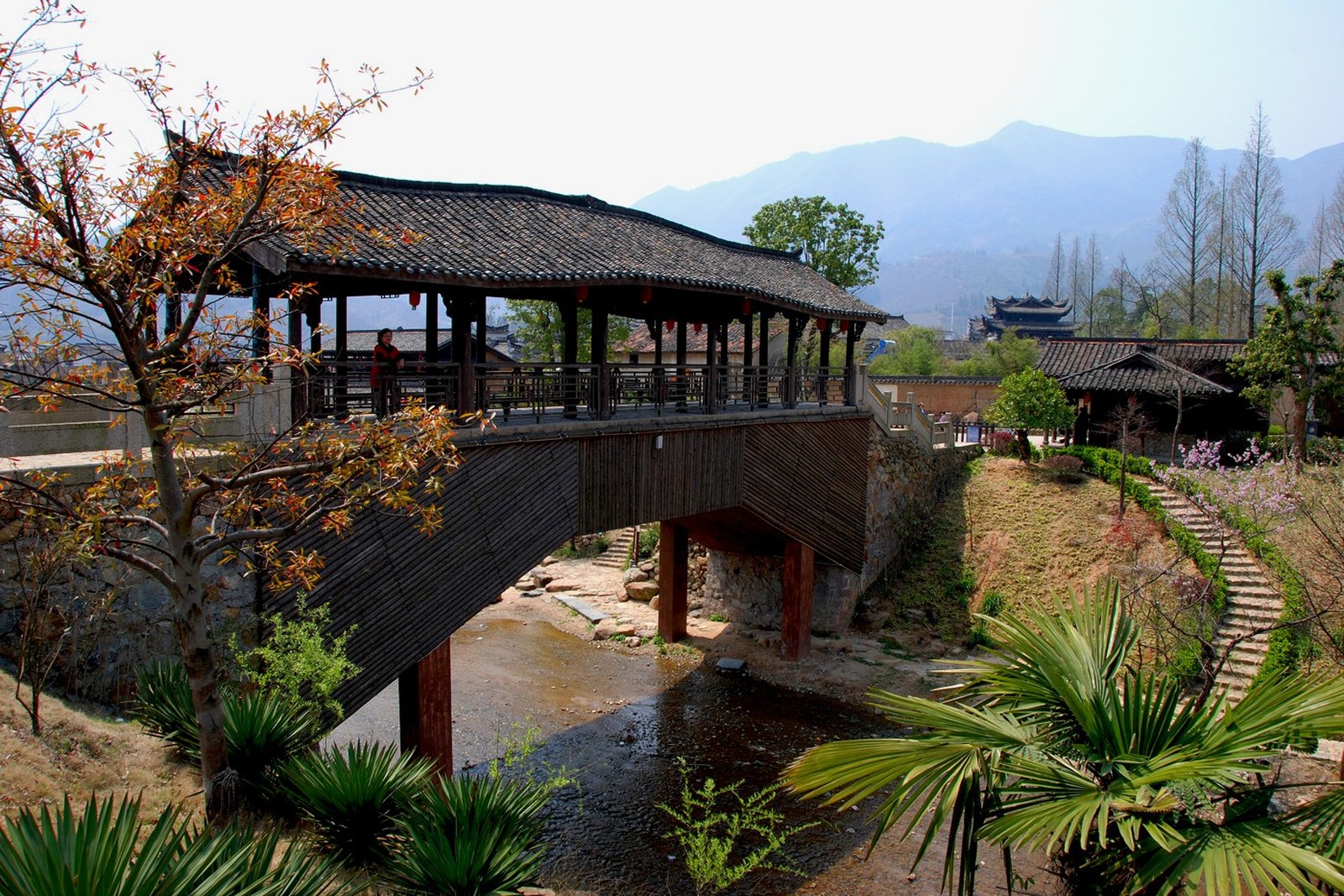
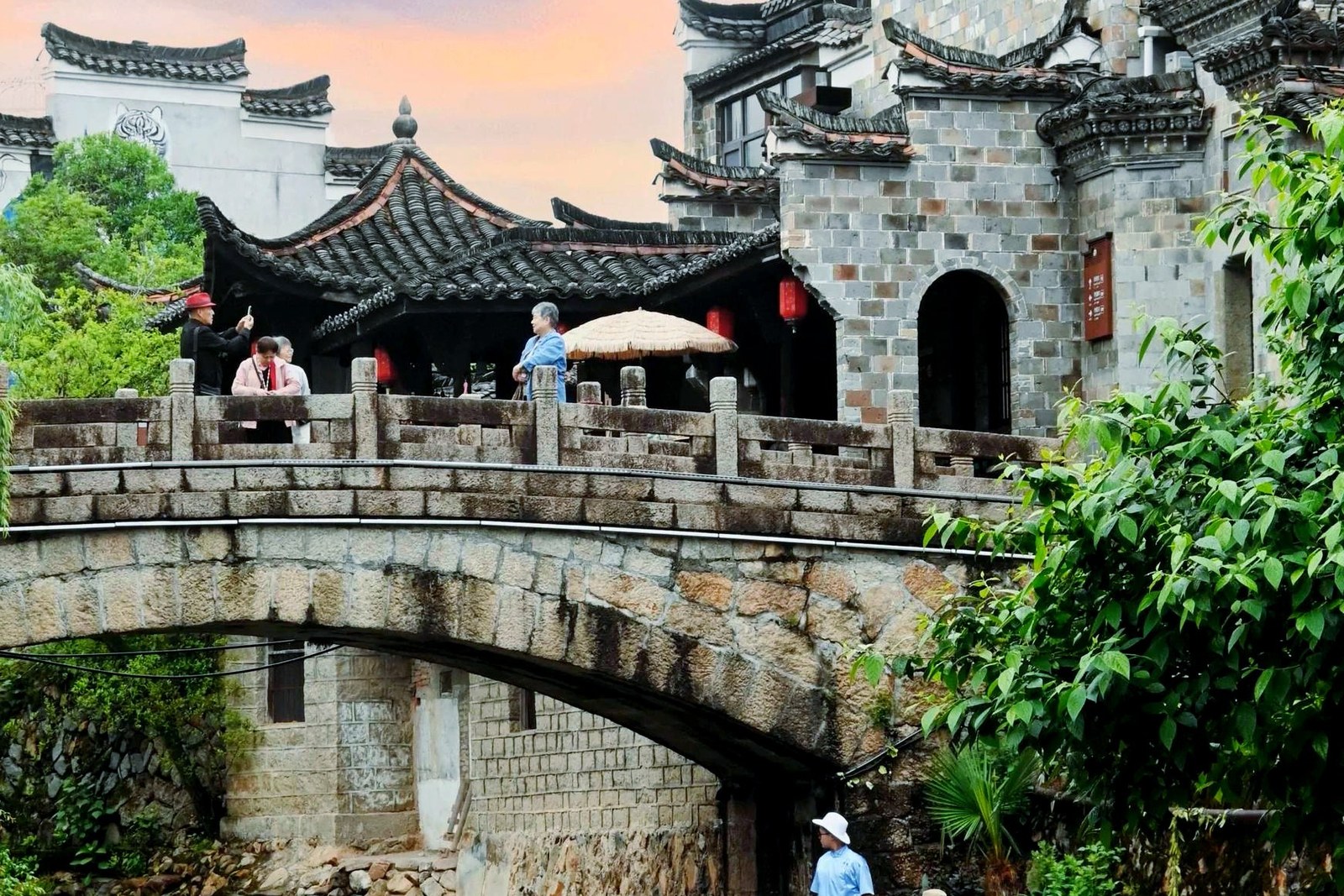
The walk is the reward: 枫溪老街 Fēngxī Lǎojiē the Old Street runs along the Fengxi stream under eleven stone bridges, whitewashed gable walls painted with merchant friezes, carved door lintels, and corner pavilions where the three-province trade routes visibly braid together. 珠坡桥 Zhūpō Qiáo the stone bridge at the lane’s bend is the postcard; the back lanes behind it are the better half, where locals dry vegetables on racks and the wood-carved shop signs have never been repainted straight.
Stay the night if you can – the tour buses leave, fog fills the streets, and the town resumes being what it has always been: a way-station holding its breath between provinces. The food runs border-hybrid too: 铜锣糕 tóngluó gāo the pea-flour festival cake, mountain-ham tofu soups, and chili levels that quietly confess the Fujian border is one valley away.
Practicalities
- The town is walkable end to end in 20 minutes; the ticket covers the Wenchang Temple and courtyard exhibits – keep it for the interior halls.
- Night entry is free after the ticket office closes; staying overnight inside the walls is the town’s best-kept trick.
- Weekday mornings are empty; October weekends queue at the famous photo bridge – walk the back lanes instead.
- Buses from Jiangshan take about an hour; drivers back to town run until early evening, so check the last departure at the visitor center.
Words and Names
廿八都 Niànbādū Nianbadu, “Number Twenty-Eight” of the Xianxia road’s old post stations; 鸡鸣三省 jī míng sān shěng a rooster’s crow in three provinces, the town’s motto; 文昌宫 Wénchāng Gōng the Wenchang Temple of letters; 枫溪 Fēngxī the Maple Stream under the town’s eleven bridges; 铜锣糕 tóngluó gāo the gong cake, the town’s pea-flour festival sweet. Beyond the garrison lanes, the same 衢州市 Qúzhōu Shì Quzhou City keeps more places worth the detour: 江郎山 Jiāngláng Shān the three world-heritage pillars, 龙游石窟 Lóngyóu Shíkū the underground chambers, 根宫佛国 Gēngōng Fóguó the root-carved kingdom, or 烂柯山 Lànkē Shān the Go-legend mountain – four more doors into the same 衢州市 Qúzhōu Shì Quzhou City. Once the old street has had its evening, our Quzhou food map fills the table.
flowcloud would say Nianbadu is a checkpoint that retired into a poem: thirteen dialects behind one gate, fresco walls arguing over whose merchant painted first, and a stream that still keeps the accounts the garrison left behind. All checked November 2026.
Getting there: Nianbadu sits deep at the three-province corner – buses from Jiangshan station take about an hour through the Fengxi valley, the G205 puts it forty minutes from Jianglang Mountain, and through-buses from Quzhou run twice daily in season. All checked November 2026.