
The Jewel Garden: Norbulingka
宝贝园林藏夏色,一园柳影锁流年 Bǎobèi yuánlín cáng xià sè, yī yuán liǔyǐng suǒ liúnián – The jewel garden hides summer’s colors; a park of willow shade holds the flowing years
罗布林卡 Luóbùlínkǎ – “the jewel garden” – is the park-palace the Dalai Lamas escaped to when Lhasa heated up, begun in 1755 with the Kelsang Potrang and expanded over two centuries into a 36-hectare estate of willows, poplars and staged lakes on the western edge of 西藏自治区拉萨市 Xīzàng Zìzhìqū Lāsà Shì Lhasa. Where the Potala is stone, stairs and vertical, Norbulingka is lawns, shade and strolling – the summer half of the same government.
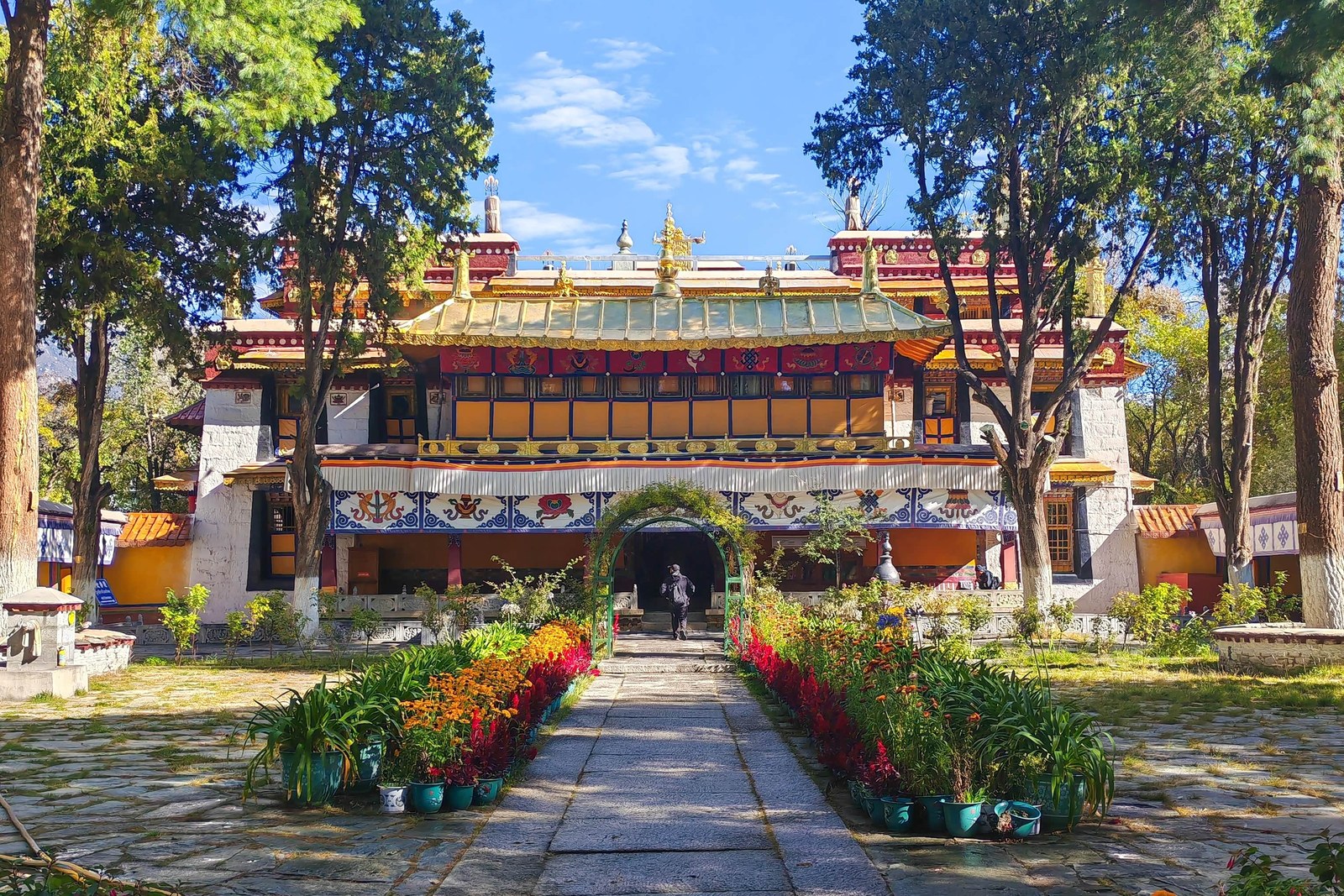
The palaces stand scattered like a village of mansions. The Kelsang Potrang, the first and oldest, keeps its audience halls and private rooms as the eighteenth century left them; the later palaces add throne rooms, chapels and the New Palace of 1954-56, whose murals retell Tibetan history in episodes – including, famously, a panel of the very construction of Norbulingka itself. Each potrang sits in its own walled garden, so the estate reads as a chain of private parks.
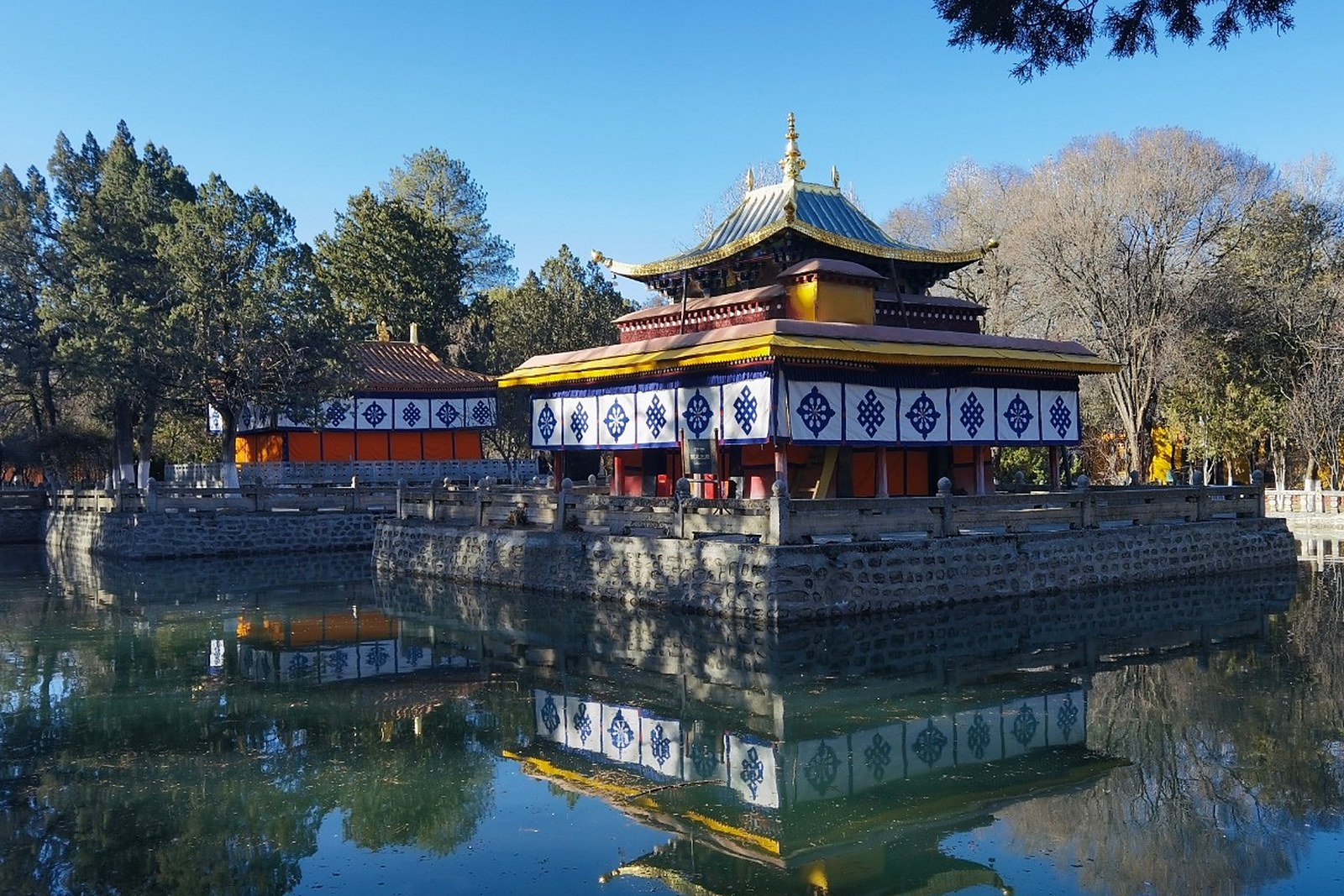
The gardens are the point in summer. Willow avenues shade the ponds, the lawns fill with picnic families during the Shoton opera season – the Lhamo stage here is the tradition’s home ground – and the contrast with dusty Lhasa outside the gate could not be sharper. It is the largest planted garden in Xizang, and locals treat it as the city’s park as much as its monument.
As heritage the listing is complete: a first-batch national key site, and since 2001 part of the Potala’s world-heritage extension. For a visitor it is the easiest half-day in Lhasa – flat, shaded, uncrowded – and the palace that explains the institution best precisely because it was built for ease rather than defense.
Practicalities
- The park gate sits on Beijing Middle Road’s south side; the garden loop on foot runs one to two hours, flat and shaded throughout.
- Summer afternoons are the season – the opera stage runs in the Shoton festival window and the lawns fill with picnics.
- The palaces open on a rotation; the New Palace murals and the Kelsang Potrang are the two rooms not to skip.
- The estate is big – water and a hat matter at 3,650 meters even under the willows.
Words and Names
罗布林卡 Luóbùlínkǎ Norbulingka, “jewel garden”; 格桑颇章 Gésāng Pōzhāng the Kelsang Potrang, the first palace; 新宫 xīn gōng the New Palace with the history murals; 雪顿节 Xuědùn Jié the Shoton festival, the opera season; 夏宫 xiàgōng the summer palace. Beyond the gardens, the same 西藏自治区拉萨市 Xīzàng Zìzhìqū Lāsà Shì Lhasa keeps more places worth the detour: 布达拉宫 Bùdálā Gōng the winter palace across town, 大昭寺 Dàzhāo Sì the temple at the old town’s heart, 八廓街 Bākuò Jiē the pilgrim circuit, or 色拉寺 Sèlā Sì the debating monastery – four more doors into the same Lhasa. When the willows close behind you, our Lhasa food map fills the table.
flowcloud would say Norbulingka is the empire’s exhalation: after the Potala’s stair, a garden built for shade, opera and long afternoons – and the better half of understanding how Lhasa actually lived. All checked November 2026.
Getting there: The park gate sits on the south side of Beijing Middle Road about two kilometers west of the Potala – city buses stop at the Norbulingka gate and taxis cross town in ten minutes; the garden loop on foot runs one to two hours and the lawns are best in the afternoon light. All checked November 2026.