
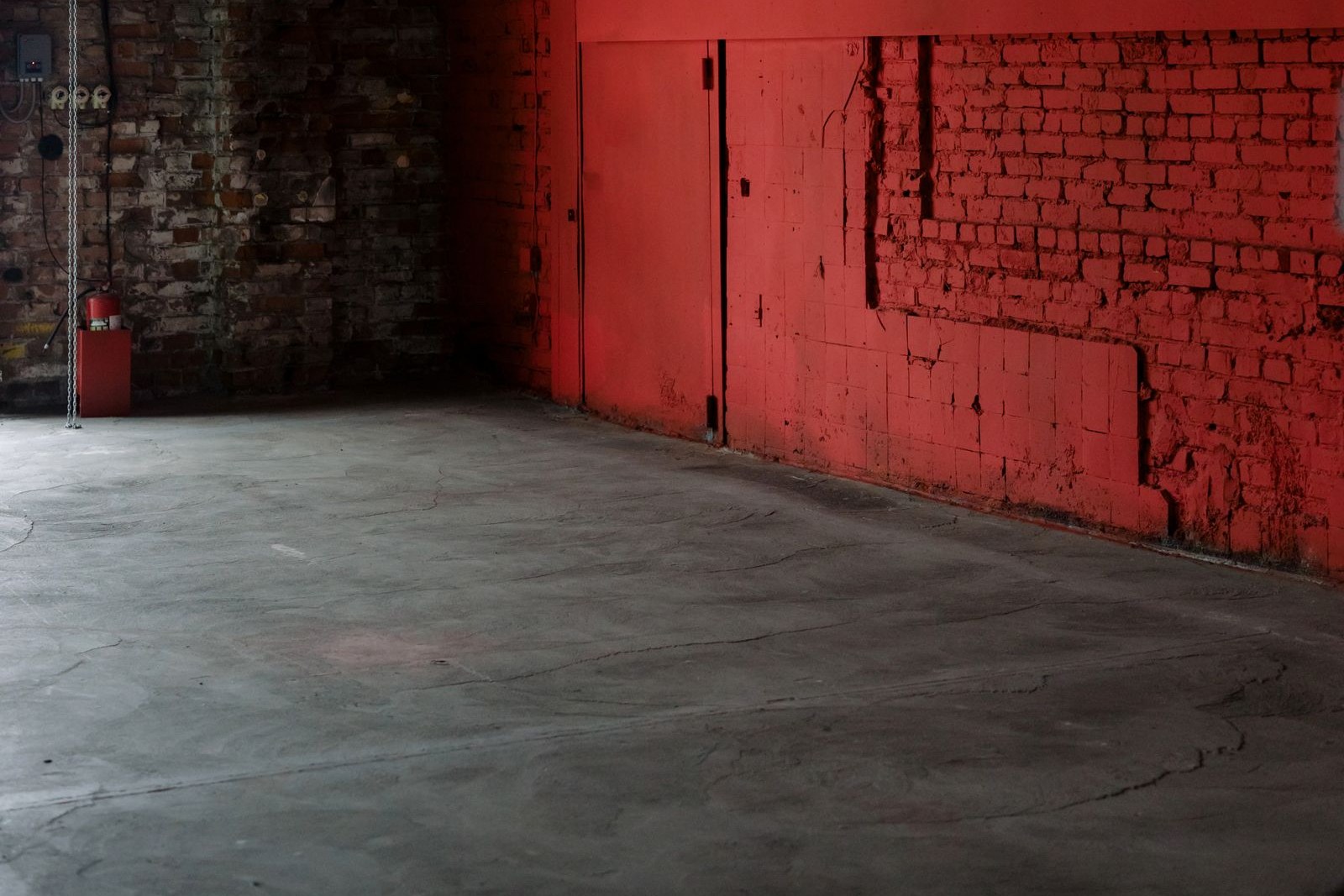
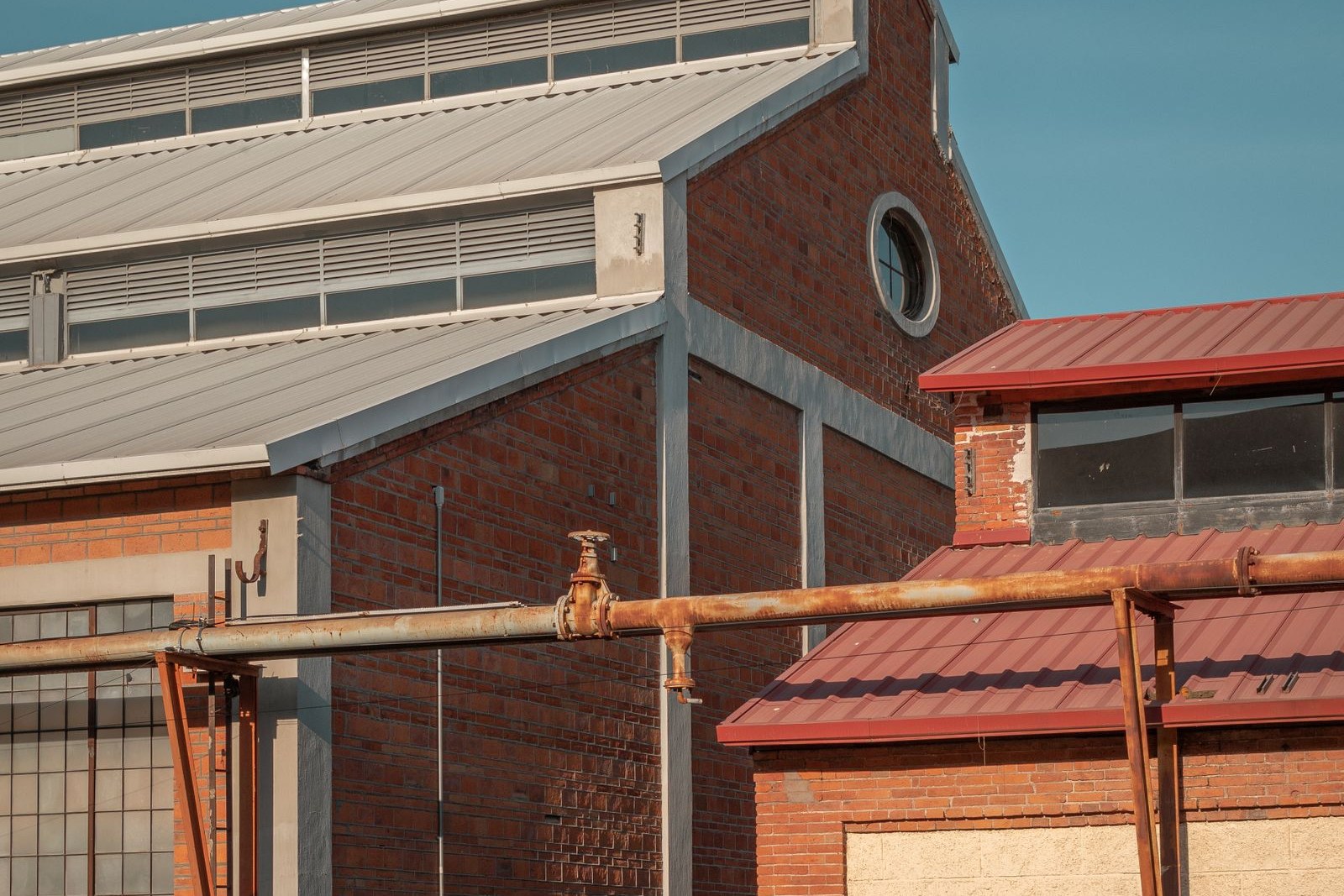
华侨城创意文化园 Huáqiáochéng chuàngyì wénhuà yuán, which everyone calls OCT-LOFT, is a 1980s factory estate in 南山 Nánshān that was left alone long enough to become interesting. The buildings were put up by the 华侨城 group as light-industrial workshops in the early years of the special economic zone, tilt-up concrete frames with sawtooth roofs, steel pipe runs and the sort of generous floor-to-ceiling heights that factories have and offices do not. By the late 1990s the workshops were emptying as manufacturing moved out of the city, and rather than demolish them the estate’s owner let the spaces out cheaply to studios, galleries and designers. The 南区 nán qū south section opened in 2004 and the 北区 běi qū north section in 2007, and the conversion was deliberate about leaving the structure visible: the concrete is still raw, the pipework is still on the outside of the walls, and the original sliding steel doors have mostly been kept.
What is in it now is a working district rather than an attraction. The galleries are the anchor, and the largest of them, the 华·美术馆 in the neighbouring 华侨城 estate and the OCAT 深圳馆, sit at the top of the food chain; below them are a long tail of commercial and project spaces that change tenants every year or two, which is the healthy state for an art district and also means that any specific list of shops is out of date within a season. 旧天堂书店 Jiù Tiāntáng Shūdiàn, the Old Paradise bookshop, has been in the same unit in the 北区 since the beginning and sells art books, records and coffee, and is the one address worth writing down. There is a 创意市集 chuàngyì shìjí of design stalls on weekend afternoons, a scattering of small kitchens and bars that mostly open at noon and close late, and the 燕晗山 Yānhán Shān park immediately to the north, which is where everyone walks between appointments.
The area is best understood as a fifteen-minute-walk neighbourhood with three anchors. The 南区 nán qū is the commercial end, with the cafes and the design shops and the highest foot traffic. The 北区 běi qū is quieter, more studios and the bookshop, and it is where the architecture is best read because fewer of the units have been overfitted. The third walk is the 华侨城 Huáqiáochéng estate itself, the 1980s planned residential district that surrounds the lofts, which is worth seeing precisely because it is unremarkable: wide tree-lined roads, low-rise housing, and a population that has lived there for thirty years, which in Shenzhen is an antique. Between the two sections is the 深圳湾 Shēnzhèn Wān corridor, so you can walk from the lofts to the waterfront in about twenty minutes.
Practicalities
Tickets. Free. There is no admission charge for the district and no ticket gate; you walk in from any of the streets around it. Individual exhibitions inside the larger galleries may charge, usually ¥20 to ¥60, and the small commercial galleries are free.
Opening hours. The lanes themselves are open around the clock and the district is at its best between about 11:00 and 21:00, when the shops and studios are staffed. The galleries generally run 10:00 to 18:00, with the larger ones holding opening receptions on Friday or Saturday evenings. The bars and restaurants at the 南区 nán qū end run until midnight or later, and a few of the studios keep evening hours during exhibition weeks.
Closing day. Most of the galleries close on Mondays, and several close on the Monday immediately after an opening. The district itself never closes, and the cafes and the bookshop trade seven days a week, so a Monday visit is a walk rather than a gallery day. Public holidays are busy and the larger shows draw real queues on the first weekend.
Getting there. Metro Line 1 to 侨城东站 Qiáochéng Dōng Zhàn, exit A, puts you at the south end of the 南区 nán qū; Line 2 to 侨城北站 Qiáochéng Běi Zhàn puts you at the north end of the 北区 běi qū, which is the better arrival if the bookshop is your destination. Bus routes along 侨城东路 and 深南大道 serve both. It is a twenty-minute walk from the 深圳湾 Shēnzhèn Wān waterfront and about the same from 世界之窗 Shìjiè Zhī Chuāng on Line 1 and Line 2.
Words and Names
华侨城 Huáqiáochéng means the overseas Chinese town, the name of both the estate and the developer that built it; 创意文化园 chuàngyì wénhuà yuán is a creative culture park, and OCT-LOFT is the estate’s own English label. 南区 nán qū and 北区 běi qū are the south and north sections, 旧天堂书店 Jiù Tiāntáng Shūdiàn is the Old Paradise bookshop, and 创意市集 chuàngyì shìjí is a design market. 燕晗山 Yānhán Shān is the park to the north and 深圳湾 Shēnzhèn Wān is the bay to the south.
Getting there: Metro Line 1 to 侨城东站 Qiáochéng Dōng Zhàn, exit A for the 南区 nán qū, or Line 2 to 侨城北站 Qiáochéng Běi Zhàn for the 北区 běi qū; come on a Saturday afternoon if you want the market and on a Tuesday morning if you want the architecture to yourself, and note that Monday is the day the galleries are shut.