
Olympic Water Park: The Straight Two-Kilometre Basin of the 2008 Games, the Dragon Boats and the Chaobai Riverside Greens in Shunyi District, Beijing
千桨劈开潮白浪,一泓静水会五洲。Qiān jiǎng pī kāi Cháobái làng, yī hóng jìng shuǐ huì wǔ zhōu – A thousand oars split the waves of the Chaobai; one sheet of still water plays host to five continents.
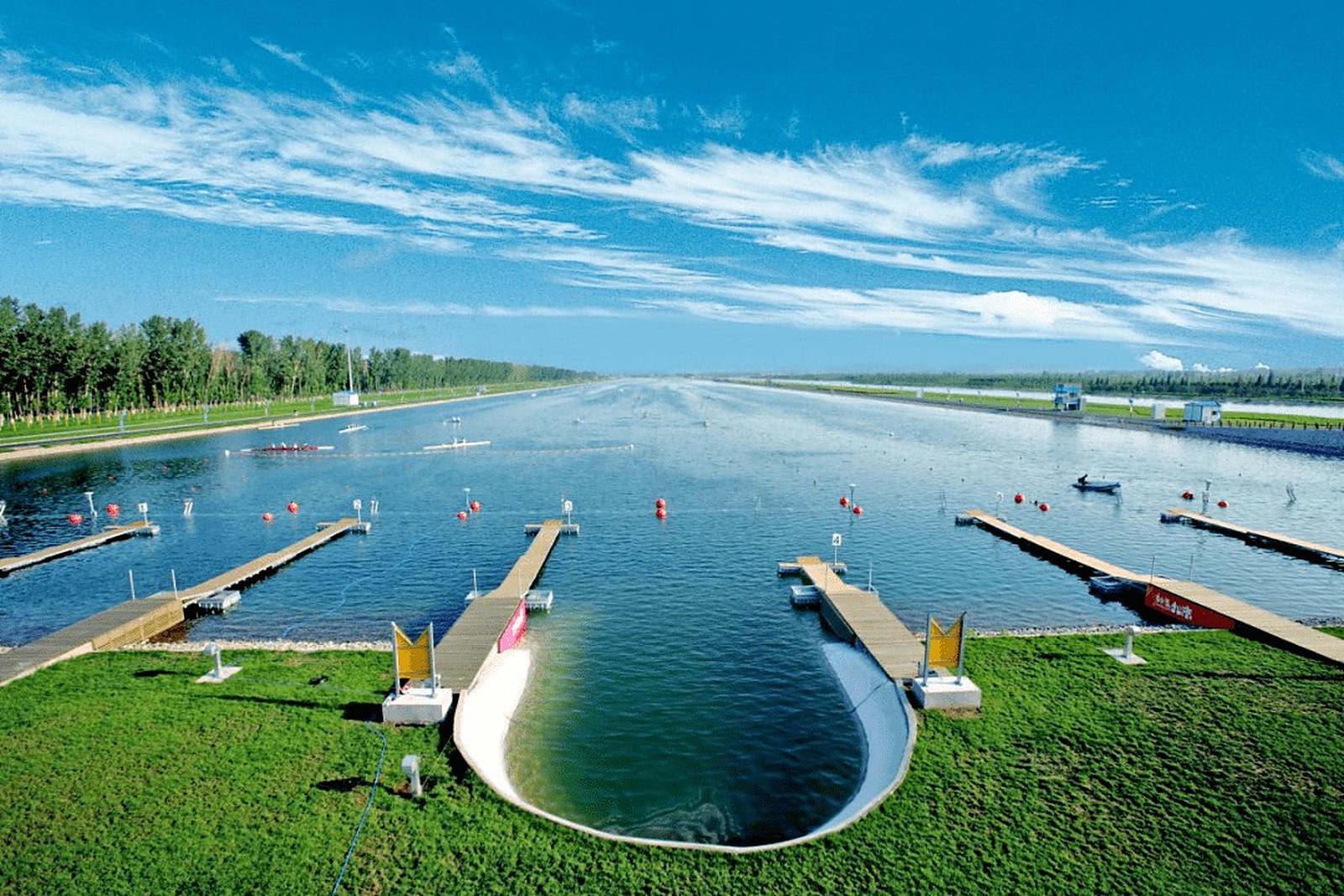
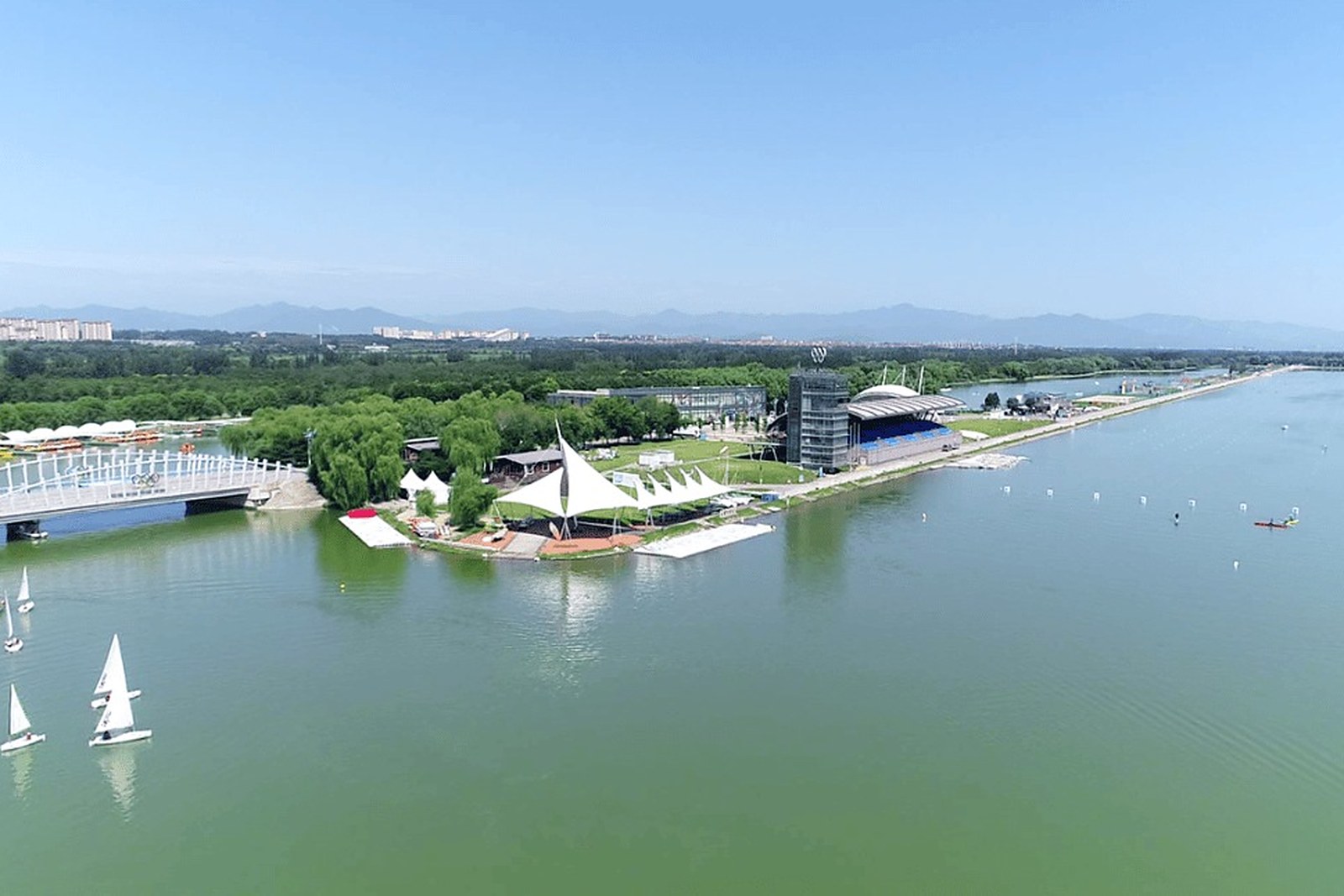
奥林匹克水上公园 Àolínpǐkè Shuǐshàng Gōngyuán the Olympic Water Park — in its Games days the 顺义奥林匹克水上公园 Shunyi Olympic Rowing-Canoeing Park — is not a lakeside lawn with a pedal-boat pond — it is, plainly put, an Olympic arena turned public waterland: a flat-water complex beside the 潮白河 Cháobái Hé Chaobai River on the northern edge of 顺义新城 Shùnyì Xīnchéng Shunyi’s new town, built from 2005 and finished in the summer of 2007, in time to stage that season’s test regattas before the real thing. In August 2008 it carried the rowing sàitǐng and the canoe-kayak flatwater píhuátǐng events of the Beijing Games on a dead-straight race channel reported at some two kilometres, and the ten-kilometre open-water marathon swim was settled in the same basin, before temporary stands reported at around twenty thousand seats. The grounds are reported at about three hundred hectares, well over half of them water, edged with lawns and windbreak woods. After the Games the basin kept its job: a training and competition base for Beijing’s rowing and canoe squads, a regular 龙舟 lóngzhōu dragon-boat course each 端午 Duānwǔ festival, and a public park of cycling paths, lawns and boat rentals. What you actually visit is a great engineered sheet of calm water that you walk, pedal or paddle around, with an Olympic past written into every straight line.
Call it honestly: the entry gate has run free or nearly free in recent years, with boat rentals, pedal craft, paddling sessions and bicycle hire all charged separately (worth confirming the details for current entry rules and reservation requirements). The honest problem is wind and weather: the basin is wide, exposed and famously breezy — brilliant for sailing dinghies, less so for picnics — so pack a windbreaker even in June. Distances are deceptively long, so bicycles or the gate-side sightseeing options earn their keep. Spring and autumn give the best walking weather, summer evenings the best light on the water, and winter turns the basin into a grey, silent, half-frozen plane with an austere beauty of its own. Give it half a day at minimum, a full one if you plan to get on the water.
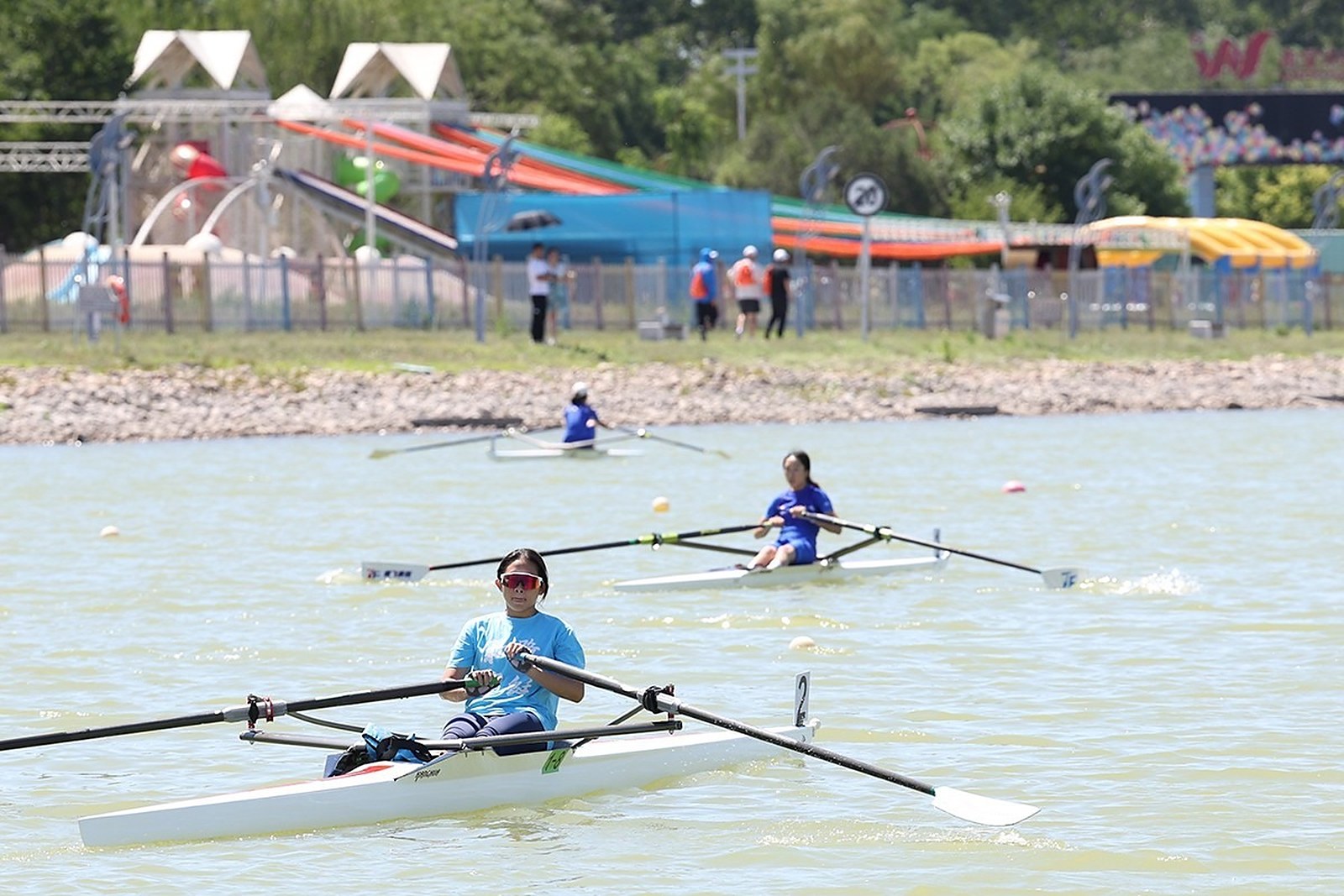
The honest star is the straight itself — two kilometres of lane-buoyed glass laid across the plain like a runway, egrets working the margins, sculls hissing through the water at first light — not the amusement corners by the gates. What gets oversold is the word “Olympic” read as a museum experience: the Games’ stands were temporary and are gone, the commemoration lives in signage and a few sculptural gestures, and you come for water and space, not exhibits (worth confirming the details for whatever exhibitions or events run on your date). What repays the effort is joining the water rather than circling it — a dragon-boat outing with a scratch crew, a rowing taster, or at minimum a bicycle lap of the bank. Come for the layering of the place: bank, then basin, then dusk light down the far straight.
The self-aware postscript: I watched a school crew unrig a racing shell on the boathouse apron while a groundsman raked the gravel drive, and when I asked whether the place felt empty now that the Games had gone he leaned on his rake and said, “the Games rented the water for a month — the water has been training here for years, and it is more patient than any of us”. That is the visit in miniature. 奥林匹克水上公园 Àolínpǐkè Shuǐshàng Gōngyuán suits whoever treats it as an open-air sports day first and a sightseeing box second — walk the straight, ride the bank, paddle if the budget allows — and exhausts anyone arriving in search of an Olympic theme park with medal ceremonies. Everything else on this Shunyi list makes its own counterpoint within an hour’s drive: the reed labyrinths of 汉石桥湿地 Hànshíqiáo Shīdì to the south-east, the underground village of 焦庄户地道战遗址 Jiāozhuānghù Dìdàozhàn Yízhǐ to the north-east, the winged greenhouses of 七彩蝶园 Qīcǎi Diéyuán to the west, and the tulip-and-chrysanthemum calendar of 北京国际鲜花港 Běijīng Guójì Xiānhuāgǎng across the plain — all in the same 顺义区 Shùnyì Qū that borrowed an Olympic summer and kept the water.
Practicalities
- Rating: ★★★★☆ — an Olympic venue that kept its water and its calm; the two-kilometre straight at first light and a dragon-boat outing outrank the gate-side amusements; bring wind layers and wheels.
- Tickets: The park has run with free or low-cost entry in recent years, with boat and bike rentals, paddling sessions and sightseeing rides priced separately (worth confirming the details for current entry rules, activity prices and any booking requirements).
- Address: 奥林匹克水上公园 Àolínpǐkè Shuǐshàng Gōngyuán, by the 潮白河 Cháobái Hé along the 白马路 Báimǎ Lù corridor, northern 顺义新城 Shùnyì Xīnchéng, 顺义区 Shùnyì Qū, Beijing.
- Time needed: Half a day for the straight, the banks and a boat; a full day adding a paddling session and the riverside cycle, with spring and autumn the kindest seasons.
Words and Names
奥林匹克水上公园 Àolínpǐkè Shuǐshàng Gōngyuán Olympic Water Park · the 2008 rowing and canoeing venue turned public waterland 潮白河 Cháobái Hé Chaobai River · the long river of Beijing’s eastern plain beside which the basin sits 顺义新城 Shùnyì Xīnchéng Shunyi new town · the northern expansion of the district that grew up around the venue 赛艇 sàitǐng rowing · the Olympic sport the two-kilometre straight was built for 皮划艇 píhuátǐng canoe and kayak · the flatwater disciplines that shared the 2008 basin 马拉松游泳 mǎlāsōng yóuyǒng marathon swimming · the ten-kilometre open-water race swum here in August 2008 龙舟 lóngzhōu dragon boat · the festival paddler that now fills the straight each 端午 Duānwǔ 白马路 Báimǎ Lù Baima Road · the east-west avenue that strings together northern Shunyi’s sights
flowcloud would say that 奥林匹克水上公园 Àolínpǐkè Shuǐshàng Gōngyuán is the rare Olympic venue that went straight back to work — built beside the 潮白河 Cháobái Hé from 2005 for the 2008 Games, a dead-straight two-kilometre race channel on grounds reported at about three hundred hectares, stage of the rowing, canoe-kayak and marathon-swim events of August 2008, and now a public basin of dragon boats, rented bicycles and squad training — and that the honest move is a weekday morning with a windbreaker and a bicycle, because entry rules and activity prices drift (worth confirming the details), the Olympic plaque is the poster half and the buoyed straight at first light is the real half, and the basin repays whoever gets on the water slowly while losing anyone hunting a stadium that no longer stands. All checked October 2026.
Getting there: Metro Line 15 out to 顺义 Shùnyì or the 俸伯 Fèngbó terminus leaves a short taxi ride north to the rowing lake on the 潮白河 Cháobái Hé Chaobai River at the district’s new-town stretch, and local buses run from the station area up toward the 白马路 Báimǎ Lù Baima Road bank; self-drive follows that riverside corridor and parks at the venue’s gate lots (worth confirming the details for current train times, bus numbers and event-day parking). All checked October 2026.