
虎门 Hǔmén carries the title the city’s own publicity prints first: the place where China’s modern history began. On the grounds of the Opium War Museum at 113 Jiefang Road lie the two stone-lined pools where, from June 3 to June 25, 1839, the imperial commissioner 林则徐 Lín Zéxú supervised the destruction of confiscated opium – more than 20,000 chests by the exhibition’s own narrative, some 2.37 million jin, roughly 1,200 tonnes, by the precise count the reference works print. The museum that grew around the pools was founded in 1957 as the Lin Zexu Memorial Hall, passed through two renamings, and on 21 December 2020 became Dongguan’s first national first-grade museum.
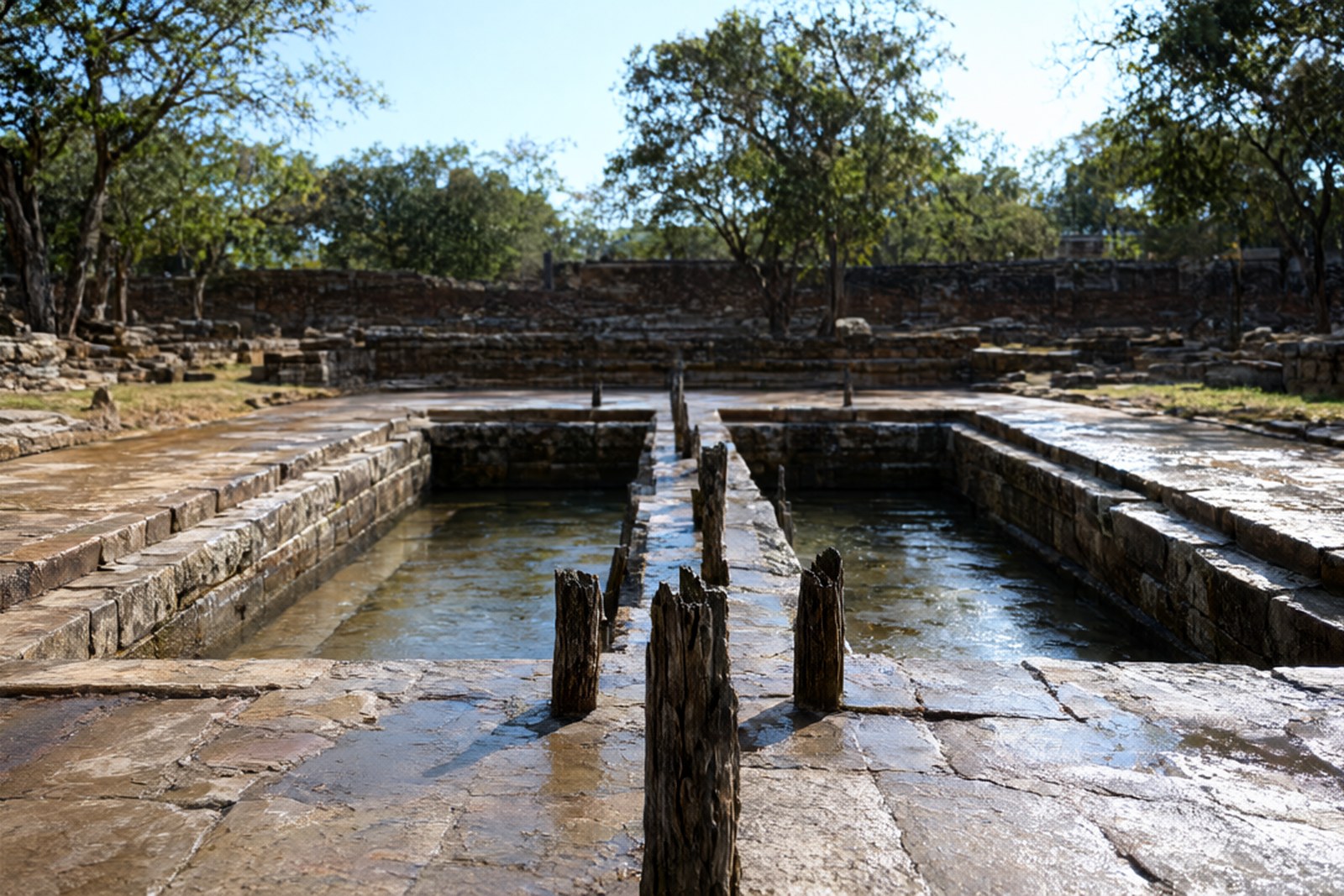
The destruction was not a bonfire, and the site is at pains to correct the picture visitors of every nation carry home. The method was “seawater immersion”: opium cakes were shredded and thrown into the stone-paved pools, salt brine and quicklime were poured in, and the mixture was stirred until the drug decomposed; when the reaction finished, the sluices were opened and the whole batch ran out into the Pearl River. Twenty-three days of that. And the scene was thought important enough that the first relief on the Monument to the People’s Heroes in Beijing depicts the Humen opium destruction – the opening image of the national story, cast in stone at the centre of the capital, drawn from what happened on this beach.
The pools themselves are a reconstruction with a paper trail. Excavation in 1973 found the original pool floors 1.15 metres below the surface, each pool about 45 metres square, with the inflow channels in front and the drainage behind and, along the rims, the slots that once held the timber stakes and planking. What stands today follows that evidence; a Lin Zexu memorial rebuilt in 1957 stands in the grounds, and the museum axis runs past an anti-British resistance sculpture group to a statue of Lin himself, in front of a hall faced like an old gun battery.
The administrative story is one site wearing three hats. In 1982 the State Council listed the opium-destruction pools and the Humen forts together as a single national key cultural relics site; the museum gained management offices at the Shajiao and Weiyuan forts in 1987 and 1988; and in December 1999, with the opening of the Sea Battle Museum on Weiyuan Island, the three-halls-in-one structure settled into place – the pool-side halls, the naval-battle museum and the forts under one administration. Attendance ranks with the giants: 5.845 million visits in 2019, seventh in the country, and a reported seven million in 2024.
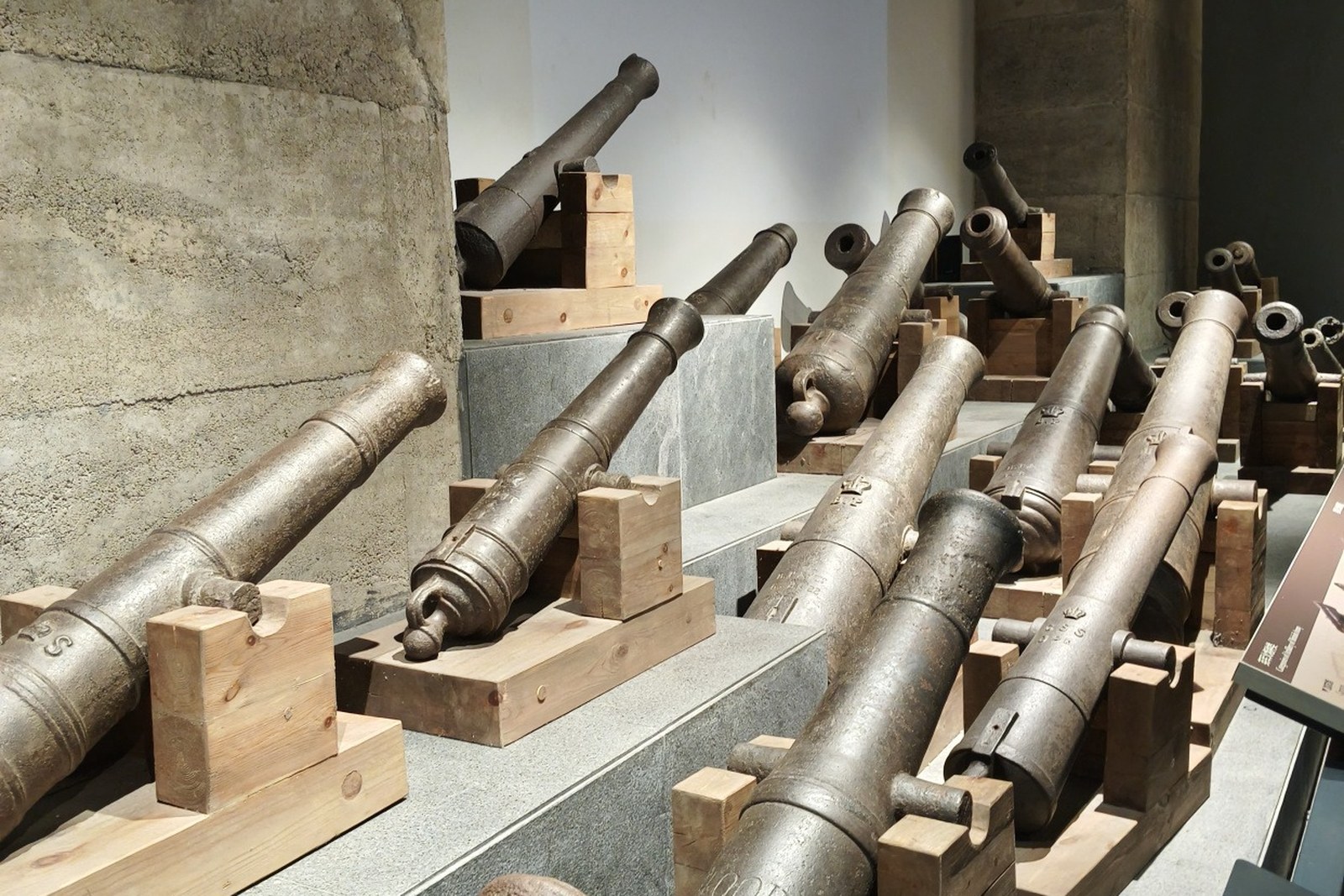
Inside, the permanent exhibition “The Destruction of Opium at Humen”, rebuilt in 2011, walks the smuggling-to-destruction story with pool timbers, Lin Zexu’s own calligraphy couplets and captured western ordnance; every year around June 3 – the date later echoed in China’s anti-drug day – the museum holds its commemoration, and 2024’s 185th anniversary brought a special exhibition on the spirit of the event. Entry is free but ticketed: book through the museum’s official WeChat account and bring your original ID or passport, because the gates are real. Budget an hour and a half to two hours, and treat the visit as half of a Humen day: the pools and halls in the morning, the Weiyuan fort and the Sea Battle Museum – the other half of the same 1982 listing – in the afternoon. One caution for planners: the Shajiao fort area has been closed since 27 March 2026 until further notice, and conservation work is under way around the pool area, so check the museum’s announcements before setting out.
Practicalities
Tickets. Free, but not gate-free – real-name reservation through the museum’s official WeChat account, with your original ID or passport at the turnstile. Checked October 2026, subject to change.
Opening hours. 08:30 to 17:30, last entry 17:00; in the summer season (13 July to 31 August in 2026) 08:30 to 18:00 with last entry 17:30; on statutory holidays 08:00 to 17:30.
Closing day. The halls close on Mondays – the “Destruction of Opium at Humen” and “Humen Stories” exhibitions and the gallery shut for maintenance every Monday except public holidays – but the open-air pool site and the rest of the grounds stay open. Do not compress that into “closed Mondays”: on a Monday you can still stand at the pools.
Getting there. From the Guangzhou-Shenzhen-Hong Kong high-speed rail Humen station it is twenty to thirty minutes by bus or taxi; bus 3A serves the Lin Zexu Memorial Hall stop and bus 262 stops at Zexu Park, some eighty metres out. In 2025 holiday periods the city ran a free “Fengyun Guanyi” heritage shuttle from Humen high-speed station calling at Zexu Park and the Sea Battle Museum – a 2025 arrangement, so recheck before relying on it.
flowcloud would say that Humen’s pools are the rare monument that works by subtraction – the drug is gone, the water is plain, the deed is recorded in the arithmetic of what no longer exists – and that a museum which opens its grounds on Mondays while the halls rest has the priorities right: stand at the water first, read the labels second.
Getting there: 林则徐销烟池 Lín Zéxú xiāoyān chí and the Opium War Museum stand at 113 Jiefang Road, Humen, Dongguan, Guangdong, twenty to thirty minutes from Humen high-speed rail station by bus or taxi, with bus 3A to the memorial hall and bus 262 to Zexu Park; entry is free with WeChat real-name booking and original ID (checked October 2026, subject to change), hours 08:30-17:30 with last entry 17:00, exhibition halls closed Mondays except holidays while the open-air pools stay open.