
Paotaiwan Wetland Forest Park: A Yangtze Estuary Riverside Park of Qing-Dynasty Fort Memory, a Steel-Slag Quarry Garden Reborn and Reed-Bed Wetlands at Tanghou Road 206 in Baoshan District, Shanghai
炮台古韵临江立,矿坑新园傍水开。Pàotái gǔyùn lín jiāng lì, kuàngkēng xīnyuán bàng shuǐ kāi – The old fort’s memory stands above the river; a new garden opens beside the water where the quarry was.
炮台湾湿地森林公园 Pàotáiwān Shīdì Sēnlín Gōngyuán Paotaiwan Wetland Forest Park is not a lawn-and-pavilion city park — it is, plainly put, a real piece of Yangtze shoreline kept wild inside the metropolis: the park spreads along the riverside at 塘后路 Táng Hòu Lù Tanghou Road 206 in 宝山区 Bǎoshān Qū Baoshan District, on the north bank of the 长江 Cháng Jiāng Yangtze just below its great confluence with the Huangpu, where reed marshes, tidal flats and viewing platforms face the widest water in the city. The name carries history: shore batteries were first sited here in the early Qing dynasty as part of the 吴淞炮台 Wúsōng pàotái Wusong forts guarding the river mouth, and the park keeps that garrison memory in lawns, earthworks and monuments rather than museum walls. Its boldest modern chapter is the 矿坑花园 Kuàngkēng Huāyuán Quarry Garden, a former steel-slag backfill site reworked into a terraced garden of pools, rock and green. What you actually visit is a riverside park where wetland, fort memory and industrial rebirth share one walkable shore.
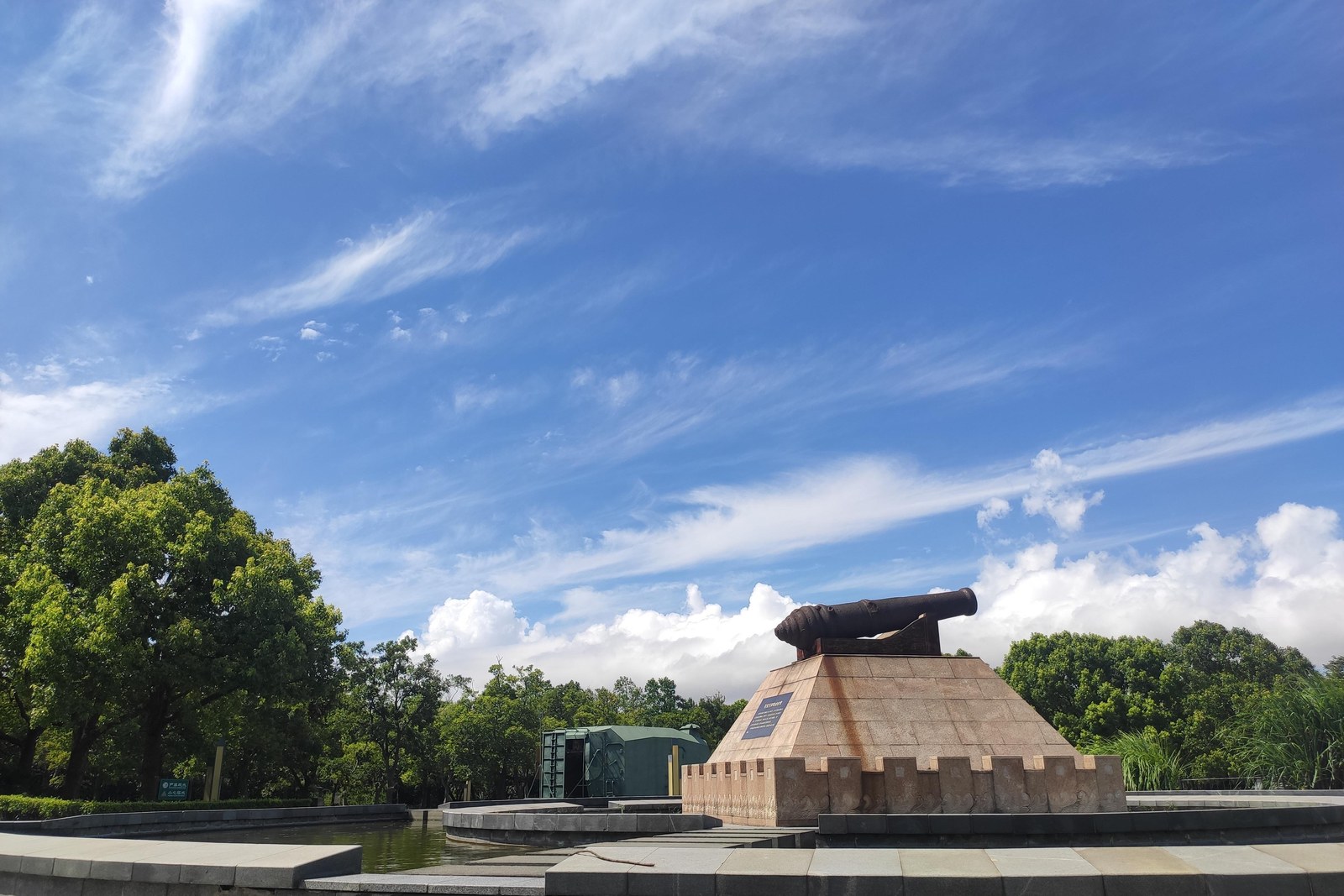
Call it honestly: the park grounds are generally free to enter, while the 长江河口科技馆 Chángjiāng Hékǒu Kējì Guǎn Yangtze Estuary Science Museum inside keeps its own door and possibly its own charge, and special exhibitions change with the season (worth confirming the details for the museum’s current opening hours and ticketing before you go), and 水产路站 Shuǐchǎn Lù Zhàn Shuichan Road station on Metro Line 3 sets you down for a short shuttle or taxi hop to the gate. The honest warning is scale and exposure: this is a big riverside ground with long distances between quarry garden, wetlands and fort lawns, the wind off the estuary is honest, and food runs to kiosks, so bring water and a plan. Early morning gives the reeds to the birdwatchers and mist on the water; late afternoon warms the quarry stone and sends the ships home in silhouette. Give it two to three unhurried hours, longer if the science museum catches you.
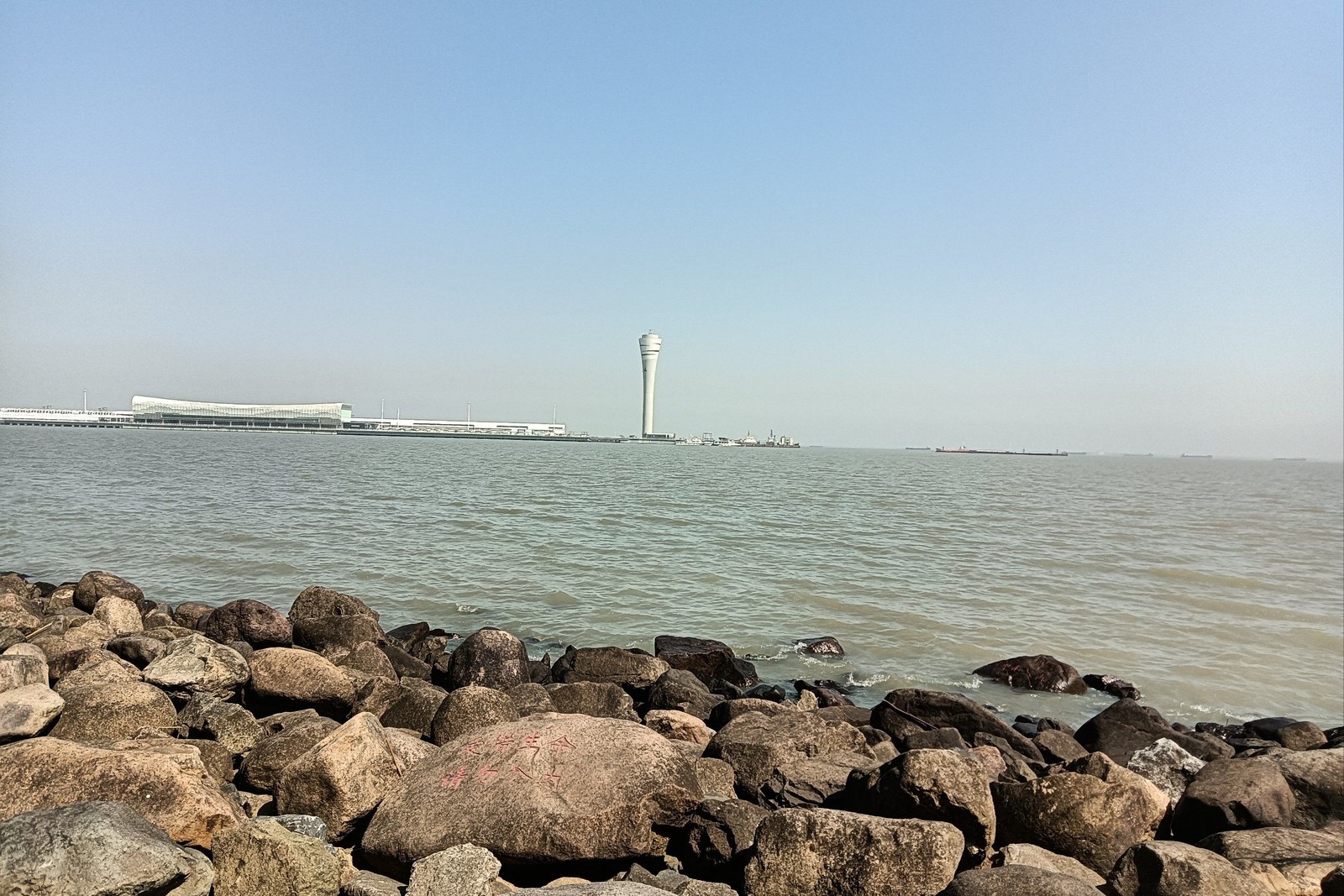
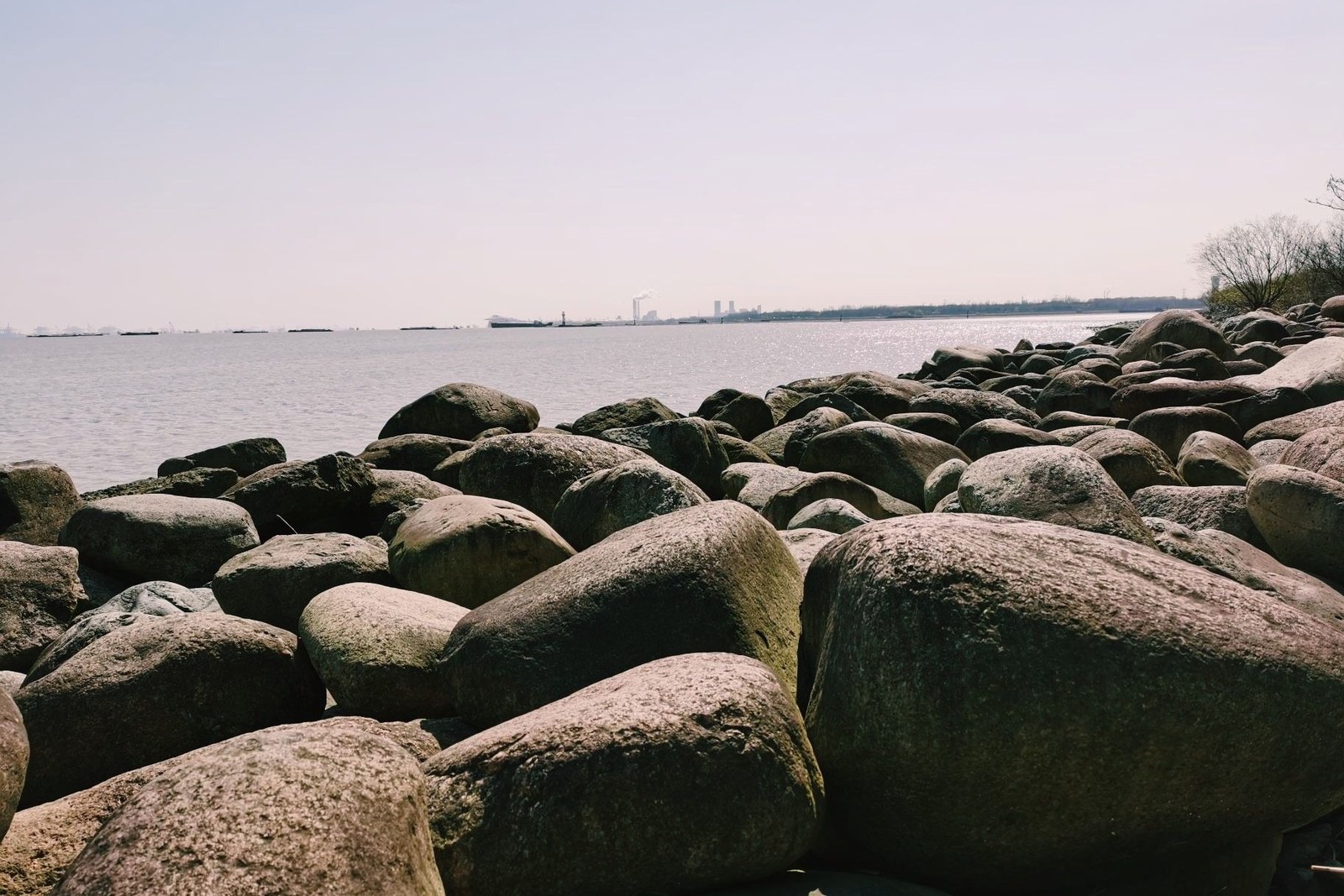
The honest star is the Quarry Garden — the cut walls, steel traces and mirrored pools of a slag heap reborn as the park’s most photographed landscape, the single place where Baoshan’s industrial century turns visibly into garden. What gets oversold is the forts: travellers arriving expecting cannon-lined ramparts find gentle memorial lawns and interpretive marks of the 吴淞炮台 Wúsōng pàotái Wusong forts rather than a great surviving fortress, and the military past here is atmosphere more than architecture (worth confirming the details for any fort-related exhibitions or tours currently running). What repays the effort is the wetland around the history: the 芦苇荡 lúwěidàng reed beds skimming the water’s edge, the 观江平台 guānjiāng píngtái river-viewing platforms reaching out over the mudflats toward passing ships, and boardwalks where herons work the shallows within sight of the cruise terminal next door. Walk the quarry garden first while your legs are fresh, then let the reed paths slow you down to river speed. Come for the layering of the place: fort lawns, then quarry, then the wide open Yangtze.
The self-aware postscript: I was following a boardwalk through the reeds one autumn morning when a retired steelworker with binoculars volunteered the local view. “I helped pour slag on that ground forty years ago,” he said, keeping his voice low for the birds, “and now I count herons where the waste went — if a garden can be built out of what we threw away, this city can fix anything”. That is the visit in miniature. From the river-viewing platform, looking back across the reeds toward the quarry walls and the cruise berths beyond, the park holds its whole argument in one frame — a shoreline that has been fort, industry and now wetland, the sequence no single monument explains. 炮台湾湿地森林公园 Pàotáiwān Shīdì Sēnlín Gōngyuán suits whoever treats it as a working landscape of estuary, memory and rebirth first and a flower park second, and disappoints anyone expecting ornamental beds, rides and a compact stroller circuit. Nearly everything else on this Baoshan list lies within a short ride: the cruise berths of 吴淞口国际邮轮港 Wúsōngkǒu Guójì Yóulún Gǎng Wusongkou Cruise Port wait next door at 宝杨路 Bǎoyáng Lù Baoyang Road 1, the furnace glow of the 上海玻璃博物馆 Shànghǎi Bōli Bówùguǎn Shanghai Museum of Glass burns at 长江西路 Chángjiāng Xī Lù Changjiang West Road 685, the Nordic spires of 美兰湖 Měilán Hú Meilan Lake stand north on Metro Line 7, and the cherry lawns of 顾村公园 Gūcūn Gōngyuán Gucun Park open at 沪太路 Hùtài Lù Hutai Road 4788 — all inside the same 宝山区 Bǎoshān Qū Baoshan District whose river mouth this park keeps.
Practicalities
- Rating: ★★★★☆ — an estuary shoreline where Qing fort memory, a slag-heap quarry garden and real reed wetlands share one walk; bring windproof layers, and take the quarry garden first.
- Tickets: Park entry generally free; the estuary science museum and any special exhibitions priced or booked separately (worth confirming the details for current hours and charges).
- Address: 炮台湾湿地森林公园 Pàotáiwān Shīdì Sēnlín Gōngyuán, 塘后路 Táng Hòu Lù Tanghou Road 206, 宝山区 Bǎoshān Qū Baoshan District, Shanghai — from Shuichan Road station on Metro Line 3 plus a short shuttle or taxi hop.
- Time needed: Two to three unhurried hours; half a day if you add the science museum properly.
Words and Names
炮台湾湿地森林公园 Pàotáiwān Shīdì Sēnlín Gōngyuán Paotaiwan Wetland Forest Park · 吴淞炮台 Wúsōng pàotái Wusong forts, Qing-dynasty river-mouth defences · 矿坑花园 Kuàngkēng Huāyuán Quarry Garden, the slag-heap garden reborn · 长江河口科技馆 Chángjiāng Hékǒu Kējì Guǎn Yangtze Estuary Science Museum · 芦苇荡 lúwěidàng reed beds · 观江平台 guānjiāng píngtái river-viewing platforms · 长江 Cháng Jiāng the Yangtze River · 塘后路 Táng Hòu Lù Tanghou Road 206 · 水产路站 Shuǐchǎn Lù Zhàn Shuichan Road station · 宝山区 Bǎoshān Qū Baoshan District
flowcloud would say that 炮台湾湿地森林公园 Pàotáiwān Shīdì Sēnlín Gōngyuán is the district’s whole autobiography on one shoreline — a Yangtze riverside ground at 塘后路 Táng Hòu Lù Tanghou Road 206 in 宝山区 Bǎoshān Qū Baoshan District that has been 吴淞炮台 Wúsōng pàotái Wusong fort country since the early Qing garrisoned the river mouth, then a steel city’s slag ground, and is now a wetland park where the 矿坑花园 Kuàngkēng Huāyuán Quarry Garden grows pools and terraces out of industrial waste while the 芦苇荡 lúwěidàng reed beds and 观江平台 guānjiāng píngtái river-viewing platforms face the widest water in the city (worth confirming the details for the estuary science museum’s current hours and charges before you go) — and that the honest move is a weekday morning entered through 水产路站 Shuǐchǎn Lù Zhàn Shuichan Road station on Metro Line 3, because the cannon-rampart expectation is the poster half and the herons, the quarry pools and the ships passing the mudflats are the real half, and the park repays whoever reads its layers in order: fort, factory, wetland, river. All checked October 2026.
Getting there: Metro Line 3 to 水产路 Shuǐchǎn Lù Shuichan Road station, then a short ride to the park gate on 塘后路 Tánghòu Lù Tanghou Road 206 (worth confirming the details for wetland boardwalk maintenance windows, which the park announces seasonally); the 矿坑花园 Kuàngkēng Huāyuán Quarry Garden anchors the industrial-relic trail. All checked October 2026.