
偏岩古镇 Piānyán Gǔzhèn, Pianyan Ancient Town, is the kind of place that trips people up before they arrive, because it is not a town of its own: it belongs to 金刀峡镇 Jīndāoxiá Zhèn, Jindaoxia Town, and has done since August 2005, when Pianyan Town was abolished and merged in. It sits where three named streets meet at Tianhu and Yingbin roads, in the north-west of 重庆市北碚区 Běibèi Qū, Beibei District, Chongqing, a municipality of southwest China. The settlement began in 1655, in the twelfth year of the Shunzhi reign of the Qing, as a market called 接龙场 Jiēlóngchǎng, Jielongchang, and was made a town in 1759, in the twenty-fourth year of the Qianlong reign, named for a thirty-metre cliff that leans away to the north-west, which the locals call 偏岩 Piānyán, the leaning rock. Under the Qing it belonged to Li Li, the sixth subdivision of Jiangbei, as 礼里六甲 Lǐlǐ Liùjiǎ. It was named one of Chongqing’s first batch of historic towns in 2002 and later became a national historic town in the third batch, a listing reference works date to 2007 or 2008. It charges nothing to enter.
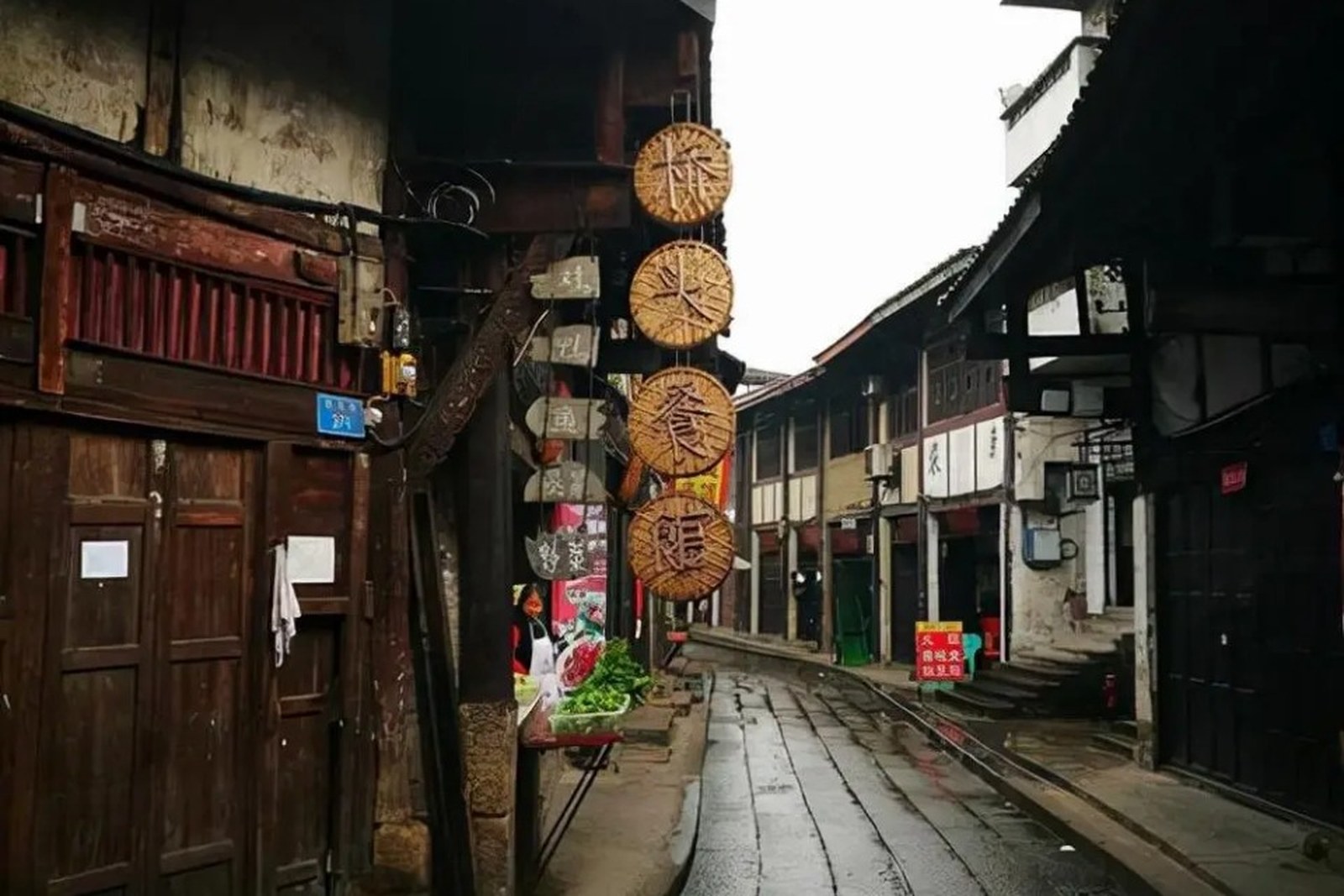
What the town keeps is nine relic sites and close to fifty Bayu houses, and the two are not the same thing, which is why the walk is worth the drive. The nine are the 武术 temple 武庙 Wǔmiào, the old opera stage 古戏楼 Gǔxìlóu also known as 万年台 Wànniántái, 禹王庙 Yǔwáng Miào, the Yuwang Temple, and 端蒙书院 Duānméng Shūyuàn, Duanmeng Academy, among them. The Yuwang Temple was founded in the twelfth year of the Daoguang reign, 1832, and rebuilt in 2003 by money raised from the public rather than by any institution. The old opera stage was restored in 2004, also by subscription. Those two dates are the ones to carry, because a stage and a temple rebuilt by people who gave money are the local argument for why the town looks the way it does, and no visitor centre explains it better than the buildings themselves. The stilted structures on the hillside and the flagstone lanes between them are what the fifty houses are, and they are the reason the town is photographed.
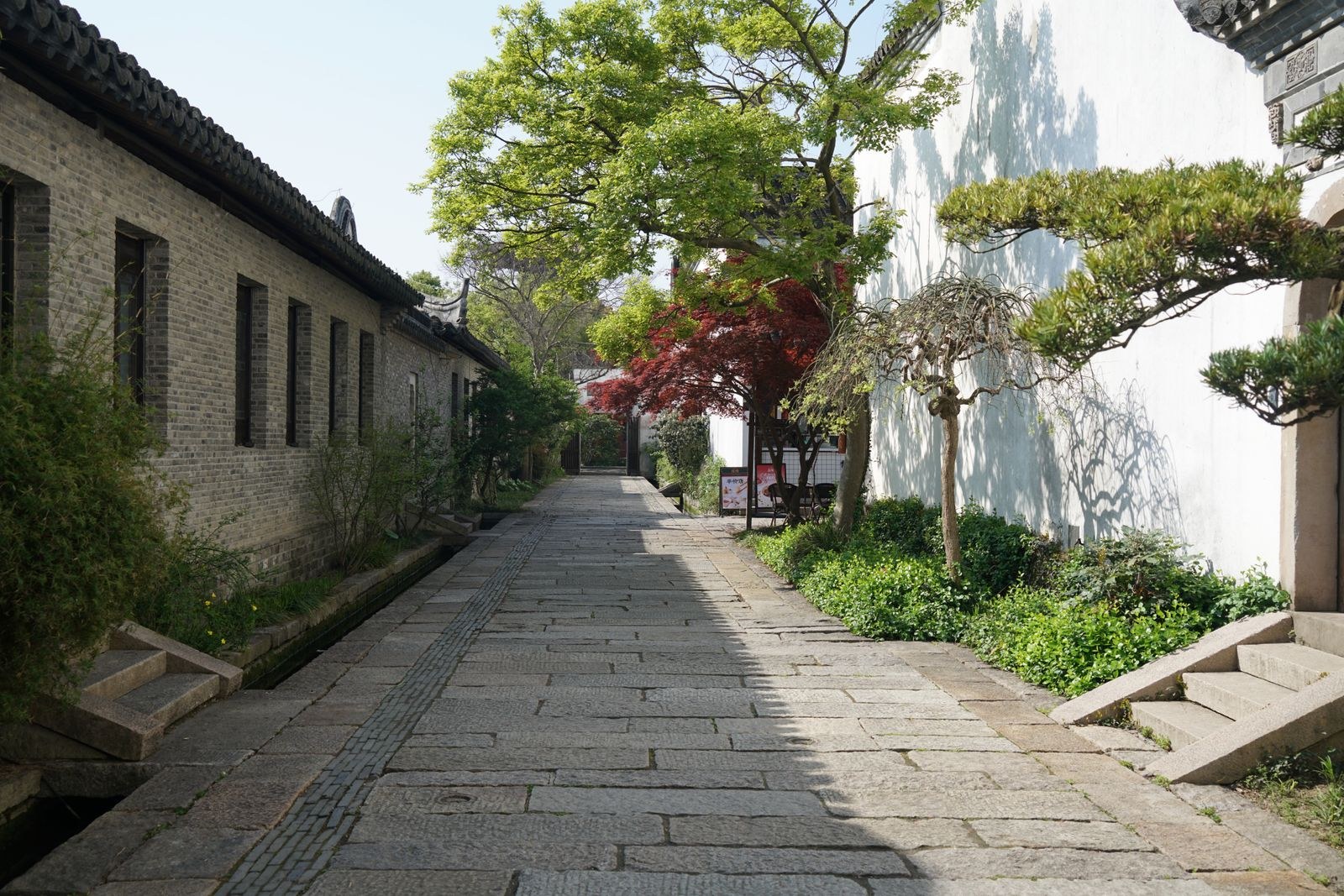
The town is being rebuilt around its own centre at serious money, and the figures are recent enough to be worth quoting exactly. An urban renewal project started in September 2023 put nearly 200 million yuan into about 20,000 square metres of the historic core, and reorganised the street pattern into what the local account calls three streets and two clusters, 三街两组团 sān jiē liǎng tuántán. By 2024 the town was taking 1.32 million visitors, its combined tourism income had passed 80 million yuan, and it had added more than 1,100 jobs. That is a small town with a very large visitor economy, and the number is the strongest argument for coming on a weekday rather than at a festival. Two intangible-heritage items are attached to the place rather than to a building: 偏岩耍锣鼓 Piānyán Shuǎ Luógǔ, the Pianyan gong-and-drum performance, and 唐门彩扎 Tángmén Cǎizā, Tang-style paper modelling. The food that belongs to a walk here rather than to a restaurant is 唐白糕 Tángbáigāo, pear-sugar candy and 河水豆花 Héshuǐ Dòufā, spring-water tofu pudding. Summers add a beach festival and other cooling events in July and August.
Practicalities
Tickets: Nothing to buy, and that is the published arrangement rather than an assumption: the town is described as free to enter and open across the year, and no source attaches a ticket to the town, to the Yuwang Temple, to the old opera stage, to Duanmeng Academy or to the nine relic sites as a group. Every one of the things worth seeing is seen from a lane. The money that does get spent in Pianyan goes on the street food and on getting there, not on a gate. The two restorations that make the town look like itself – the Yuwang Temple in 2003 and the opera stage in 2004 – were both paid for by public subscription, which is a detail worth knowing before you walk in, and worth remembering the next time a sign somewhere in China tells you a site was restored with public money.
Opening hours: 08:00 to 17:00, and this is the one figure to treat carefully rather than confidently: it is given by encyclopedia entries and by platform listings, and no notice from a government or tourism authority publishing Pianyan’s hours was found. So the window is consistent across the sources that carry it, and all of them are secondary. The practical consequence is simple – treat seventeen o’clock as the end of the lanes and the shops as the thing that stays open, and note that a stone town in a canyon goes dark early because the walls close the sky. If you are pairing this with a paid site or a museum elsewhere in Beibei, remember those keep clock hours and Mondays, which makes the old town the useful half of a Monday here.
Closing day: None published, and the reason is structural rather than editorial: a town of forty-odd old houses, with a main street, shops, guesthouses and a resident population, does not close on a day, and no source describes a weekly rest for it. What does have a weekly rhythm in this district is elsewhere – the district’s eight museum and memorial-hall venues keep 09:00 to 17:00 and close on Mondays except on public holidays, all under one telephone number – and the town itself is the one place in the area that ignores that rhythm entirely. The seasonal exceptions are festivals, not closing days: the summer beach season fills the lanes in July and August, which is the opposite of a rest.
Getting there: Pianyan sits inside Jindaoxia Town, not at the town centre, so a driver given only the name of the old town will be sent to a place that no longer has that name in the administrative sense. Give the intersection of Tianhu Street and Yingbin Street, or the Jindaoxia Town address the sources publish, and the last stretch is a local bus or a taxi off the district road. The sources publish addresses and distances rather than a route, and no rail station is named for the town, so treat it as a road destination and expect the last leg to be short but rural (checked October 2026, subject to change).
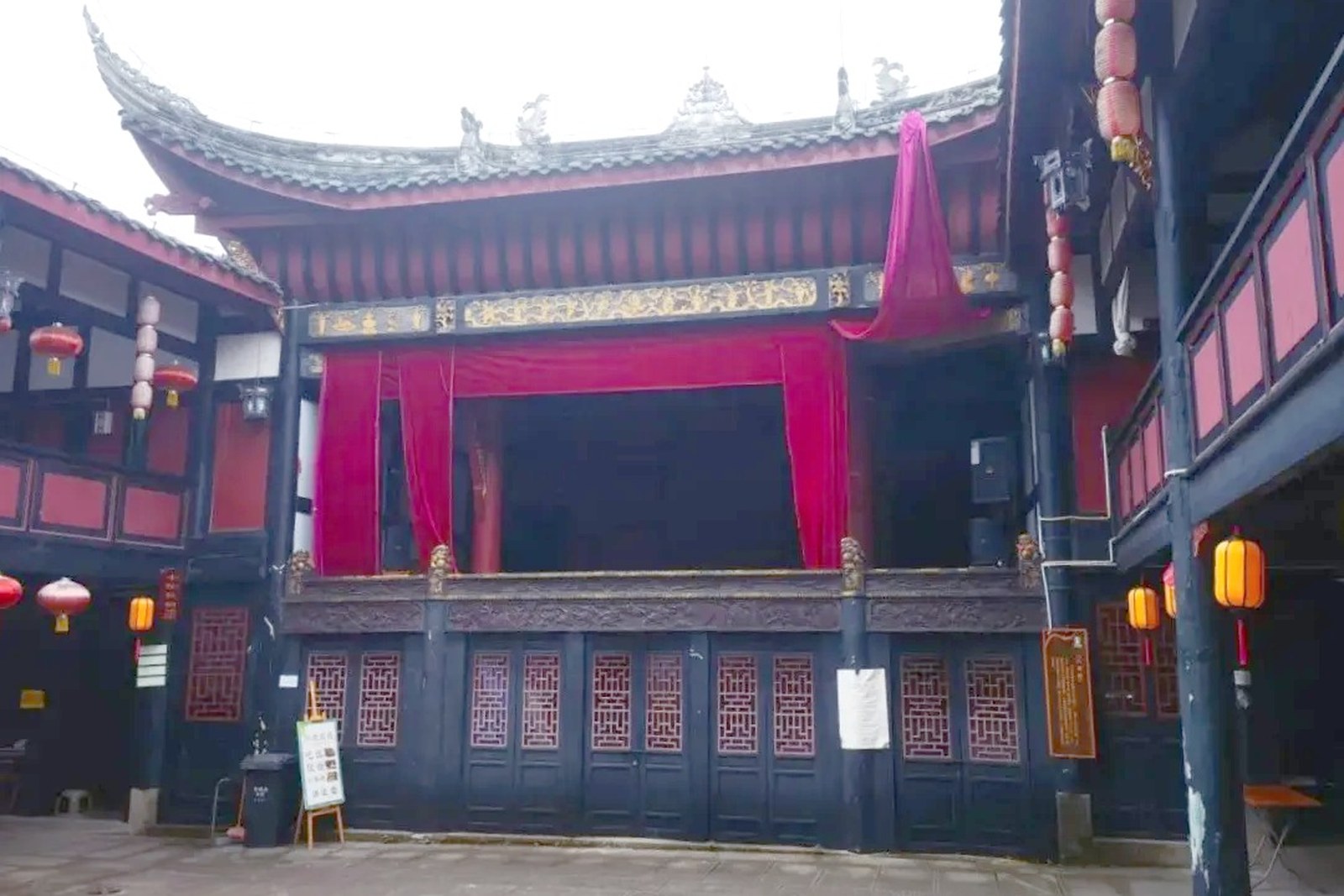
flowcloud would say that Pianyan is free, and that its two most important buildings were rebuilt with money the town itself raised – a temple in 2003 and a stage in 2004 – which is the difference between a place that was kept and a place that was saved.