
There are caves that water made and caves that fire made, and then there is the third kind, the kind only people make. In the 1960s the state began tunnelling a complete nuclear-industry plant into the mountains above 白涛 Báitāo, Baitao, the Wujiang river town in 涪陵区 Fúlíng Qū, Fuling District. The works were numbered 816 – 工程八幺六 gōngchéng bā yāo liù, Project 816 – and for seventeen years engineering troops by the tens of thousands dug into the mountain, hollowing out what would be measured as the world’s largest man-made cave complex. It was never commissioned. The machine it was built for never ran, and the mountain kept its secret until the whole undertaking was declassified and opened to visitors.
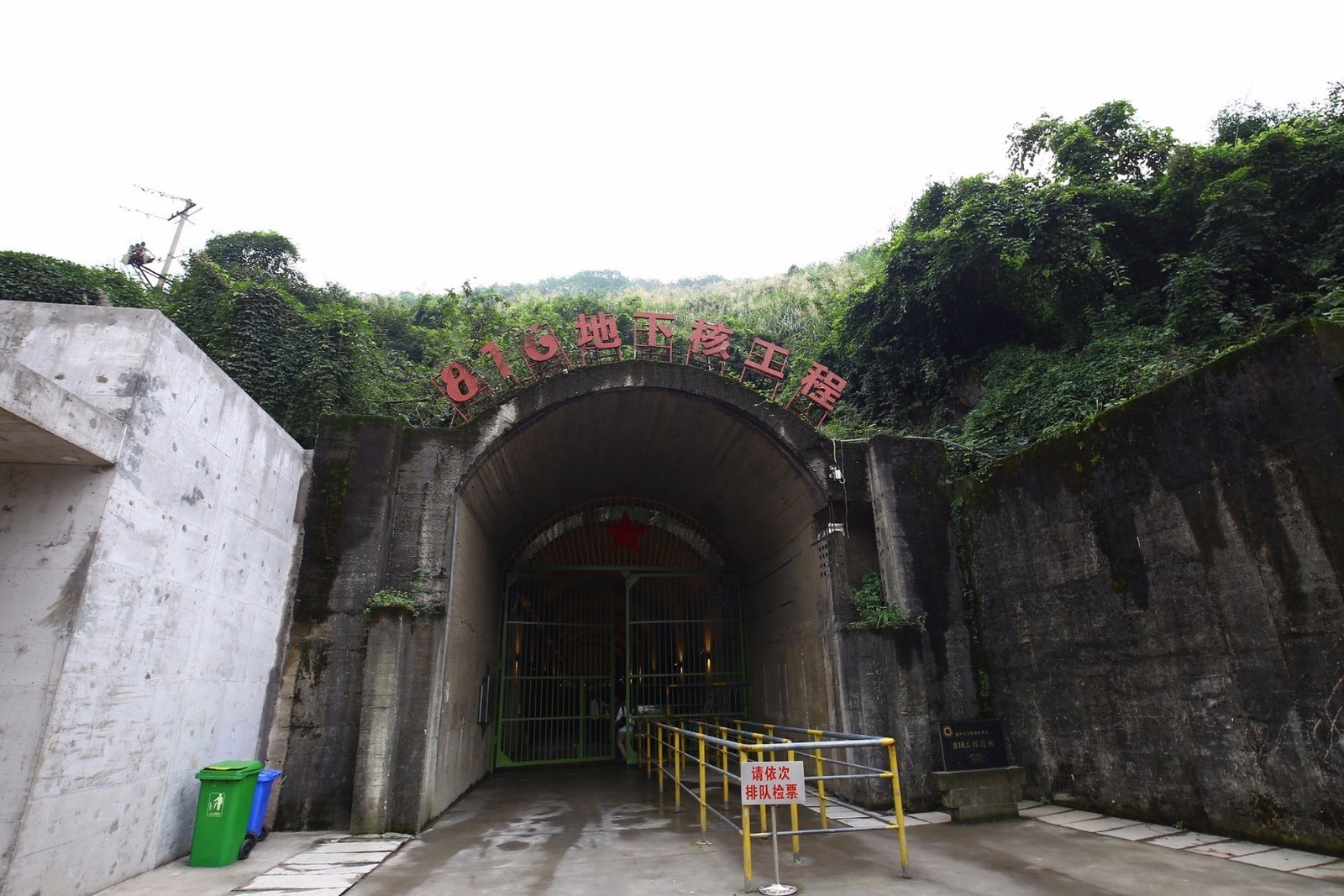
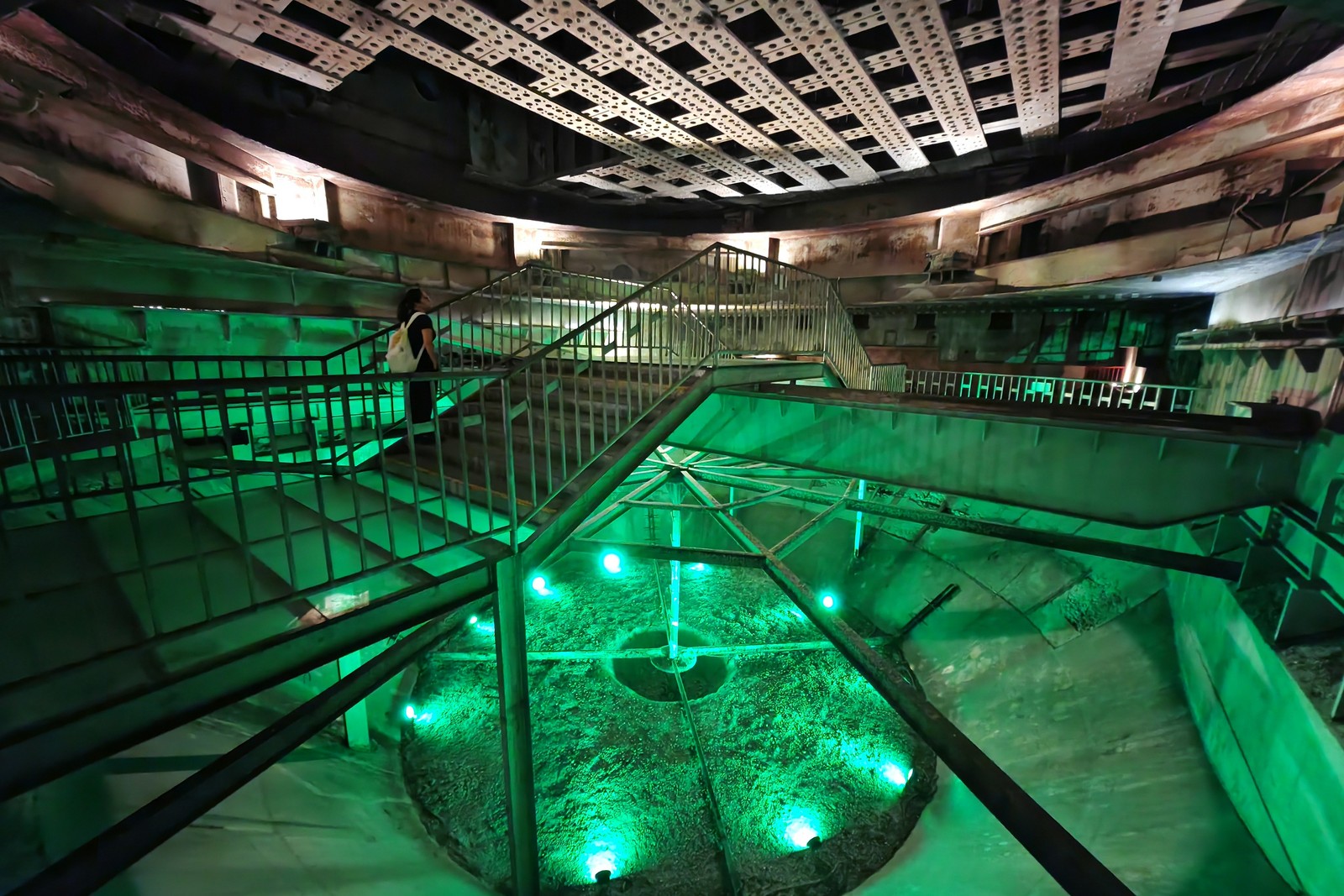
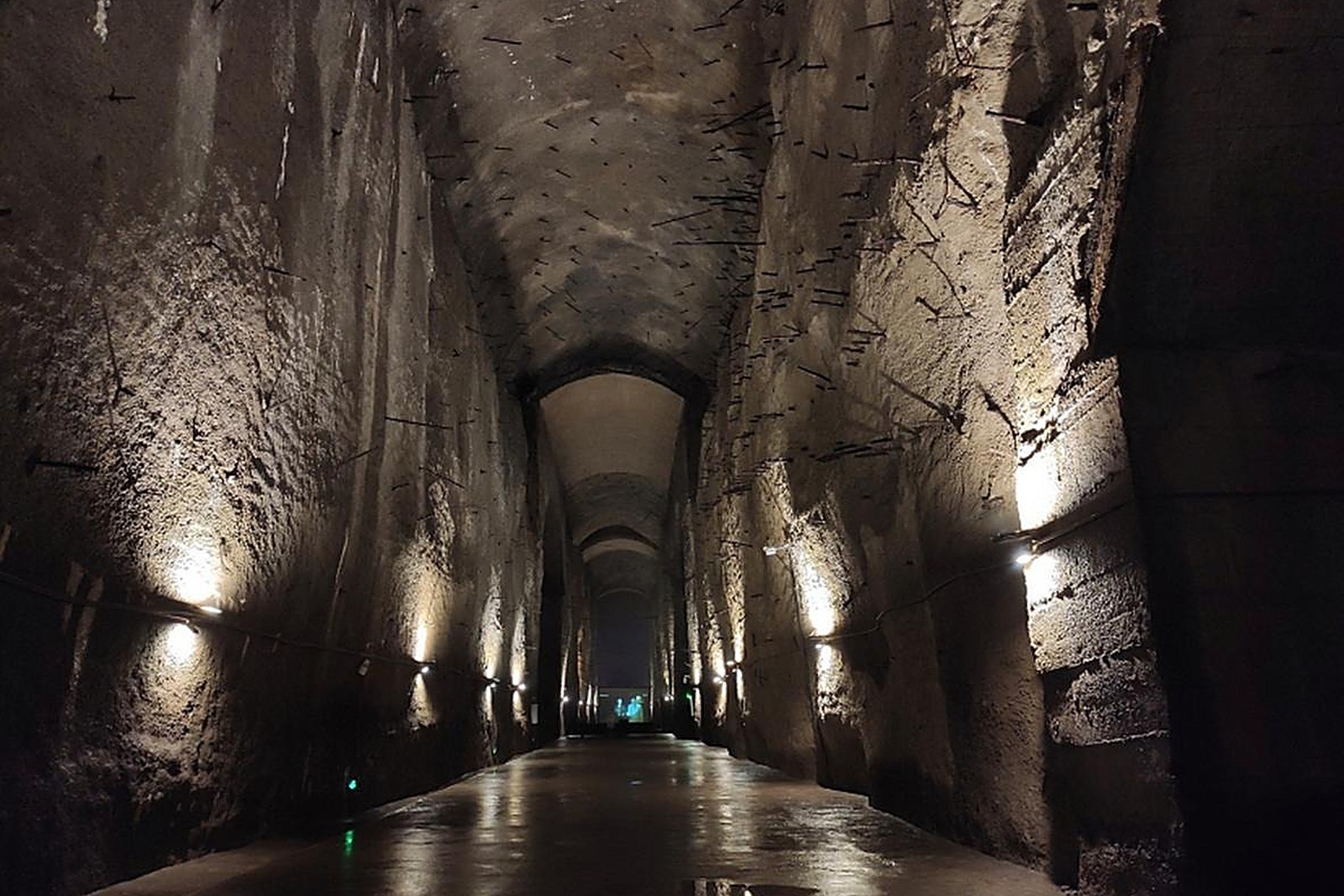
The scale is the first thing and, in a sense, the only thing. The halls inside the mountain are the size of factory floors – because that is what they were built to be, the chambers for reactors and processing galleries of a complete plant – and the tunnels that link them are themselves works of engineering, stacked in levels, crossed and recrossed, so that the complex is a mountain with an interior like a building’s. Visitors move through on foot, from hall to hall, and the mind keeps trying to file the spaces under some familiar category – cathedral, station, dam – and failing every time, because the comparison that fits is a factory turned inside out and buried in rock.
The concrete is raw, and that rawness is the honesty of the place. Nothing here was ever polished by use; the walls carry the marks of the excavation, the floors the texture of a site paused mid-works, and the absence of the machines that were meant to fill these halls is itself the exhibit – a ghost of industrial ambition, kept deliberately. Reactor pits stand empty, galleries run off into darkness, and the visitor’s imagination is asked to do the fitting-out, which it does, reluctantly and then completely.
The other half of the experience is the story of the hands. Tens of thousands of engineering troops spent seventeen years on the dig, and the site keeps the martyrs’ account of those who did not come out of the mountain – a record the visit treats with the same gravity as the concrete. Plant 816 is, read one way, a monument to a strategic idea from another age; read another way, it is simply the largest thing people ever dug by hand into a mountain, and both readings are true at once. The caves now run as a 4A scenic area, which is the quietest possible description of the strangest site in the district.
The setting matters to how the visit lands. Baitao sits up the 乌江 Wūjiāng from the district seat, at the edge of the gorge country, and the road in runs beside green water with the mountains closing in – an approach that explains, better than any plaque, why the plant was put here: deep rock, deep water, deep in the hills. The walk through the mountain is cool at every season, the lighting is sparse by design, and the route is straightforward underfoot; the difficulty of Plant 816 was never the walking, it was the comprehension.
Words and Names
白涛 Báitāo, Baitao, the Wujiang river town in 涪陵区 Fúlíng Qū, Fuling District, that is the gateway to Plant 816. 工程 816 gōngchéng 816, Project 816, the nuclear-industry works tunnelled into the mountain above the town by engineering troops in the 1960s and 1970s, hollowed over seventeen years into the world’s largest man-made cave complex and never commissioned. 乌江 Wūjiāng, the Wu River, whose green gorge water runs past Baitao and explains the site’s setting. The caves are now visited on foot as a 4A scenic area, with the martyrs’ account of the digging troops kept at the site.
What the Locals Know
The local knowledge is about the mountain’s own climate and the day’s arithmetic. The interior holds a cave temperature at every season, so locals carry a layer even in summer – the halls that size do not warm up for a visitor, and the walk is long enough in tunnel shade that cold arrives before wonder does. Footwear with grip matters more than anything in a daypack: the floors are raw concrete, some surfaces damp, and the lighting is deliberately spare. Locals going with first-time visitors schedule the cave for the morning and Baitao’s riverfront for the evening, because the story needs the drive home to settle; and they always, always read the martyrs’ room slowly. The mountain took those years once, and the room is where the account is kept.
Practicalities
Tickets: no ticket figure is on the record consulted, so the page declines to quote one – the site’s own notice at the Baitao entrance is the only figure worth trusting, and quoting anything else here would be exactly the invented number this page exists to avoid. Opening hours: likewise, no posted hours table is on the record consulted; the visit is a guided circuit of the caves rather than an open-wander site, and the practical rule is to arrive in the day’s first half with time for the full walk. Closing day: no published weekly rest day is on the record consulted, so none is guessed at here; a site of this kind schedules its own maintenance closures, and the local notice rather than any calendar assumption should settle the question before the drive up the Wujiang.
flowcloud would say that Plant 816 is the district’s most unlikely attraction and its most affecting – a mountain hollowed by seventeen years of digging into the world’s largest man-made cave complex, kept raw, kept honest, visited on foot through halls the size of factory floors and tunnels stacked in levels, with the story of the troops who dug it carrying half the weight; no figure or hours table is on the record consulted, so the page quotes none, and the site’s own notices are the authority. All checked October 2026.
Getting there: the site stands in the mountains above 白涛 Báitāo, the Wujiang river town up the 乌江 Wūjiāng from the 涪陵区 Fúlíng Qū district seat, reached by the gorge road that follows the river into the hills; from the district seat the drive is a morning’s outing, and the small riverside inns of Baitao exist largely to serve the cave’s visitors. Pair this page with the baitao-river-inns page in the stay column to turn the underground works into a relaxed full-day visit rather than a dash. All checked October 2026.