
The Palace on the Red Hill: Potala
红山宫阙入云端,一城灯火绕经幡 Hóngshān gōngquè rù yúnduān, yī chéng dēnghuǒ rào jīngfān – The palace on Red Hill climbs into the clouds; a city’s lamps circle under prayer flags
布达拉宫 Bùdálā Gōng rides the Red Hill at the center of 西藏自治区拉萨市 Xīzàng Zìzhìqū Lāsà Shì Lhasa like the city’s fixed point – thirteen stories and 117 meters of white and red masonry begun in the seventh century under Songtsen Gampo and rebuilt from 1645 as the winter seat of the Dalai Lamas. The White Palace ran the government, the Red Palace holds the chapels and the gilded tomb-stupas of the Dalai Lamas, and together they make the largest and most complete ancient palace complex on the plateau.
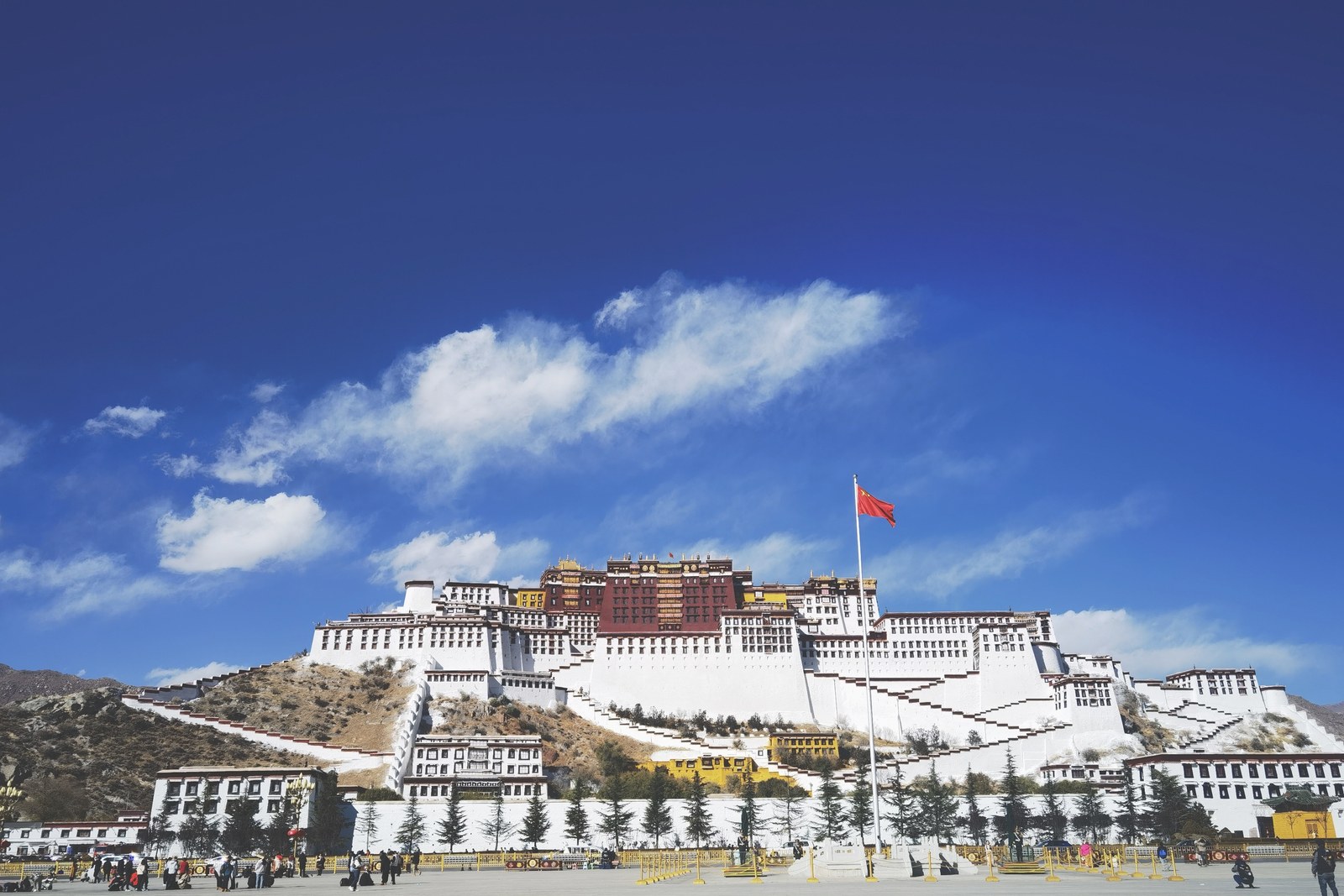
The visit is a climb, and the building stages it that way. From the gate you cross the snow-city terrace at the base, then take the zigzag stone stair – the " circled way" – up the wall face to the White Palace’s courtyard, passing room after room of dark timber, butter-lamp glow and treasury chapels until the Red Palace’s great halls open out at the top. Pilgrim circuits run the whole way prostrating; tourists get about an hour inside under the timed-ticket rule, and the stone steps at 3,650 meters make the hour honest.
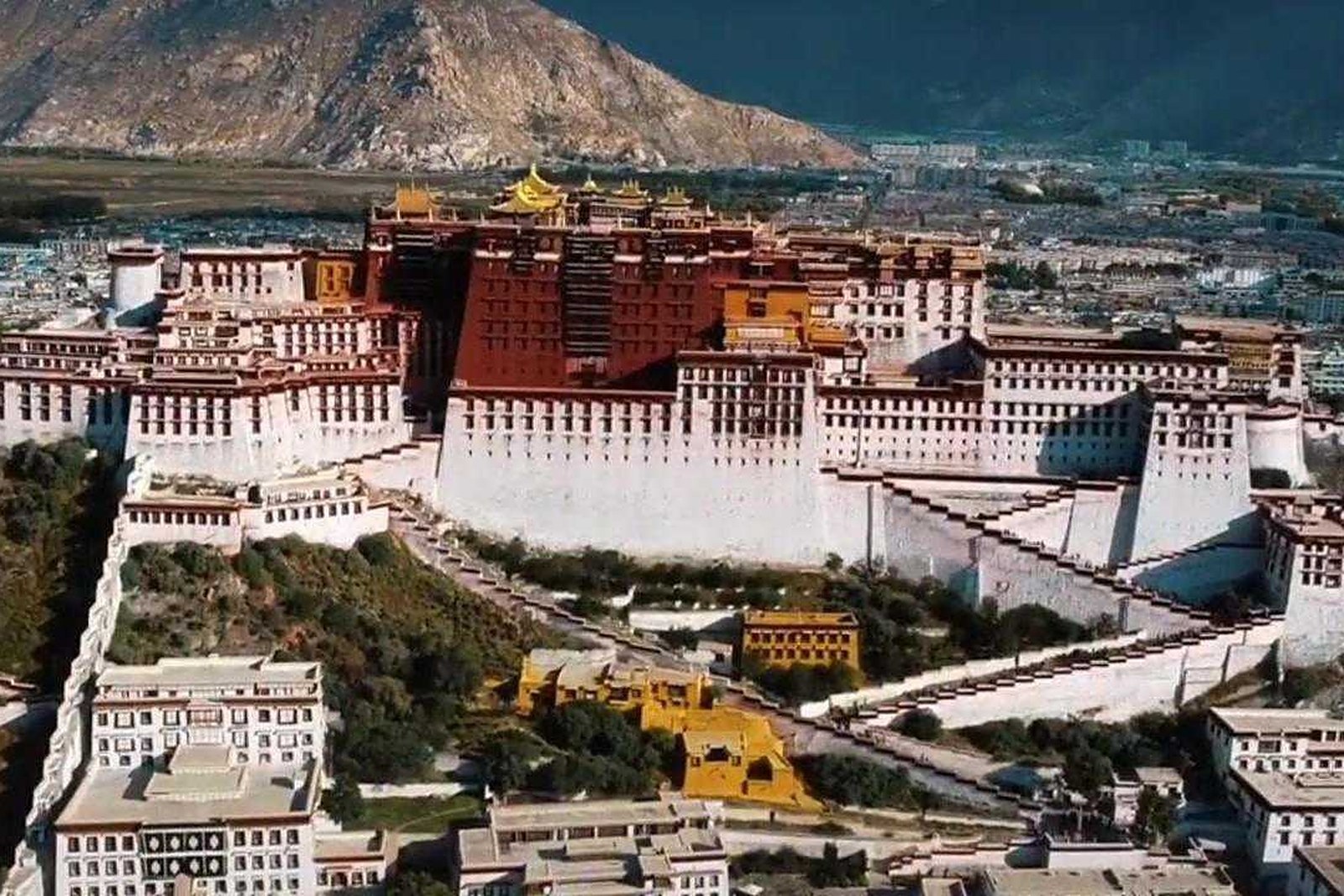
Below the palace the city turns around it. The zongjiao lukang park behind the walls keeps the pond reflections, the square in front runs the flag-raising ground and the monument, and the little Chakpori hill across the road – the old medical college hill – holds the classic viewpoint where the palace and the white stupa frame together exactly as on the fifty-yuan note. At dusk the floodlights come up and the whole mass glows out of the dark like a lantern.
What the palace means is written on the city around it. No building in Lhasa may rise higher, every new wall is painted the same whitewash toward it, and the pilgrim roads of the old town bend toward its base. Whatever else you do in Xizang, this is the building the journey points at – and on a clear autumn morning, with the first light on the red wall and the kora already humming below, it earns the whole trip.
Practicalities
- Entry is by timed reservation with your passport or ID; high-season tickets sell out days ahead, so book the day you fix your dates.
- The in-palace visit runs about an hour and the stair flights are long – pace yourself, the altitude is real at 3,650 meters.
- Photography is banned inside the chapels; save the camera for the roof terraces and the park reflections.
- The classic photo is from Chakpori (Yaowang Hill) across the road – go early morning for side light or at dusk for the floodlit wall.
Words and Names
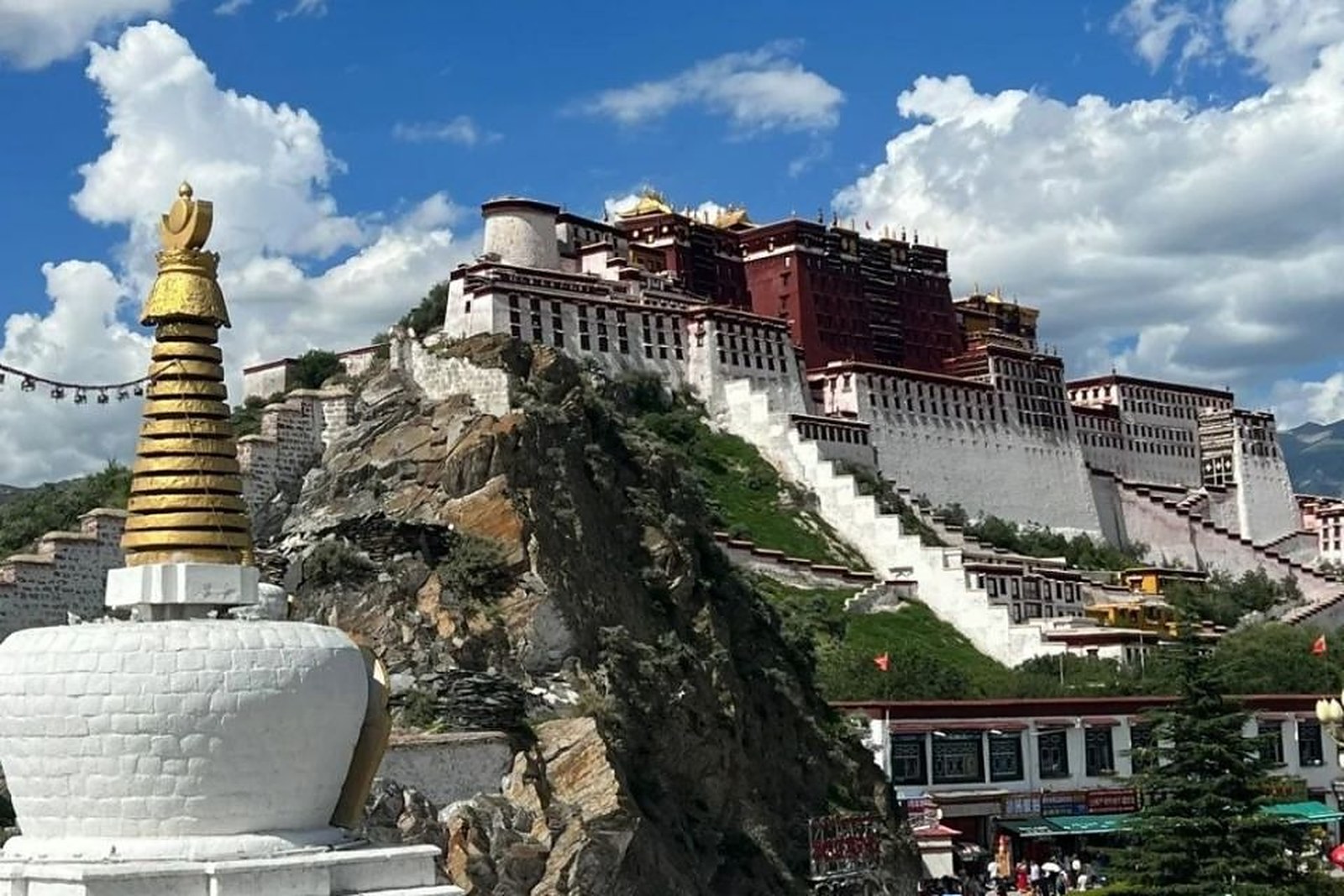
布达拉宫 Bùdálā Gōng the Potala Palace; 红山 Hóng Shān Red Hill, the palace rock; 白宫 bái gōng the White Palace, the government wing; 红宫 hóng gōng the Red Palace, the chapel and stupa wing; 药王山 Yàowáng Shān Chakpori, the viewpoint hill; 雪城 xuě chéng the snow-city terrace at the base. Beyond the palace, the same 西藏自治区拉萨市 Xīzàng Zìzhìqū Lāsà Shì Lhasa keeps more places worth the detour: 大昭寺 Dàzhāo Sì the seventh-century temple at the city’s heart, 八廓街 Bākuò Jiē the pilgrim street around it, 罗布林卡 Luóbùlínkǎ the summer-palace gardens, or 色拉寺 Sèlā Sì the debating monastery – four more doors into the same Lhasa. Once the palace is behind you, our Lhasa food map fills the table.
flowcloud would say the Potala is not a sight but an axis: everything in Lhasa – roofs, roads, rituals – orients to it, and climbing it once rearranges how you read the whole city. All checked November 2026.
Getting there: Entry is by reservation with timed tickets and photo ID – book ahead in season, enter from the palace gate on the west side of the square, and expect the in-palace visit to run about an hour up long stair flights; at 3,650 meters pace yourself and sit down when the steps steepen. The classic photo is from the Yaowang Hill viewing platform across the road. All checked November 2026.