
Where the Emperor Slept: The Qianlong Palace at Zaohe, Suqian
红墙静锁帝王迹,运河水送桨声来 Hóngqiáng jìng suǒ dìwáng jì, yùnhé shuǐ sòng jiǎng shēng lái – Red walls quietly lock away an emperor’s traces; the canal water carries the sound of oars to the gate
正文:乾隆行宫 Qiánlóng Xínggōng the Qianlong Palace is the temple compound at 皂河镇 Zàohé Zhèn Zaohe Town that the Qianlong Emperor used as his lodging on the southern tours – officially 敕建安澜龙王庙 Chìjiàn Ānlán Lóngwáng Miào the imperially endowed Dragon-King Temple of Peaceful Waters, built by the Kangxi Emperor’s order and expanded into a proper travelling palace when his grandson made it his quarters. The compound stands on the 大运河 Dàyùnhé Grand Canal – now UNESCO-listed – at the reach where the water system met the old post road, and its red walls, opera stage, stele pavilions and dragon courts record both facts at once: a temple built to calm the waters, and a palace built because an emperor needed somewhere to sleep while checking on them. It is the finest Qing official-style complex in northern Jiangsu, and it hides in a canal town most maps barely mark.
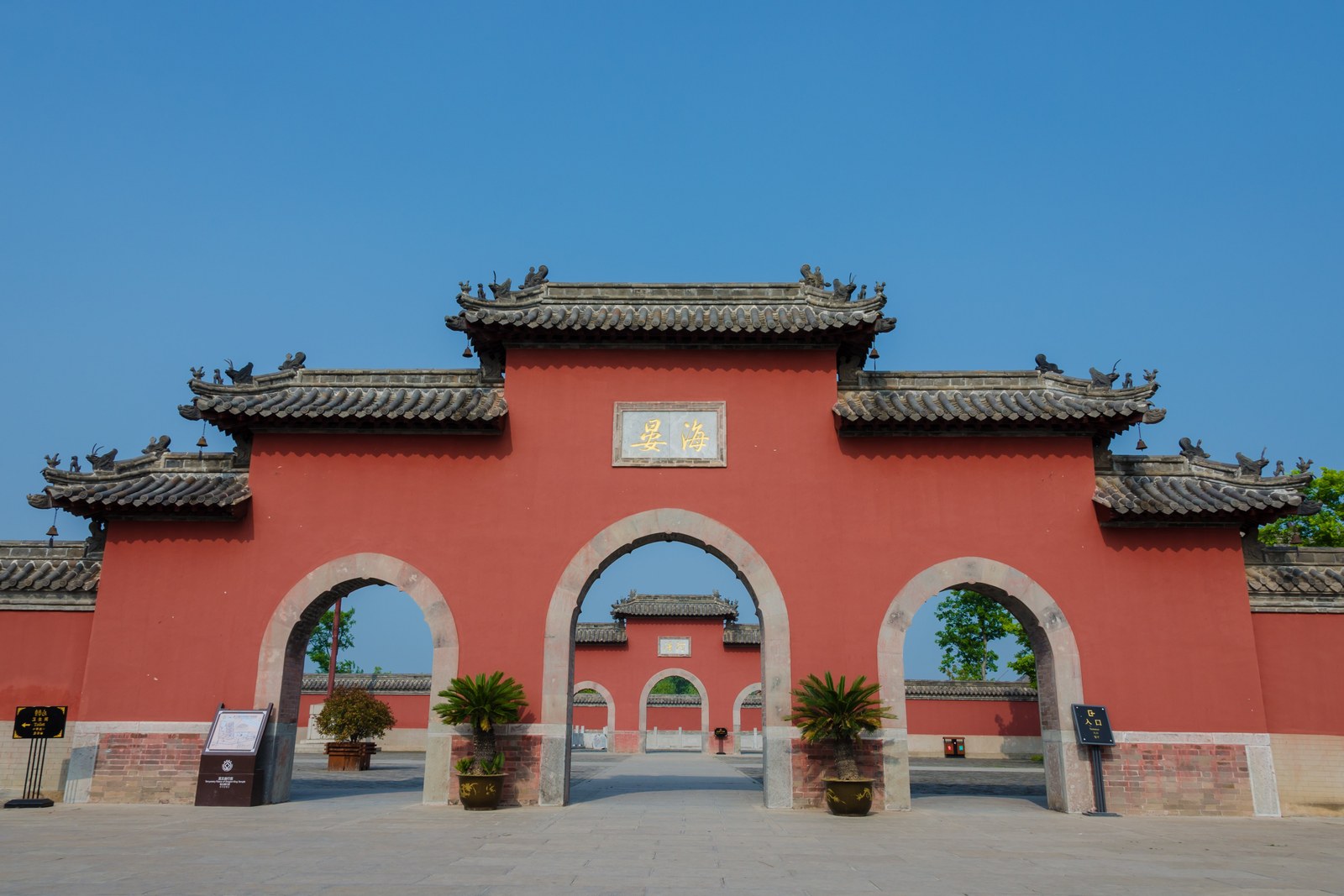
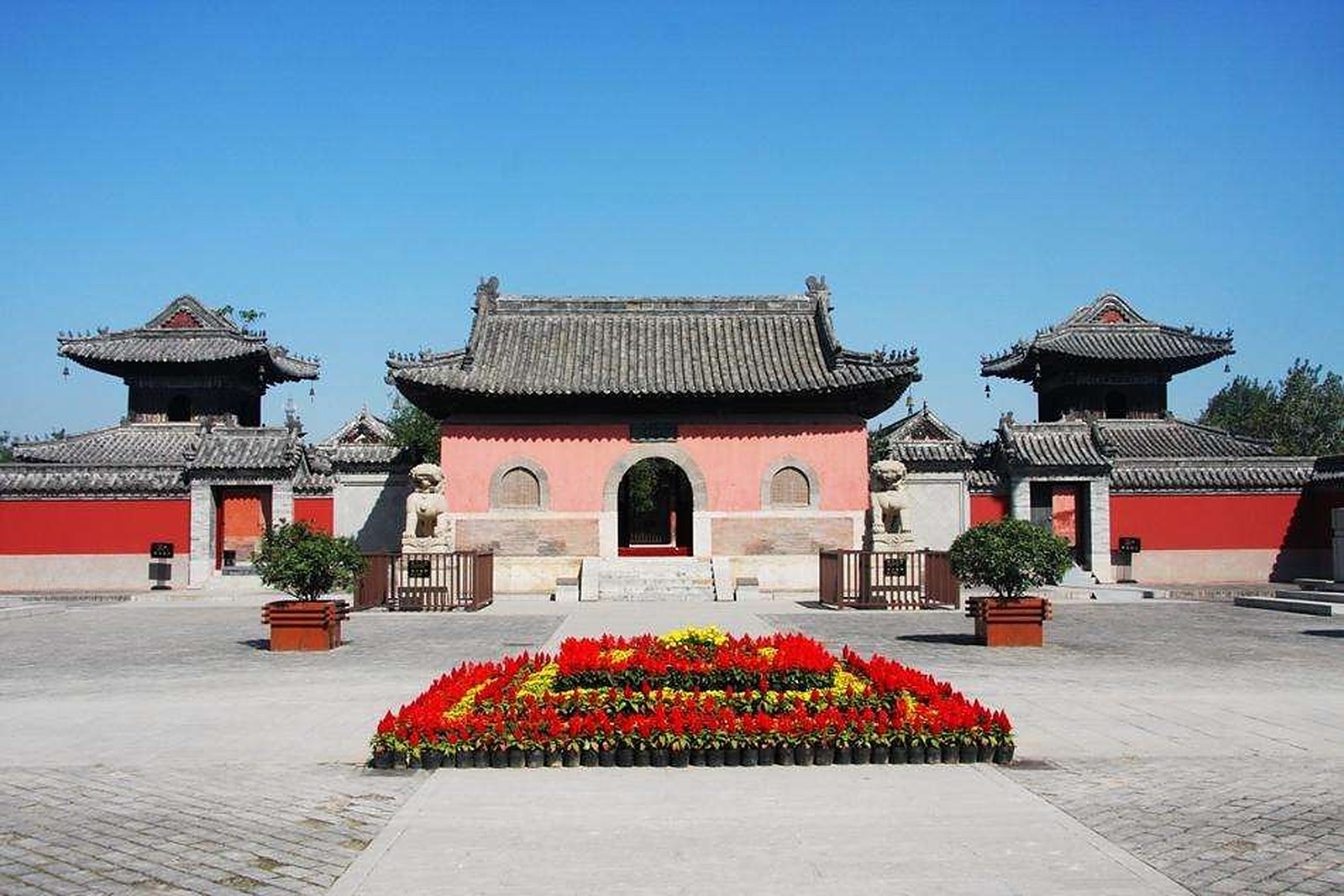
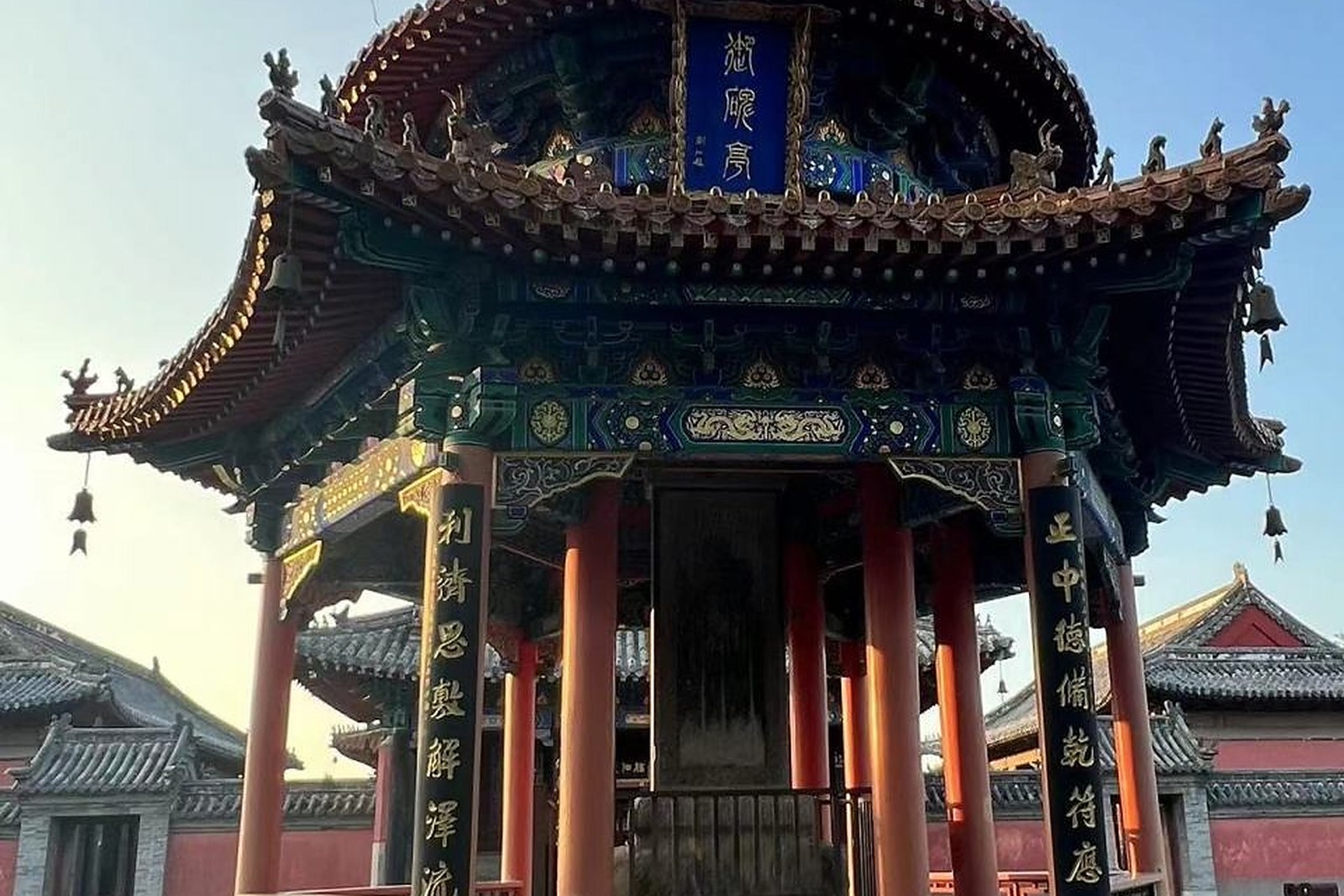
The architecture does the imperial talking. Red walls run the compound’s perimeter, the triple-arched gates carry official-style roof figures, and the axial courts step from the temple’s dragon halls to the palace’s private quarters – every threshold sized to remind a visitor who once slept here. The stele pavilion holds the emperors’ own tablets, the calligraphy still crisp under the pavilion roof.
The opera stage is the compound’s connoisseur’s corner. Qing stages were built for the acoustics of open courtyards, and this one still carries a whispered line from its corridor to the far eaves; the carved brackets and painted beams have kept their colour in the dry canal air. On festival days the stage works again – the temple’s own opera troupe tradition revived for the calendar feasts.
Give the palace two calm hours. The courts take a slow loop – gates, dragon hall, opera stage, stele pavilion – and the canal-side streets of Zaohe outside the walls supply the rest: the old bakery’s tribute crisps, river-fish lunches, and the towpath where the barges still pass the temple gates. Half an hour by car from central Suqian, the palace pairs naturally with the canal’s other relics downstream.
Practicalities
Beyond the palace walls, the same 宿迁市 Sùqiān Shì Suqian City keeps more places worth the detour: 骆马湖 Luòmǎ Hú Luoma Lake the beaches east of town, 三台山 Sāntái Shān Santai Mountain the flower-sea forest, 项王故里 Xiàngwáng Gùlǐ the Conqueror’s compound in the city, or 洪泽湖湿地 Hóngzé Hú Shīdì the Hongze Lake Wetland in Sihong – four more doors into the same 宿迁市 Sùqiān Shì Suqian City. Once the courts are walked, our Suqian food map fills the table.
Practicalities
Words and Names
flowcloud would say the Qianlong Palace is the canal’s memory in red brick: a temple built to tame the water, kept grand because an emperor kept coming back to check. All checked November 2026.
Getting there: The palace sits in Zaohe town northwest of the city – about half an hour by car, entry is ticketed, and the temple courts, the opera stage and the canal-side streets take a calm two hours; the Grand Canal runs past the gate. All checked November 2026.