
The Oldest Garden North of the River: Qiao Garden, Taizhou
半日偷闲听雨去,一园湖石立明朝 Bàn rì tōuxián tīng yǔ qù, yī yuán húshí lì Míng cháo – Steal half a day and go to hear the rain; a garden of lake-stones stands there from the Ming
正文:乔园 Qiáo Yuán Qiao Garden is the oldest classical garden surviving in northern Jiangsu – a Ming-dynasty scholar’s garden folded into a block of the old town in 海陵区 Hǎilíng Qū Hailing District, a stone’s throw from the Fengcheng River loop. Founded in the Wanli era as 日涉园 Rìshè Yuán Rishe Garden, it passed through official families and merchant hands – the Qiao family gave it its present name – and survived the centuries that flattened most of its peers, which is why garden historians, 陈从周 Chén Cóngzhōu Chen Congzhou the most quoted among them, treat it as the north-of-the-Yangtze standard: a compressed classic of rockwork, borrowed scenery and listening-rain courts built on a footprint smaller than a city block. What it lacks in scale it pays in density – lake-stone peaks, ringed verandas, moon gates and the plantings that make each courtyard its own season.
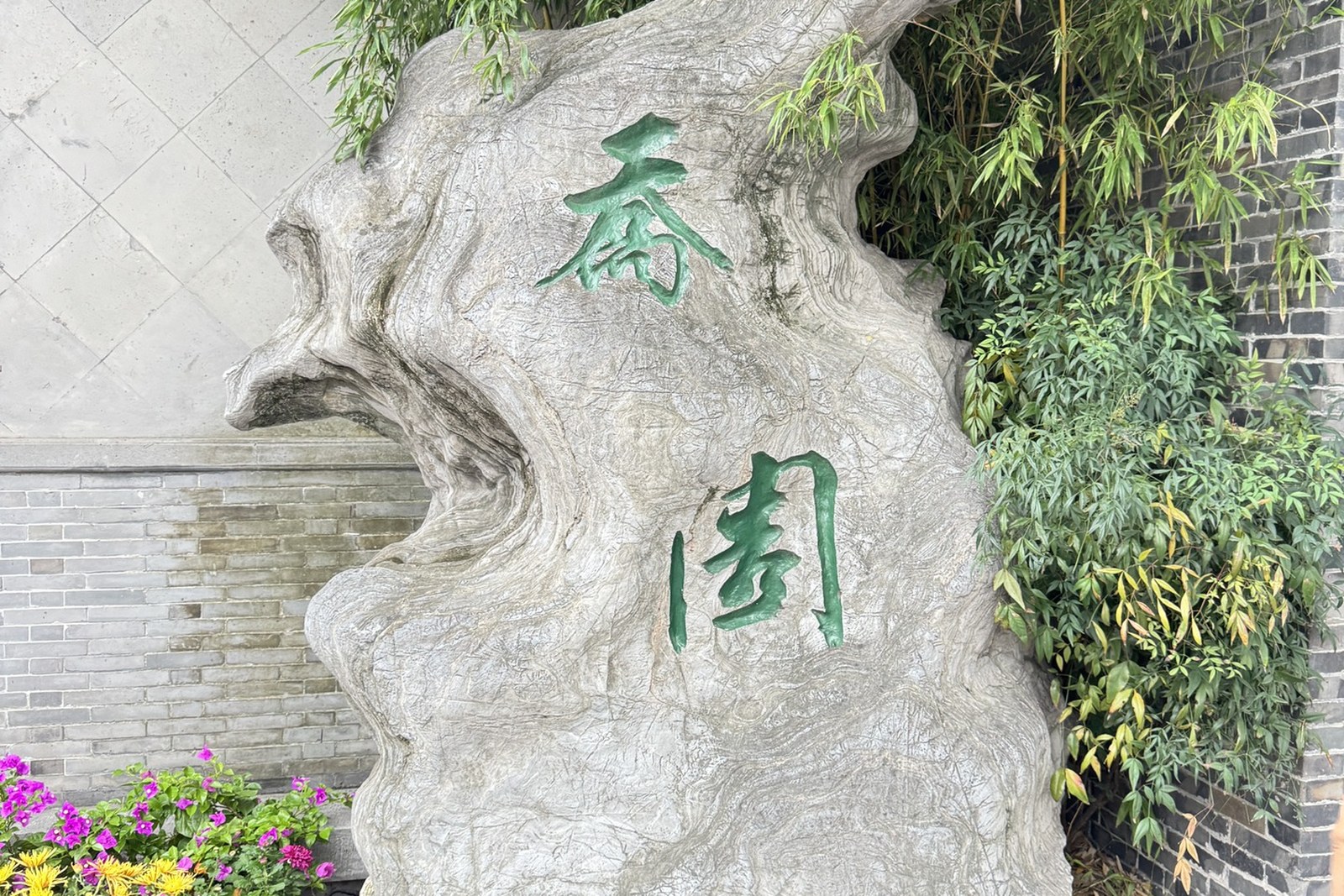
The garden announces itself the old way: a green stone by the gate carries the name 乔园 in character-deep carving, and beyond it the paths close into the Ming geometry – white walls, dark tile, bamboo against brick. The entrance courts set the register: small, precise, every frame composed, a garden built for sitting rather than strolling.
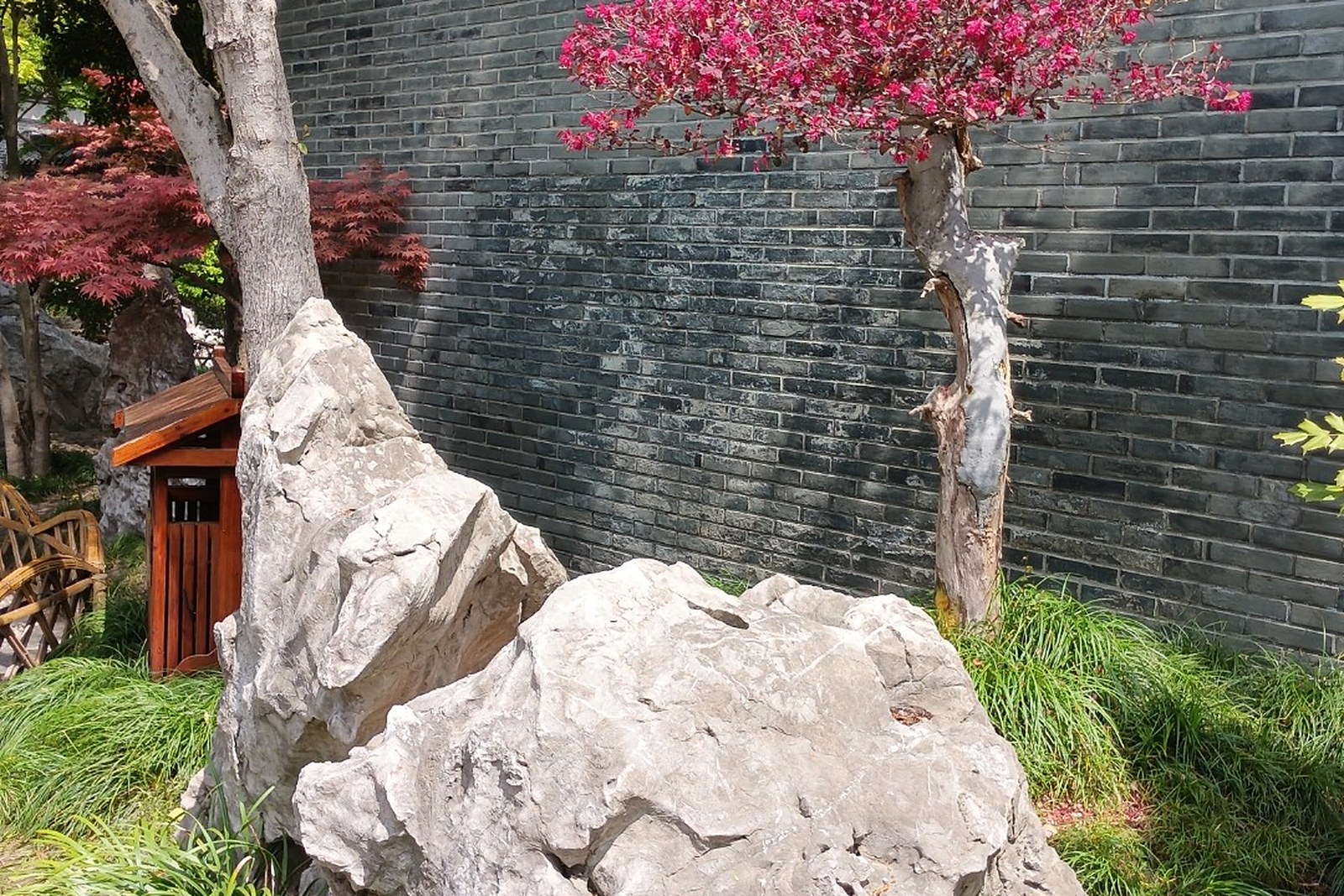
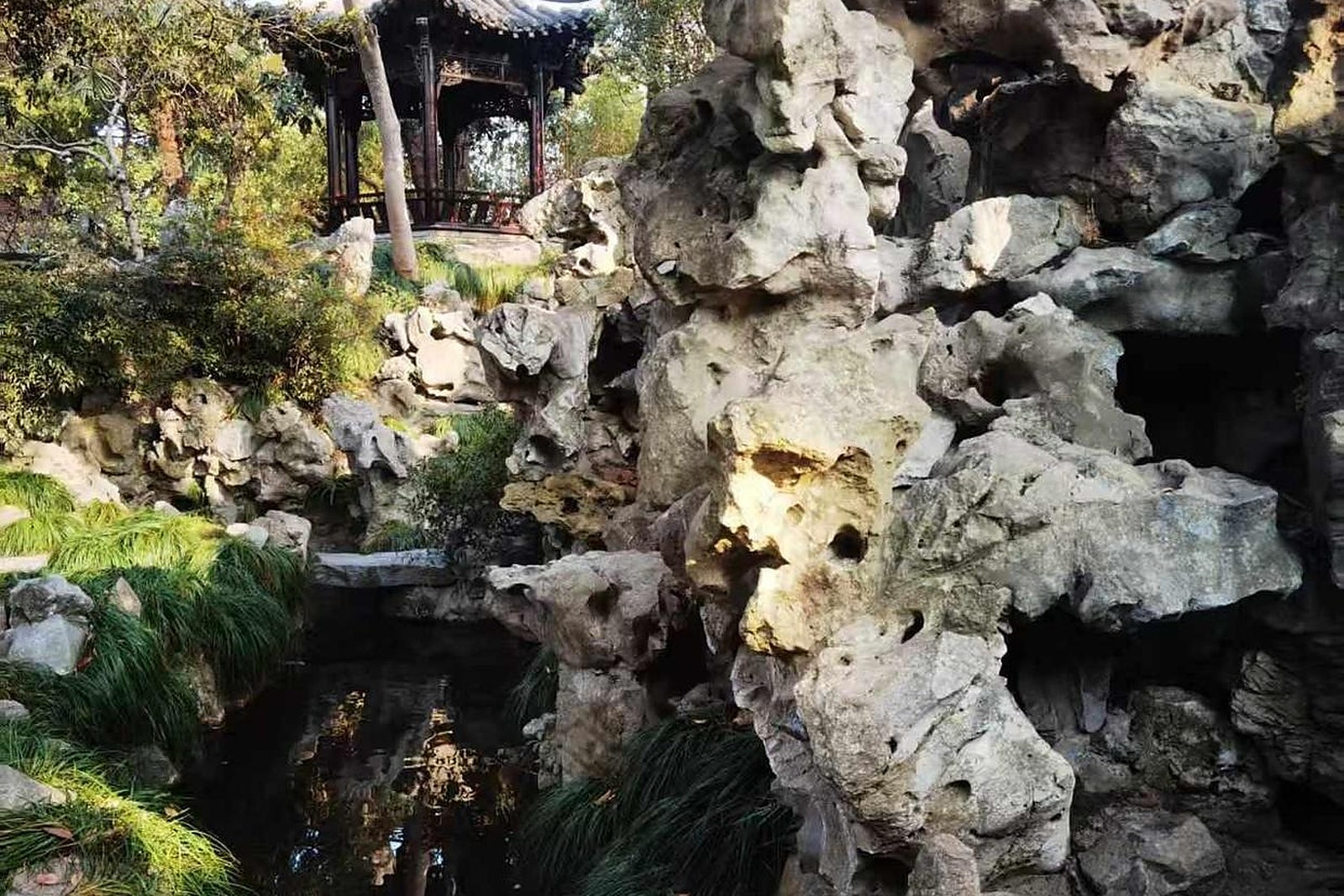
The rockwork is the collection. Taihu-lake stones – porous, grey, water-carved into peaks and caves – stand against the garden’s famous wave-pattern brick wall, lean over the lotus pool, and stack into the climbing grottoes that let the owner’s children play at mountains. Chen Congzhou called the garden’s rockery the finest of its school north of the river, and the stones still argue his case: each peak placed for the view from the study windows, each cave framing the next courtyard like a lens.
An hour is enough, and the hour repays quiet. The listening-rain pavilion earns its name in a shower, the verandas ring the courts for slow circuits, and the plantings – maple, crape myrtle, the camphors that were here before the Wars – hold the garden’s light the way the stones hold its shadow. Come in the morning before the tour groups, and let a garden the size of a courtyard take the morning’s whole measure.
Practicalities
Beyond the Ming garden, the same 泰州市 Tàizhōu Shì Taizhou City keeps more doors on the itinerary: 溱湖 Qínhú Qinhu Wetland the reed maze in Jiangyan, 凤城河 Fèngchéng Hé Fengcheng River the moat loop outside the gate, 溱潼古镇 Qíntóng Gǔzhèn Qintong Ancient Town the canal lanes, or 李中水上森林 Lǐzhōng Shuǐshàng Sēnlín Lizhong Water Forest the flooded cypress in Xinghua – four more doors into the same 泰州市 Tàizhōu Shì Taizhou City. Once the rockwork is climbed, our Taizhou food map fills the table.
Practicalities
Words and Names
flowcloud would say Qiao Garden is the scholar’s argument in stone: that a courtyard, four rocks and a wall of waves can hold a dynasty’s worth of landscape, provided nobody is in a hurry. All checked November 2026.
Getting there: The garden hides in the old town just off the Hailing road axis – a short walk or ride from the Fengcheng River promenade, entry is ticketed, and the rockwork circuit, the listening-rain courts and the Ming footpaths take about an hour. Mornings are quietest before the tour groups. All checked November 2026.