
Sixteen houses, one stream, and a family that decided to restore what it had instead of selling it. 桥溪 Qiáoxī, marketed as 桥溪古韵 Qiáoxī Gǔyùn, is a Hakka village in a narrow valley at the back of 雁洋镇 Yànyáng Zhèn in 梅县区 Méixiàn Qū, on the eastern flank of 阴那山 Yīnà Shān. The settlement is small even by village standards: a cluster of Hakka houses of the 堂横屋 tánghéng wū type, a stone-paved lane, a stream running down through the middle, and terraces going up the hill on both sides. What makes it different from the dozens of similar villages in these hills is that the houses were listed and restored, and the restoration was done largely by the descendants of the families who built them, several of whom made their money overseas.
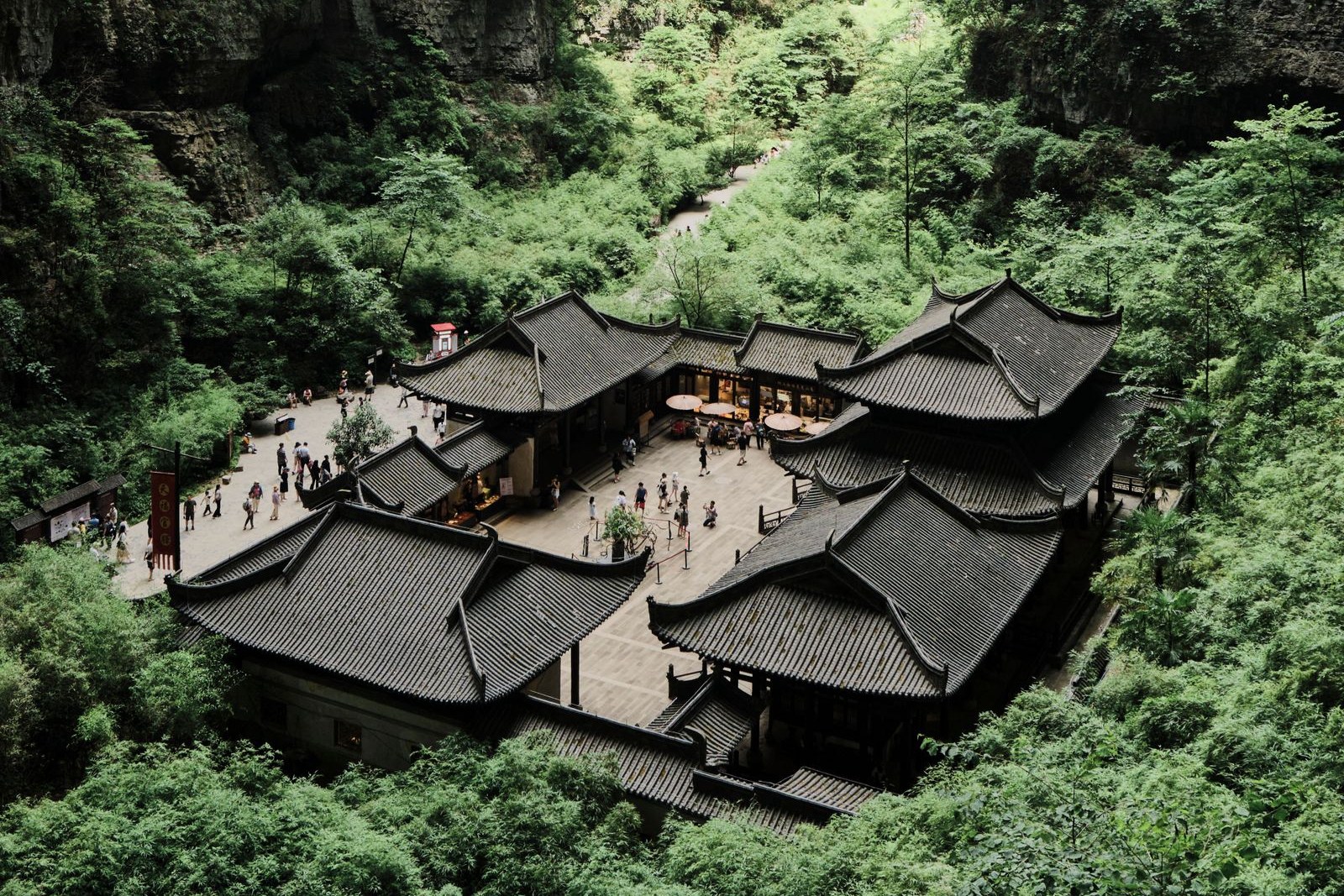
The houses are the reason to come, and the best of them is 继善楼 Jìshàn Lóu, a large Hakka residence built in the early twentieth century with money sent home from Southeast Asia and finished with a level of carving and joinery that a farming village could not normally afford. Look at the stone doorframes, the timber screens in the halls and the tiled ridges, and then look at the rest of the village: the same plan, the same grey tile, the same inward-facing courtyards, but without the money. The comparison is the point. 桥溪 is a lesson in how unevenly remittances arrived, and how a village of one surname can contain both a house with carved lintels and a house whose walls are plain rammed earth, standing fifty metres apart.
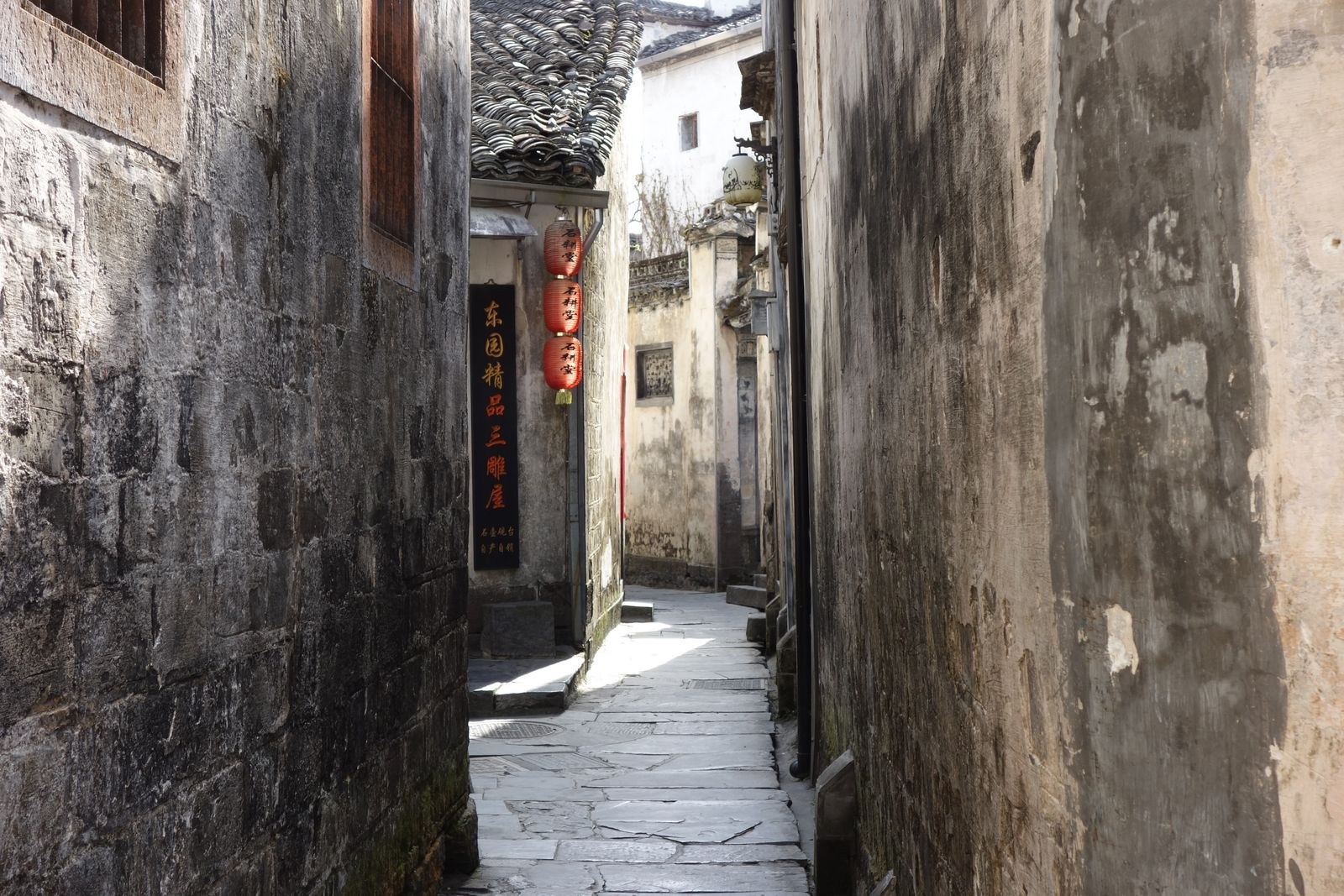
The stream is what gives the place its name and its shape, and it does more work than a stream normally does. The village sits in a cleft, so the water is both the reason the site was chosen and the reason the lanes are so narrow; the houses are built tight against each other on the small area of flat ground on either bank, and the paths climb the terraces when the bank runs out. Upstream the valley narrows and the forest closes in, with the massif of 阴那山 above, and paths run up into it. Downstream the road leads back toward 雁洋 and the temple, which is ten minutes away by car.
Practicalities
Tickets. About ¥50 for the village, which is run as a scenic area with a gate at the valley entrance and a shuttle from the car park. 继善楼 Jìshàn Lóu is included; some smaller houses are private and closed to visitors, and the boundary is marked.
Opening hours. Roughly 08:30 to 17:30 daily, with the last entry an hour before closing. The village is small enough to walk in an hour and interesting enough to want two, and it is quietest before ten in the morning.
Getting there. 桥溪 Qiáoxī is at the back of 雁洋镇 Yànyáng Zhèn in 梅县区 Méixiàn Qū, about fifty minutes by road from 梅州市 Méizhōu Shì and around forty minutes from 梅州西站 Méizhōu Xī Zhàn on the 梅汕 Méi-Shàn line. Buses run from the 梅州 terminal to 雁洋, and the village is a short taxi ride beyond it; the road continues to 阴那山 Yīnà Shān and the 灵光寺 Língguāng Sì, which is why the pair is usually done in one day.
Closing day. No closing day: the village is open every day of the year. Individual houses can be shut without notice if a family is in residence or if maintenance is under way.
Money From Away
The village is a compact illustration of how the Hakka diaspora worked, and it is a better one than any museum label. A man left for 南洋 Nányáng from a river port like 松口 Sōngkǒu, worked for years, and sent money home; the money went into a house. The house was built in the local form, because that was what a house was, but with imported detail, because the money had been to other places. 继善楼 Jìshàn Lóu is the largest example here, and the family that built it is also the family that later paid for its restoration, which is why the carving has been cleaned rather than replaced and why the buildings around it have been kept rather than cleared.
What that means for a visitor is a village that is neither abandoned nor staged. There are people living in some of the houses, shutters open and washing out; there are houses kept as exhibits with the doors unlocked and a caretaker in the yard; and there are houses that are simply closed and dark. The lanes are stone and wash down the hill in the rain, the stream runs under small slab bridges, and the terraces above the village are still worked. It is a half hour of walking and a long time of looking, which is the right ratio for a place this size.
Words and Names
桥溪 Qiáoxī is the village name, 桥 qiáo a bridge and 溪 xī a stream; 桥溪古韵 Qiáoxī Gǔyùn is the marketing name used on the signs, 古韵 meaning old charm. 堂横屋 tánghéng wū is the Hakka house type with a central hall and side wings, 继善楼 Jìshàn Lóu is the largest restored residence in the village. 雁洋 Yànyáng is the township, 梅县区 Méixiàn Qū the district, 阴那山 Yīnà Shān the mountain above, and 南洋 Nányáng the South Seas, the old term for Southeast Asia where the remittances came from.
flowcloud would say that 桥溪 is the honest version of a restored village, since the money that built the houses came from the same families that later paid to save them, and the plain houses were kept beside the grand one instead of being cleared away.
Getting there: by road to 桥溪 Qiáoxī at the back of 雁洋镇 Yànyáng Zhèn in 梅县区 Méixiàn Qū, about fifty minutes from 梅州市 Méizhōu Shì; buses from the 梅州 terminal reach 雁洋 and a taxi covers the last stretch. Go before ten, walk the lane and the stream first and 继善楼 Jìshàn Lóu second, and continue a few minutes up the road to 阴那山 Yīnà Shān and the 灵光寺 Lingguang Si while you are here.