
Qibao Old Town: A Thousand-Year-Old Water Town of a Three-Arch Stone Bridge, Snack-Lined North Street and Temple-and-Wine-Workshop Quiet along the Banks of Puhui Creek in Minhang District, Shanghai
三孔桥横千载水,双街烟火暖一城。Sān kǒng qiáo héng qiānzǎi shuǐ, shuāng jiē yānhuǒ nuǎn yī chéng – The three-arched bridge spans a thousand years of water; the cooking fires of two streets warm a whole town.
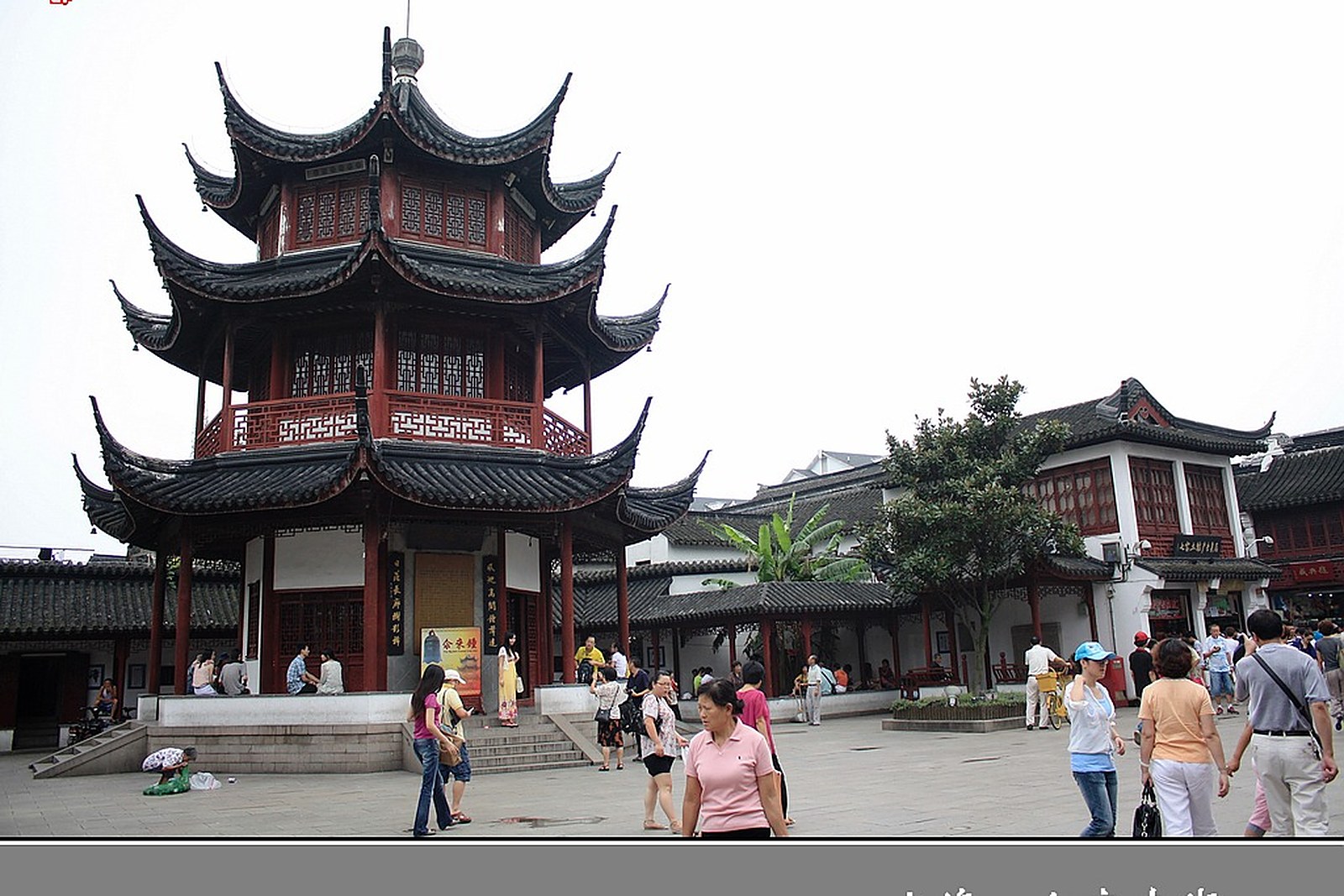
七宝老街 Qībǎo Lǎojiē Qibao Old Town is not a rebuilt heritage film set — it is, plainly put, a genuine thousand-year-old water-town still trading on its own banks: the old quarter wraps its lanes around 蒲汇塘 Púhuì Táng Puhui Creek in 七宝镇 Qībǎo Zhèn Qibao Town of 闵行区 Mǐnháng Qū Minhang District, where a settlement that grew up around the 七宝教寺 Qībǎo Jiàosì Qibao Temple has milled, brewed and snacked beside the same water for more than a millennium. The plan of the place is disarmingly simple: the 三孔石塘桥 sānkǒng shítángqiáo three-arch stone bridge holds the centre of the town like a keystone, 北大街 Běidàjiē North Street piles its banks with snack stalls and food queues, and 南大街 Nándàjiē South Street gathers the quieter sights — temple, halls and courtyards — along the creek. What you actually visit is a working water-town quarter of bridges, shopfronts and river steam, near enough to downtown for an afternoon and old enough to feel borrowed from another century.
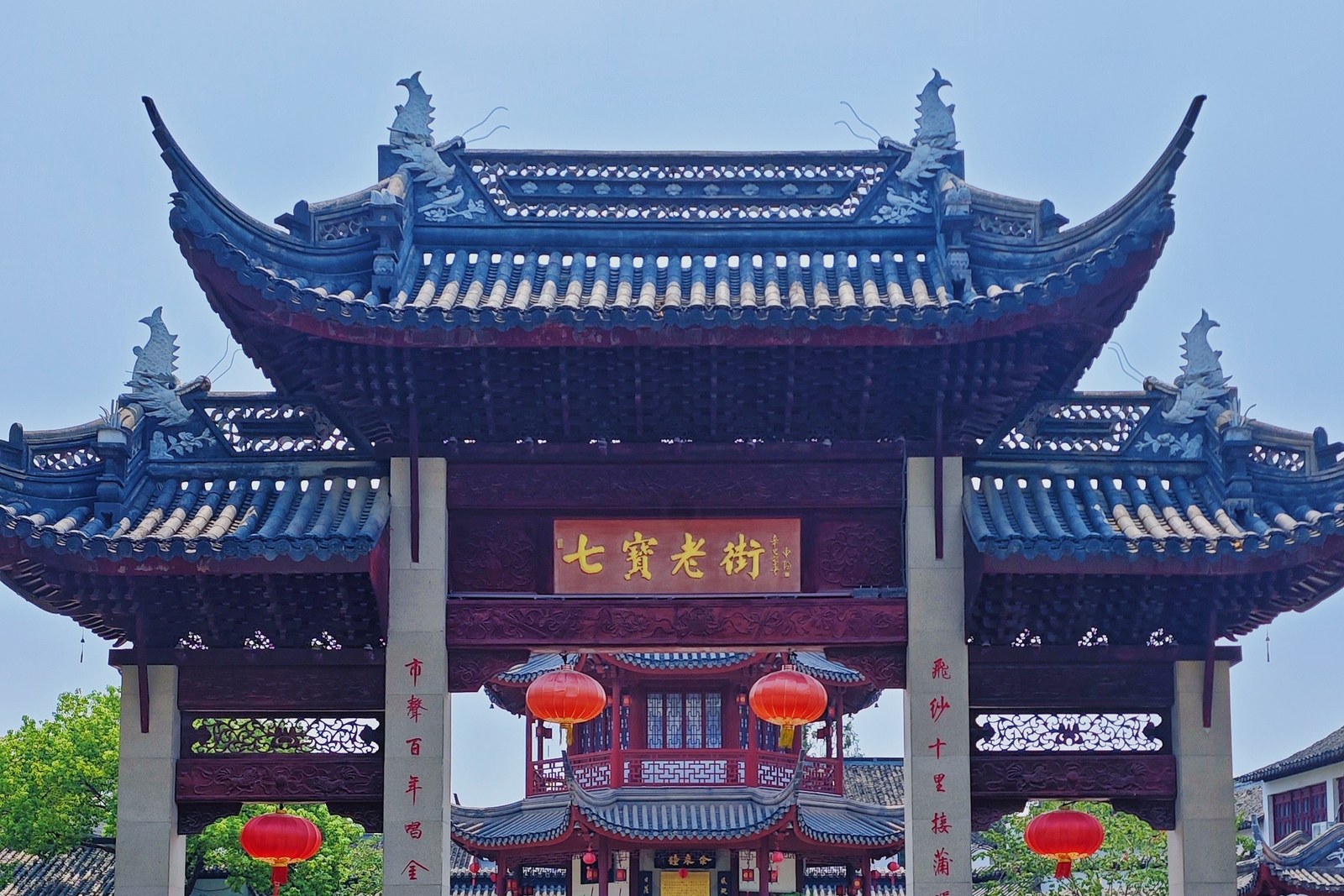
Call it honestly: the streets themselves are free to wander through the day, while the small sights inside — the 七宝教寺 Qībǎo Jiàosì Qibao Temple, the 蟋蟀草堂 Xīshuài Cǎotáng Cricket Grass Hall devoted to the town’s famously serious cricket-keeping culture, and the 老酒坊 Lǎojiǔfāng old wine workshop with its vats and jars — each keep their own doors and small charges (worth confirming the details for current opening hours and any combined ticket), and 七宝站 Qībǎo Zhàn Qibao station on Metro Line 9 sets you down a short walk from the old streets. The honest warning is crowd physics: this is the closest real water-town to central Shanghai, so weekends hand the narrow lanes to a shoulder-to-shoulder current and the snack queues at midday can outlast the snacks themselves. Come on a weekday morning if you can, when the shutters open and the steam rises before the crowds arrive. Give the town two to three hours, longer if you intend to eat your way down North Street properly.
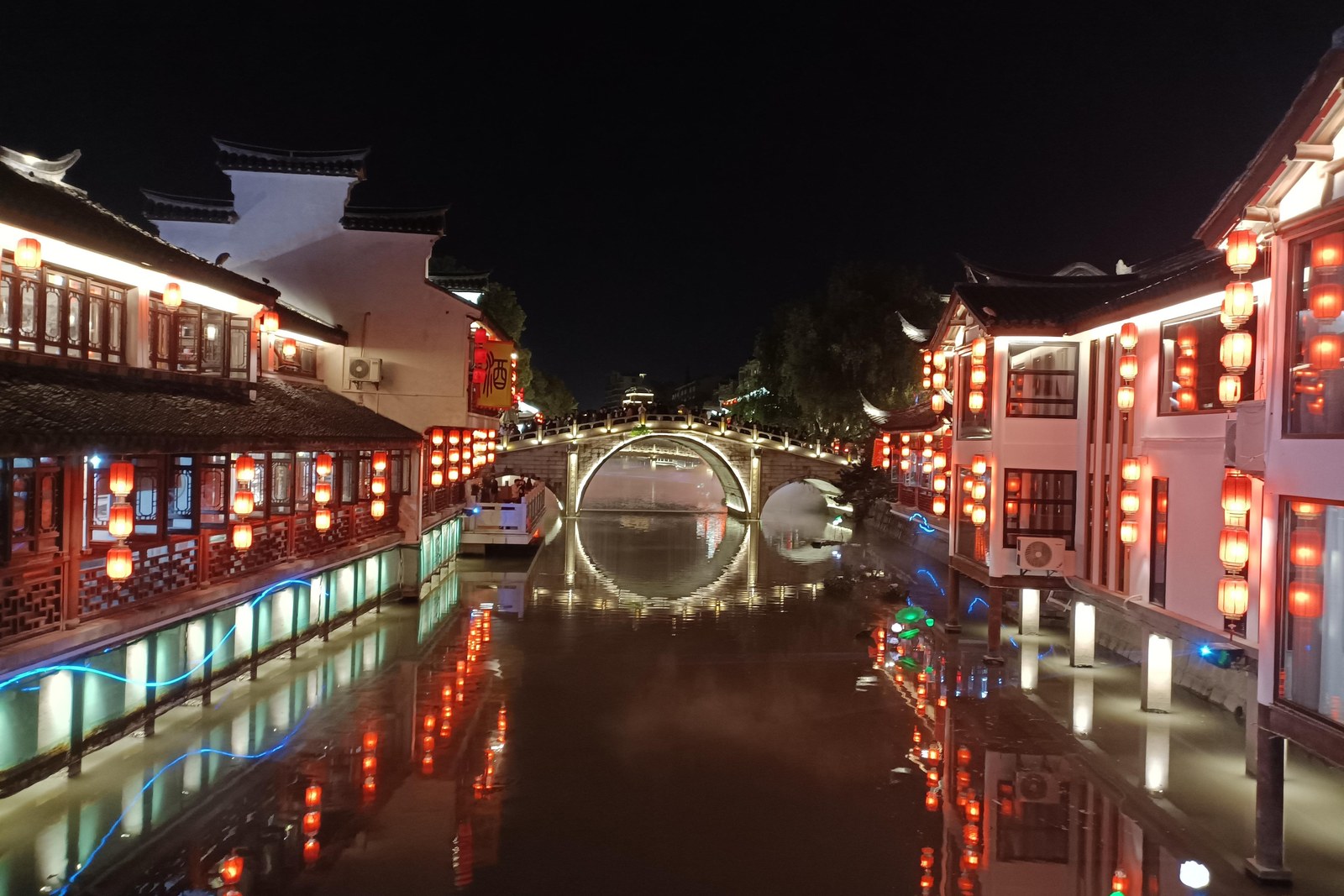
The honest star is the bridge-and-creek heart itself — the three-arch stone bridge standing over 蒲汇塘 Púhuì Táng with tea houses and whitewashed fronts stacked along both banks, the single composition that explains why a thousand years of trade chose this bend of water. What gets oversold is the word “ancient”: parts of the quarter have been rebuilt and smartened over the years, and travellers expecting an untouched museum village find a living, thoroughly commercial old street instead (worth confirming the details for which of the small halls are currently open to visitors). What repays the effort is the double-street rhythm: one bank all sizzling woks, candied fruit skewers and ordering crowds, the other a slower stroll of temple incense, courtyard gates and the malt-and-jar smell of the old wine workshop, with canal boats sliding beneath the arches. Walk North Street for appetite, cross the bridge, and let South Street slow your pace. Come for the layering of the place: bridge, then snacks, then the quiet south end.
The self-aware postscript: I was photographing the arches from the creek-side steps one weekday morning when a woman restacking snack trays in the next doorway volunteered the local view. “My family has traded on North Street since my grandfather’s day,” she said, nodding at the bridge, “the city grew ten rings around us, but the water never moved — I still cross that bridge every morning the way he did, and the tourists photograph the same three arches he complained were too narrow for his barrow”. That is the visit in miniature. From mid-bridge the whole town lines up in one frame — two streets, one creek, three arches — the composition every postcard copies and every visitor re-shoots with their own crowd in it. 七宝老街 Qībǎo Lǎojiē suits whoever treats it as a living water-town to eat and wander through first and a heritage checklist second, and disappoints anyone expecting empty lanes, hushed temple grounds and a museum-village quiet that never belonged to a trading town.
Nearly everything else on this Minhang list lies within a short metro ride: the lakes and plane trees of the 上海交通大学闵行校区 Shànghǎi Jiāotōng Dàxué SJTU Minhang Campus wait south-east at 东川路 Dōngchuān Lù Dongchuan Road 800, the flower fields of 浦江郊野公园 Pǔjiāng Jiāoyě Gōngyuán Pujiang Country Park open beside 沈杜公路 Shéndù Gōnglù Shendu Highway, the relocated stone bridges of 韩湘水博园 Hánxiāng Shuǐbóyuán Hanxiang Water Museum stand on the 黄浦江 Huángpǔ Jiāng Huangpu River bank at 马桥镇 Mǎqiáo Zhèn Maqiao Town, and the dining lanes of 老外街 Lǎowài Jiē Laowai Street run along the old rail spur at 虹梅路 Hóngméi Lù Hongmei Road Lane 3338 — all inside the same 闵行区 Mǐnháng Qū Minhang District whose oldest street corner this thousand-year-old town keeps.
Practicalities
- Rating: ★★★★☆ — the nearest genuine water-town to downtown Shanghai, all stone arches and snack smoke; come early on a weekday, and eat your way down North Street.
- Tickets: Free to wander the streets; the temple and the small halls inside charge their own modest fees (worth confirming the details for current opening hours and any combined ticket).
- Address: 七宝老街 Qībǎo Lǎojiē, 七宝镇 Qībǎo Zhèn Qibao Town, 闵行区 Mǐnháng Qū Minhang District, Shanghai — a short walk from Qibao station on Metro Line 9.
- Time needed: Two to three hours for the bridge, both streets and a proper snack tour; half a day if you add the small sights inside.
Words and Names
七宝老街 Qībǎo Lǎojiē Qibao Old Town · 蒲汇塘 Púhuì Táng Puhui Creek, the water through the town · 三孔石塘桥 sānkǒng shítángqiáo three-arch stone bridge, the town’s centre · 北大街 Běidàjiē North Street, the snack street · 南大街 Nándàjiē South Street, the sights street · 七宝教寺 Qībǎo Jiàosì Qibao Temple, the town’s founding sight · 蟋蟀草堂 Xīshuài Cǎotáng Cricket Grass Hall · 老酒坊 Lǎojiǔfāng old wine workshop · 千年古镇 qiānnián gǔzhèn thousand-year-old water-town · 七宝站 Qībǎo Zhàn Qibao station · 闵行区 Mǐnháng Qū Minhang District
flowcloud would say that 七宝老街 Qībǎo Lǎojiē is the proof that a water-town can keep its market soul while the metro city grows over it — a thousand-year-old quarter wrapped around 蒲汇塘 Púhuì Táng Puhui Creek in 七宝镇 Qībǎo Zhèn Qibao Town of 闵行区 Mǐnháng Qū Minhang District, where the 三孔石塘桥 sānkǒng shítángqiáo three-arch stone bridge holds the centre, 北大街 Běidàjiē North Street feeds the crowds and 南大街 Nándàjiē South Street keeps the temple, the 蟋蟀草堂 Xīshuài Cǎotáng Cricket Grass Hall and the 老酒坊 Lǎojiǔfāng old wine workshop for the strollers (worth confirming the details for the small sights’ current hours and tickets) — and that the honest move is a weekday morning entered through 七宝站 Qībǎo Zhàn Qibao station on Metro Line 9, because the untouched-ancient-village expectation is the poster half and the working snack stalls, the school-day crossings and the three arches still carrying daily feet are the real half, and the water-town repays whoever comes hungry and walks the creek end to end. All checked October 2026.
Getting there: Metro Line 9 to 七宝 Qībǎo Qibao station, exit 1 or 2, then a walk along 漕宝路 Cáobǎo Lù Caobao Road to the old-town gate (worth confirming the details for festival-day crowd control on the stone lanes); the 三孔石塘桥 Sānkǒng Shítángqiáo three-arch stone bridge spans the 蒲汇塘 Púhuìtáng Puhui Creek at the heart of the snack streets. All checked October 2026.