
岐江公园 Qí jiāng gōngyuán occupies eleven hectares of the west bank of the Qijiang river in 西区街道, the downtown heart of 中山市 – at the south foot of the Zhongshan First Bridge, next door to the Fuhua Hotel, a short walk from the Sunwen West Road pedestrian street. It has no fence: a winding stream draws the line between park and city, the lake inside rises and falls with the estuary tide by as much as 1.1 metres a day, and a grid of timber trestles bridges the wet margins. Under all this green stands a factory. The Yuezhong shipyard was built in the early 1950s, employed 1,300 people at its height and was the state-owned works the city was proudest of; in the middle 1990s river freight died, and in 1999 the yard stopped, leaving its workshops, rails, gantry cranes, docks and water towers among the weeds.
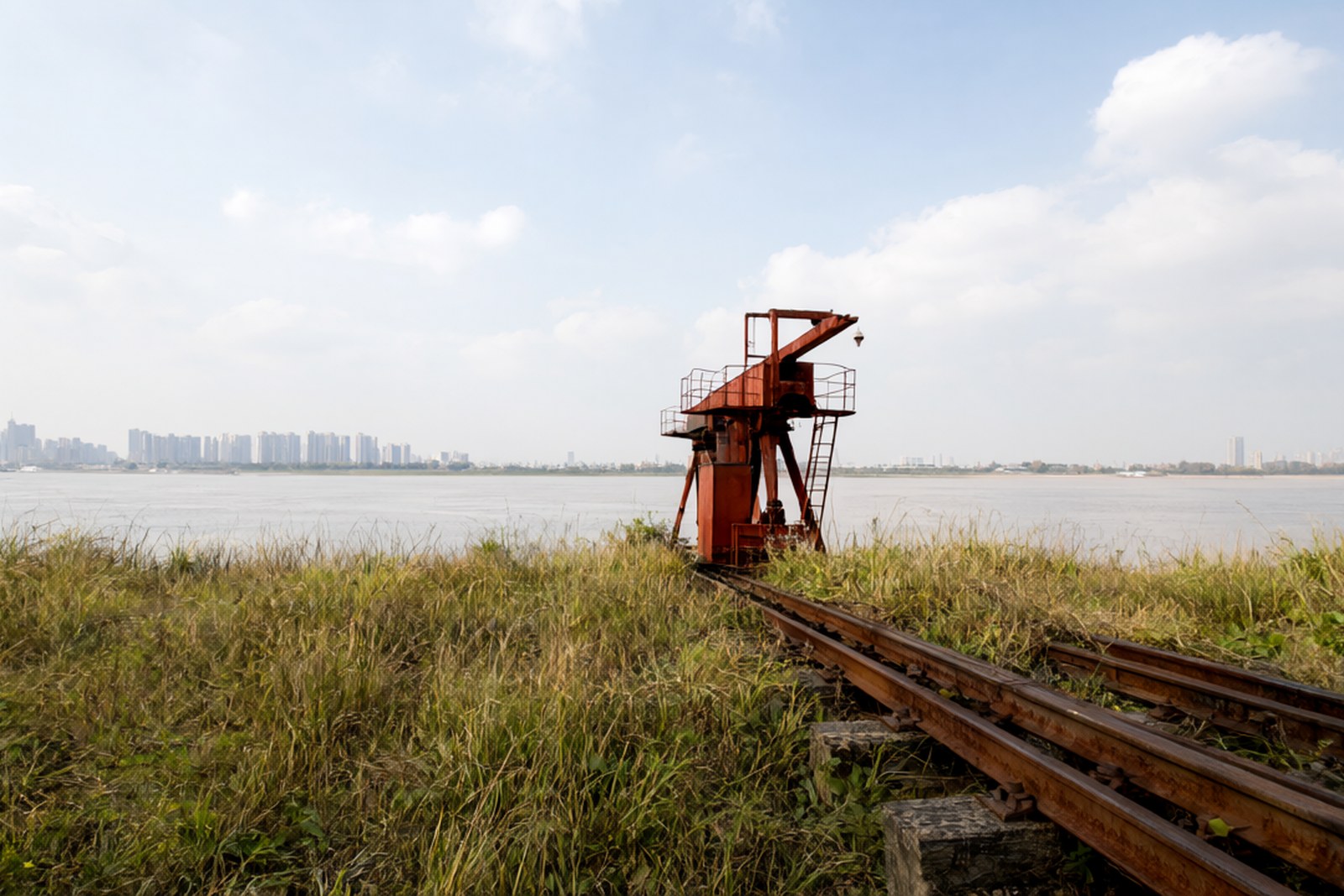
What happened next is now a founding story of Chinese landscape design. 俞孔坚 Yú Kǒngjiān – a Harvard doctoral graduate, a Peking University professor and founding dean of its college of architecture and landscape – took it as his first project at home and advised the city to keep the yard as an industrial-heritage park rather than demolish it. At the design review one expert voted for the idea and the rest, by the city planners’ own account, were against it. Zhongshan did something unusual: renderings went on public display at the shipyard site, in the Fuhua Hotel lobby and in the old library, and residents voted by secret ballot – more than eighty per cent said yes. Design ran from June 1999 to October 2001, construction began in August 2000, and the park opened in October 2001 under its designer’s idea – the culture of the ground beneath, the beauty of wild grass: straight paths for industrial efficiency, wild reeds and thatch grasses brought down from 五桂山 Wǔguì shān instead of an ornamental lawn, and every rail, crane and transformer kept, repainted and given a job.
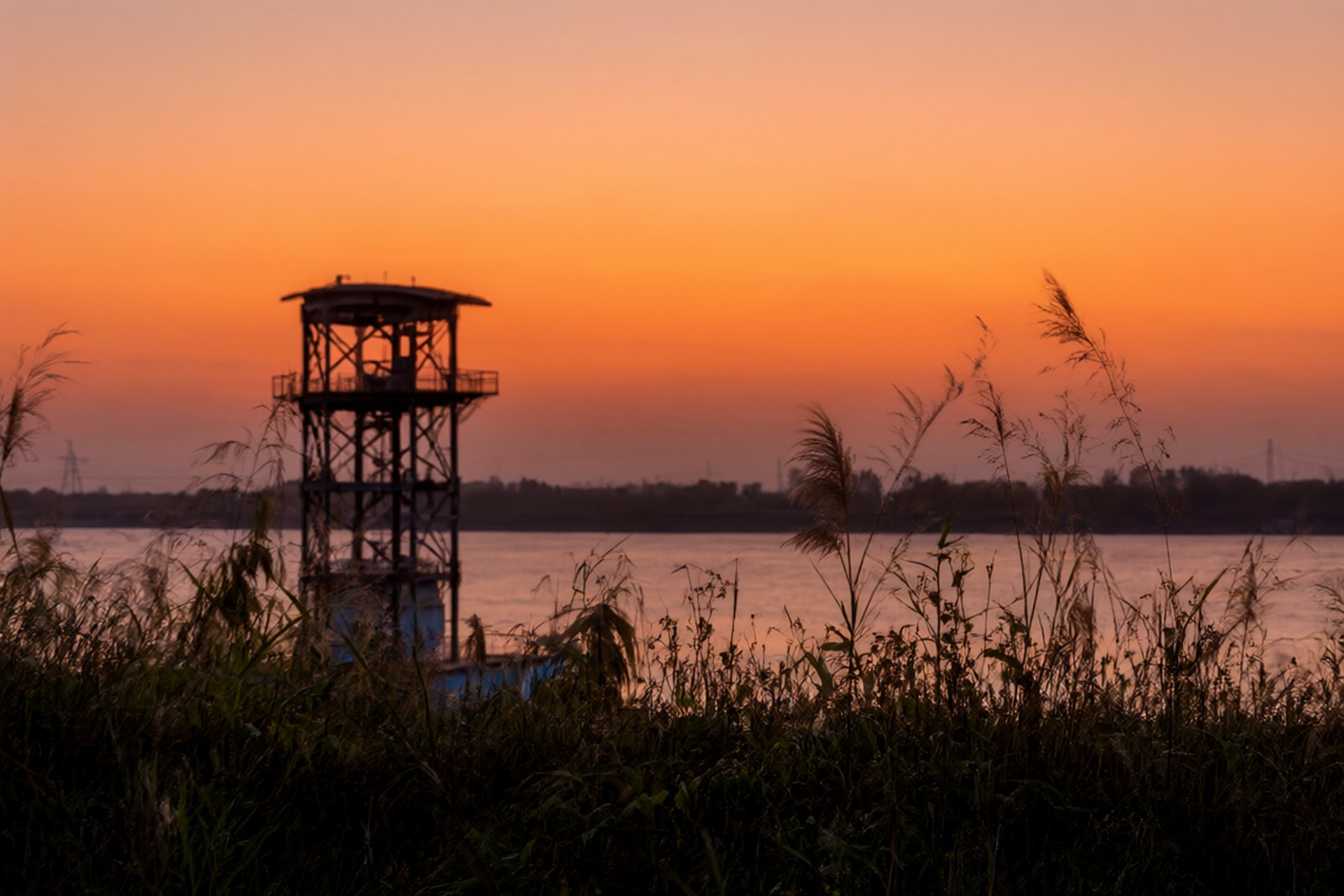
Two moves inside that scheme became textbook. To satisfy flood control the channel had to widen by twenty metres, which would have felled the old riverside banyans; the designers cut the extra channel as a new island instead – cut the channel, make the island – and the trees stayed, with the old water tower reborn as a night-lit navigation beacon. The relics got a second round of invention: the Amber Water Tower wears a jacket of metal-framed glass and glows on solar power after dark; the “skeleton” tower, originally to be stripped to its rebar, was rebuilt in steel to its original outline after the structure failed review; the Red Memory installation sets red iron boxes around a pool of clear water; a lone chimney throws its long shadow; and the yard’s own ship – sold for scrap and then bought back by the city – sits ashore as what the designers call the park’s soul sculpture. The two-storey art museum, 2,500 square metres in lemon-yellow concrete columns, I-beam steel and floor-to-ceiling glass, reads as the workshop the yard never stopped being.
The awards came quickly and the first was the one that mattered. In 2002 the new park took the Honor Award of the American Society of Landscape Architects – the 2002 ASLA Honor Award, exactly as cited – the first, Chinese sources record, for a Chinese landscape design at that rank of international recognition; a Chinese architecture art award followed in 2003, a gold for environment art at the tenth National Art Exhibition in 2004, the Waterfront Center’s top honour for 2008 – given in Chicago that November, the only one awarded that year – and an Urban Land Institute Asia-Pacific honour in 2009. Planners in the city put it plainly: before Qijiang Park was built, China’s industrial-heritage landscape renewals had no template; after it, the wave started. Its designer did not see the movement’s twenty-fifth year: Chinese media widely reported in September 2025 that Yu Kongjian had died in a plane crash in Brazil, aged sixty-two, while filming a documentary – a report carried here as what was widely reported, pending the official obituary, not as confirmed fact.
An hour or two covers it, and the park asks nothing: free, open all night, walked best with the pedestrian street, 中山公园 Zhōngshān gōngyuán and the big wheel across the water. The only paid thing is the river itself – a night cruise launched in October 2011 for the centenary of the 1911 revolution, running about six kilometres of water between the first and second bridges, some fifty minutes one way.
Practicalities
Tickets. Free. The park is an unfenced city park open round the clock with no gate and no ticket of its own; the Qijiang night cruise is the one priced item, and its current fare has no published figure – pay on the pontoon. Checked September 2026.
Opening hours. Always open – 24-hour access is a matter of design, and the floodlit towers and the night cruise make the evening the better show. The cruise runs from 15:30 to 22:00 on its published schedule.
Closing day. No closing day exists; an open park has none. What changes the ground is weather and tide – the lake follows the river, and after heavy rain the low trestles can sit close to the water, so give the boardwalks a day to dry.
Getting there. The park sits in the downtown riverside strip of 西区街道, a short walk from the Sunwen West Road pedestrian street and the Fuhua Hotel, with 中山公园 and the ferris wheel nearby. No published bus route or car-park figure could be verified: from the city’s stations allow a taxi of fifteen to thirty minutes, then walk the riverfront.
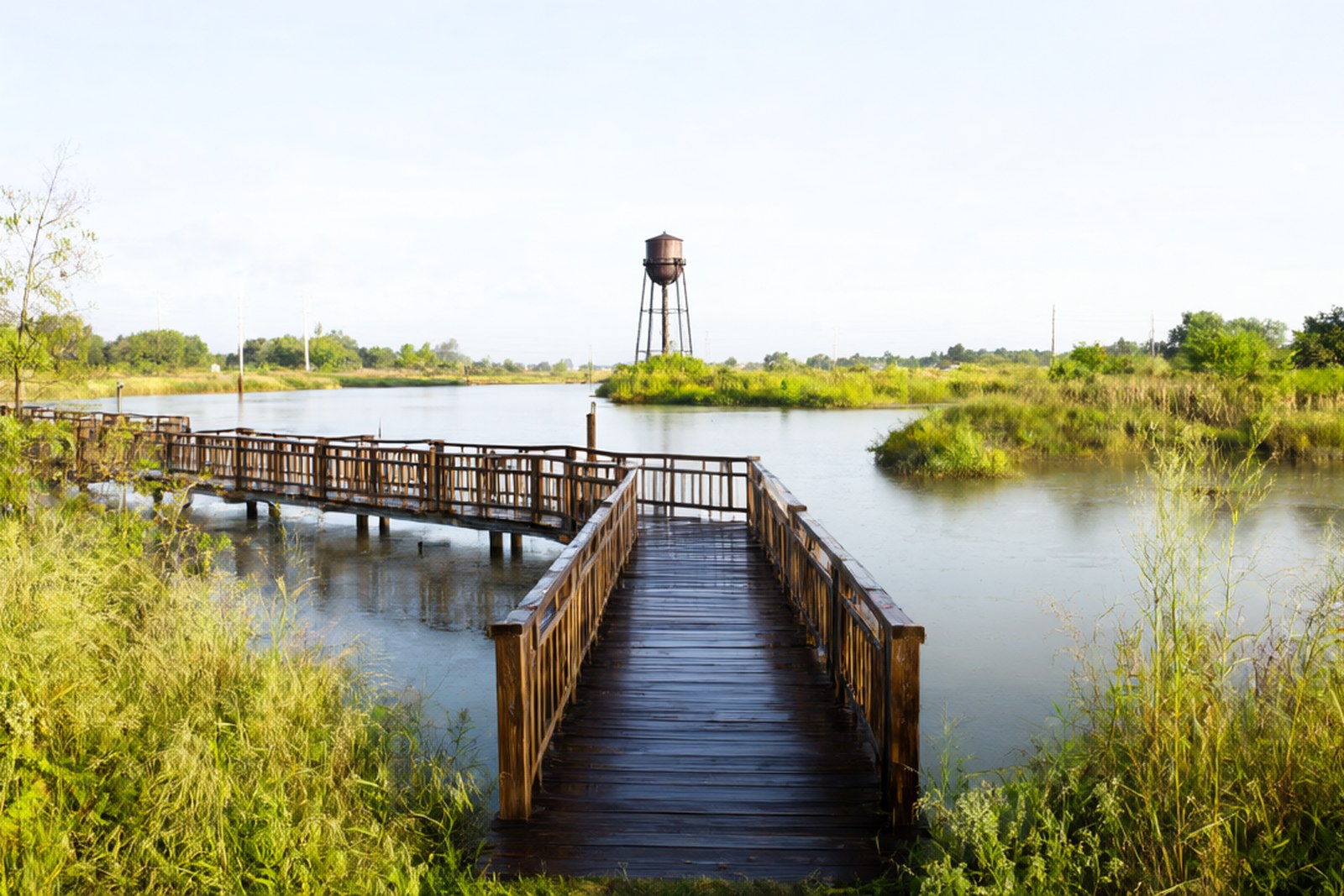
flowcloud would say that the park’s real exhibit is the argument it won: one expert against ninety-nine, a public ballot against the reviewers, wild grass against the lawn – and that a crane and two water towers standing here with jobs to do are the proof that a city can keep its past without embalming it.
Getting there: 岐江公园 stands on the west bank of the Qijiang river in 西区街道 of 中山市, at the south foot of the Zhongshan First Bridge and a short walk from the Sunwen West Road pedestrian street; entry is free and the park is open 24 hours with no closing day (checked September 2026), the only priced item being the evening river cruise from 15:30 to 22:00; no bus route or car-park figure is published, so the practical access is a taxi from the city’s stations, fifteen to thirty minutes.