
The Green Lung Between Two Cities: Qilihai Wetland
万顷芦花秋作雪,一湾碧水宿禽来 Wàn qǐng lúhuā qiū zuò xuě, yī wān bìshuǐ xiǔ qín lái – Ten thousand acres of reed flowers turn to snow in autumn; a bay of clear water hosts the coming birds
七里海国家湿地公园 Qīlǐhǎi Guójiā Shīdì Gōngyuán spreads between Tianjin and Beijing as one of the world’s three great ancient-coastal wetlands, in 天津市宁河区 Tiānjīn Shì Nínghé Qū Ninghe District – reed seas that gold over each October, lagoons threaded by wooden walkways, and a bird list past three hundred species that turns the autumn sky into traffic. Locals call it the green lung of the Jing-Jin corridor, and the epithet is literal: the reeds filter, the water settles, and the negative-oxygen counts in the reed season read like a mountain resort.
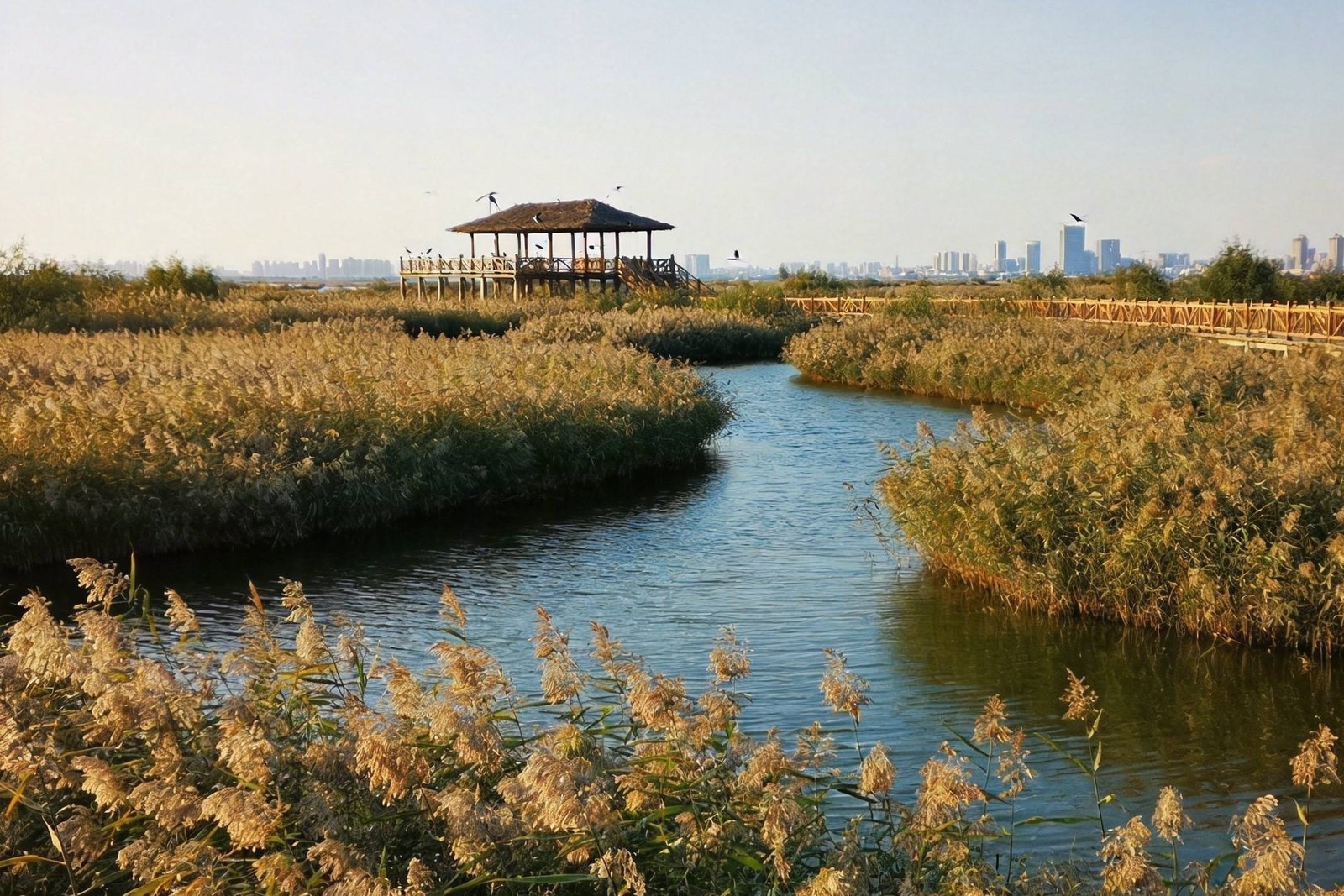
The reeds are the show. Weed beds sway gold from September, the water between them holds mirror-flat at dawn, and the boardwalk lines push visitors deep into the stands where the only sounds are wind, bitterns and the click of camera shutters. Boat tours keep to the wider channels; the bird islands stay fenced, which is exactly why the flocks keep coming back.
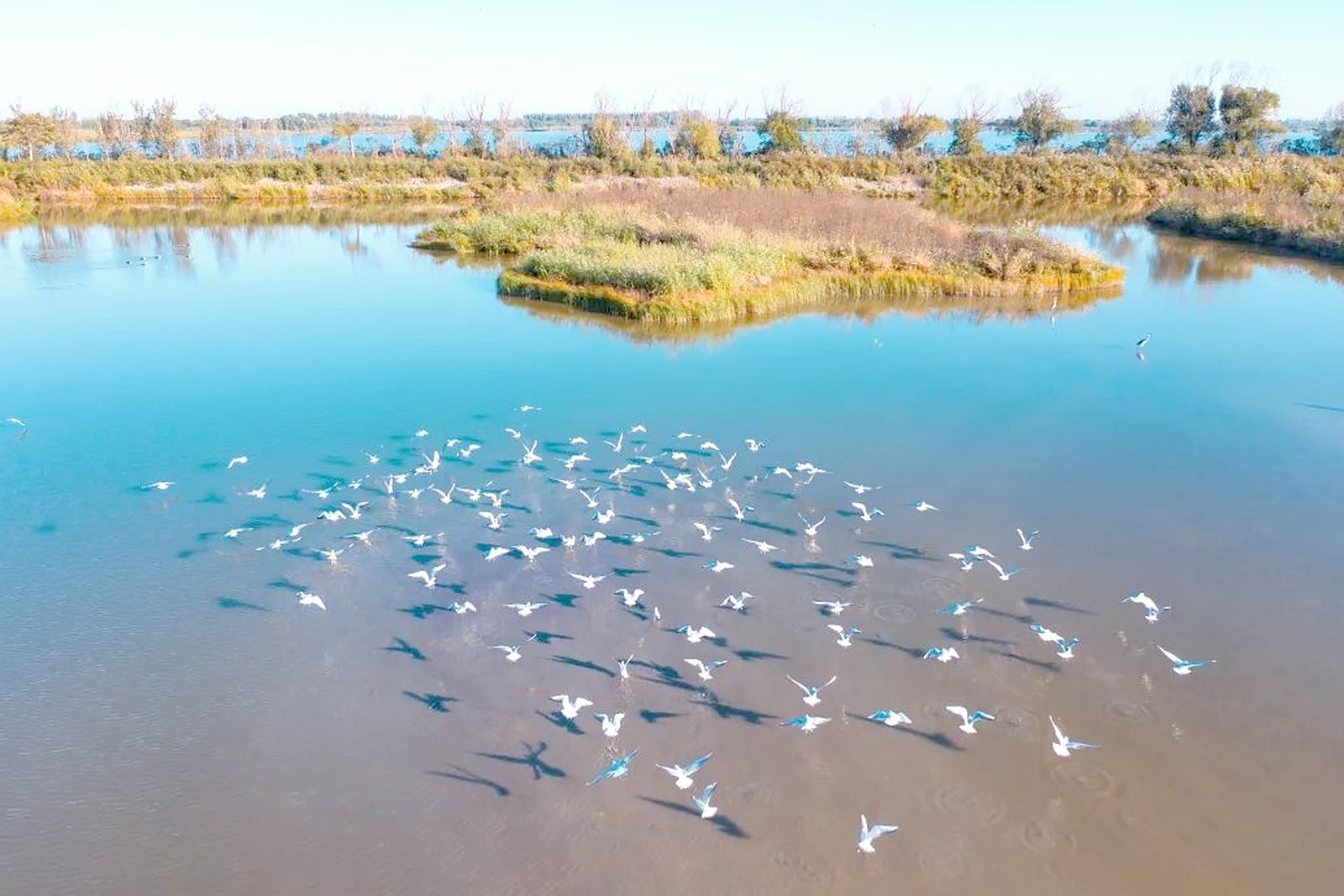
The birds are the calendar. Spring brings the nesting rush, autumn funnels the passage migrants – Oriental white storks, swans, geese in line-ahead – and winter leaves the hardy herons working the ice edges. The wetland’s education center decodes the cycle with exhibits on the ancient oyster reefs below the mud, a reef system so old it reads like tree rings for the Bohai coast.
The slow visit wins here. Boardwalk loops take an hour each, the observation platforms reward patience with harrier flights at dusk, and the village lanes on the wetland’s edge rent bicycles for the levee circuit. Bring binoculars, skip the rush, and the park pays back the kind of quiet that day-trippers usually burn through in half an hour.
Practicalities
- The reed-gold season peaks late September through October; bird passage peaks April and October-November.
- Boardwalk loops are flat and stroller-friendly; boats run on the main lagoon in season.
- Binoculars beat zoom lenses on the platforms – the birds keep to the islands.
- Mosquito repellent earns its place from June through August; the reeds breed them generously.
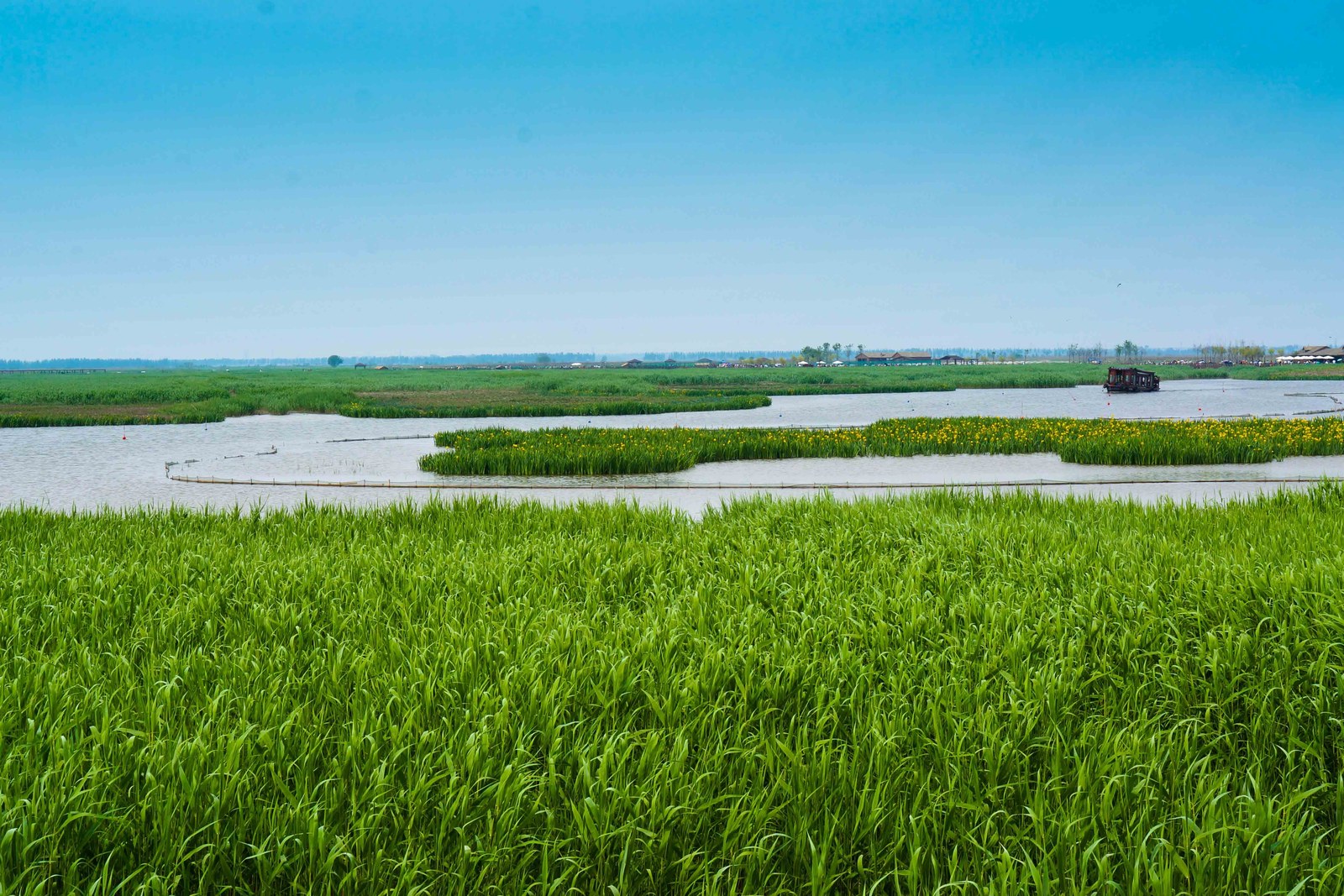
Words and Names
七里海 Qīlǐhǎi the Qilihai wetland, “seven-li sea”; 芦苇 lúwěi the reeds that build the landscape; 湿地 shīdì wetland; 候鸟 hòuniǎo migratory birds; 古海岸 gǔ hǎi’àn the ancient coastline the wetland preserves. Beyond the wetland, the same 天津市宁河区 Tiānjīn Shì Nínghé Qū Ninghe District keeps more places worth the detour: 天尊阁 Tiānzūn Gé the Kangxi-era wooden pavilion, 于方舟故居 Yú Fāngzhōu Gùjū the revolutionary’s home village, 芦台春创意文化产业园 Lútái Chūn Chuàngyì Wénhuà Chǎnyè Yuán the liquor-culture park, or 新天钢联合特钢工业旅游区 Xīn Tiāngāng Liánhé Tègāng Gōngyè Lǚyóu Qū the steel-works tour – four more doors into the same Ninghe District. Once the boardwalks are behind you, our Ninghe food map fills the table.
flowcloud would say Qilihai is the corridor’s breathing room: reeds that filter two cities’ air, birds that commute farther than either, and a boardwalk that makes you slow down to the marsh’s clock. All checked November 2026.
Getting there: The wetland park sits on Ninghe’s southern side, about an hour’s drive from central Tianjin by the Jinning expressway – park lots front the main gate, village depots and guesthouses ring the approach roads, and bird-season dawns reward the early start. All checked November 2026.