
The Lake of Ten Thousand Birds: Qinggeda Reservoir at Wujiaqu
一湖碧水映天山,万鸟翔集芦苇间 Yī hú bìshuǐ yìng Tiānshān, wàn niǎo xiángjí lúwěi jiān – A lake of clear water mirrors the Tianshan; ten thousand birds wheel among the reeds
正文:青格达湖 Qīnggédá Hú Qinggeda Lake is the water reason 五家渠市 Wǔjiāqú Shì Wujiaqu City exists – a reservoir the Sixth Division finished in 1959 by damming the Tou-tun and Ulan rivers at the gobi’s edge, now the biggest wetland of the Urumqi river system and the first stop for migrating waterbirds on the northern skirts of the capital. The locals call it simply 青湖 the Blue Lake: an inland sea of reed beds, lotus shallows and open water where swans, pelicans and bar-headed geese raft up by the thousand in migration season, and where the whole city comes at dusk to watch the light go gold across the water.
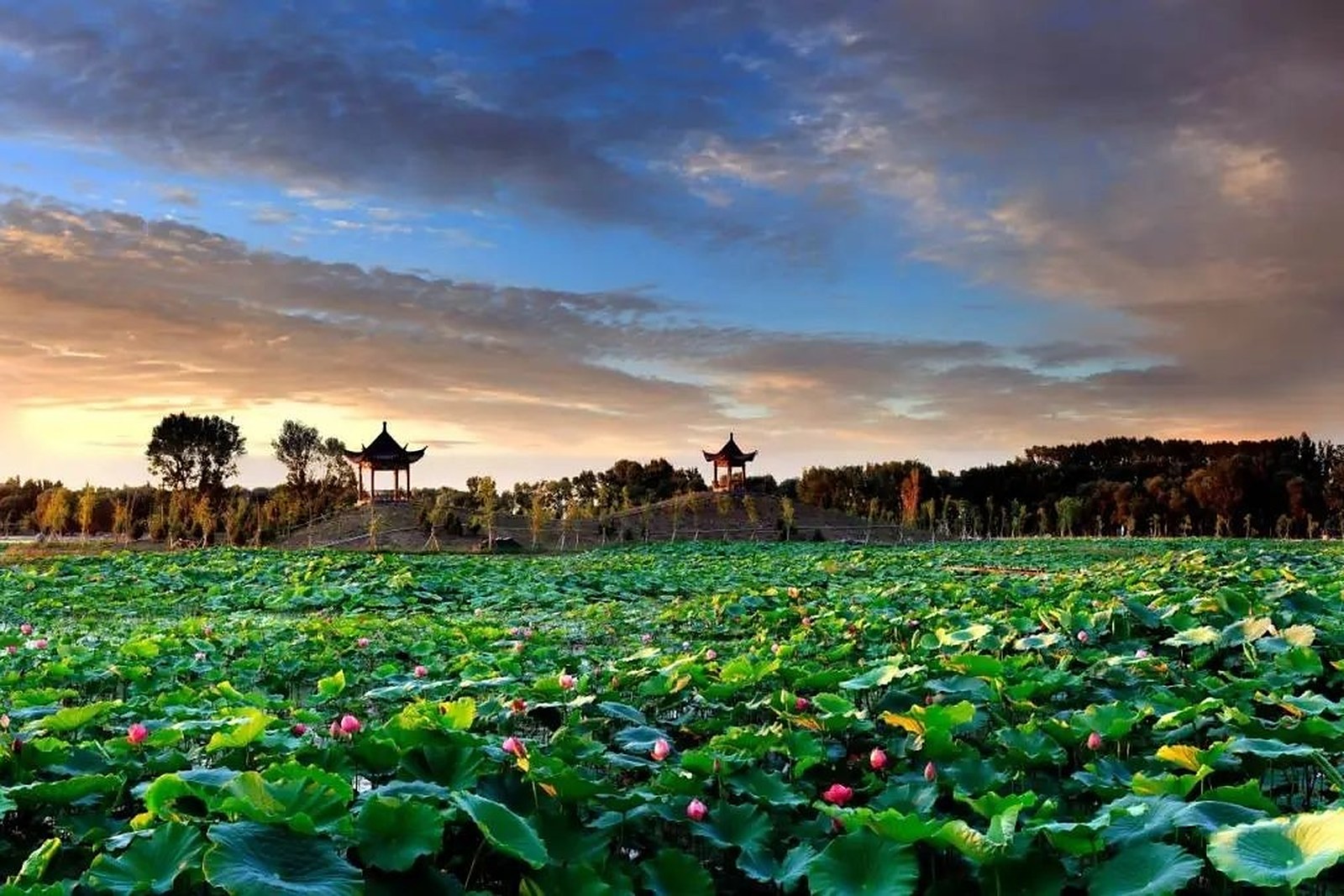
The lake changes with the year. Spring brings the bird festival – swans and geese rest here in April while the reeds still stand from last year; summer fills the margins with lotus, and the lotus ponds on the southern shore become the city’s own flower sea; autumn stacks the reed gold against the first snow on Bogda peak, visible across the water on clear days; and winter freezes the shallows into a grey mirror where the hardy few walk out on the ice. Bird hides and a boardwalk on the western side keep watchers close to the flocks without pushing them off the water.
Come the local way: drive or taxi ten minutes north of the city center to the lake’s south gate, walk the lotus-pond boardwalk first while the light is flat, then take the west-side dike as the sun drops – the pavilion silhouettes and the reed line read best in the last hour. Boat rides run in summer; anglers work the canals below the dam all season. The entry fee is modest and the whole shoreline can be sampled in an easy half-day.
The lake is also the regiment’s oldest engineering. Digging it by hand took the first reclamation brigades four years – banner by banner, basket by basket – and the tree belts they planted against the gobi wind now shade the whole northern shore. The canal headworks below the dam still water the fields of 蔡家湖田园 Càijiāhú Tiányuán the Caijiahu farmland, so the lake you walk around is the same water that turns the cotton white twenty kilometers south. Few city parks can claim that plumbing.
For photographers the honest hours are dawn and dusk. Morning fog lifts off the lotus ponds while coots work the channels; evening sends the reeds to silhouette against the western glow with the pavilions black against it. In late September the migration peaks – pelicans, grey geese and the occasional flamingo – and the bird hides on the west dike become the best seats in the whole of northern Urumqi’s outskirts.
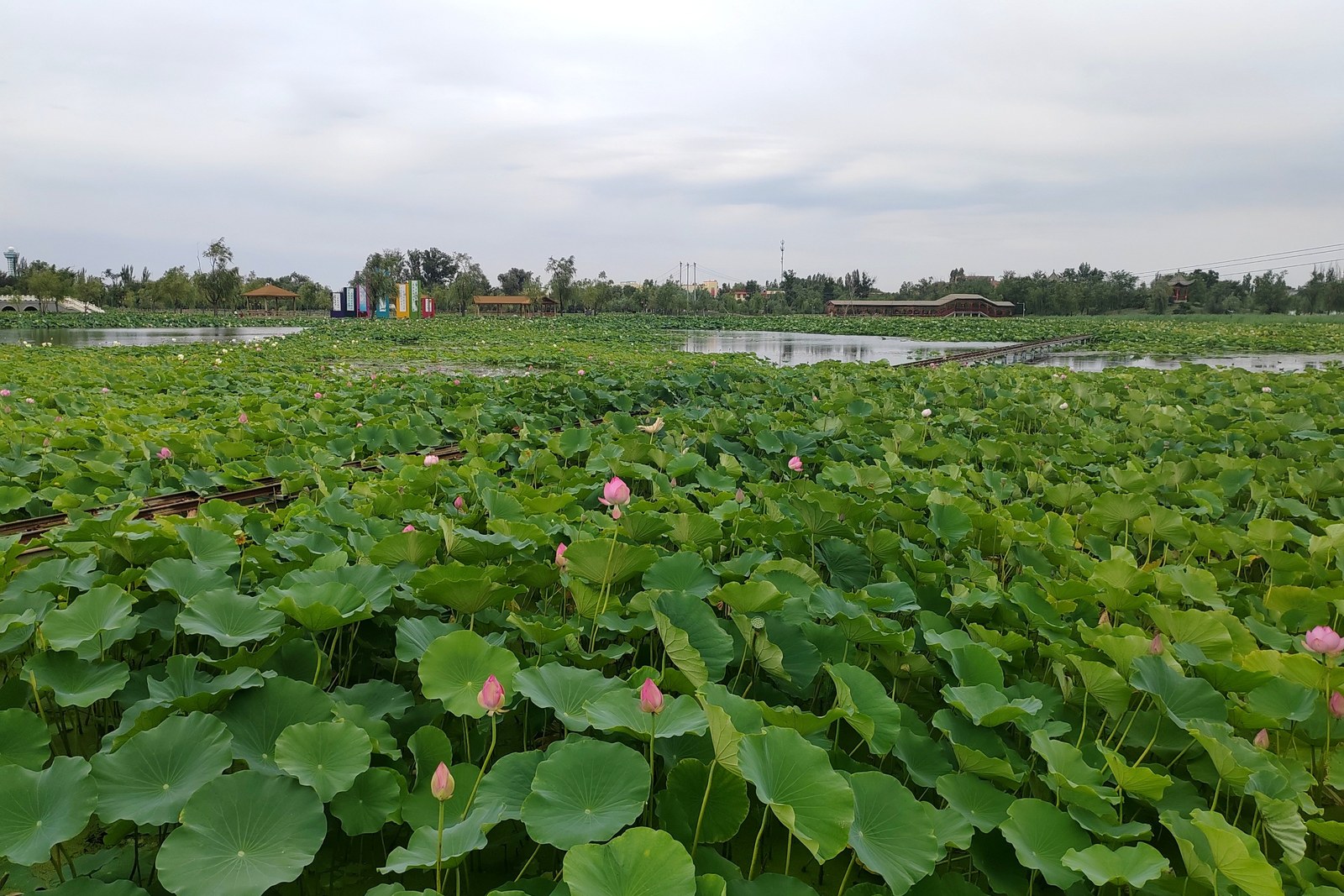
Practicalities first. The lake sits ten kilometers north of Wujiaqu center; the south gate is the main entrance, the lotus boardwalk is stroller-friendly, and the west-dike bird hides are the quiet section. May and September carry the strongest bird numbers, June the lotus, and winter the ice walkers. Water, hats and sunblock are city-standard; there is no serious walking anywhere on the shore.
Practicalities
Beyond the lake, the same 五家渠市 Wǔjiāqú Shì Wujiaqu City keeps more places worth the detour: 将军纪念馆 Jiāngjūn Jìniànguǎn the General Memorial Hall for the Sixth Division story, 头屯河谷 Tóutún Hé Gǔ the Toutun river valley for the boardwalk wetlands, 郁金香花园 Yùjīnxiāng Huāyuán the tulip gardens for the May flower fair, or 蔡家湖田园 Càijiāhú Tiányuán the Caijiahu fields for the cotton horizons – four more doors into the same 五家渠市 Wǔjiāqú Shì Wujiaqu City. Once the lake is walked, our Wujiaqu food map fills the day.
Practicalities
Words and Names
flowcloud would say Qinggeda Lake is the surprise of the northern gobi: a hand-dug inland sea where ten thousand birds check in each spring, lotus takes over the summer shallows, and the whole regiment story reads in one line of tree and canal from dam to cotton field. All checked November 2026.
Getting there: The lake park sits on Wujiaqu’s southern rim; from Urumqi the drive north takes about forty minutes, and taxis from the city center reach the shore in five minutes. All checked November 2026.