
The emblem of 珠海市 Zhūhǎi Shì, Zhuhai, is not a building and not a boat. It is a woman in stone, standing on a rock at the edge of the sea with a pearl held above her head. The 珠海渔女 Zhūhǎi Yúnǚ, the Zhuhai Fisher Girl, often rendered as the Zhuhai Fishing Girl, stands in 香炉湾 Xiānglú Wān, Xianglu Bay, on the seafront of 情侣中路 Qínglǚ Zhōng Lù, the middle stretch of Lovers’ Road, in Xiangzhou District, with her back to the hill and her face to the water. She was completed in the autumn of 1982, she is 8.7 metres tall and weighs about ten tonnes, and she is assembled from seventy blocks of granite. The sculptor was 潘鹤 Pān Hè, Pan He; the work was carried out by the Guangzhou Gardens Bureau crafts company, and the stone was carved by hand by stonemasons from Wuhua in Guangdong. Chinese official accounts describe her as the country’s first large seaside sculpture, and she is the city’s emblem. She is small by the standards of civic sculpture and easy to walk past, which is part of her charm: the stone is pale, the sea behind her is usually grey, and the scale is deliberately human rather than monumental. What makes her more interesting than a monument, though, is the order in which she and her story were made.
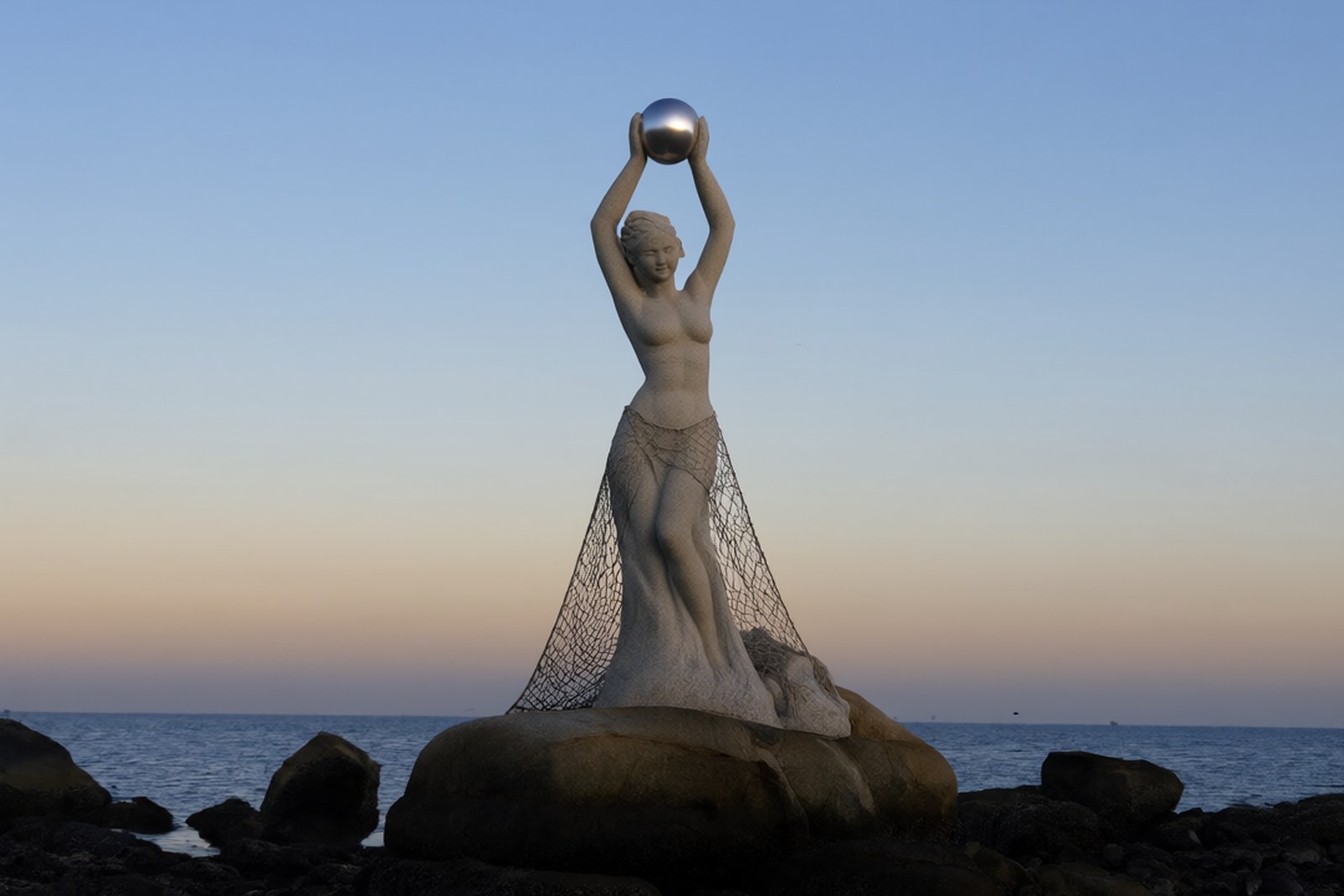
The sculpture came first and the legend came afterwards, and the city is candid about it. When Zhuhai was newly established as a city in 1979, its first Party secretary, 吴健民 Wú Jiànmín, Wu Jianmin, argued that the young city needed a large sculpture to serve as its emblem, and invited Pan He to design one. Pan He reasoned that Zhuhai had been a fishing town before it was a city, and chose a fisher girl to stand for that past. Then came the difficulty that gives this story its twist: he searched every historical document about Zhuhai he could find and discovered that no ancient legend of a fisher girl existed at all. So he proposed the reverse of the usual order, the statue first and the legend after, and wrote a myth to fit the stone. The city’s own accounts tell it as the story of the seventh princess of the South Sea Dragon Palace, who loved the singing of the fisher folk in Xianglu Bay, came ashore among them, fell in love with a young fisherman named Haipeng, passed through trial and loss, and became the guardian of the coast, holding up a pearl to protect the boats. Versions of the tale differ, which is exactly what one would expect of a legend written on purpose.
The figure herself is specific. She wears a string of pearls at her throat and a fishing net over her shoulder, her trouser cuffs are rolled a little above the ankle, and both hands raise a single pearl high, her face somewhere between delight and shyness. Accounts of the design record that the pose was changed from holding the pearl at her chest to offering it outward, facing north, before the final carving. The statue has been looked after and, once, repaired: the salt wind took its toll and a restoration was carried out in 1990, and she has stood through the typhoons that have struck Zhuhai directly, among them Ellen in 1983 and Hato in 2017. She is, in other words, a piece of civic art that has quietly become infrastructure, the thing locals use to tell you where they are.
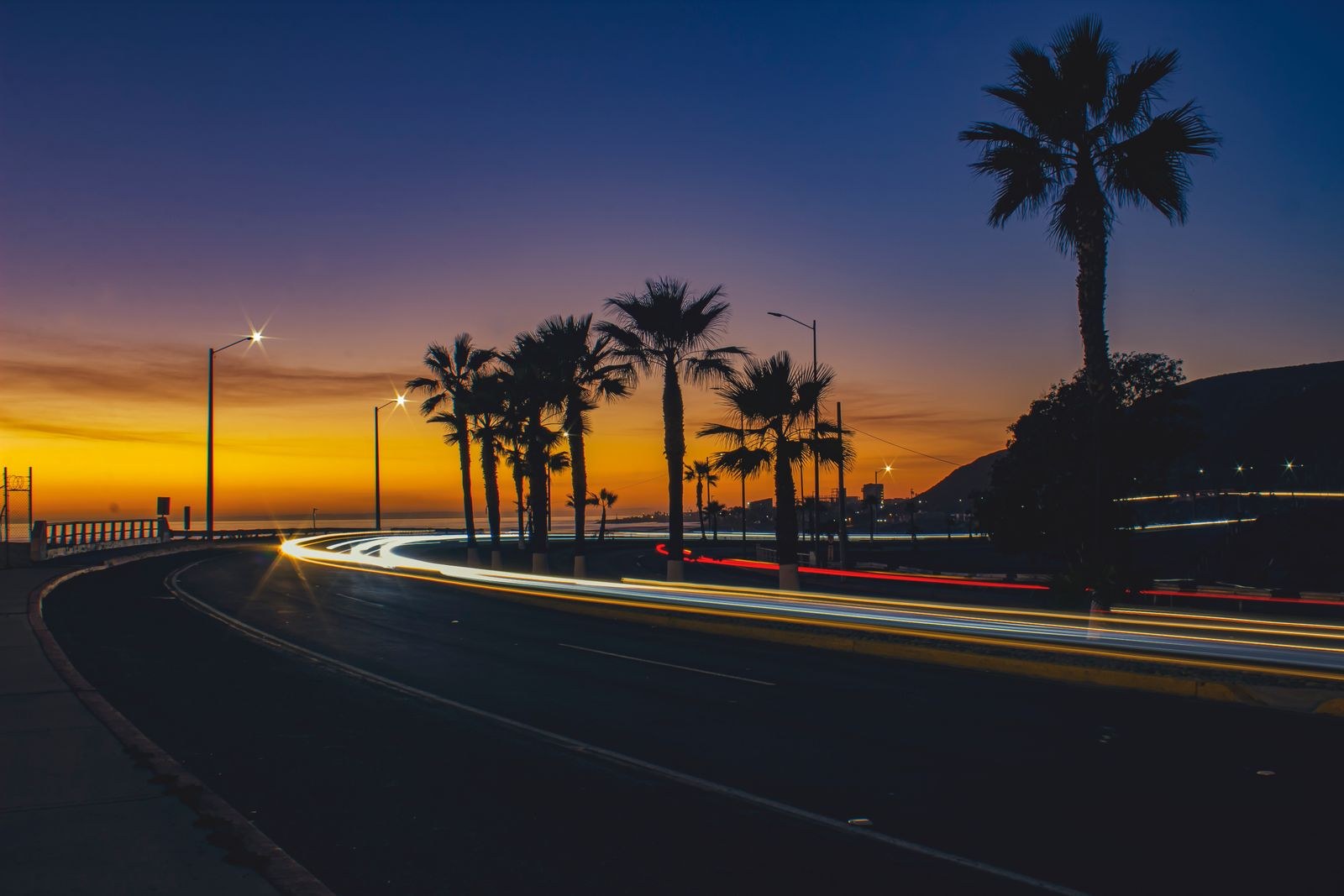
The road she stands on has a history of its own. 情侣路 Qínglǚ Lù, Lovers’ Road, was built in 1991, when Zhuhai became the first city in the country to build a coastal landscape road along its shoreline, and the planning principle behind it was unusual: rather than cut the coast straight, the designers agreed to take a detour wherever the natural landform or vegetation would otherwise have been destroyed. The result is a road that follows the water instead of dominating it. Its length is recorded in two figures, since current official reporting gives about 55 kilometres while earlier accounts measured the first stretch at about 15, so the honest version is that the road has grown and today runs to roughly 55 kilometres. The southern section looks out toward Macao, China, and the middle section passes the beach that gives the bay its summer crowds.
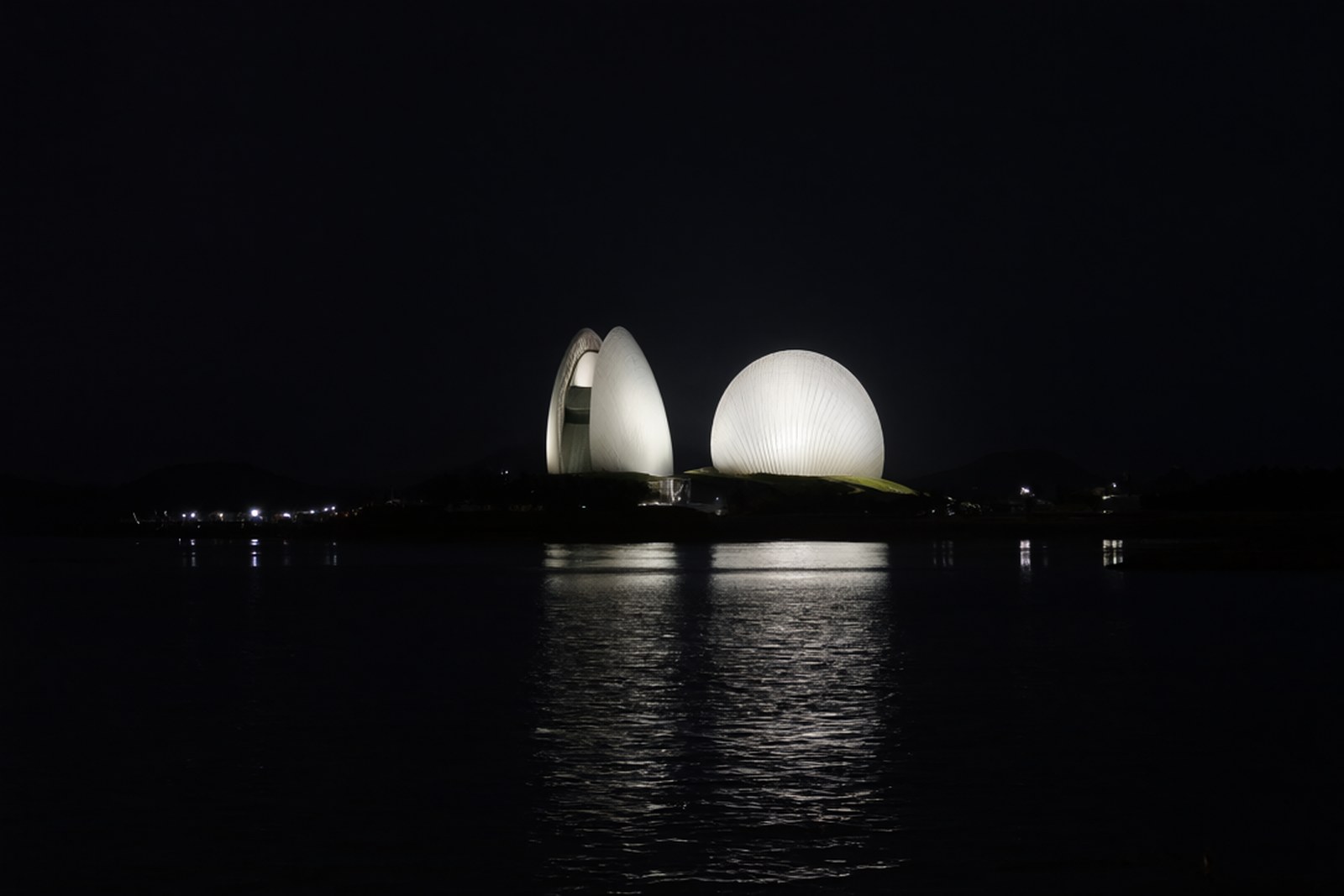
At the northern end of the road sits the city’s newest landmark, and it is a building rather than a statue. The 珠海大剧院 Zhūhǎi Dàjùyuàn, the Zhuhai Grand Theatre, stands on and beside 野狸岛 Yělí Dǎo, Yeli Island, and consists of two shell-shaped forms, a large one about ninety metres tall and a small one about sixty, which is why everyone calls it 日月贝 Rìyuè Bèi, the Sun and Moon Shells. It covers a floor area of about 59,000 square metres, cost about 1.08 billion yuan, was designed under the lead of Professor Chen Keshi, began construction on 28 April 2010 and opened on New Year’s Day 2017. Its stated idea is that the pearl is born of the shell and the shell of the sea, and the design is said to draw on the painting of the birth of Venus. The city describes it as China’s only grand theatre built on an island, and it holds a main auditorium of about 1,550 seats and a smaller multipurpose hall of about 550. At night the shells are lit and the whole thing sits on the water like a piece of the moon left behind.
The practical way to do the road is to pick a stretch rather than attempt all of it. The natural walk runs from the statue at Xianglu Bay north past the beach and on to Yeli Island and the theatre, which takes a couple of hours at an unhurried pace and covers the three things the city actually wants you to see. If the weather is kind, go late and let the light fall: the seafront is at its best when the day cools and the lamps come on, and the theatre is worth reaching before dark so that you can watch the shells light up from across the water. On holidays the road fills with people, and the sensible plan is to arrive by bus and walk, because parking along the seafront is limited and there is no reason to spend the best hour of the evening looking for a space.
There are other stops along the same line if you want them: the beach at 海滨泳场 Hǎibīn Yǒngchǎng, the cable car up 景山公园 Jǐngshān Gōngyuán, Jingshan Park, for the view back over the bay and toward Macao, China, and, for the patient, the 圆明新园 Yuánmíng Xīnyuán, a 1997 reconstruction of selected scenes from the Yuanmingyuan in Beijing. None of them is the reason to come. The reason is the ordinary, slightly odd fact at the centre of the city, that a sculpture made in 1982, before anyone had a story to put behind it, became the face Zhuhai puts on its own postcards. Most cities’ legends are older than their statues. Here the statue is older than its legend, and the coast has organised itself around her ever since.
Practicalities
Tickets. The Fisher Girl, Lovers’ Road, the beach and the Yeli Island greenway are all free. The Grand Theatre’s exterior and the island around it can be walked without charge, while seats for a performance are sold by programme and vary with the show. The cable car and the slide at Jingshan Park are charged separately, and those prices come from platform listings rather than an official notice, so treat them as a snapshot. As of October 2026, subject to change.
Opening hours. Lovers’ Road, the seafront and the statue’s area are open at all hours. The Grand Theatre’s exterior and Yeli Island are reachable at any time, with performances following the official schedule. Evening is the best time to come: as local writers describe it, the lights come on, the statue stands against the dark water and the shells of the theatre glow, which is the picture the city likes to show.
Closing day. There is no fixed closing day, since the statue and the public seafront are open all year. The one routine exception is the weather: during typhoons the sea wall and the beaches are closed to the public, which is standard practice along this coast and worth checking before setting out in the July-to-September season.
Getting there. The statue stands on the seafront of the middle stretch of Lovers’ Road at Xianglu Bay and is served by city buses. For the Grand Theatre, buses L1 and L3 stop at the Sun and Moon Shells stop, which is the clearest official transport note for this stretch of coast. Driving along Lovers’ Road is possible, with parking spaces along the way, though they fill quickly on holidays; from Zhuhai Station the taxi ride into the Xiangzhou seafront area takes about twenty minutes.
flowcloud would say that Zhuhai is the rare city whose legend is younger than its statue, a 1982 block of granite that arrived without a story and had one written for it, and that a place willing to tell you the order in which its own myth was made is a more honest host than most.
Getting there: The Zhuhai Fisher Girl is a 1982 granite statue 8.7 metres tall in Xianglu Bay on the seafront of Lovers’ Road in Xiangzhou District, Zhuhai, Guangdong, in official accounts China’s first large seaside sculpture and designed by Pan He, who found no ancient legend and wrote one to follow the stone; Lovers’ Road runs about 55 kilometres and is free, the Sun and Moon Shells of the Grand Theatre opened on New Year’s Day 2017 and are described by the city as China’s only grand theatre built on an island, buses L1 and L3 serve the theatre, everything is open at all hours with no fixed closing day although the sea wall and beaches close during typhoons, and the legend was written after the statue rather than before it (checked October 2026, subject to change).