
Roofed Rivers: The Lounge Bridges of Qingyuan
木拱如虹横碧涧,桥廊半座纳行人 Mù gǒng rú hóng héng bì jiàn, qiáoláng bàn zuò nà xíngrén – Timber arches span the green ravine like rainbows; half a bridge of sheltered walkways takes in the traveler
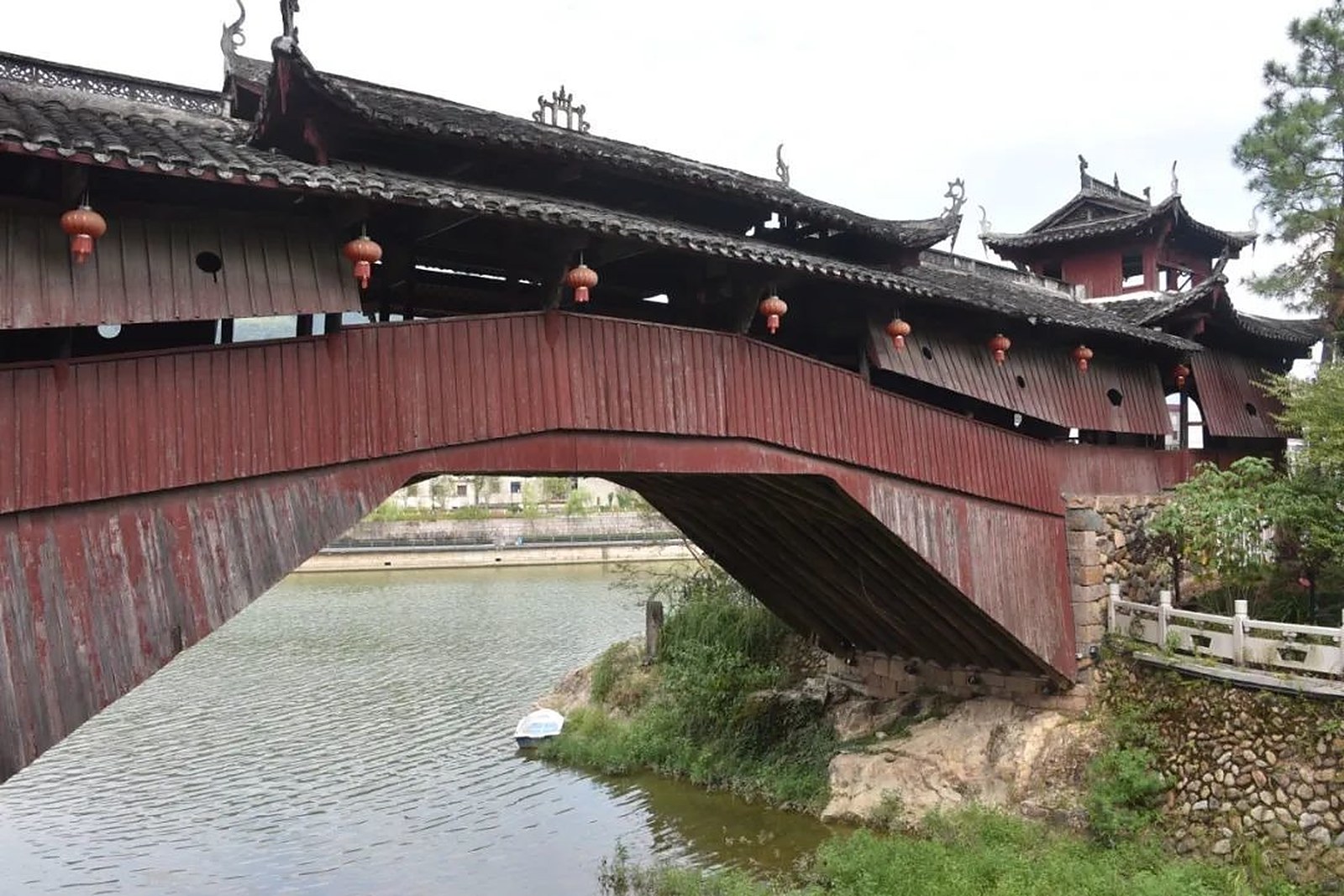
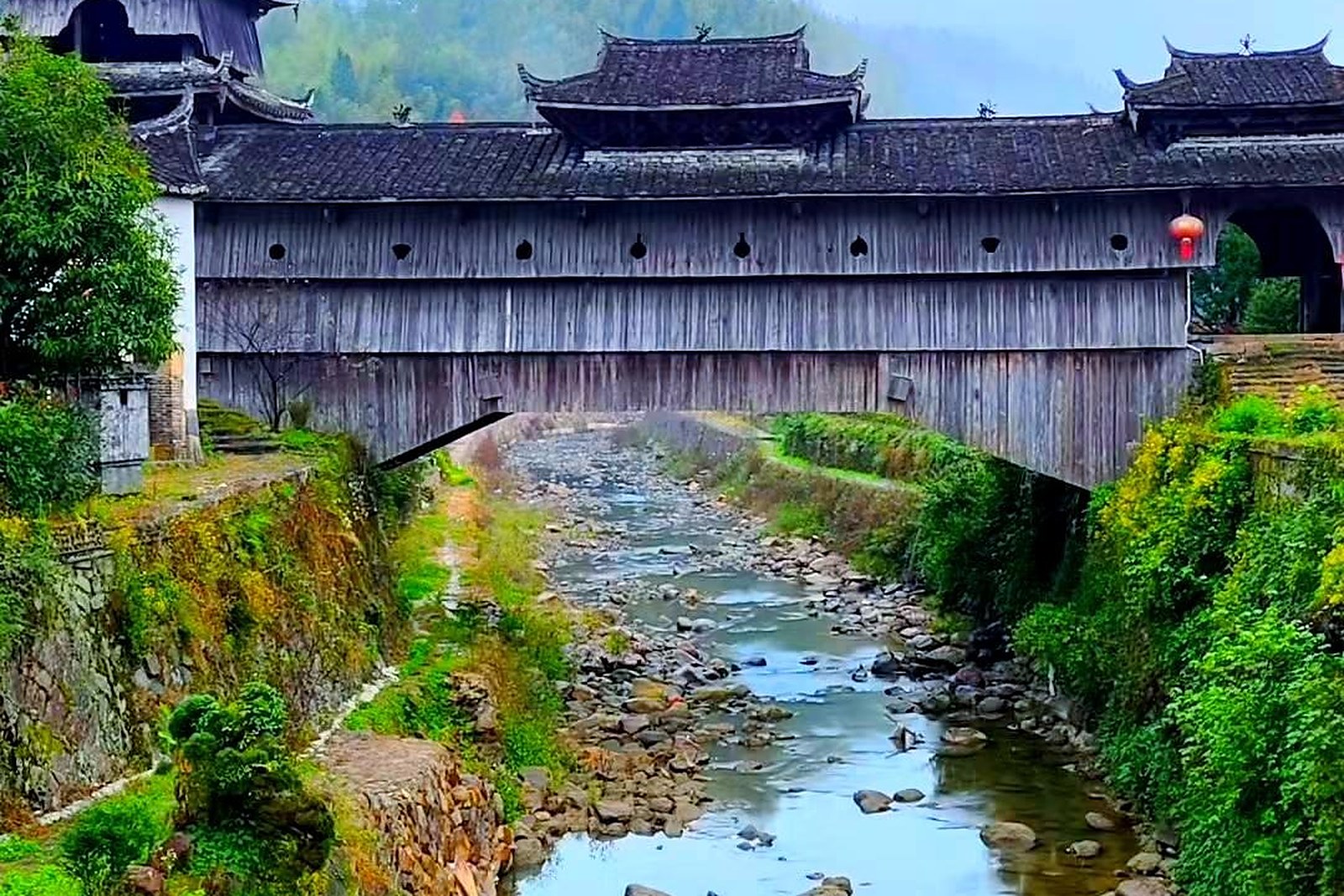
正文:庆元廊桥 Qìngyuán Lángqiáo the lounge bridges of Qingyuan county make it China’s capital of covered bridges – roughly a hundred survive across the forested valleys around 丽水市 Lìshuǐ Shì Lishui City, from slender wooden trestles to the great woven timber arches that span rivers without a single nail-driven pier. The masterpiece is 如龙桥 Rúlóng Qiáo the Rulong Bridge at Yueshan village, dated 1625 and among the oldest securely-dated timber arch bridges on earth: its interlocking pine weave flexes under load the way a basket flexes, a technique now listed as national intangible heritage. Bridges here were never just crossings – the enclosed walkway offered shelter from mountain rain, benches for gossip, altars for the local god, and on market days a whole moving fair. 兰溪桥 Lánxī Qiáo the Lanxi Bridge arches broad and low over its reservoir cove; town-side, 咏归桥 Yǒngguī Qiáo spans at the county seat’s front door.
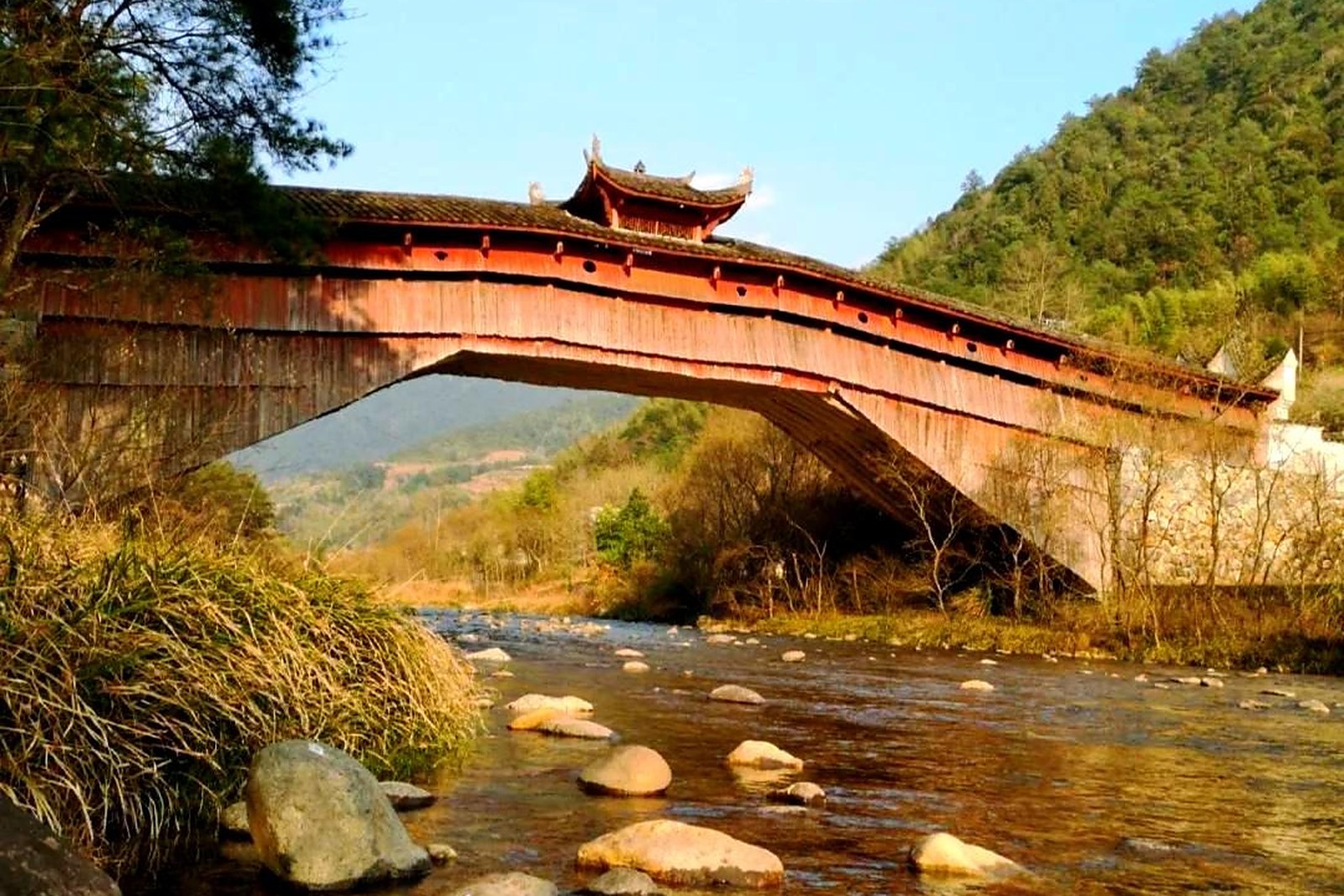
Rulong Bridge is the pilgrimage: a great knuckled timber arch with a tiled gallery riding it, dated 1625 in ink on its own beams, standing at the head of Yueshan village’s lotus ponds. Step inside and the bridge becomes a room – benches worn smooth, the river running visible between the floorboards’ shadow gaps, names of donors listed on the wall since the Ming.
The craft is the deeper sight: carpenters weave the arch from layered pine chords in long interleaving finger-joints, raising it by leverage without scaffolding – and the county’s inheritors still demonstrate the weaving at the bridge museum in town. A covered bridge is furniture-scale engineering, readable from a bench seat in a way no steel span ever is.
Make it a bridge day-trip: start at the county-town 咏归桥, drive the valley road that strings Langxi and the upstream spans, and end at Yueshan village for Rulong at sunset when the lotus ponds go copper. The bridges anchor village squares – tea, tofu and gossip are always in supply, and rain, the bridges’ oldest customer, only improves the visit.
Practicalities
Beyond the roofed crossings, the same 丽水市 Lìshuǐ Shì Lishui City keeps more places worth the detour: 缙云仙都 Jìnyún Xiāndū the stone pillar of Xiandu, 云和梯田 Yúnhé Tītián the mirror terraces of Yunhe, 松阳古村落 Sōngyáng Gǔcūnluò the golden villages of Songyang, or 遂昌金矿 Suìchāng Jīnkuàng the gold-mine tunnels of Suichang – four more doors into the same 丽水市 Lìshuǐ Shì Lishui City. Once the bridges have walked you across, our Lishui food map fills the table.
Practicalities
Words and Names
flowcloud would say Qingyuan keeps its rivers in furniture: pine arches woven like baskets, galleries that have hosted gods and gossip for four centuries, and a craft that shelters you best exactly when the rain arrives. All checked November 2026.
Getting there: Qingyuan county is the far southwest of Lishui, about two hours by road – the bridges stand in and around the county town (Yonghe Bridge at its park, Lanxi Bridge up the valley), most are free to walk, and pairing two or three in a day makes the classic bridge run. All checked November 2026.