
The Canal Town That Rows to Church: Qintong, Jiangyan
灰砖巷深藏宋茶,会船鼓动千年潮 Huīzhuān xiàng shēn cáng Sòng chá, huìchuán gǔ dòng qiānnián cháo – Deep in grey-brick lanes hides a Song camellia; the boat-festival drums stir a thousand-year tide
正文:溱潼古镇 Qíntóng Gǔzhèn Qintong Ancient Town is the canal town that grew rich on the lake beside it – a grid of grey-brick lanes, courtyard houses and waterside pavilions in 姜堰区 Jiāngyàn Qū Jiangyan District, threaded by the channels that link it to 溱湖 Qínhú Qinhu. The town’s pedigree is written in its survivors: a Song-dynasty 山茶 shānchá camellia still flowers in a courtyard off the main lane, the old shops still sell the lake’s fish cakes and shrimp balls, and the door lintels carry the carved couplets of merchant families who shipped rice, timber and salt through these canals for a thousand years. Qintong is also the home port of the 会船 huìchuán boat-gathering – the spring festival that turns the lake into a regatta – and the town’s boathouses store the racing craft the villages bring out each Qingming, oars stacked like weapons in an armoury.
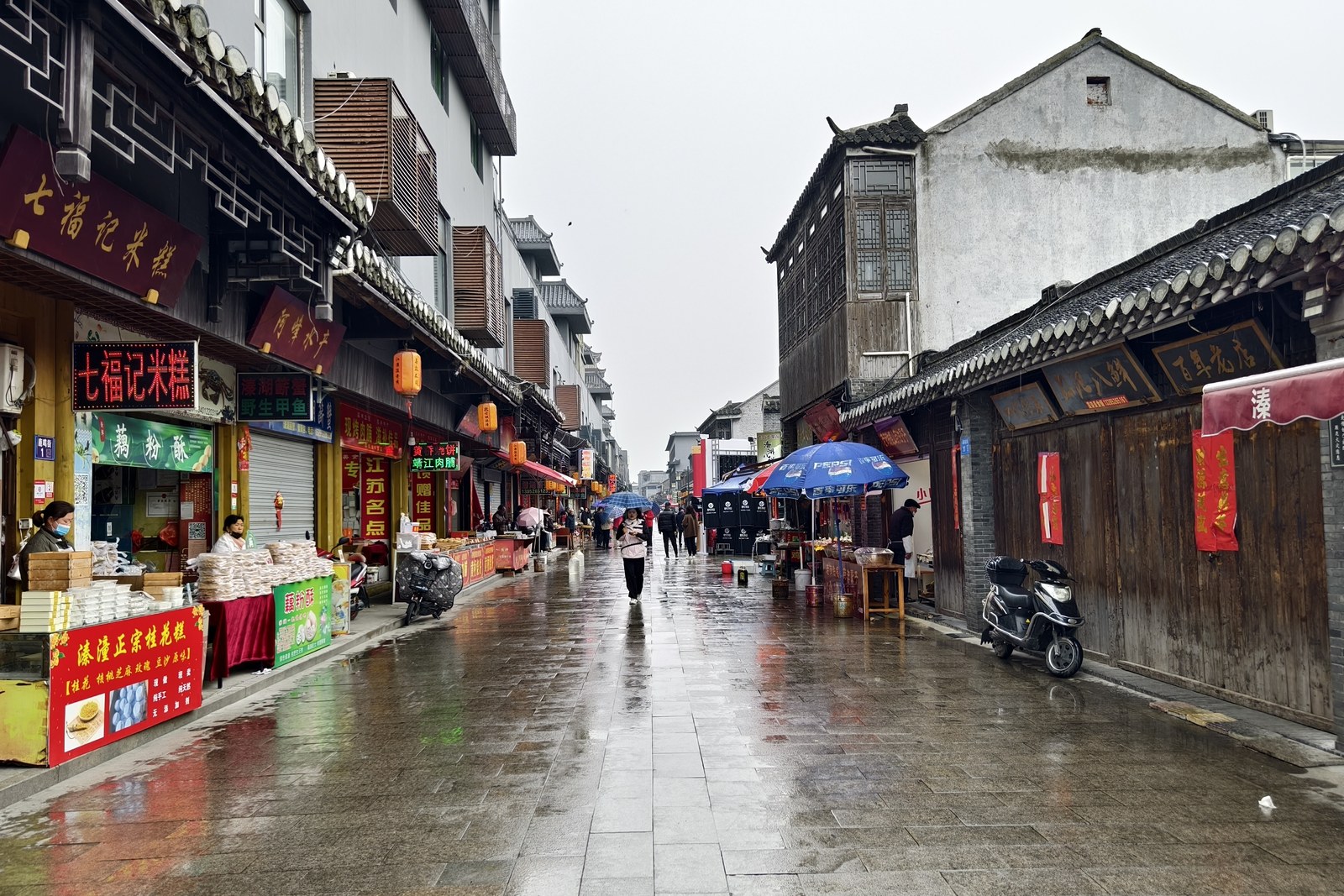
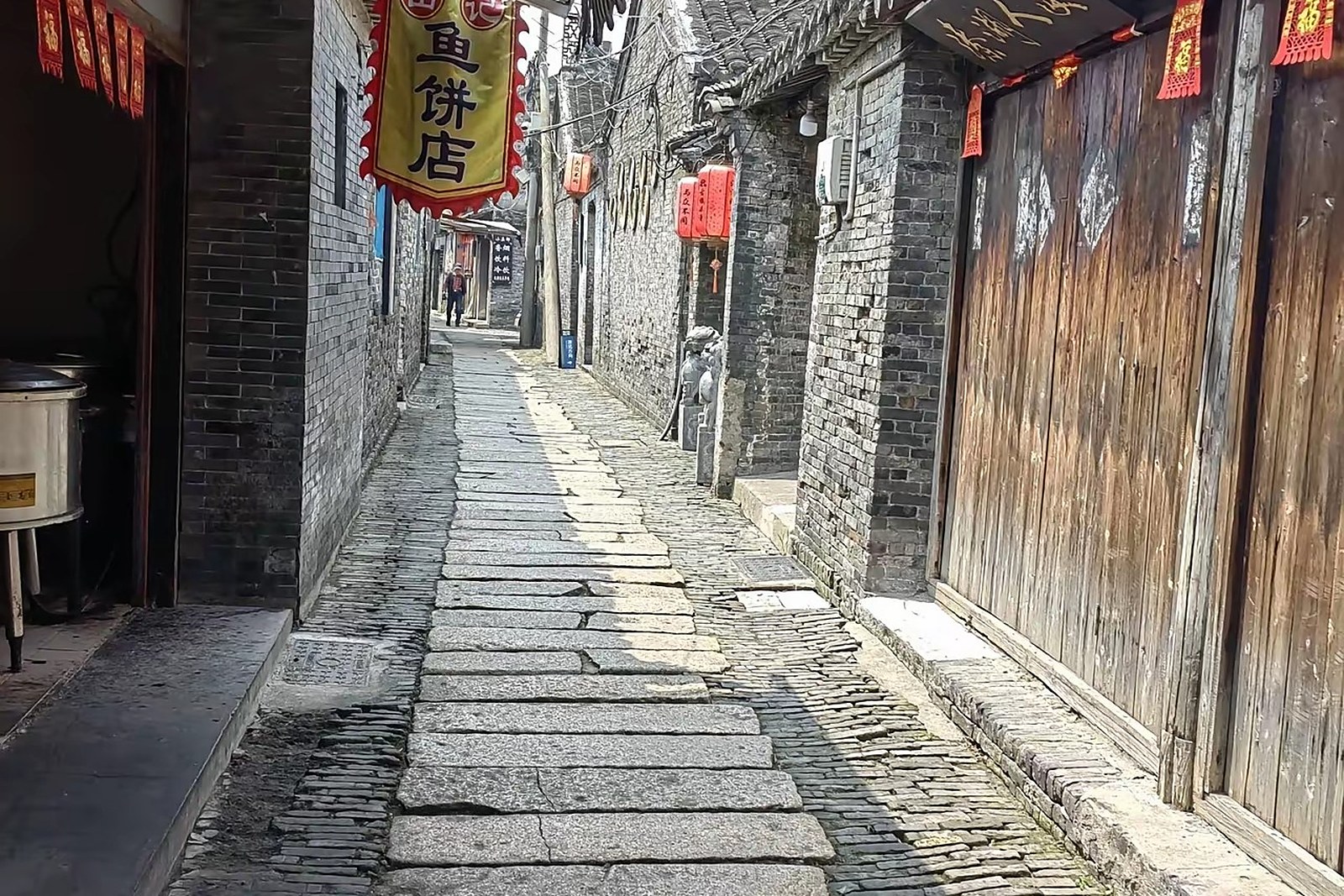
The lanes are the town. Rain-washed flagstones, grey brick laid in basket-weave panels, timber shopfronts whose hand-painted signs advertise the lake’s cooking – the wet hours are the honest hours, when the town looks least arranged and the smell of fish cakes and frying batter runs down the gutters. The old shops still trade: rice wine, bean curd, the lake’s dried shrimp in jars by the door.
Food is the town’s second architecture. The lane kitchens sell 溱湖鱼饼 Qínhú yúbǐng Qinhu fish cakes and shrimp balls fried to order, the morning-tea houses pour the same shredded-tofu gansi as the city, and every menu leans on the lake – the eight freshes of Qinhu arrive here fresher than anywhere downstream. The courtyard houses hold the town’s smaller treasures: the Song camellia, the ancient well heads, the study courtyards of scholars who rowed to the county exams.
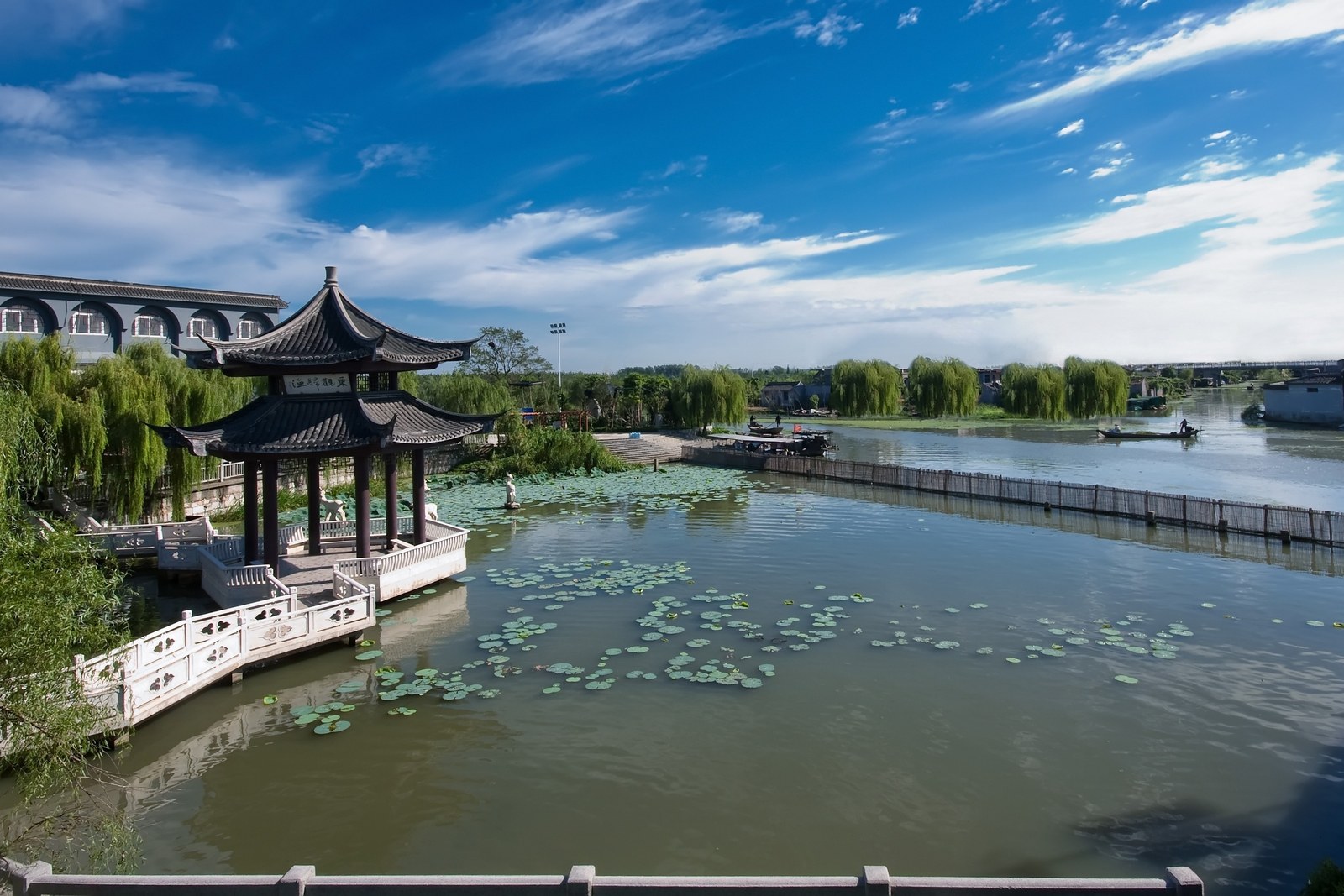
The water side is the postcard. Pavilions on stone terraces face the lotus ponds, the 砖桥 zhuānqiáo brick bridges frame the channels, and the eastern water gate opens onto the lake roads the festival fleets row each spring. Come at festival time if the crowds appeal; otherwise the town is quietest on weekday mornings, when the mist lifts off the canals and the only traffic is a pensioner poling a flat-bottomed skiff under the arches.
Practicalities
Beyond the canal town, the same 泰州市 Tàizhōu Shì Taizhou City keeps more places worth the detour: 溱湖 Qínhú Qinhu Wetland the reed-and-deer park next door, 凤城河 Fèngchéng Hé Fengcheng River the old-town moat, 乔园 Qiáo Yuán Qiao Garden the Ming scholar garden, or 李中水上森林 Lǐzhōng Shuǐshàng Sēnlín Lizhong Water Forest the flooded cypress in Xinghua – four more doors into the same 泰州市 Tàizhōu Shì Taizhou City. Once the lanes are walked, our Taizhou food map fills the table.
Practicalities
Words and Names
flowcloud would say Qintong is what a canal town looks like when it never needed to impress anyone: grey brick, fish cakes, a thousand-year camellia, and a boat shed full of racing oars waiting for spring. All checked November 2026.
Getting there: The old town lies in Jiangyan beside the wetland – twenty minutes by taxi from central Taizhou, free to wander with individual courtyards ticketed, and the lanes, tea houses and the ancient camellia take two or three unhurried hours. Pair it with Qinhu park next door. All checked November 2026.