
Qiuxiapu Garden: One of Shanghai’s Five Great Classical Gardens, Three Ming-Era Family Gardens and a City God Temple Merged into One Compound of Yellow-Stone Rockeries, Clear Ponds and Ancient Trees at East Street 314 in Jiading District, Shanghai
三园一庙融秋色,古木清池入画屏。Sān yuán yī miào róng qiūsè, gǔmù qīngchí rù huàpíng – Three gardens and a temple melt into autumn colour; ancient trees and clear ponds step into a painted screen.
秋霞圃 Qiūxiápǔ Qiuxiapu Garden is not a single rich merchant’s vanity — it is, plainly put, three gardens and a temple folded into one compound: the garden opens at 东大街 Dōngdà Jiē East Street 314 in 嘉定镇 Jiādìng Zhèn Jiading Town, and its name — “Autumn Sunset Garden” — barely covers the ambition, because what stands here is a landscape assembled from the 龚氏园 Gōng Shì Yuán Gong Family Garden, the 沈氏园 Shěn Shì Yuán Shen Family Garden, the 金氏园 Jīn Shì Yuán Jin Family Garden and the grounds of the adjacent 城隍庙 Chénghuáng Miào City God Temple, unified over the Ming era into one of the five great classical gardens of Shanghai. The compound reads less like a designed estate than a small town of walls, courts and water, its Ming-era layout preserved in the seams where one garden ends and another begins. What you actually visit is a scholar’s enclave where families, faith and art have agreed to share one set of gates.
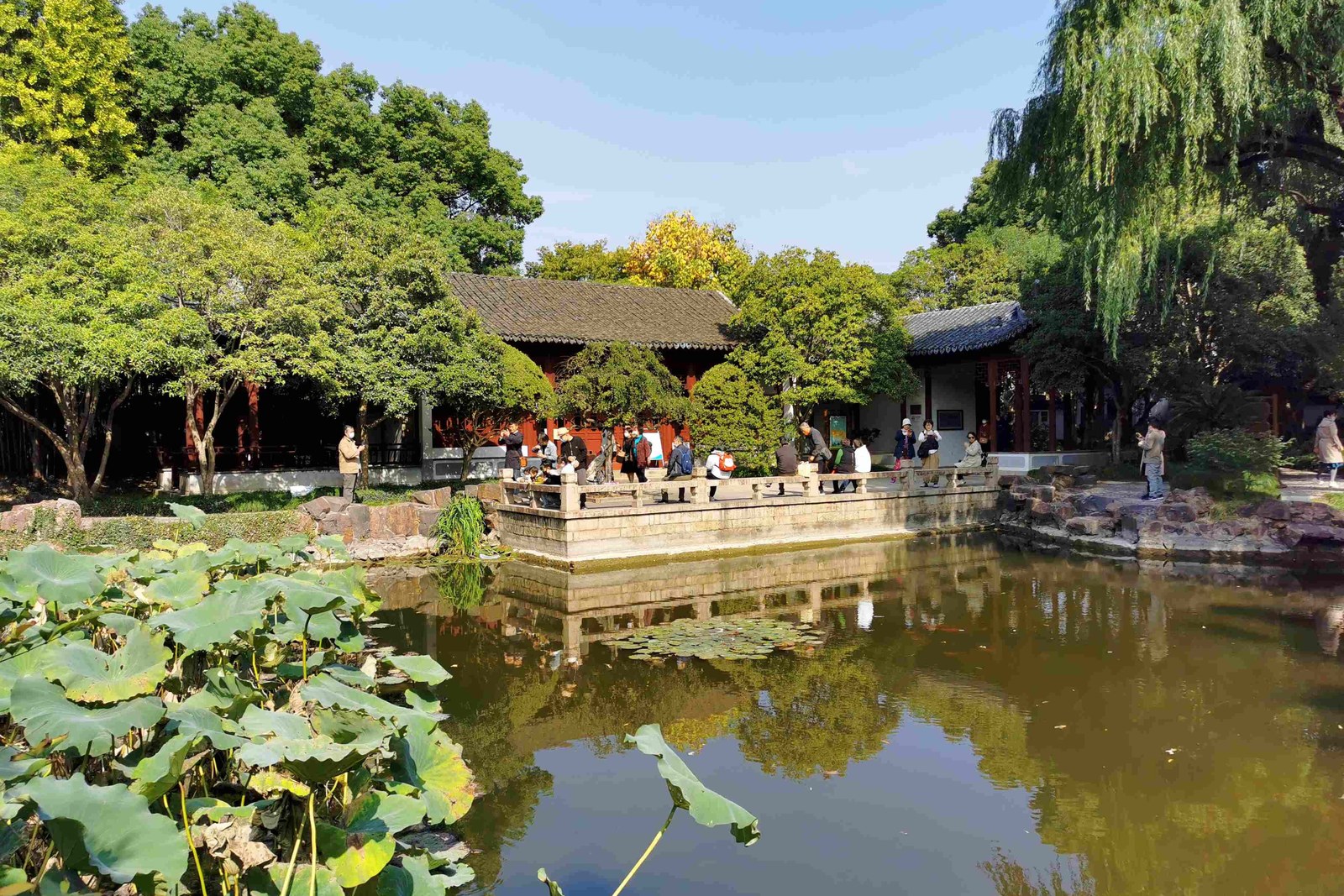
Call it honestly: the garden keeps modest entry ticketing and fixed seasonal hours (worth confirming the details for current admission prices and opening times before you set out), and the 嘉定城隍庙 Jiādìng Chénghuáng Miào Jiading City God Temple stands directly beside the garden, keeping its own incense, its own rhythm and possibly its own door (worth confirming the details for temple opening hours and any festival schedule), so a garden ticket and a temple visit are neighbours rather than one purchase. Metro Line 11 to 嘉定北站 Jiādìng Běi Zhàn Jiading North station, then a short bus or taxi ride, delivers you to the old town’s lanes. The honest warning is scale: this is an intimate garden, compact beside the city’s famous estates, so travellers expecting half-day labyrinths find an hour’s slow circuit instead — and the circuit repays repetition more than distance. Autumn is the season the name promises, when red leaves set the ponds alight; green spring and summer suit the stones. Give it one unhurried hour, two if you cross into the temple.
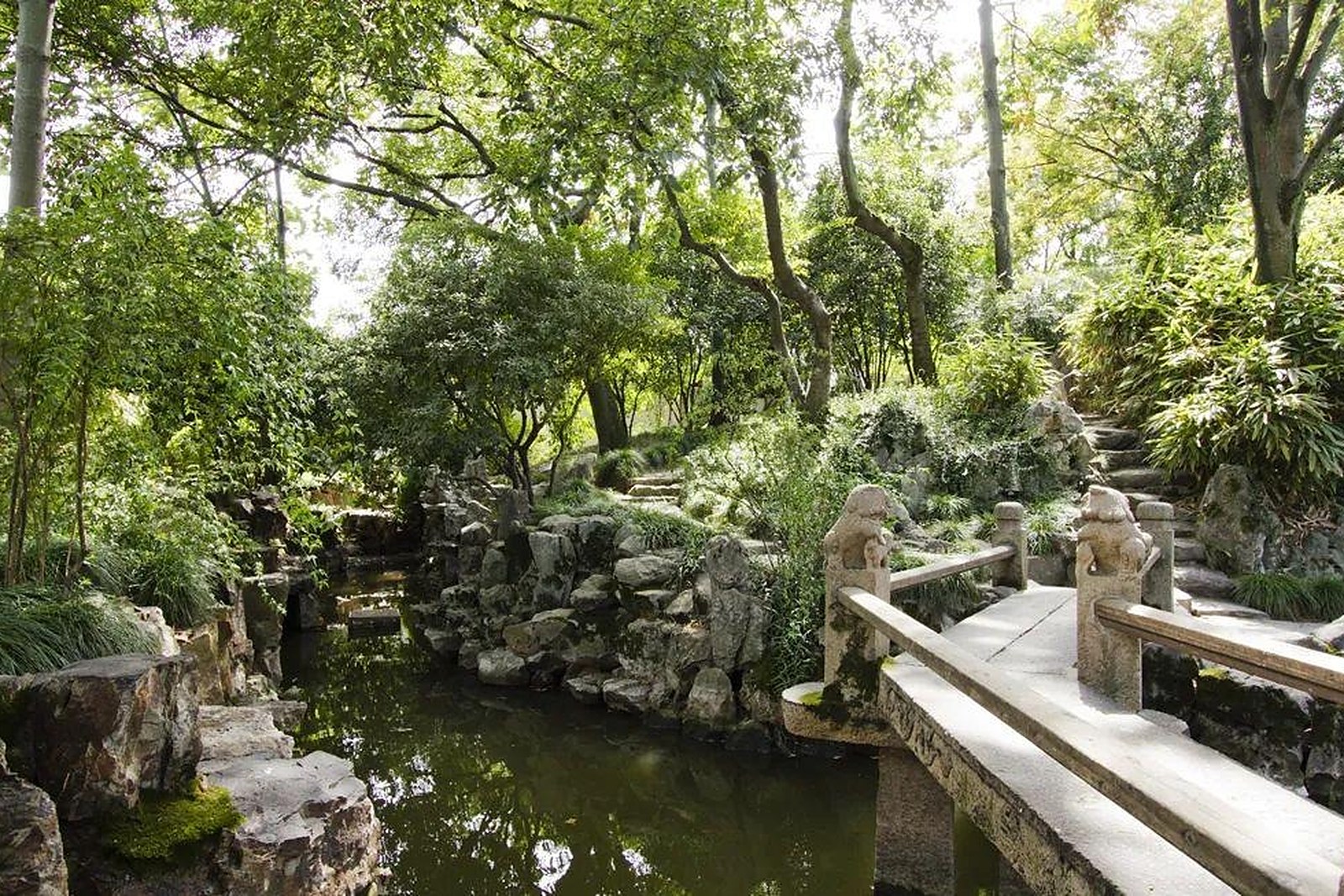
The honest star is the 黄石假山 huángshí jiǎshān yellow-stone rockery — heavy, angular blocks stacked into hills and caves above 清水池塘 qīngshuǐ chí táng clear-water ponds, the kind of stone-work Ming hands built and modern hands cannot quite fake. What gets oversold is the autumn colour itself: the red-leaf weeks are genuinely famous among Shanghai photographers, but posters imply the whole garden burns at once, while the colour really gathers in corners and the best gate collects the queues (worth confirming the details for the current foliage forecast and any peak-season flow control). What repays the effort is the joinery of the place: covered walkways that turn a corner and hand you another family’s garden, 古树名木 gǔshù míngmù ancient trees whose plaques read older than whole nations, and temple bells drifting over the wall at odd hours. Trace the boundaries where 龚氏园 Gōng Shì Yuán meets 沈氏园 Shěn Shì Yuán and 金氏园 Jīn Shì Yuán, and the compound’s centuries-old argument reveals itself. Come for the layering of the place: rock, then water, then the seams between gardens.
The self-aware postscript: I was following a red leaf’s descent beside the rockery one November morning when a painter with a folding stool volunteered the local view. “People come for two weeks of red and photograph the same corner,” she said, mixing pigment, “but I paint here all year — three families agreed to share a wall, and that courtesy is the real masterpiece”. That is the visit in miniature. From the pond bank, looking back through branches at rockery, hall roof and temple eave stacked in one frame, the compound holds its whole idea visible — separate estates grown into a single landscape. 秋霞圃 Qiūxiápǔ suits whoever treats it as a Ming-era scholar’s compound to be walked slowly first and an autumn photo destination second, and disappoints anyone expecting grand lakes, boat piers and festival stages. Nearly everything else on this Jiading list lies within a short ride: the examination scrolls of 嘉定孔庙 Jiādìng Kǒngmiào Jiading Confucian Temple wait on 南大街 Nándà Jiē Nan Avenue 183, the bamboo and lotus of 古猗园 Gǔyī Yuán Guyi Garden open in 南翔镇 Nánxiáng Zhèn Nanxiang Town, and the twin pagodas of 南翔老街 Nánxiáng Lǎojiē Nanxiang Old Town stand on the same Metro Line 11 — all inside the same 嘉定区 Jiādìng Qū Jiading District whose quietest masterpiece this garden keeps.
Practicalities
- Rating: ★★★★☆ — a Ming-era compound of three gardens and a temple that rewards slow repetition; come for the red-leaf weeks, and stay for the seams between gardens.
- Tickets: Modest garden entry with the city god temple next door kept separate (worth confirming the details for current prices and hours).
- Address: 秋霞圃 Qiūxiápǔ, 东大街 Dōngdà Jiē East Street 314, 嘉定镇 Jiādìng Zhèn Jiading Town, 嘉定区 Jiādìng Qū Jiading District, Shanghai — from Jiading North station on Metro Line 11 plus a short bus or taxi hop.
- Time needed: One unhurried hour for the garden; two if you cross into the temple.
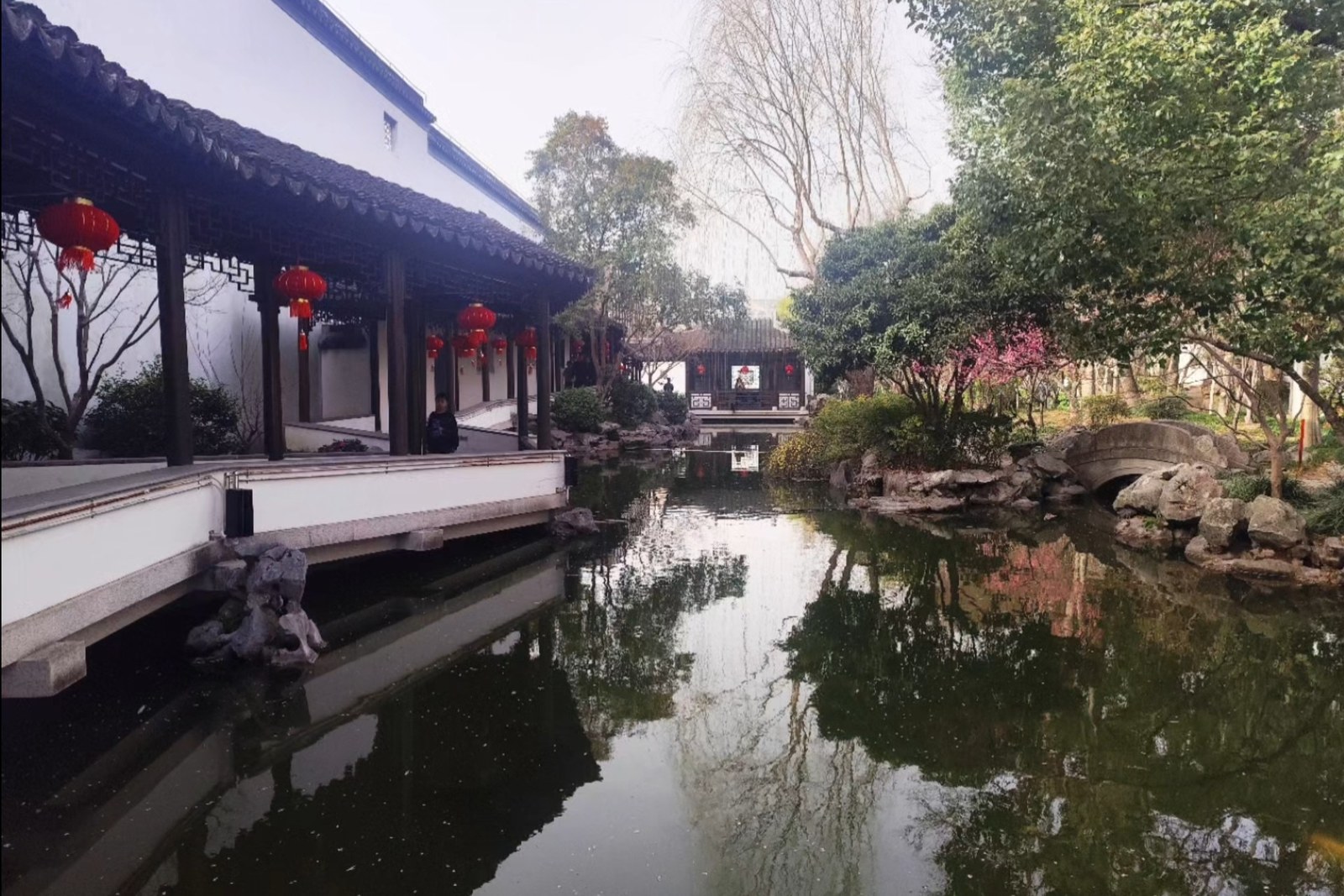
Words and Names
秋霞圃 Qiūxiápǔ Qiuxiapu Garden, “Autumn Sunset Garden” · 龚氏园 Gōng Shì Yuán Gong Family Garden · 沈氏园 Shěn Shì Yuán Shen Family Garden · 金氏园 Jīn Shì Yuán Jin Family Garden · 嘉定城隍庙 Jiādìng Chénghuáng Miào Jiading City God Temple, next door · 黄石假山 huángshí jiǎshān yellow-stone rockery · 清水池塘 qīngshuǐ chí táng clear-water ponds · 古树名木 gǔshù míngmù ancient famous trees · 东大街 Dōngdà Jiē East Street 314 · 嘉定北站 Jiādìng Běi Zhàn Jiading North station, Metro Line 11 · 嘉定区 Jiādìng Qū Jiading District
flowcloud would say that 秋霞圃 Qiūxiápǔ is the most quietly complicated garden in Shanghai — a compound at 东大街 Dōngdà Jiē East Street 314 in 嘉定镇 Jiādìng Zhèn Jiading Town where the 龚氏园 Gōng Shì Yuán Gong Family Garden, the 沈氏园 Shěn Shì Yuán Shen Family Garden, the 金氏园 Jīn Shì Yuán Jin Family Garden and the 嘉定城隍庙 Jiādìng Chénghuáng Miào Jiading City God Temple were folded together over the Ming era into one of the city’s five great classical gardens, its 黄石假山 huángshí jiǎshān yellow-stone rockery stacking hills above 清水池塘 qīngshuǐ chí táng clear ponds, its 古树名木 gǔshù míngmù ancient trees out-ranking whole city blocks, and its red-leaf autumn famous among photographers citywide (worth confirming the details for current entry prices, temple hours and the foliage forecast before you go) — and that the honest move is a slow weekday circuit entered through 嘉定北站 Jiādìng Běi Zhàn Jiading North station on Metro Line 11, because the grand-estate expectation is the poster half and the seams between three family gardens, the temple bells over the wall and the courtesy of shared courtyards are the real half, and the garden repays whoever walks it twice. All checked October 2026.
Getting there: Metro Line 11 to 嘉定北 Jiādìng Běi Jiading North station, then a short ride to the garden gate on 东大街 Dōngdà Jiē East Street 314 (worth confirming the details for chrysanthemum-season entry rules, which the garden announces each autumn); the rockeries and ponds hold the Ming-era layout. All checked October 2026.