
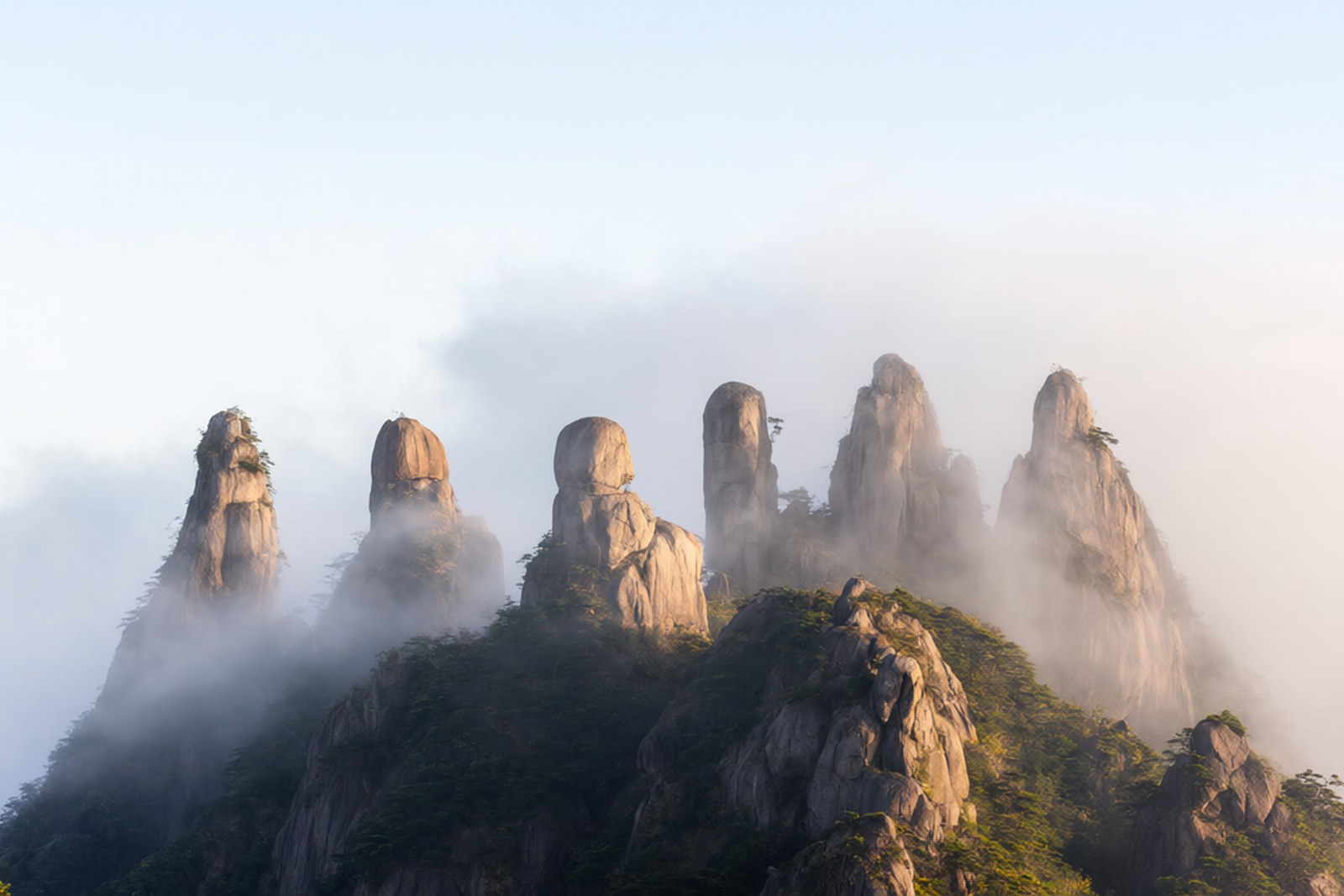
Qixianling Hot Spring National Forest Park stands northeast of the county seat at Baocheng, seven to nine kilometres out, and covers about 2,200 hectares split between a forest zone and a hot-spring zone. The name means Seven Fairy Ridge, and it describes the shape precisely: seven granite peaks rising from a single massif like fingers held up against the sky. The park has been a national forest park since 1998 and was rated a national 4A scenic area at the end of 2016 – Hainan’s only new 4A that year. The highest of the seven peaks reaches about 1,126 metres, and the summit view is described by the park in five verbs: look, watch, gaze, survey and bow, the last reserved for the peaks themselves.
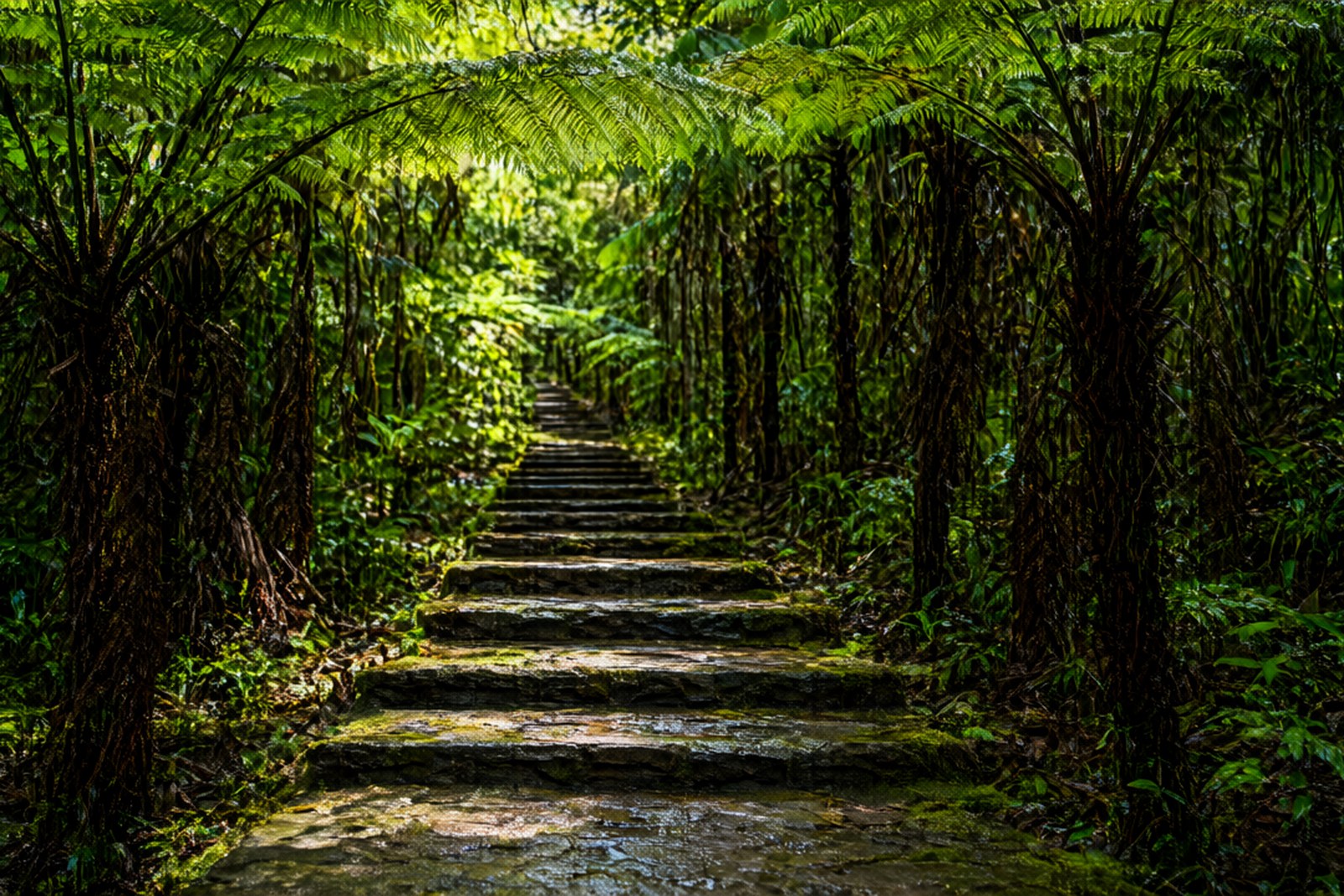
The climb is the reason most visitors come, and it is more engineered than its wild look suggests. A stone-flagged trail runs about 2,300 metres to the top in some 3,770 steps, and a separate timber boardwalk of about 850 metres crosses the lower slopes. Near the 700-metre mark the stone path passes a stand of tree ferns – Alsophila, a living fossil protected at the national first class, with trunks running to more than nine metres and a lineage that reaches back to the age of the dinosaurs. At the end of the stone trail an eighty-metre rock face with fixed chains and a gradient near seventy-five degrees treats the final push as a scramble rather than a stroll, and the park is frank that the seven peaks are climbing country.
From the top the compass opens in every direction. North the view reaches Wuzhishan, east toward Diaoluo mountain and west toward Maogong mountain, and on a clear day the sea and the layered forest, cloud and fog below are all part of the prospect. The rainforest the peaks stand in is one of the few well-preserved tropical patches left on Hainan island; thousands of plant species are recorded here, including Hainan rosewood, tree ferns and the notorious antiaris, the see-blood-seal-throat tree of legend. Species counts in the sources run from a few hundred to several thousand depending on how the survey was drawn, so the safe reading is simply that this is dense, old, wet forest with more species than any walker will notice.
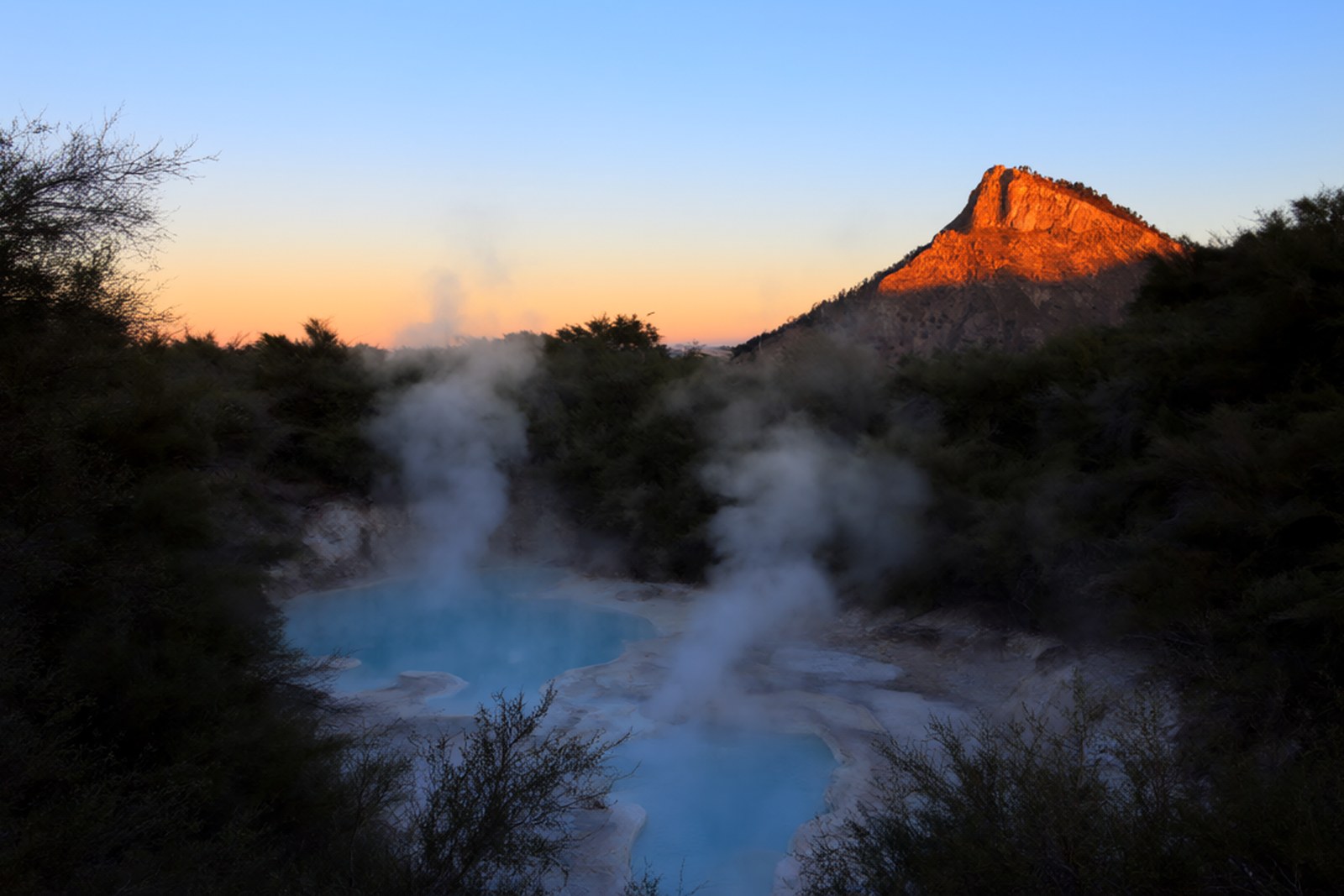
The hot springs below are what most overnight guests come for, and their reputation rests on temperature. Official accounts put the source water at up to 95 degrees Celsius, others at 93, so the honest range is 93 to 95 degrees at the source; it is a silicate-bicarbonate-sodium type, described as a composite high-temperature mineral spring, and the county calls it artesian – self-flowing, without pumping. The daily yield is quoted as more than 3,800, though the sources disagree on whether the unit is tonnes or litres, and People’s Daily reporters working on the water-splashing festival have noted that the spring runs hot enough to cook an egg. One wiki-based listing gives 47 vents across a 1.72-square-kilometre field, a figure no official source carries, so treat it as an enthusiast’s count. In the week before the Qixian water-splashing festival, Li village elders draw the festival’s sacred water at dawn from the spring source along the mountain path, a ritual that ties the geothermics to the calendar.
Plan the day in two halves. Climb in the morning, when the mists that give the peaks their nickname are still moving between the fingers, and soak in the afternoon. Guides suggest two to three hours for the stair trail at a steady pace, and the 3,770 steps are the honest reason for the estimate. The dry season from November into April is the best window; the lunar seventh-month water-splashing festival in July or August is the liveliest but the busiest. Rooms and pool rates along the resort strip are a separate subject and belong to this site’s hotels guide – what matters here is that the trailhead, the springs and the peaks are all one park, reachable from the resort road.
Practicalities
Tickets. No unified ticket price is published for the park or the spring zone, and there is no official gate price to quote. The forest trails are reached from the hot-spring resort strip, where soaking is charged by the individual hotels at their own rates. Checked October 2026, and best verified on site before you go.
Opening hours. The park publishes no uniform timetable. The outdoor trails follow daylight, and the hotel springs keep the hours of their own properties, so check with wherever you are staying.
Closing day. There is no closing day. The park has no rest day, and the only seasonal rhythm is the dry-season window and the festival crowds.
Getting there. By car, leave the Shanhai Expressway at the Baoting interchange, cross Baocheng and follow the road northeast; the park entrance is about ten to fifteen minutes beyond town, and the expressway exit is within roughly twelve kilometres. The Sanya intercity bus line 1 ends at Qixianling Hot Spring National Forest Park itself, running from Sanya Railway Station from about 07:00 to 16:30, which makes it the one major county sight reachable from the coast by public transport without a car.
flowcloud would say that Qixianling is the county’s hot heart – seven granite fingers holding up a rainforest, a spring that boils an egg and a ritual that draws its water at dawn – and that few parks let you climb a mountain and soak in one afternoon.
Getting there: Qixianling Hot Spring National Forest Park stands seven to nine kilometres northeast of Baocheng, Baoting Li and Miao Autonomous County, Hainan, about ten to fifteen minutes beyond town and roughly twelve kilometres from the Shanhai Expressway exit; there is no published unified ticket (the resort hotels charge for their own spring pools), no published hours and no closing day, and the Sanya intercity bus line 1 terminates at the park (checked October 2026, subject to change).