
Qizi Bay, Pebbles and Sunsets on Hainan’s Dry West Coast
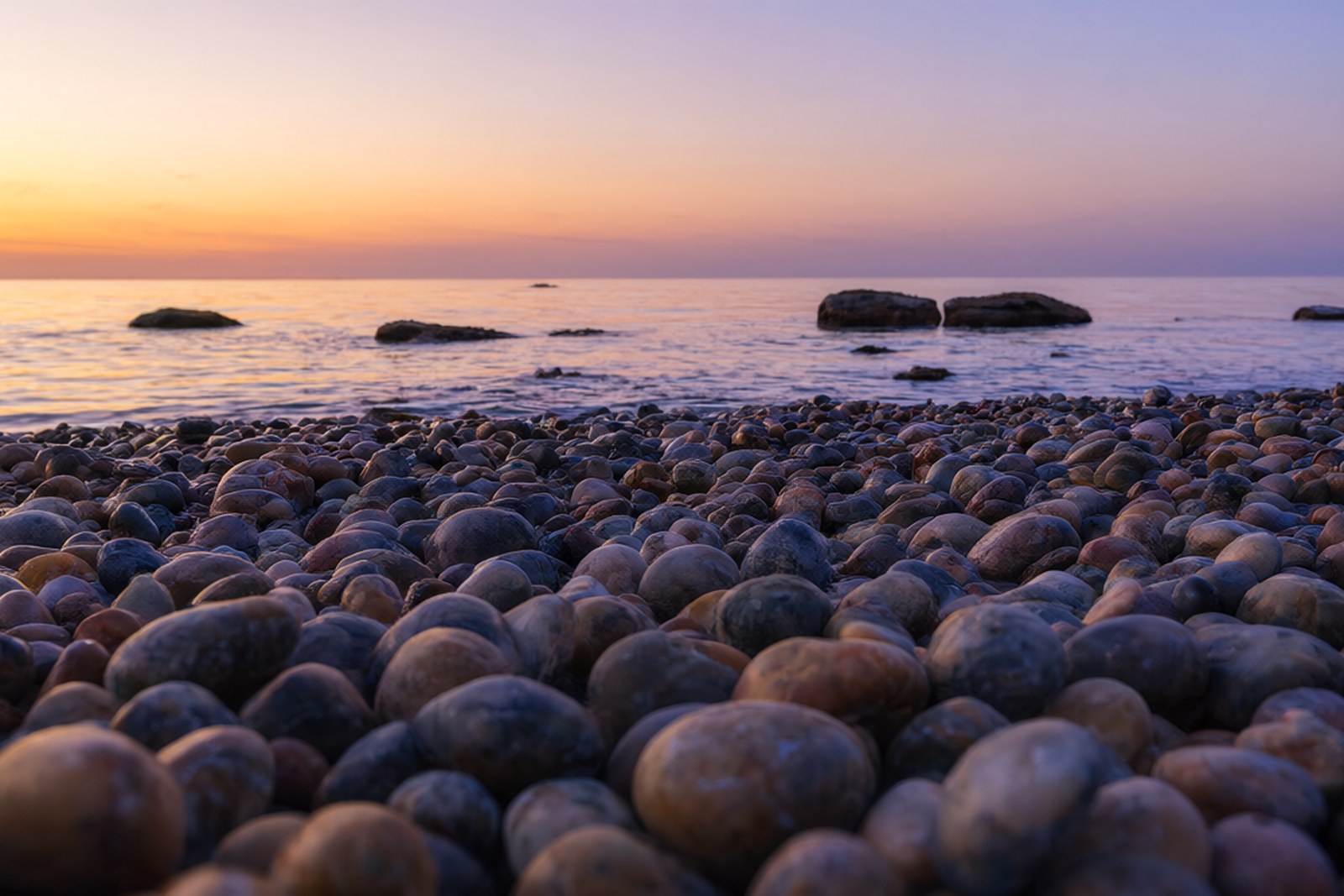
棋子湾 Qí zi wān lies on the western coast of 昌江黎族自治县 at 昌化镇 Chāng huà zhèn, part of it reaching toward 海尾镇, facing the Gulf of Tonkin across water that on the island’s dry western side is often strikingly clear. The name comes from what is underfoot: pebbles the sea has polished round and smooth over centuries, mottled in colours that made someone think of Go stones. The bay bends in an S through three reaches, on a shore the official tourism releases put at about 20 km – platform writers, measuring differently, give 13 and more – and behind it the rain shadow does its work, laying down broad sheets of coastal sand that give the west coast its byword: ten thousand mu of desert fallen to the sea.
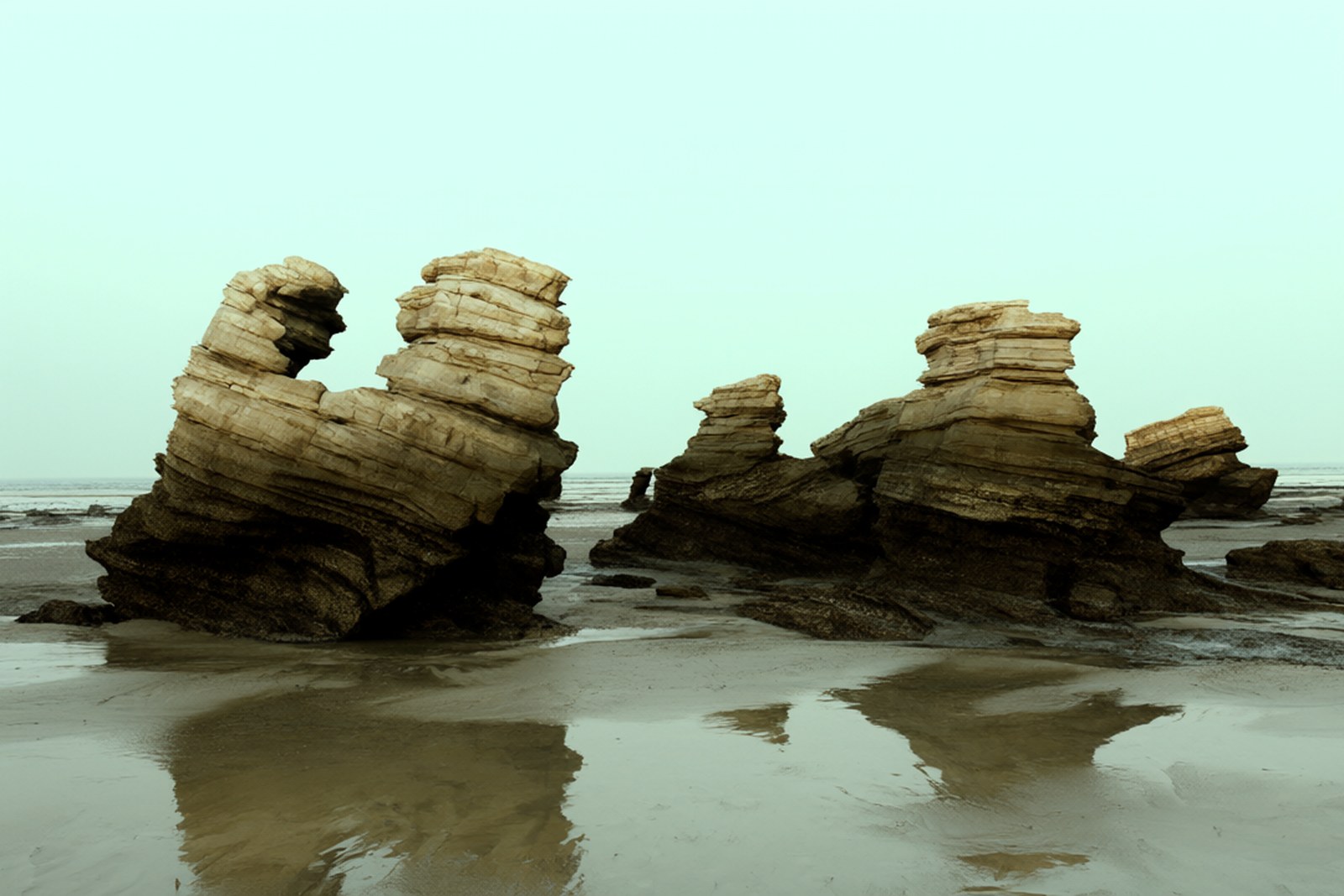
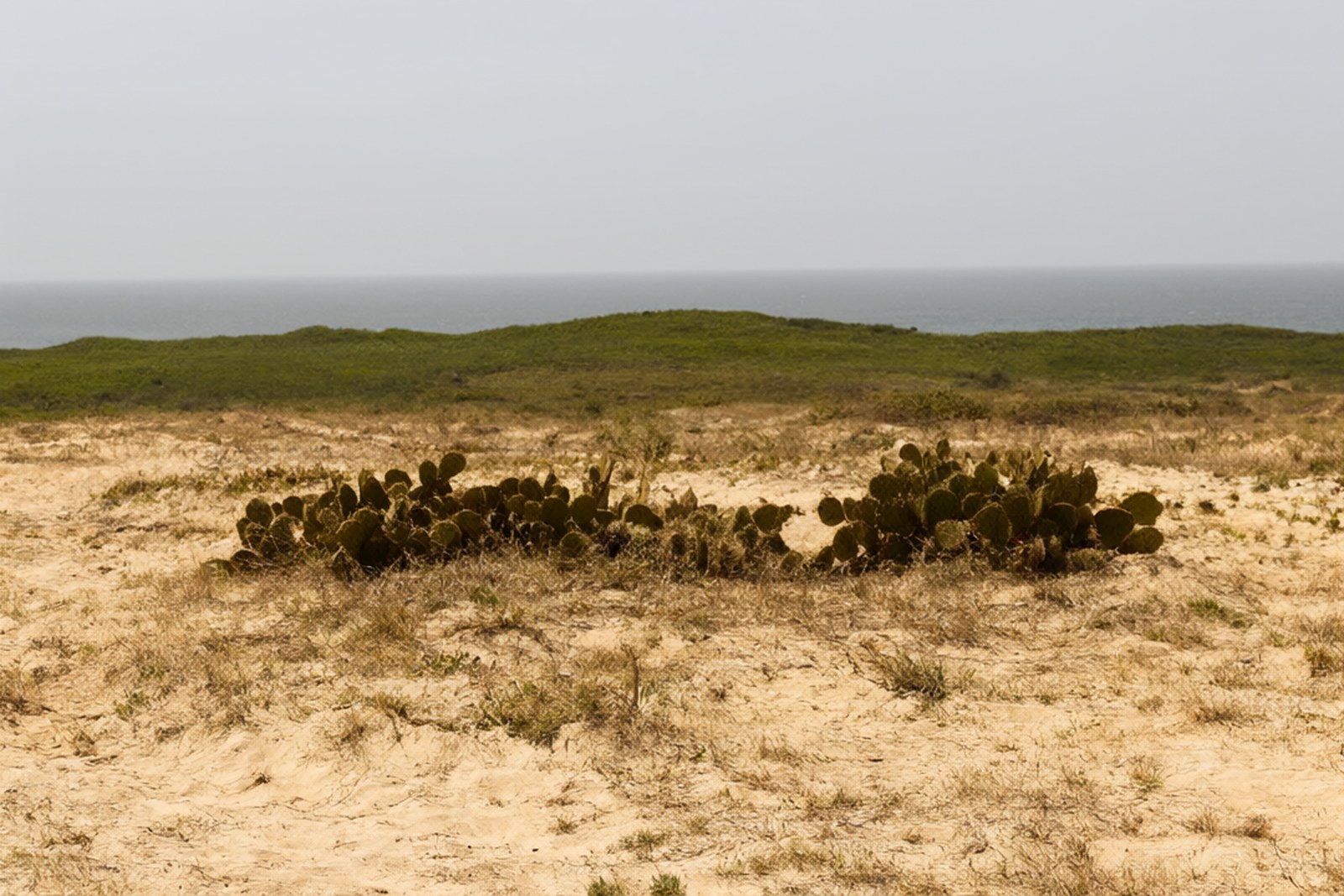
The three reaches divide the day neatly. 大角 Dà jiǎo, the great corner, has the widest sand, a boardwalk along the water and thick stands of wild cactus above the beach. 中角 Zhōng jiǎo is where the sea has carved longest: a forest of eroded rock stacks with names like the Sail Rock and the Turtle Scouting the Sea, twenty-odd shaped forms in all, with the tide out there is beachcombing among the pools. 小角 Xiǎo jiǎo, the little corner, faces northwest up the gulf and is the sunset point the west coast is known for. The stone sets have their own catalogue – the great and little Qizi-blue coves, the Great Corner stone forest, the Sail Rock, the Husband-and-Wife rocks – and a legend, told by guides rather than gazetteers, that immortals once played Go on this shore and dropped their stones into the water.
The bay has been a project for a decade and its paperwork is worth reading. The resort zone was planned at 46.2 square kilometres with a first phase of 25, and the infrastructure bill ran to nearly a billion yuan for eleven roads and a water plant. In 2016 local-government releases approved a national marine park here of 6,021 hectares; the Kaiyuan resort opened as the first high-end bed on the west line; in 2023 the province listed the bay among its beautiful bays, and in 2024 the ecology ministry named it an excellent case in the country’s third batch. The 5A scenic-area rating and the provincial resort title on the hoardings are planning targets, not facts yet – the park is still being built out, with special bonds still being raised in 2025.
Then there is the game. A bay named for Go stones has made Go its festival sport: the Qiziwan Cup open tournaments run year after year with student beach volleyball alongside; in 2024 the bay hosted the quarterfinals and semifinals of the fifteenth Chunlan Cup world championship; and on 4 January 2026 the thirty-ninth Wanbaobei, the national amateur championship founded in 1988, opened here with fifty-five teams and one hundred and sixty-five players, fourteen of them eighth dans, the largest field in the event’s history. The 2026 calendar keeps the pattern: a seniors’ Go open at the end of February, kapok-festival pop-ups in early March, and a stage of the island-loop cycling tour in mid-March, tentative at the time of writing.
What the bay is really for, though, is light. This is the driest coast on the island, the sand sheets run down to the water, and the sunset window – roughly 17:30 to 19:00 in season, on media figures – is what people drive for; Chinese travel media rank it among Hainan’s best sunset spots, which is their phrasing rather than anyone’s award. The boardwalk climbs from the shore into the scrub and drops back to the stones; visitors warn that the sand carries small pebbles, that the slope is gentle and the waves small, and that after leaving the expressway the speed limits alternate 40, 60 and 80 faster than you expect.
Practicalities
Tickets. The bay’s public shore is free and always has been – there is no gate and no operator selling entry, and the platform listings show zero-yuan entries for the viewpoints. What costs money is what you rent or ride, and the resort strip’s beds. Checked on 30 September 2026; none of this is a ticket price, because there is not one.
Opening hours. An open coast keeps no hours: the shore is walkable at any hour of any day, and the practical timetable is the sun’s. Come for the last two or three hours of daylight, stay for the after-colour, and if you have a night to spare, dawn on the pebbles is quieter still. A full day covers the three corners by car.
Closing day. No closing day exists and none is reported – the coast is public land with open access. What changes the day is weather rather than administration: a front can flatten the sunset, and the dry season from November to April is when the clear evenings cluster.
Getting there. The island-loop high-speed railway has a station named for the bay: Qiziwan station, twenty to thirty minutes from the shore by car. By road it is about two hours from Haikou on the G98 west-line expressway, and about 46 km from the county town at Shilu. A county bus runs toward Changhua town with local cars for the last leg, but schedules are thin – check on the ground. The old town and the Junling temple at Changhua are a short hop for a wet-hour fill-in.
flowcloud would say that a coast which took its name from game pieces and then made the game its festival, which keeps ten thousand mu of desert beside a national marine park, and which asks nothing at the gate, has worked out what the west of Hainan is actually for – not a beach resort’s crowds but the last hour of the day, which costs nothing and cannot be booked.
Getting there: 棋子湾 lies at 昌化镇 in 昌江黎族自治县 on the island’s west coast, about 46 km from the county town at 石碌镇 and twenty to thirty minutes from Qiziwan station on the island-loop high-speed railway, or about two hours by the G98 expressway from Haikou; the public shore is free with no gate and no closing day, the national marine park approved in 2016 covers 6,021 hectares, and the sunset window runs roughly 17:30 to 19:00 with the clearest evenings in the dry season from November to April.