
The Tibetan King’s Tombs — Earthen Pyramids of the Yarlung Valley
一抔封土葬赞普,青稞岁岁守王陵 Yī pǒu fēngtǔ zàng zànpǔ, qīngkē suì suì shǒu wánglíng – A handful of raised earth buries a king; the barley keeps watch on the royal tombs year after year
藏王墓 Zàngwáng Mù The Tibetan King’s Tombs are what their name does not suggest: not crypts beneath stone, but great earthen mounds standing in open farmland. In the narrow valley of 琼结县 Qióngjié Xiàn Qonggyai county, a line of tall earth pyramids – raised more than a thousand years ago for the kings of the Yarlung dynasty – keeps its ground among barley fields, poplars and the low brown hills, as farm paths run almost to their feet.
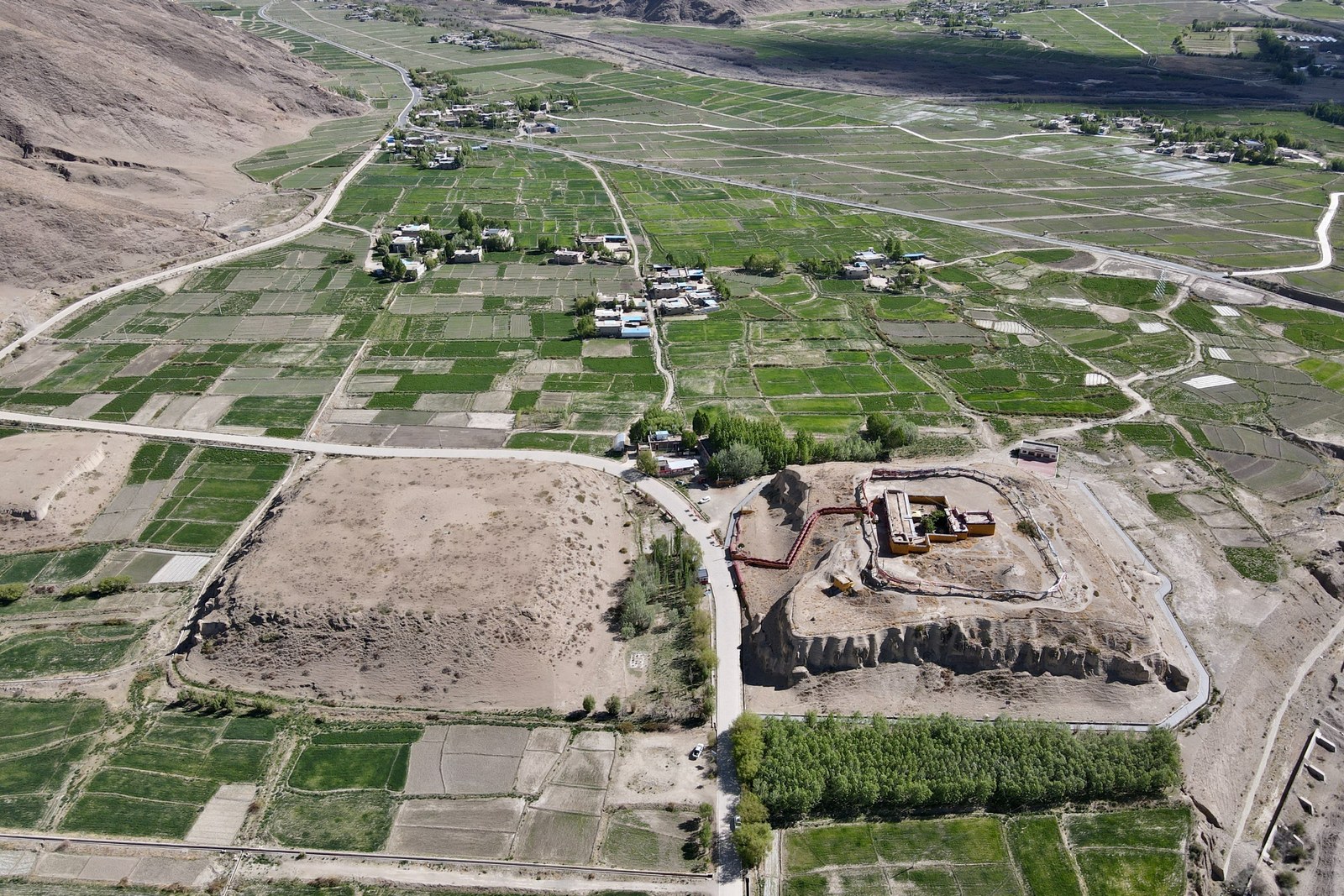
The most visited mound is the one tradition assigns to 松赞干布 Sōngzàn Gānbù Songtsen Gampo, the king who unified the plateau; a small chapel sits on its top, tended by a monk or two, and travelers who time it right climb the short path for the valley view. Beside it stand more mounds of the royal line, and a stone stele of the Tang period – among the oldest inscribed stones on the plateau – still keeps its ground by the tombs.
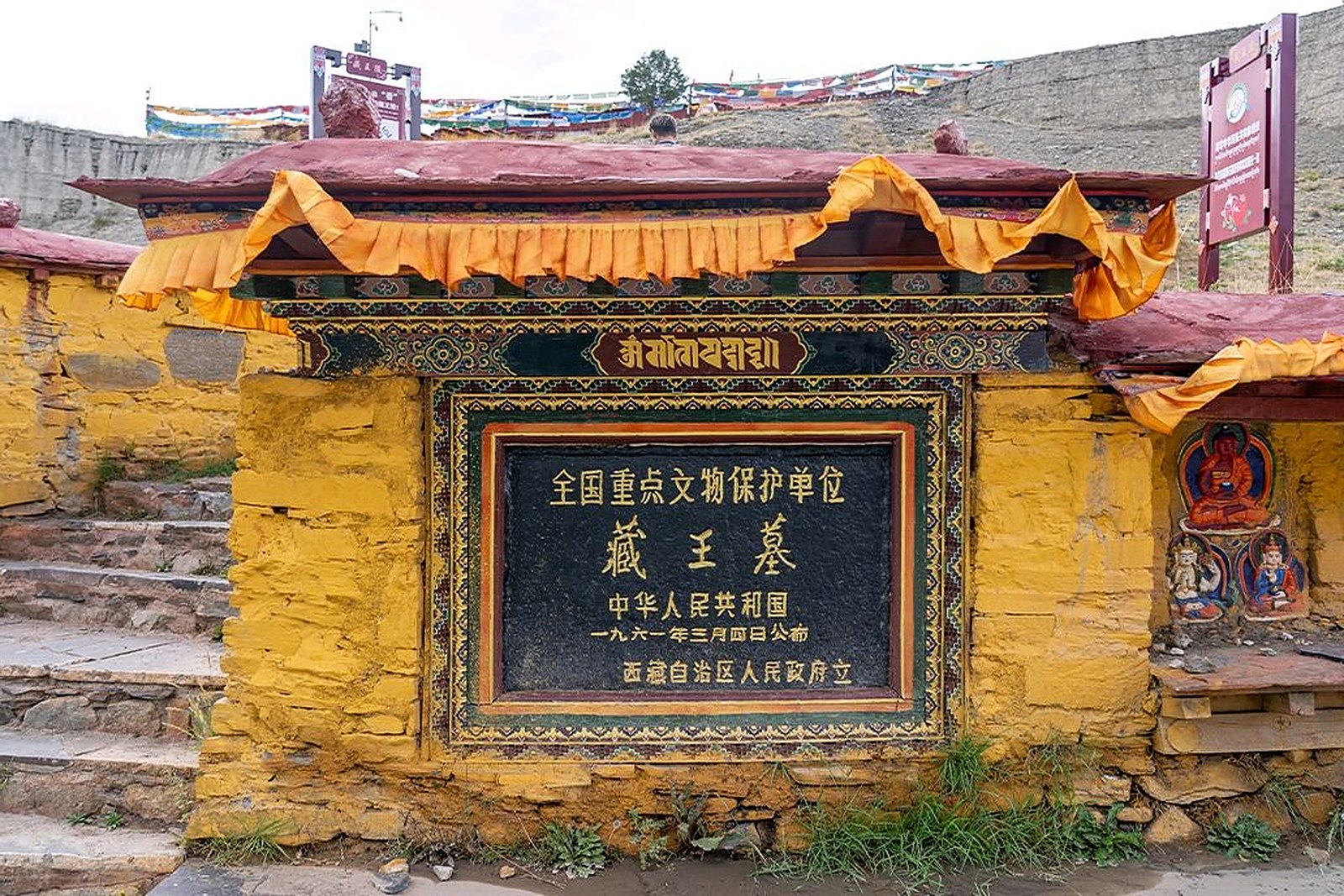
The scale is the surprise. Photographs make the mounds look like hills; standing under one, with the earth wall rising steeply above barley stubble, the engineering lands differently – these are structures, shaped and stockaded in their day, built to hold the center of a kingdom’s memory. Info boards sketch the dynasty’s story, local old men point out which mound is whose, and the whole site reads as a field of history rather than a fenced museum.
Qonggyai makes an easy half-day from Zetang – the road runs down the valley about an hour – and pairs naturally with the district’s other sights. Come in late summer and the mounds stand ringed by green crops; come in autumn and the whole valley turns gold around them. Few sites on the plateau give so much history for so little effort: park by the fields, walk the paths between the mounds, and let the valley tell its own long story.
Practicalities
- The tomb field sits beside the road in Qonggyai county, roughly an hour’s drive southeast of Zetang.
- The chapel-topped mound is the classic climb – a short steep path; the stele and info boards lie along the field paths.
- The site sits around 3,700 meters: sun protection matters more than altitude sickness here, but pace yourself anyway.
- Pair the tombs with the county town’s guesthouses for a slow day, or loop them with the Zetang sights in one long day.
Words and Names
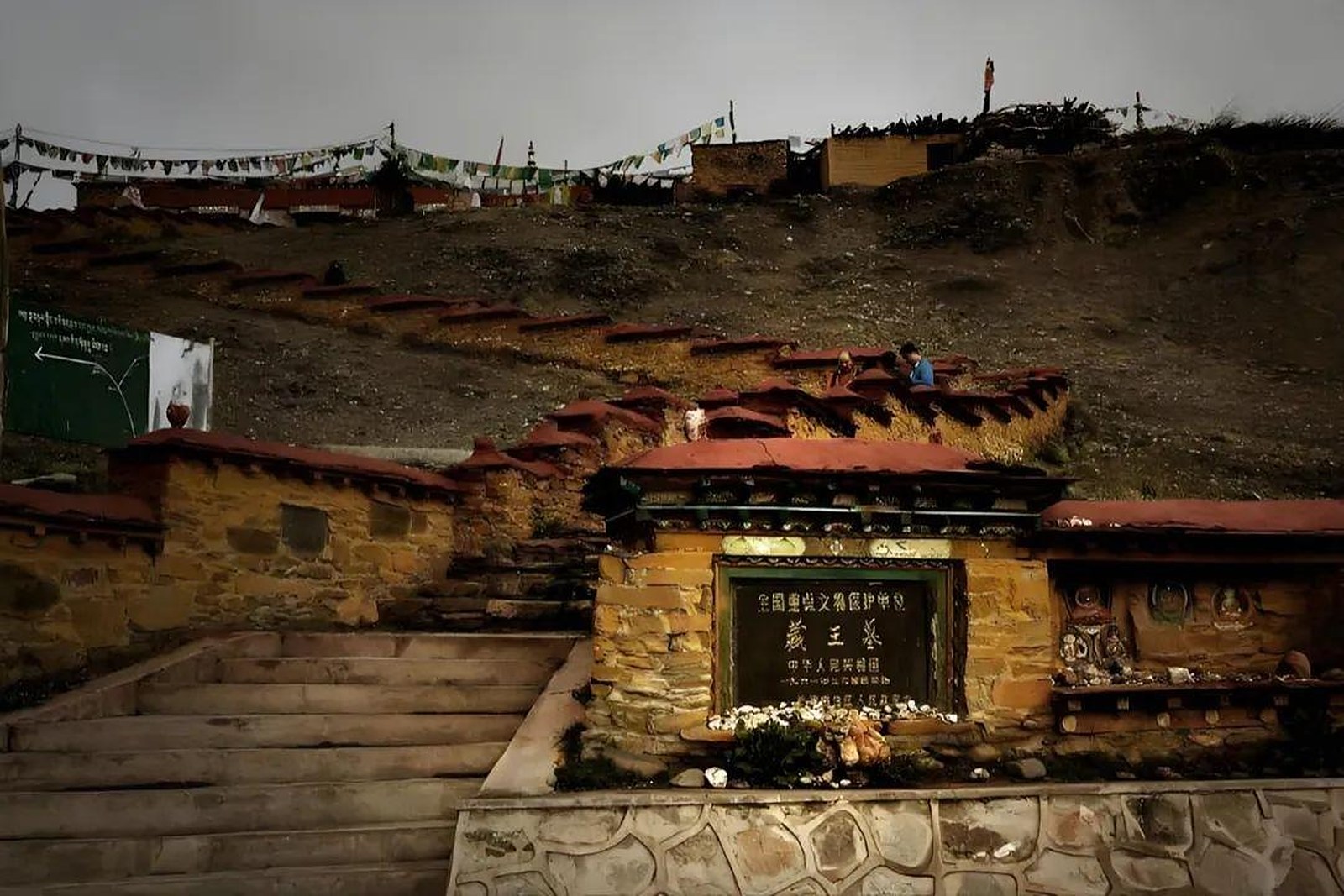
藏王墓 Zàngwáng Mù the Tibetan King’s Tombs, the Yarlung dynasty’s royal burial mounds; 松赞干布 Sōngzàn Gānbù Songtsen Gampo, the unifier king whose mound carries the chapel; 赞普 zànpǔ tsenpo, the royal title of the dynasty; 封土 fēngtǔ the raised earthen mound itself, shaped by builders a millennium ago; 琼结县 Qióngjié Xiàn Qonggyai county, the valley that keeps them. Beyond the tombs, the same 山南市 Shānnán Shì Shannan keeps more places worth the detour: 雍布拉康 Yōngbùlākāng the first palace above the barley fields, 桑耶寺 Sāngyē Sì the first monastery on its mandala plan, 羊卓雍措 Yángzhuó Yōngcuò the holy lake of the turquoise arms, or 拉姆拉措 Lāmǔlācuò the oracle lake of the high ridges – four more doors into the same Shannan. Once the mound paths are behind you, our Shannan food map fills the table.
flowcloud would say the tombs are the valley’s quiet thesis – empires end, barley continues, and the earth mounds referee. All checked November 2026.
Getting there: The tombs stand at the foot of the Zongshan ridge just south of Qonggyai county town, about thirty kilometers or forty minutes west of Tsetang – an easy loop combined with Yumbulagang. An hour on site is enough. All checked November 2026.