
In the humid fields and quiet workshops of Rongchang District, western Chongqing, a plant older than cotton is still turned into cloth: 荣昌夏布 Róngchāng Xiàbù, ramie grass cloth, a cool, faintly lustrous summer fabric woven by hand and protected as a national intangible cultural heritage. The name xiabu simply means “summer cloth,” and the stuff lives up to it — light, breathable, and strange to the touch.
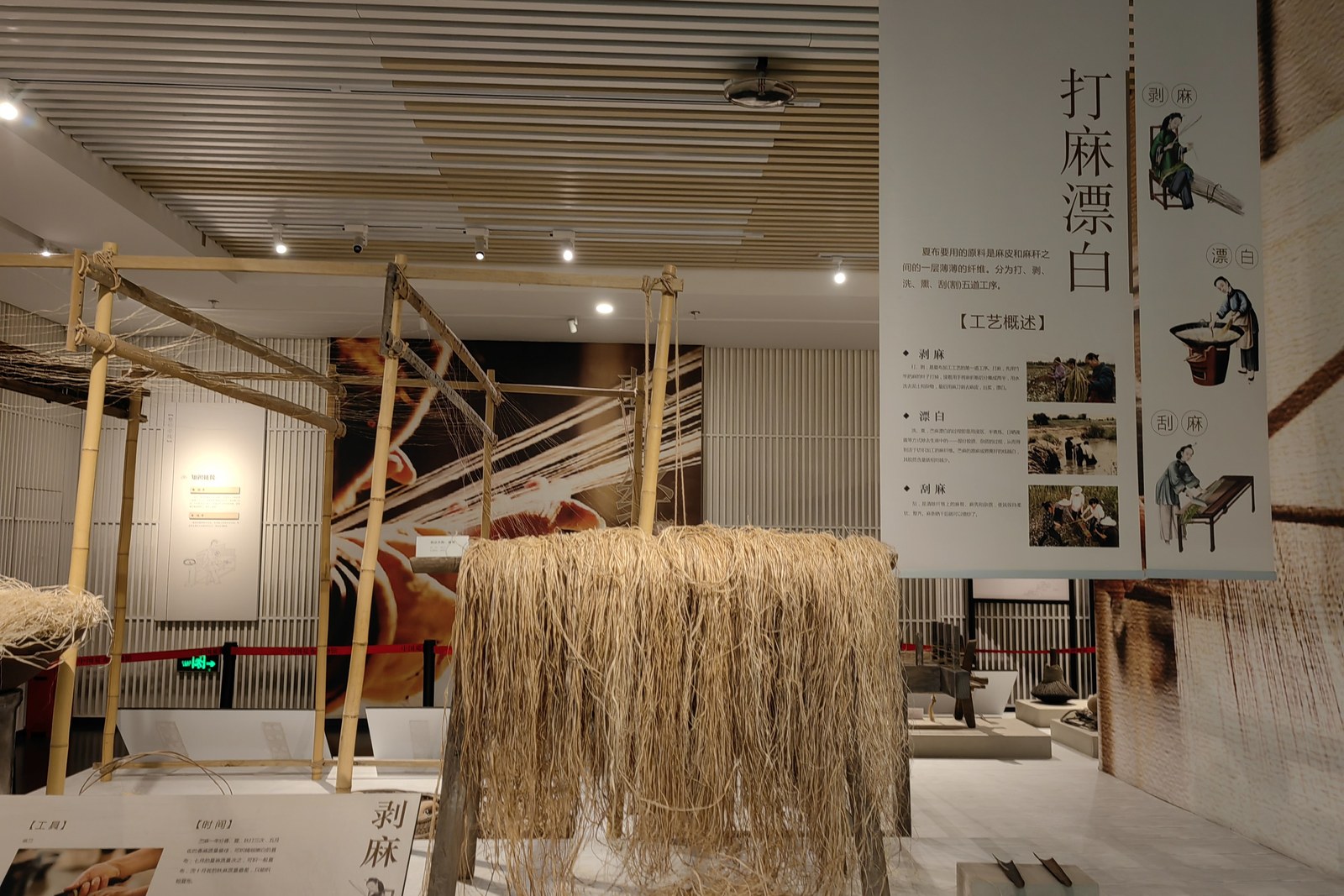
Ramie is a nettle cousin whose inner bark yields a long, strong fibre. Making xiabu is a multi-step hand craft: the stalks are harvested, the bark stripped and boiled, the fibre scraped and bleached, then spun into thread on a simple wheel. The thread is stiff and pale, almost like unbleached linen before it is woven. On the loom, weavers produce a plain, open weave that lets air through — the reason the cloth became the summer wear of southern China long before modern fabrics. Rongchang has been a center of this work for centuries, and the district’s name is still attached to the finest grades.
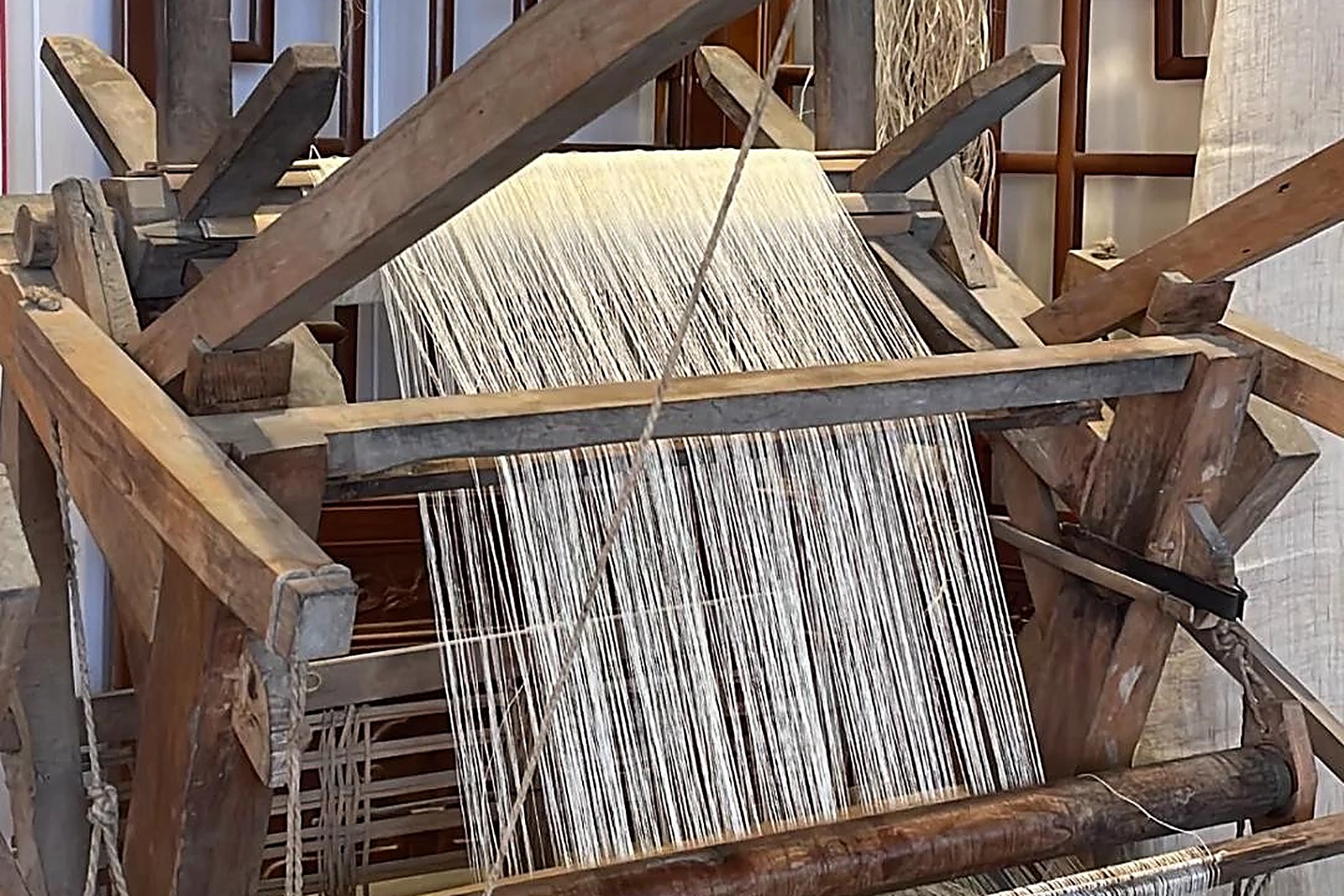
What surprises first-time viewers is the sound and feel: the woven cloth has a dry, papery crispness and a quiet sheen that improves as it is washed and worn. Artisans today use it for summer garments, scarves, and a growing range of home and art objects — mounted panels, lamp shades, even bags — that show off the texture. Because every thread is spun and set by hand, no two lengths are quite identical, and the slowness is the point. Watching a length come off the loom explains why machine copies never quite match.
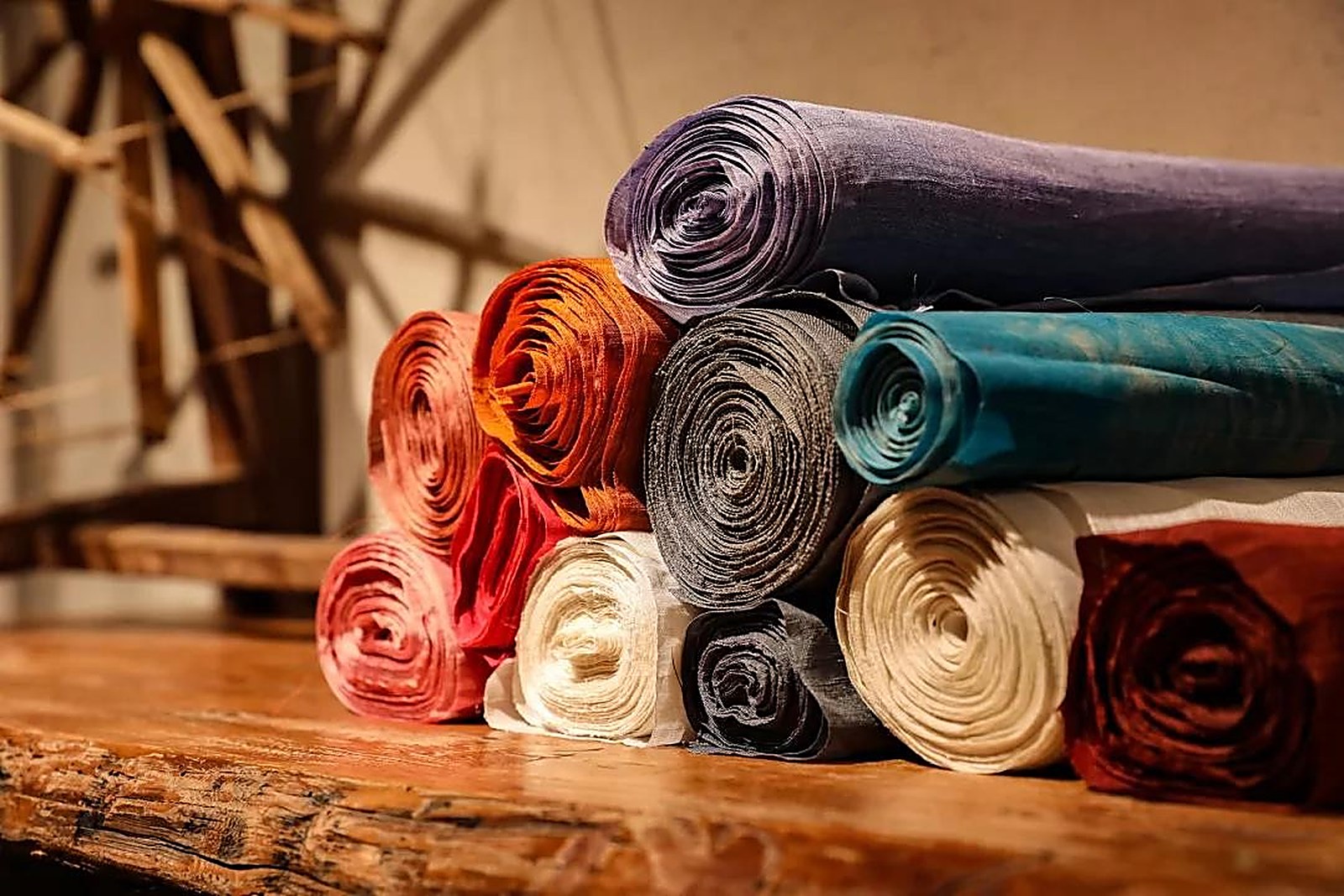
Rongchang’s grass cloth sits naturally beside its pottery and folding fans as one of three heritage crafts that still employ local hands. A length of xiabu is both a souvenir and a small lesson in how plant becomes cloth.
Words and Names
荣昌夏布 Róngchāng Xiàbù is Rongchang grass cloth, or ramie summer cloth. 苎麻 Zhùmá is ramie, the fibre plant. 夏布 Xiàbù is summer cloth. 织机 Zhījī is the weaving loom. 非遗 Fēiyí is intangible cultural heritage.
What the Locals Know
Grass cloth is made through the year, but the fibre work follows the ramie harvest seasons, so spring and autumn show the fullest cycle from stalk to cloth. Workshop visits are best on weekday mornings when spinning and weaving are actually underway. Reach the craft villages by local road from Rongchang’s center; look for yards with pale fibre hung to dry rather than only finished-goods shops. Feel the cloth before you buy — real xiabu is crisp and cool, not soft like cotton — and expect hand-woven pieces to cost more than printed imitations for good reason.
flowcloud would say that Rongchang grass cloth is a plant spun and woven by hand into summer’s coolest fabric. All checked October 2026.
Where to find it: In the ramie-weaving villages and workshops of Rongchang District, Chongqing, where grass cloth is still spun and woven by hand. All checked October 2026.