
The Grey Fortress of the Second Dunhuang: Sakya Monastery
灰墙三色映经台,万卷金书镇萨迦 Huīqiáng sānsè yìng jīng tái, wàn juàn jīn shū zhèn Sàjiā – Three-colored grey walls mirror the scripture hall; ten thousand scrolls of golden books anchor Sakya
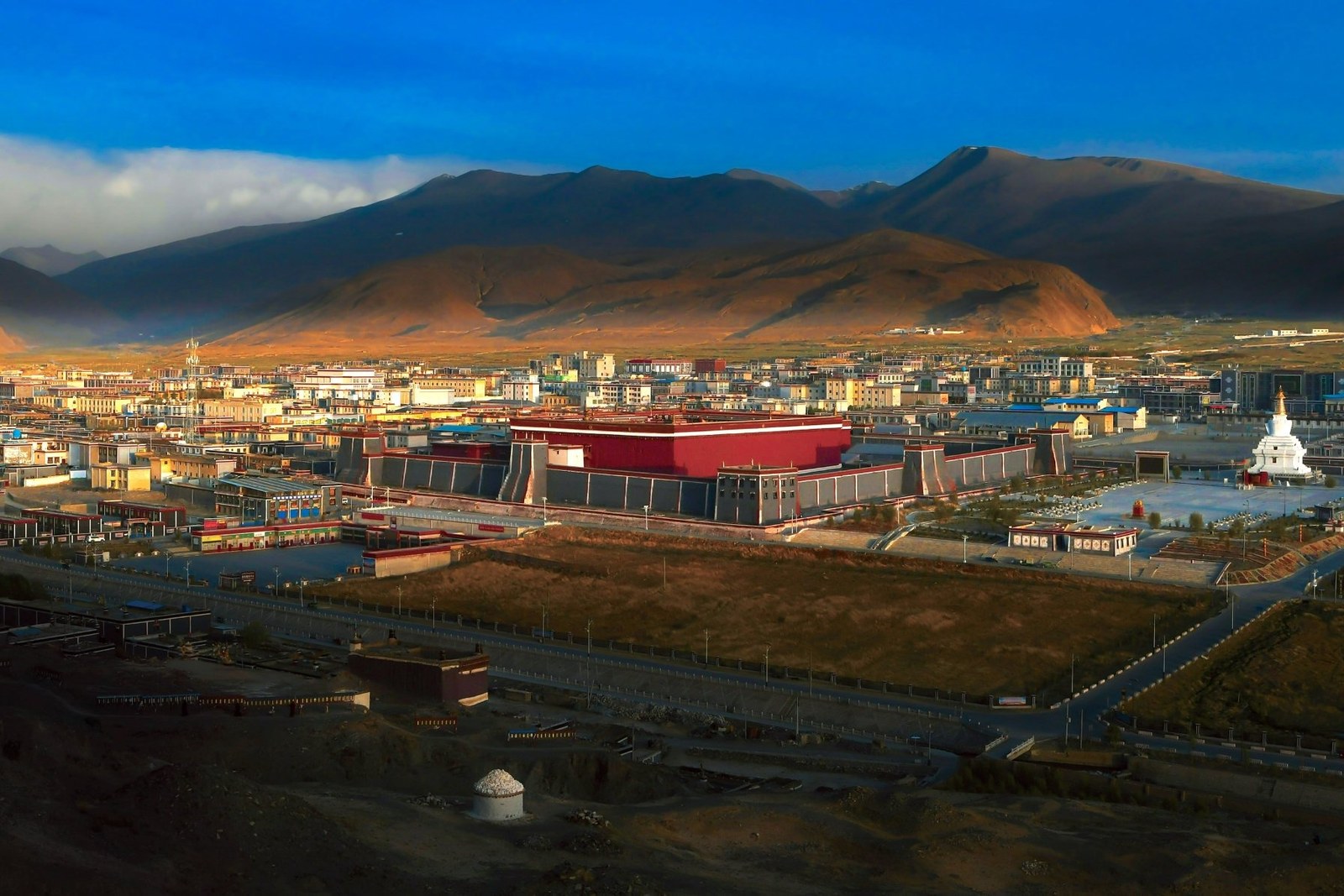
萨迦寺 Sàjiā Sì Sakya Monastery, about 150 kilometers west of 西藏自治区日喀则市 Xīzàng Zìzhìqū Rìkāzé Shì Shigatse, is the seat of the Sakya school and the closest thing the plateau had to an imperial monastery – the family that ruled Xizang from here in the thirteenth century built its grey fortress-cathedral in the image of a Mongol-era palace, moated and walled like a citadel above the river plain. The South Monastery’s walls carry the school’s three signature bands of grey, white and red, a heraldry unmistakable from kilometers down the road.
Inside the great hall, scale does the talking. Massive pillars – each with its own name and story – hold a ceiling high enough for an assembly of thousands; bronze and gilt images line the chapels, and the shell of the conquering era survives in thrones, banners and the great conch horns of the Sakya ritual. The floors echo, the butter lamps smoke, and the hall keeps the atmosphere of a fortress converted into a cathedral rather than the other way around.
The library wall is the treasure the monastery is named for. Behind grilles along one side, racks of 84,000 hand-copied volumes stack floor to ceiling – a wall of scripture centuries deep, including sutras written in gold ink and pages that survive from the monastery’s founding era. Scholars have called Sakya the second Dunhuang for the density and age of what those shelves hold, and even behind the grilles the sight of the whole wall at once is the monastery’s single most astonishing view.
Across the river stand the ruins of the older North Monastery, the founding site of 1073 – broken walls, meditation caves and stupa bases scattered along the slope, with the river plain between them and the citadel. The pairing explains the whole history in one view: the north site is where the school was born as a hermitage, the south citadel is what it became at the height of its power, and the two together make Sakya the most political of the great monasteries of Xizang.
Practicalities
- The drive from Shigatse takes about 2.5-3 hours; shared buses run most days, and the monastery gate is a short walk from the town’s main street.
- The great hall and library wall are the priority – allow two hours; the North Monastery ruins need another hour across the river.
- Interior photography is restricted; the library wall may be viewed but not always shot – check with the caretakers.
- Sakya sits at about 4,300 meters – colder than Shigatse at any hour; bring a layer even in summer.
Words and Names
萨迦寺 Sàjiā Sì Sakya Monastery, the “grey-earth” seat of the Sakya school; 萨迦派 Sàjiā pài the Sakya school, rulers of Xizang in the Yuan era; 经书墙 jīngshū qiáng the library wall of 84,000 volumes; 八思巴 Bāsībā the thirteenth-century hierarch of the imperial alliance; 灰白红三色 huī bái hóng sānsè the grey-white-red wall bands of the school; 北寺 běi sì the North Monastery ruins across the river. Beyond the citadel, the same 西藏自治区日喀则市 Xīzàng Zìzhìqū Rìkāzé Shì Shigatse keeps more places worth the detour: 扎什伦布寺 Zhàshílúnbù Sì the Panchen Lamas’ seat back in Shigatse, 白居寺 Báijū Sì the Kumbum stupa at Gyangtse, 江孜宗山古堡 Jiāngzī Zōngshān Gǔbǎo the fortress rock of the wool road, or 珠峰大本营 Zhūmùlǎngmǎ Dàběnyíng the camp under Everest on the road west – four more doors into the same Shigatse. Once the library wall is behind you, our Shigatse food map fills the table.
flowcloud would say Sakya is Xizang’s archive as much as its temple: the grey walls hold a dynasty’s memory shelf by shelf, and an hour in front of the library wall rewrites whatever you thought you knew about the plateau’s middle ages. All checked November 2026.
Getting there: From Shigatse, the western road reaches Sakya in about 2.5-3 hours by car; shared buses run most days from the Shigatse bus station. The South Monastery’s great hall and library wall are the priority – allow 2 hours. All checked November 2026.