
Where the Rivers Meet: Sancha Estuary
三汊河口千帆过,长虹跨水接云天 Sānchà Hékǒu qiān fān guò, chánghóng kuà shuǐ jiē yúntiān – A thousand sails have passed the three-forked mouth; a long rainbow crosses the water to touch the sky
三岔河口 Sānchà Hékǒu The Sancha Estuary is 天津市红桥区 Tiānjīn Shì Hóngqiáo Qū Hongqiao District’s founding address – the river fork where the 南运河 Nán Yùnhé South Canal and 北运河 Běi Yùnhé North Canal hand their waters to the 海河 Hǎihé Haihe, and the point where Tianjin’s grain-barge history says the city was born. Today the fork is marked by the 引滦入津 Yǐnluán rù Jīn Water Diversion Monument, a sweeping river plaza, and the 天津之眼 Tiānjīn Zhīyǎn Tianjin Eye ferris wheel bridging the water just downstream.
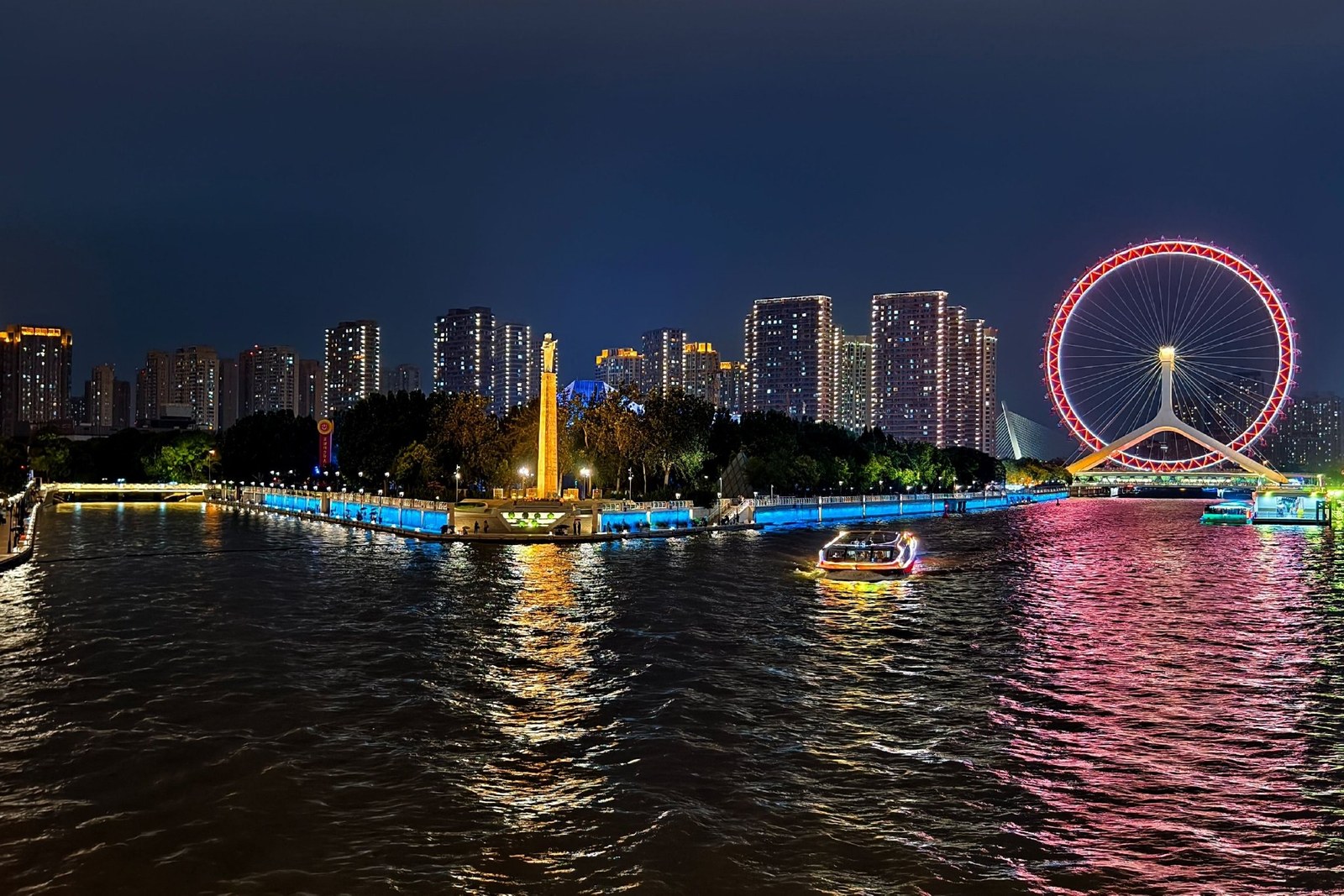
The monument does the consecrating. A white obelisk with a sculpted mother-and-child figure lifting the water of the Luan River, it commemorates the 1983 project that turned the city’s taps from brackish to sweet – and it stands exactly where the barges once queued for the fork. The plaza around it runs the bank in clean granite steps, and the wheel’s white rim closes the downstream view like a period.
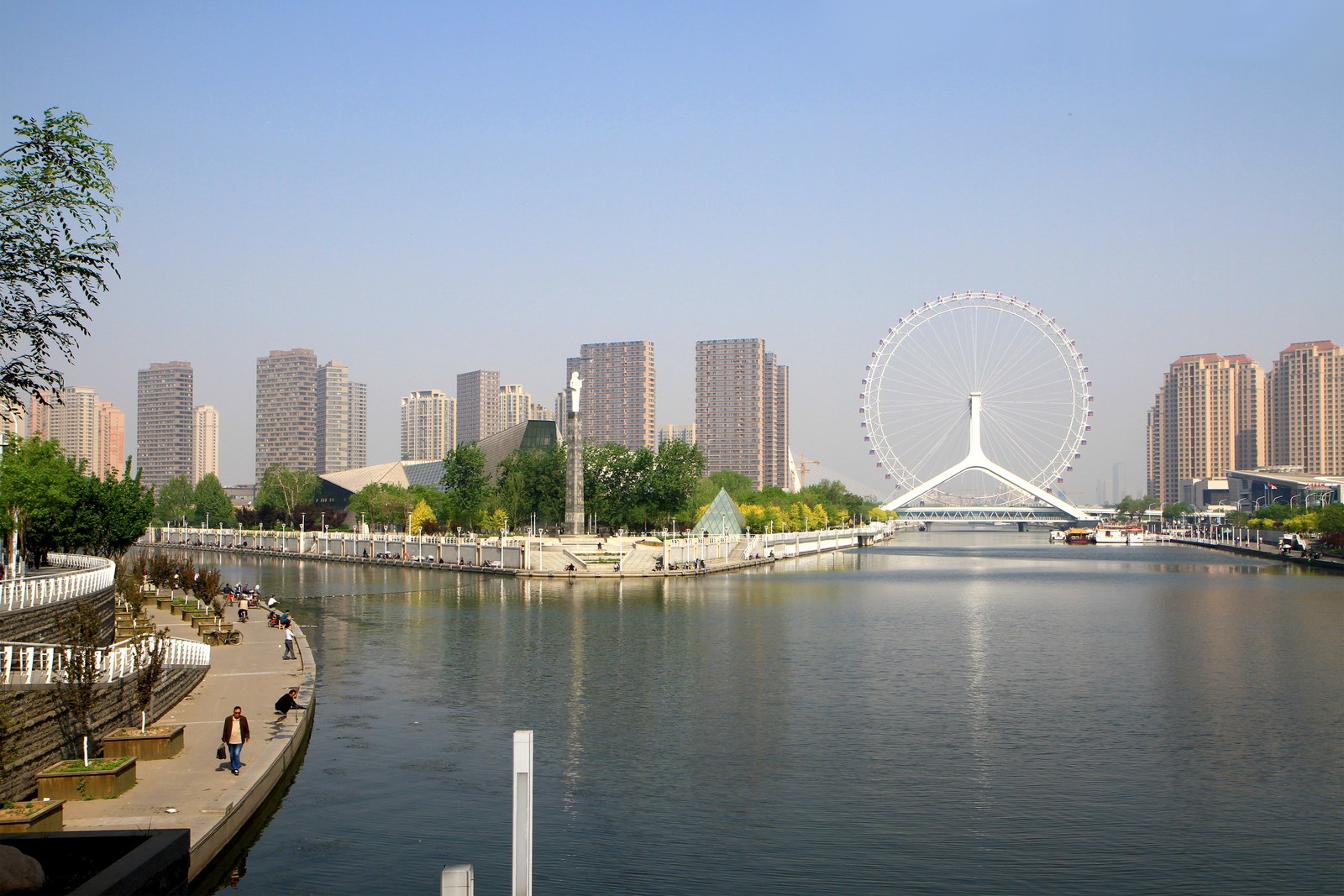
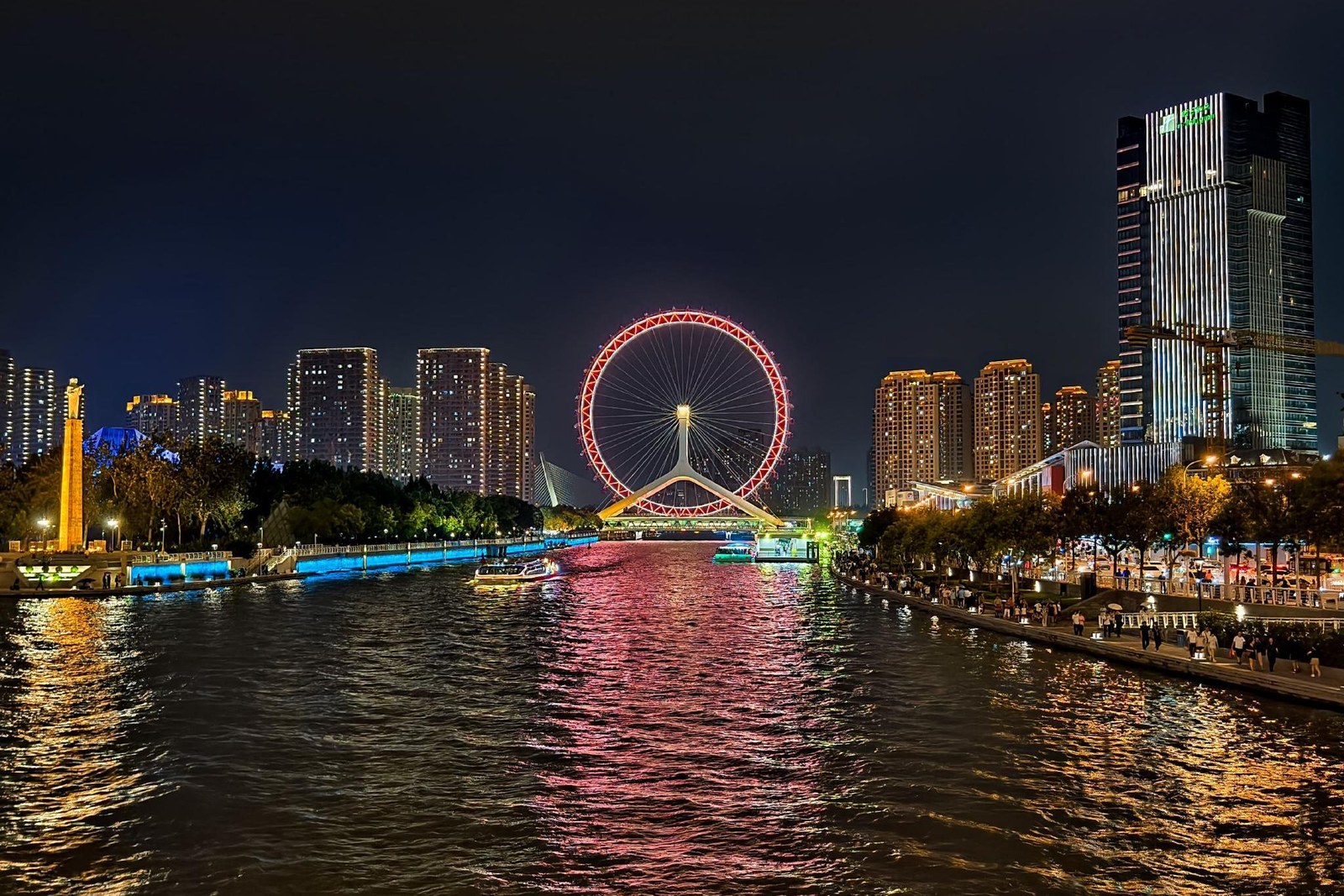
The wheel is the estuary’s modern signature. The only ferris wheel in the world built astride a bridge, the Tianjin Eye turns its slow circle over the 永乐桥 Yǒnglè Qiáo Yongle Bridge, and its night rotation turns the fork into a luminous clock. Ride it for the delta view – the canal lines, the station’s dome upstream, and the Haihe sliding toward the city center – or watch it from the embankment for free, which the neighborhood’s evening walkers consider the better deal.
The banks keep the older city within reach. 桃花园 Táohuāyuán Peach Garden’s rows run the north bank in season, the 窑洼 Yáowā bridge approaches keep the old ferry crossing’s memory, and the embankment walk links the estuary to the concession riverbanks downstream. Morning brings tai chi and fishing rods to the steps; night brings the wheel’s blue breath and the sound of water doing what it has always done here – deciding where the city begins.
Practicalities
- The estuary plaza and embankment are open all day and free; the wheel tickets after dark sell fastest.
- Metro Line 1 to 西北角 Xīběijiǎo Xibeijiao station, then a fifteen-minute river walk, puts you at the fork.
- The Water Diversion Monument photographs best in morning light; the wheel best at blue hour.
- Pair it with 天津西站 Tiānjīn Xīzhàn one metro stop west – dome and wheel make one line of sight.
Words and Names
三岔河口 Sānchà Hékǒu the Sancha Estuary, Tianjin’s founding river fork; 引滦入津 Yǐnluán rù Jīn the Luan-to-Tianjin Water Diversion Project of 1983; 天津之眼 Tiānjīn Zhīyǎn the Tianjin Eye ferris wheel on Yongle Bridge; 海河 Hǎihé the Haihe, the mother river below the fork; 漕运 cáoyùn the grain-barge transport that built the city. Beyond the estuary, the same 天津市红桥区 Tiānjīn Shì Hóngqiáo Qū Hongqiao District keeps more places worth the detour: 平津战役纪念馆 Píngjīn Zhànyì Jìniànguǎn the Pingjin Campaign Memorial, 西沽公园 Xīgū Gōngyuán Xigu Park, 估衣街 Gūyī Jiē Guyi Street, or 天津西站 Tiānjīn Xīzhàn the West Railway Station – four more doors into the same Hongqiao District. Once the wheel has had its hour, our Hongqiao food map fills the table.
flowcloud would say the Sancha Estuary is the city’s first sentence still being written: two canals handing their water down, a monument raising the moment the taps ran sweet, and a wheel turning the fork into a clock the whole skyline can read. All checked November 2026.
Getting there: The estuary fronts the river fork at the head of the Haihe – Metro Line 1 to Xibeijiao station walks you north to the embankment, and the wheel signs itself from three bridges away. All checked November 2026.