
三道拐 Sāndàoguǎi, the “three bends”, is what remains of the Qing dynasty’s merchant road up the river bluff in 长寿区 Chángshòu Qū, Changshou District: three thousand stone steps climbing the hillside in three great sweeping bends, lined with bamboo-and-timber houses whose bay windows lean out over the stair. It is called the last surviving old street of the Three Gorges river towns, and it earns the title the hard way – by still being lived in, shopped at and climbed every day, a working stair with two centuries of wear polished into every tread. This page is the street’s vertical walk, top to bottom, bend by bend.
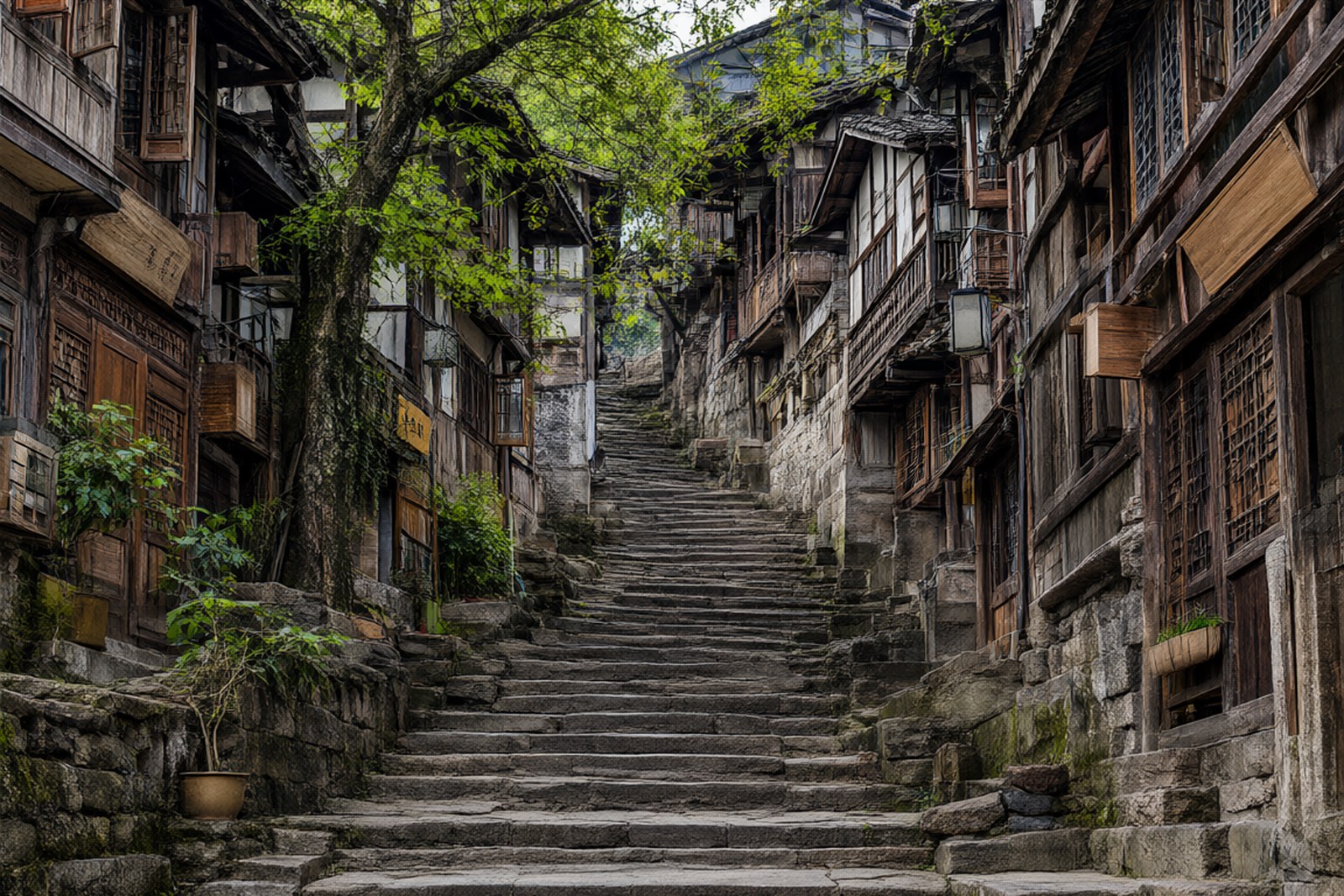
The street reads like a vertical market history, and the walk collects the layers in order. The gate arches still frame the stair where the merchant road once taxed and welcomed its traffic; the old shopfronts keep their plank counters, the counters that came out each morning and went back each night for generations of river trade; shared wells sit in the pockets between the bends, and small temples occupy the landings where the stairs rest – places built for exactly the pause a climbing body needs, which is why the merchants paid for them and why the climbers still use them. Nothing on the street is staged, because nothing on the street needed staging: the stair is the exhibit, and the exhibit is still open for business.
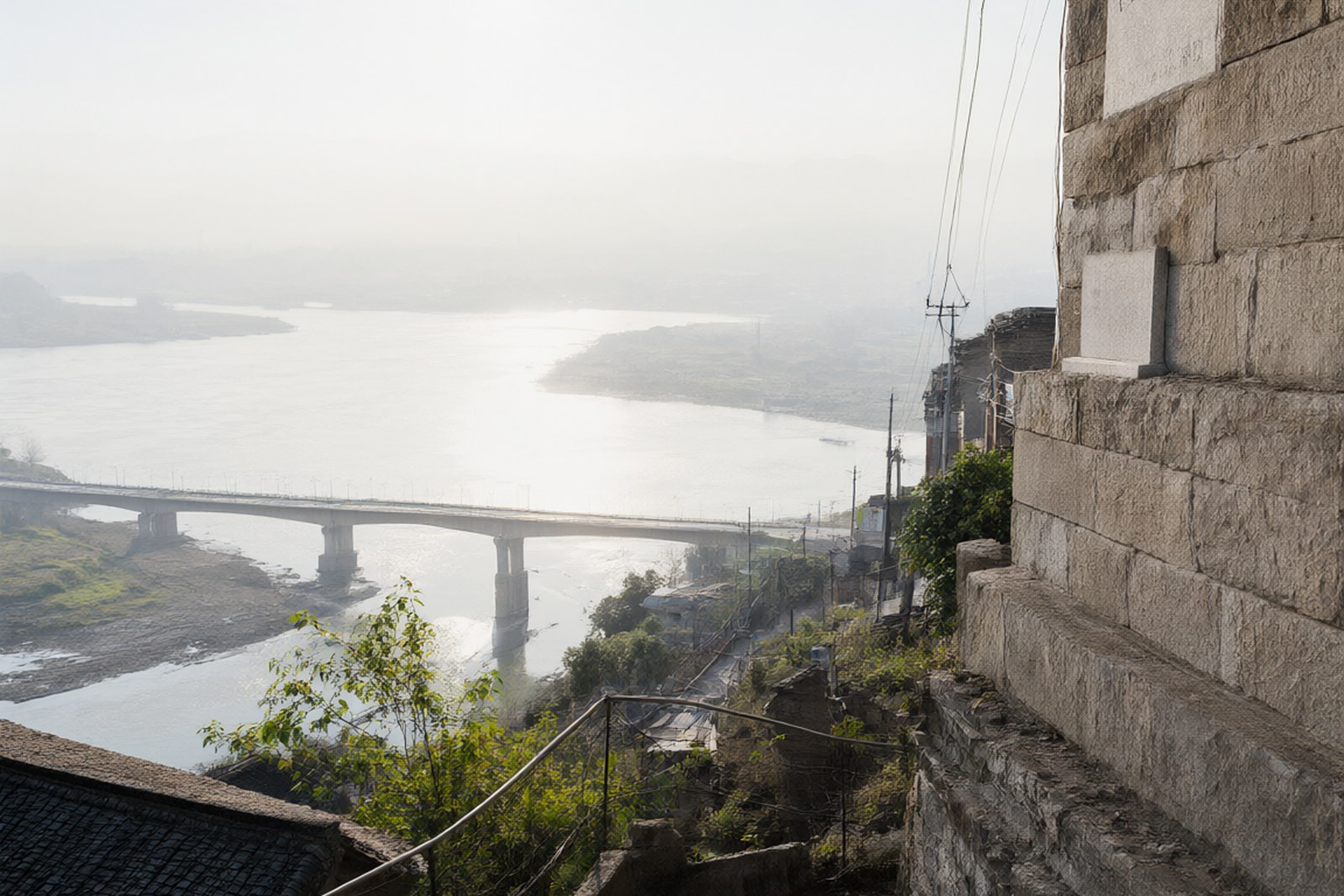
The climb is real but gentle, which surprises people who meet three thousand steps on paper. The three bends break the ascent into movements, the gradient breathes with the stair, and the teahouses that lean against the bends pour refills for climbers – a cup on the way up, a cup on the way down, the whole climb punctuated by tea the way the Qing merchants punctuated theirs. The upper bends open the reward: river views back over the 长江 Cháng Jiāng, Yangtze, with the district’s bridges spanning the plain below, the river running wide and unhurried under a street that once lived entirely off it.
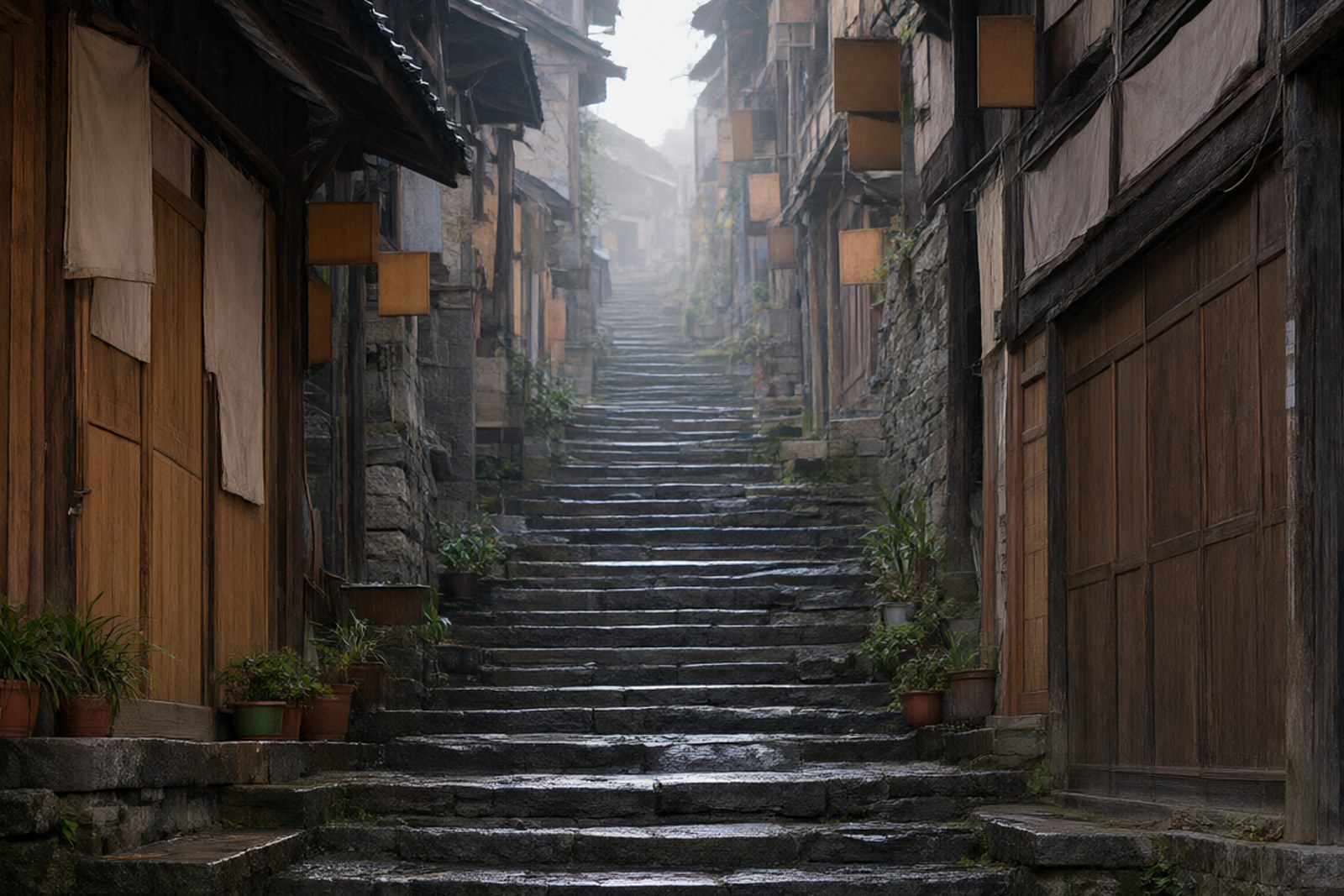
The houses are the street’s texture. Bamboo and timber, dark with age and repaired in whatever the decades required, they lean their bay windows over the stair so that the upper storeys almost meet across the steps – a canyon of eaves with a river of stone running through it. Washing dries over the railings, potted plants crowd the window ledges, and the plank counters still open onto the step for the day’s small trade. What the record supports is the street’s Qing origin, the count of three thousand steps in three bends, the bamboo-and-timber building line, the wells and small temples, and the claim as the Three Gorges’ last surviving old street; what it does not support is any entry figure or posted hours table, and none is invented here – the street is a public stair, free in both directions, and the page leaves the reader to the teahouses’ own schedules.
The residents are the last thing the street asks a visitor to understand: this is their daily route, not a museum corridor. Groceries come up the steps, children go down them, and the teahouse regulars hold the same seats at the same hours. The manners are the obvious ones – walk quietly, keep to the side when someone carries a load past, and buy your tea from the windows that open onto the steps rather than photographing the doorways of people who did not ask to be scenery. Do that, and the street gives back what no rebuilt old town can: the sound of a place using itself.
Words and Names
三道拐 Sāndàoguǎi, the “three bends”, old street in 长寿区 Chángshòu Qū, Changshou District: the last surviving old street of the Three Gorges river towns, a Qing-dynasty merchant road of three thousand stone steps climbing the river bluff in three sweeping bends, lined with bamboo-and-timber houses whose bay windows lean over the stair. The walk passes gate arches, plank-counter shopfronts, shared wells and the small temples that hold the landings between bends, with the upper stairs opening views over the 长江 Cháng Jiāng, Yangtze, and the district’s bridges. The street is a public stair; no entry figure or posted hours table is on the record consulted, and none is invented here.
What the Locals Know
The local knowledge is the direction and the heat. The street is climbed both ways all day, but the locals take it early – the stone cool underfoot, the bends in shade, the teahouses just lighting their fires – and leave the middle of a summer day to the heat that collects between the eaves. The honest route is top to bottom for the views, bottom to top for the legs; either way the teahouse stops are not optional, because the refills are the street’s whole social machinery. Rain makes the worn stone treacherous faster than any visitor expects, and the residents read the weather the way sailors do – a postponed climb is the street’s oldest tradition.
Practicalities
Tickets: None and none needed – the street is a public residential stair, walked free in both directions, and no entry figure exists to quote; the only spending is tea at the teahouses, whose prices the page leaves to the counters that post them. Opening hours: The stair never closes – it is the residents’ daily route – and the teahouses keep their own informal hours around the bends. No posted hours table is on the record consulted; the honest clock is the daylight’s, and the best hours are the cool ones at either end of the day. Closing day: None posted – a lived-in street does not close its weeks, and no published rest day is on the record consulted. The variable is weather: rain turns the polished stone slick, which is a postponed walk rather than a cancelled one.
flowcloud would say that 三道拐 Sāndàoguǎi is the Three Gorges’ last surviving old street doing its original job – three thousand Qing-era stone steps in three bends up the river bluff, under bamboo-and-timber bay-window houses, past plank counters, shared wells and stair-resting temples, with teahouse refills for the climb and the Yangtze bridges opening at the upper bends – and that the correct visit is the quiet one, tea bought from the windows that open onto the steps. All checked October 2026.
Getting there: the street climbs the river bluff on the 长寿区 Chángshòu Qū riverside, reached from the district seat by a short ride to the riverfront quarter, with the stair’s lower gate close to the old-town streets and the upper bends opening over the Yangtze bridges; no entry figure or posted hours table is on the record consulted, so none is invented here. Pair this page with the changshou-city-hotels page in the stay column for the station-side night, and with the changshou-lake page for the district’s other landscape. All checked October 2026.