
From Nanniwan to the Tarim: The 359 Brigade Memorial Above Aral’s Fields
屯垦戍边志,胡杨万代魂 Túnken shùbiān zhì, húyáng wàndài hún – The will to open wasteland and hold the frontier; the poplar’s soul through ten thousand generations
正文:三五九旅纪念馆 Sānwǔjiǔ Lǚ Jìniànguǎn the 359 Brigade Memorial stands on Aral’s central axis, a sweeping steel-and-glass roof pitched like a tent over the story of the regiment that became the First Agricultural Division of the Xinjiang Production and Construction Corps. The brigade itself needs no introduction in Chinese history: it was the Nanniwan unit that turned barren Shaanxi hills into fields during the war years, and in 1949 it marched straight from that work into the Tarim basin to do it again. The museum is the memory-keeper of that march, and in 阿拉尔市 Ālā’ěr Shì Aral City – a city the brigade literally founded from desert scrub in the 2000s – it doubles as the city’s front parlour.
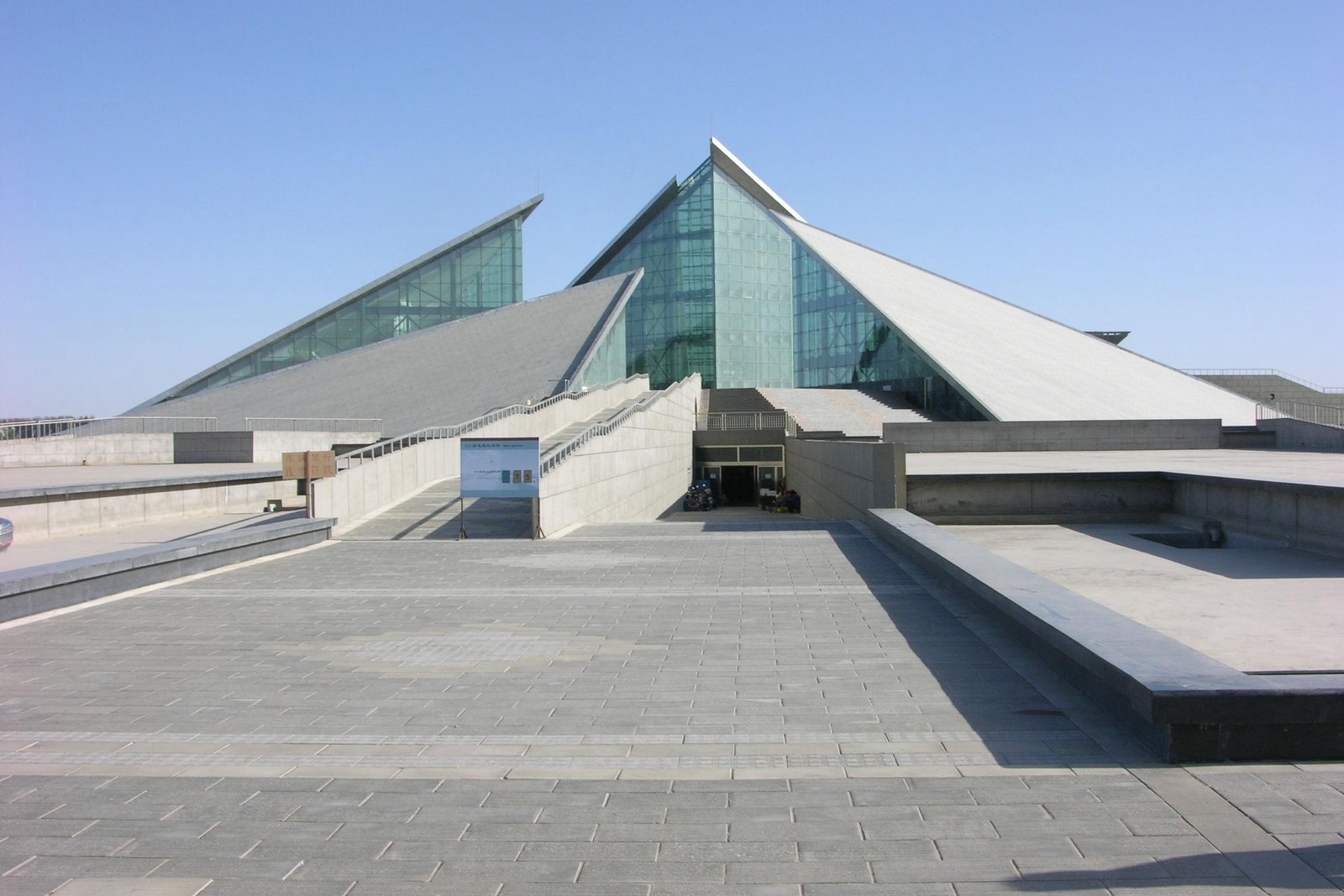
The building sets the tone before any caption does. Its roofline sweeps upward like a canvas shelter in wind, all glass and steel above a broad plaza of paving and poplars, and the exhibition halls run underneath in one long forward march. Inside, the ground floor follows the brigade chronologically: the Nanniwan years with their spinning wheels and hoes, the 1949 crossing into Xinjiang, the first canals cut through the desert fringe, and the chain of reclamation farms that turned river scrub into the cotton and orchard country visitors drive through today.
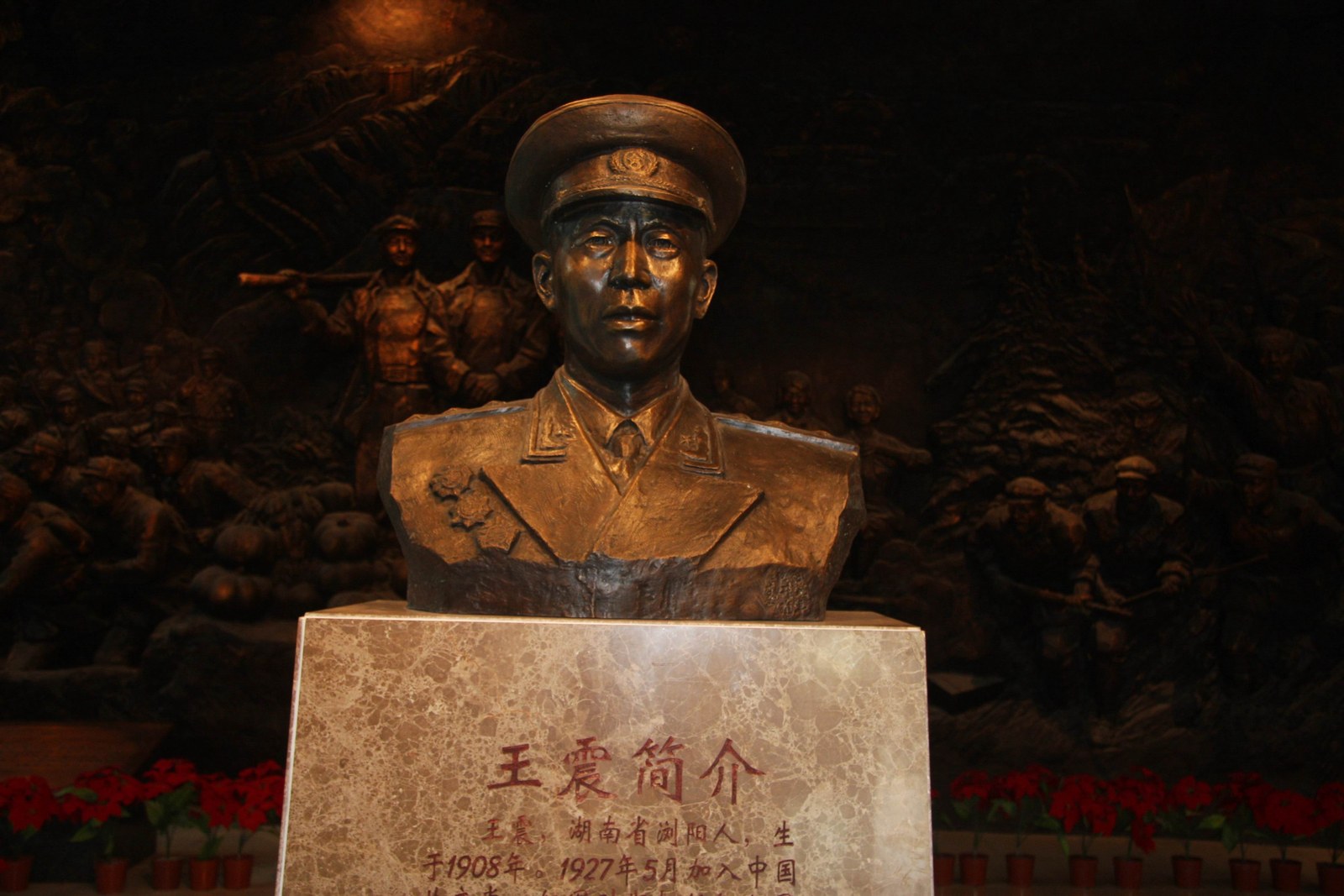
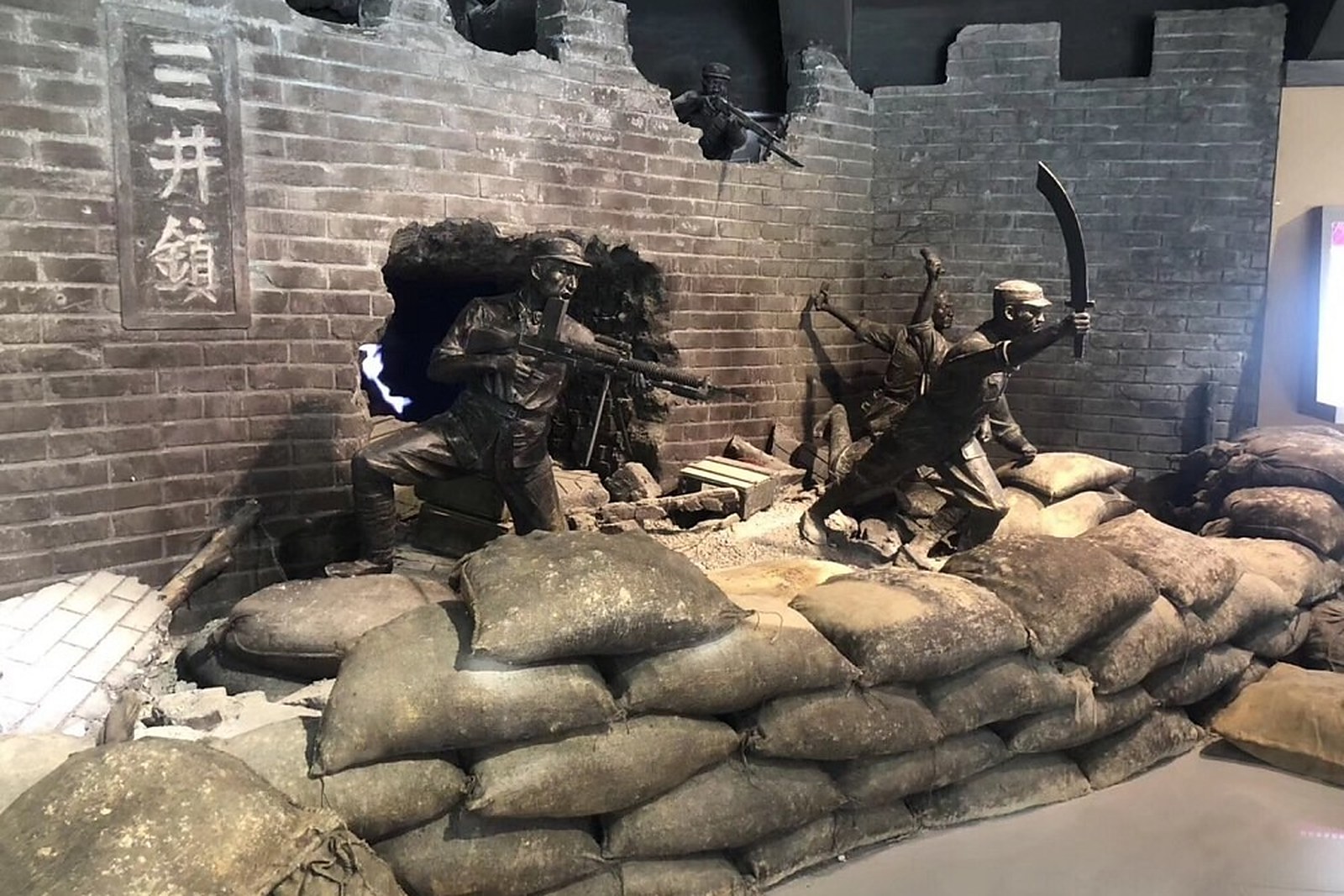
The middle galleries are the emotional core. Dioramas rebuild the first winters – earthen dugouts, willow-frame instruments, the famous kettle-scale meals – while wall cases hold the actual tools, rifles-to-ploughshares conversions and yellowed gazettes of the early settlements. A hall of sculptures stacks sandbags and hauls sledges in frozen motion, and the bronze of General Wang Zhen, the brigade’s commander and the Tarim’s great planter, stands at the turning point of the story with his inscriptions overhead.
What lifts the museum above the regional average is its candour about cost. The displays do not pretend the reclamation was easy: photographs of the flood years, the salt flats that defeated three plantings, and the letters of families who spent lifetimes on the frontier all have their wall space. By the time the route reaches the modern wing – cotton pickers the size of ships, drip-irrigation models, the university’s laboratories – the transformation reads as earned rather than declared, which is exactly the argument Aral makes to the traveller.
Allow a couple of hours and the sequence lands properly. Docents run free at fixed hours; the halls are fully captioned in Chinese with English summaries in the brochure; and the plaza outside rewards the exit with its long view down the city axis toward the river. Families will find the dioramas child-proof and the lighting kind; photographers get their best frames late in the afternoon when the roof glows against the poplar line.
Practicalities first. Entry is free with an ID at the desk, the halls close on Mondays, and the site sits ten minutes by taxi from the bus station. Come after the university in the morning and the memorial in the afternoon, then walk the plaza at dusk when the roof lights come on – the museum was designed to be seen from outside as much as in.
Widen the frame and the memorial is the key that organises everything else in Aral: the university was founded to serve its farms, the river bridge carries its canals’ master-line, and the dead poplars of the sleeping valley are the frontier the first planters walked into. Few small cities anywhere explain themselves this clearly.
And that is the lasting impression: a museum that treats hard history as a family album rather than a monument. The roof gathers the light, the halls keep the pace of a march, and the brigade’s generations of work – Shaanxi loess to Tarim cotton – line up in a single afternoon’s walk.
Practicalities
Beyond the memorial, the same 阿拉尔市 Ālā’ěr Shì Aral City keeps more places worth the detour: 塔里木大学 Tǎlǐmù Dàxué Tarim University for the campus the brigade built, 睡胡杨谷 Shuì Húyáng Gǔ the Sleeping Huyang valley for the dead poplars standing in their thousands, 塔里木河大桥 Tǎlǐmù Hé Dàqiáo the Tarim River bridge for the braided channels and autumn gold, or 千鸟湖湿地 Qiānniǎo Hú Shīdì Qianniao Lake wetland for the egrets at dusk – four more doors into the same 阿拉尔市 Ālā’ěr Shì Aral City. Once the memorial is seen, our Aral food map fills the day.
Practicalities
Words and Names
flowcloud would say the 359 Brigade Memorial is Aral telling its own origin story with its sleeves rolled up: a roof like a wind-blown tent, halls that march from loess to cotton, and the honest weight of two generations’ work carried lightly in glass and steel. All checked November 2026.
Getting there: The museum stands in the central square district downtown; any taxi crosses the small city for under ten yuan and city buses stop on the museum avenue. Free entry with ID, closed Mondays – go morning for quiet galleries. All checked November 2026.