
Sapu — the Glacier Family Above the Lakes of Biru
萨普一家冰作骨,神湖倒影雪为魂 Sàpǔ yījiā bīng zuò gǔ, shénhú dàoyǐng xuě wéi hún – The Sapu family has ice for bones; in the holy lake’s reflection, snow is the soul
萨普神山 Sàpǔ Shénshān Sapu is the mountain that photographs keep promising and roads rarely deliver – until now. In 羊秀乡 Yángxiù Xiāng Yangxiu township of 比如县 Bǐrú Xiàn Biru county, a compact massif of six peaks rings a central summit, and from its walls hanging glaciers spill down toward a chain of milky turquoise lakes. Local tradition reads the group as a family: the great father peak at the center, the mother beside him, the children arrayed around – a household of stone and ice above water the color of raw gems.
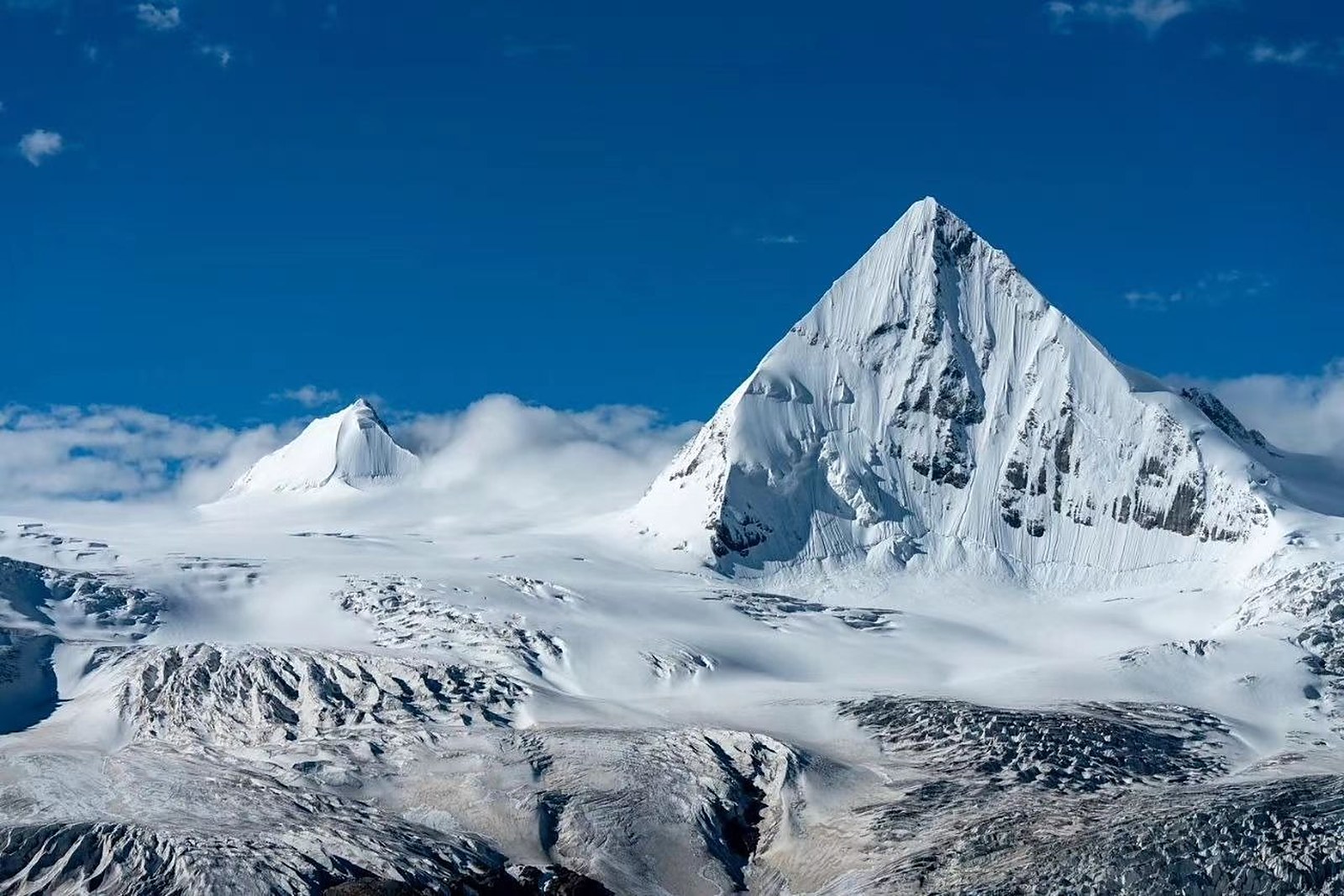
The road in from Biru county town is long and partly rough, and that honesty is part of the mountain’s charm: no fences, no walkways, no gates – just a valley track that ends at a shore, and the peaks doing their work at close range. Walk an hour from the road end and the perspective shifts with every bench of ground: the lake in front, the ice above, moraine ridges underfoot still dropping stones from the last century’s retreat.
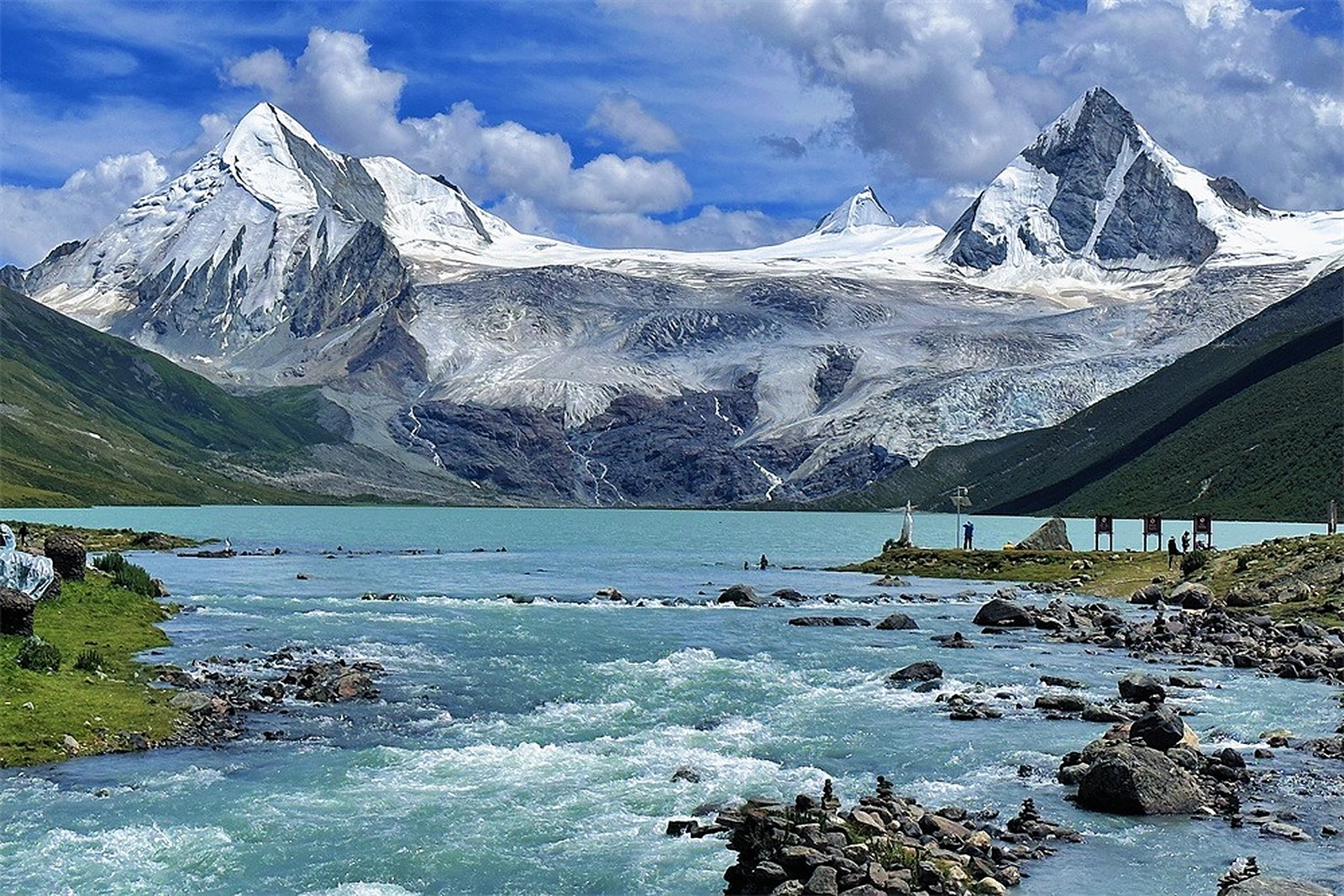
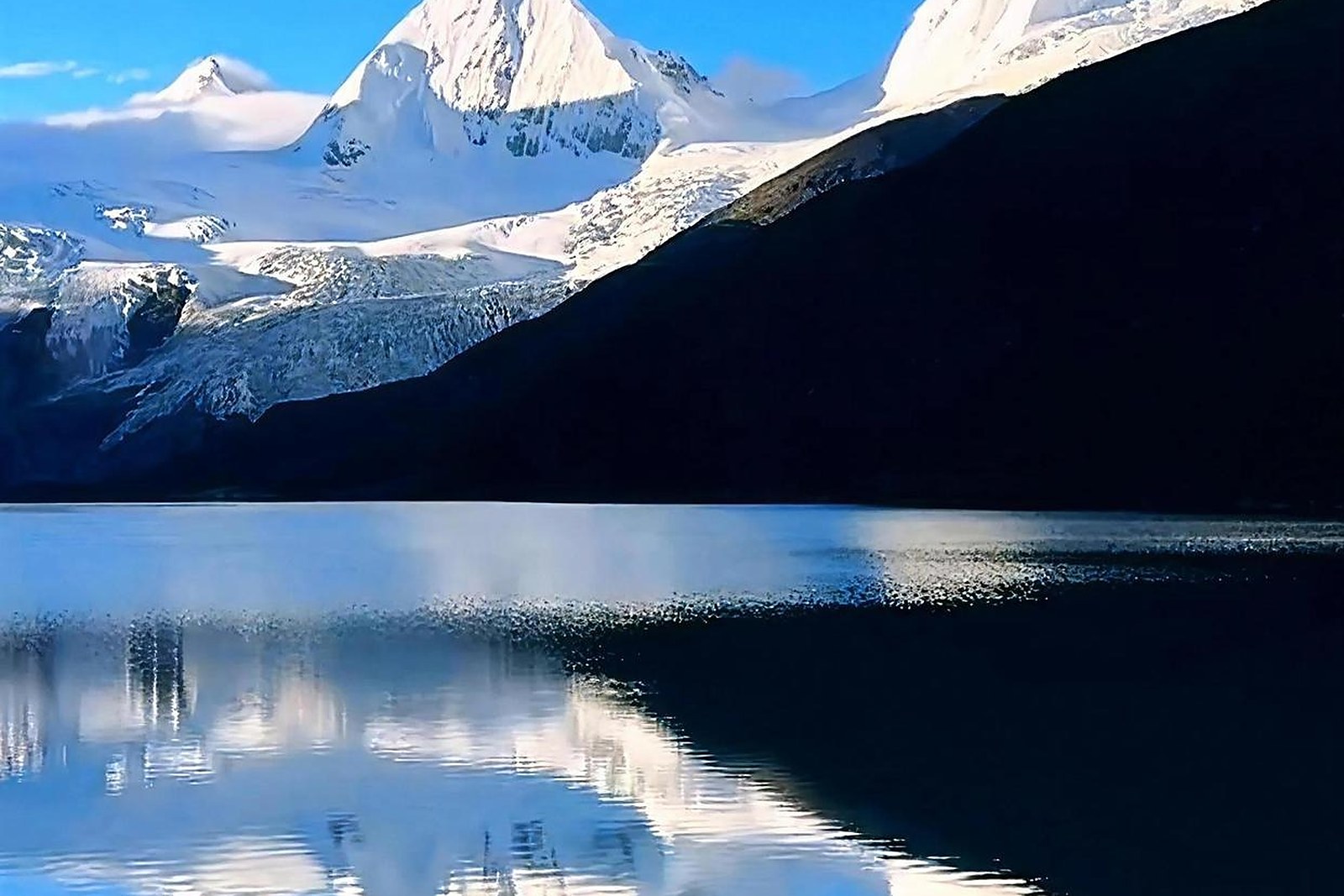
The light is the reason to stay. Morning puts the east faces in sun while the lake steams; midday flattens the ice; and from late afternoon the whole massif turns gold, then rose, then a blue so deep the glaciers seem lit from inside. Campers set tents on the grass benches above the shore – marmots whistle from the boulders, wind ruffles the flags at the cairn – and the stars over Sapu on a clear night are thick enough to read by.
For travelers, Sapu has quietly become the reason to detour to Biru at all: the finest close-up mountain walking in Nagqu, at a fraction of the crowds the famous ranges draw. Come with a chartered car from the county town, give the mountain a dawn and a dusk, and walk as much of the shore as your legs allow – the family of peaks changes character with every angle, and none of the postcards quite settle the argument of which view is the true face.
Practicalities
- Sapu lies in Yangxiu township east of Biru county town – roughly three hours to the town from Nagqu, then hours more on partly rough road to the trailhead.
- No facilities exist at the lakes; carry food, water and camping gear if you stay, and pack out everything.
- The shore sits above 4,500 meters; go slow, and give a first plateau week a pass if altitude is still new to you.
- Chartered cars and drivers are arranged through Biru town hotels; confirm the return plan before setting out.
Words and Names
萨普神山 Sàpǔ Shénshān Sapu, the sacred mountain family of Biru; 比如县 Bǐrú Xiàn Biru county, the gateway county; 羊秀乡 Yángxiù Xiāng Yangxiu township, the valley below the peaks; 冰川 bīngchuān glacier, the massif’s hanging ice; 玛尼堆 mǎní duī mani cairns, the prayer-stone piles of the shore. Beyond the mountain, the same 那曲市 Nàqū Shì Nagqu keeps more places worth the detour: 纳木错 Nàmù Cuò the heavenly lake of the Elephant Gate, 色林错 Sèlín Cuò the great crane lake of the Changtang, 当惹雍错 Dāngrě Yōngcuò the deep holy water of Nyima, or 那曲赛马节 Nàqū Sàimǎjié the August festival of the grassland capital – four more doors into the same Nagqu. Once the peaks are behind you, our Nagqu food map fills the table.
flowcloud would say Sapu is a family portrait in ice – six relatives posing by the water, patient as only mountains are. All checked November 2026.
Getting there: Drive from Nagqu town to Biru county town, roughly three hours, then east toward Yangxiu township on partly rough roads to the road end and lake trailhead – a long full day, or overnight in Biru for a dawn start. All checked November 2026.